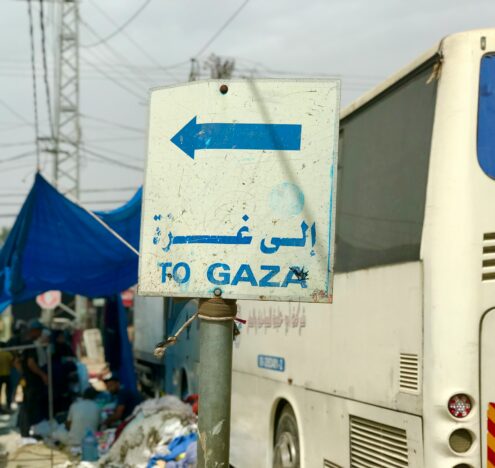
There, Marina discovers that her recently deceased grandmother’s childhood house in Haifa is haunted by a vengeance for all those to try to inhabit it, after the Nakba drove the original inhabitants away. It’s a bit of poetic justice, a fantastical riff on today’s strange reality of Israelis inhabiting the historic limestone Palestinian houses in places like Haifa and Jaffa.
The motif of a deadly, haunted sea and the hard expectations shouldered by immigrant daughters also run strongly through the novel. Though at times the prose verges on explanatory, it’s a new take on Palestinian historical fiction in English, and joins a handful of Palestinian horror fiction releases out this year. They also come on the heels of Ibtisam Azem’s 2014 novel The Book of Disappearance, released in English translation in 2019, which imagines a world in which all Palestinians suddenly, and without explanation, disappear, leaving society to grapple with the emptiness left behind
But in light of the ongoing genocide since 2023, the latest crop of horror feels like it’s going further. “There is a rise [in interest], obviously, and there is a rise for a reason,” Gaza-born literary translator Basma Ghalayini, who recently compiled an anthology of Palestinian horror fiction, told me. “Both readers and writers are realizing that it’s a way they can process their own thoughts about Palestinian identity.”
“When Palestinians write, they write about their past through their present, knowingly, or unknowingly,” Ghalayini writes in her introduction to the 2019 anthology of Palestinian science fiction, Palestine +100. The book became a new landmark for Palestinian genre fiction in translation. “Their writing is, in part, a search for their lost inheritance, as well as an attempt to keep the memory of that loss from fading.”
She continues, “It is perhaps for this reason that the genre of science fiction has never been particularly popular among Palestinian authors; it is a luxury, to which Palestinians haven’t felt they can afford to escape. The cruel present (and traumatic past) have too firm a grip on Palestinian writers’ imaginations.”
Maybe that’s why some of the stories in that 2019 volume edge, instead, more toward the realm of horror; of hauntings and voices of the tragically dead echoing from beyond the veil.
In one of the stories, Saleem Haddad’s “Song of the Birds,” a teenage girl in a future, seemingly pristine and liberated Gaza, is visited each night by the apparition of her older brother, who died by suicide. He now inhabits a nightmarish alternate reality marred by Zionist military occupation and mass bloodshed. There are severed limbs, destroyed homes, and animal carcasses that float in the girl’s beloved sea.
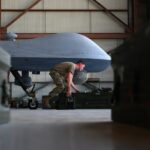
In Rawan Yaghi’s “Commonplace,” a man marvels at the ghost of his dear sister, who has been killed by futuristic — and, today, eerily resonant — Israeli drones.
As in Our Cut of Salt, the Mediterranean Sea weaves throughout these horror stories, its dark waves drawing in people like a siren song to the realm of the dead.
It’s no surprise, then, that Palestine +100 editor Ghalayini has returned six years later with Palestine Minus One, an anthology of short horror stories set “on the eve of the Nakba.” Ghalayini herself doesn’t remember growing up with scary stories or supernatural tales in Gaza — beyond her family’s traditional religious beliefs in jinn. But, in the past years watching from her newfound home in the United Kingdom, daily reality began to seem like enough of a horror story.
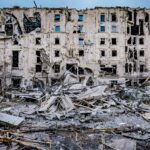
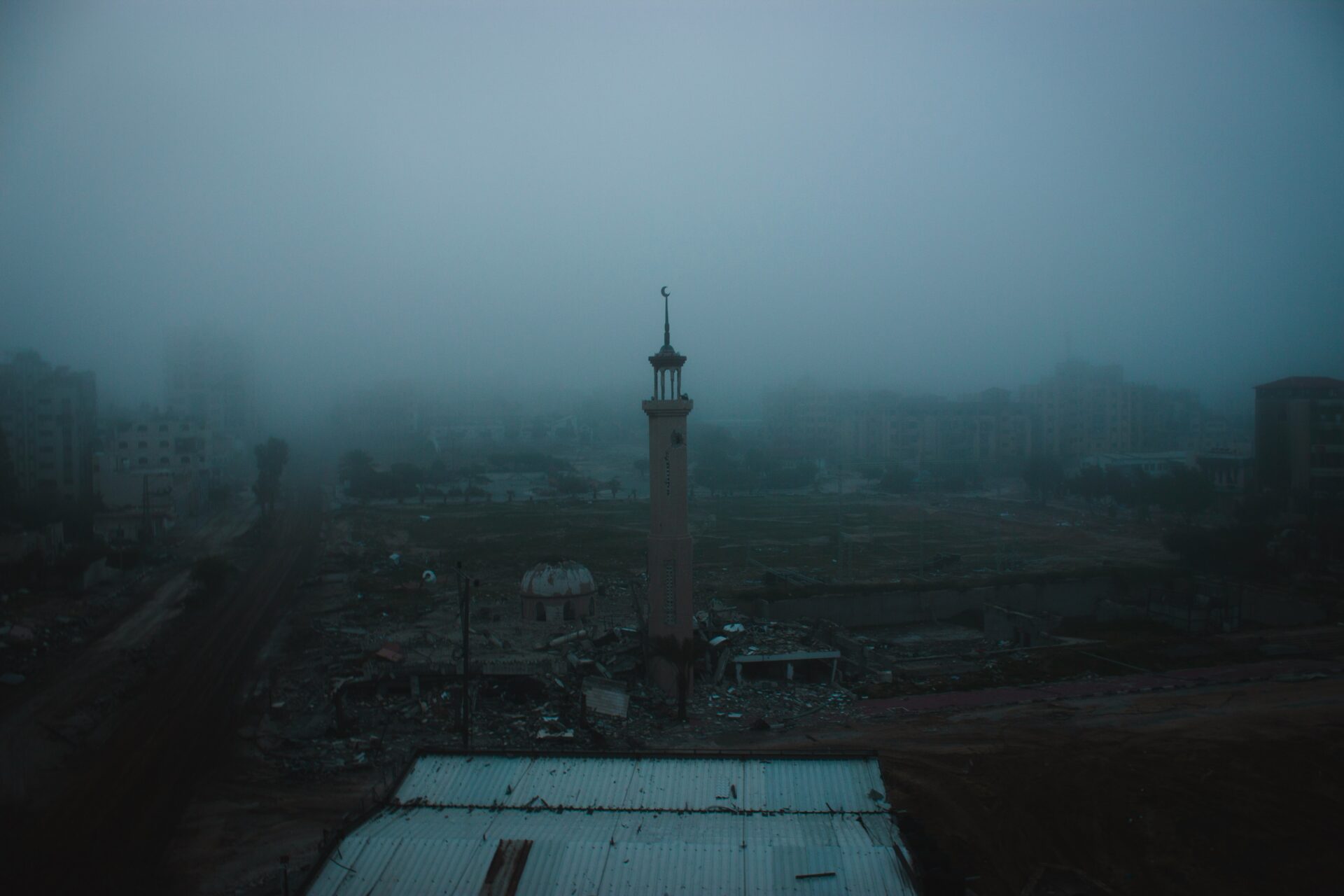
The stories in Palestine Minus One come amid the ongoing, televised genocide in Gaza, now spreading into the occupied West Bank, in which Israeli forces have killed at least 73,000 in the encircled Gaza Strip alone. The actual number, which will become clearer, perhaps, as the years roll on, is likely much higher. Their memories now lie buried beneath rubble that itself is disappearing, as Israeli forces bulldoze it away. Gaza features heavily in pages of Palestine Minus One; among the stories is a time-hopping tale based on the real-life horror that was Israel’s 2024 murder of five-year-old Hind Rajab, whose body they riddled with 335 bullets as she waited for help from paramedics.
“The two years of genocide we’ve all just witnessed constitute yet another dreamlike trauma that Palestinians will always be running from,” Ghalayini writes in her introduction to Palestine Minus One. “A living nightmare, live-streamed on social media, making us see things that we can never unsee. ”
In the after-flashes of those images lurk the ghosts.
In Lebanon, where I live, Israeli bombs have also decimated schools and hospitals and homes. At the site of one overnight airstrike in Akkar, I shuffled past charred bits of debris littering the crater of what was once an apartment building. Lebanese Red Cross volunteers in their red jumpsuits solemnly gathered the pieces in yellow biohazard bags.
They were, I soon discovered, blackened pieces of flesh, of the residents who had lived and been ripped to death in that bomb-stricken building. The bits seemed a desecrated part of the surrounding plot of land itself. Despite my press permissions, I felt an eerie pull, like a tug away from the wreckage of where these people had lived and died.
Yet there are the inanimate ghosts, too. The main character of Helm’s Our Cut is the forcibly evacuated house itself, condemned to a fate of angry mourning over the souls of its expelled family.
As in Helm’s haunted house tale, “some of the most haunting ghosts in these stories are the settings — villages and neighborhoods wiped from the map, their names contorted and disfigured or replaced completely,” Ghalayini writes in Palestine Minus One. Indeed, among the book’s tales is a story told from the anthropomorphized perspective of Saffouryeh, a forcibly disappeared Palestinian village replaced by manicured lines of evergreens. It is one of more than 500 such villages that Israel erased from the map of its then-new state.
In another story, “Ismail al-Lyddawi” by Ibtisam Azem, the city of Lydd (subsequently Hebraicized as Lod), under new occupation by Zionist forces in 1948, “was a dying body, and we, the remnants of its spirit, struggled to keep it alive.”
They are like the dark, mildewed hallways of the Gaza Hospital I visited several times last year on a reporting assignment. A former Palestinian Red Crescent-run hospital complex in the Sabra neighborhood of Beirut, it bore witness to the 1982 Sabra and Shatila massacre, wrought against Palestinian refugees by Israeli-backed Lebanese militants. The following year, Amal fighters shut down the hospital, looting its equipment and massacring remaining staff members. Some of their bodies were never found.
Today, I’m told, ghosts seem to roam the hallways between the former medical examination rooms and operating theaters, now converted into informal residential apartments. Strange voices and sounds haunt the night. The building itself, I felt, seemed to cry from within, stalactites of salty water forming on the sooted walls and ceilings.
“This whole place is a city of ghosts,” one Gaza Hospital resident, as well as a survivor of the 1982 massacre, told me at the time.
Such hauntings weave through Deena Helm’s description of her Haifa. There is the city, which just feels “off,” like a glitch in the matrix of what should be, under a normalized occupation that has upended the streetmap. There is the Mediterranean Sea, site of a horrific 1948 massacre, that tugs Helm’s heroine Marina to drown beneath its waters. There is also, of course, the house at the center of the story, in which occupants seem to disappear one after the other in the years following the forced expulsion of its original Palestinian family.
Helm grew up in what she told me was something of a haunted house, far away from Palestine, in Kansas.
“I always noticed that cats were really drawn to the house,” she remembered to me, of the home in Kansas. The sidewalks always had strange cracks. “Sometimes at night … there was the accumulation of everything, and just the feeling, like, ‘There’s something here’.”
She laughed over the phone. “It made me avoid the genre of horror forever.
The more books centered on haunted houses she read, she explained, “the more I realized there are a lot of haunted house books that do the house’s point of view.” In those stories, the house is dark, mean, evil. In her case, though, she felt a Palestinian house’s perspective might be different. “I don’t think my house would be that way, I think my house would have seen a lot of stuff and be really sad about it.”
Helm’s grandfather, she remembers, used to joke about exiled Palestinians coming back home to visit, when they could, to see the ruins of their homes, to see the “living stones.”
“When people are expelled so violently from the places they loved…I think there’s an emotion that a house could have about that, because they are witnesses.”
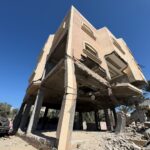
Perhaps most striking, though, in Our Cut, aside from the siren-like waves of the Haifa sea, and the haunted house crying for its family, are the ghosts that live in the physical rubble of genocide. There are the decades-old bullet holes that the young Marina sees left behind in the walls of some Haifa buildings, which nauseate her to the point of vomiting on the street. I, too, remember seeing such bullet holes in the walls of Beirut when I first moved here; sometimes there were great forests of them in a line at chest height on the outer wall of a local building, other times they clouded a specific window of a house. Each cluster seemed to tell a sad tale. In Helm’s Haifa, there are also the buildings that simply no longer exist at all to tell their traumatic stories. They’ve been destroyed and wiped away in the Zionist violence.
In a seminal essay this summer for Equator magazine, Palestinian-British novelist Isabella Hammad writes of the longstanding motif in Arabic literature, from the days of the pre-Islamic Jahiliyya poets, to recent writings on Palestine, of a narrator stopping to “look out over the rubble” as the dust settles from loss and mass violence. It is a moment of pause, and of mourning. The Bedouin poet stops to weep over a lost, great love, or the “ruins of the abandoned campsite.”
Like a horror movie, the wreckage stretches out before him, regaling the story of the bloodshed therein.
“Centuries before the development of the discipline of psychoanalysis and its discursive equipment, the Jahiliyya poets’ call to stand on the ruins and weep before moving on from the site of loss was a poeticised, communal version of an interior mental process,” Hammad writes.
Is there something therapeutic in the writing of fictional horror, after so much real-life horror?
“I wound’t necessarily call it ‘therapeutic,’” Helm told me, as the horror of today’s genocide is still unfolding, “but it was a channel for my emotions.”
When Palestinians write horror, “they aren’t writing escapism, they are writing about the surreal feelings…of violence and occupation,” Ghalayini said. “Horror is a very surreal genre. You’re writing about an out-of-body experience … because we are subjected to this violence on a daily basis.”
She writes too, in Palestine Minus One, that stopping to confront the horrors before us, through writing fictional scary stories, could be one way of confronting the spiritual pain. What else is there to outrun, when reality has already exceeded the worst horror stories we could have imagined?
“Sometimes we have to stop running,” Ghalayini writes. “It’s unsustainable. When fantasy and trauma are the cause and effect of the Zionist project, one way to turn and face it might be to engage with the two Nakbas — the current and the original — by fighting these living nightmares with created ones: fighting one fantasy with others, fighting dreams with more dreams.”
That is, maybe, to simply go on living and writing in spite of the haunt. Let the ghosts dwell in our dark, shadowy corners. Keep them there, as one keeps a spider in their bedroom to ward off other creepy crawlers. Helm writes of Marina’s Haifa, in Our Cut:
“She can only see the ghosts that haunt this city at the edge of her vision. Knowing that they are there is almost a comfort laced in grief. The city is haunted but it is hers, the land holding both her great-uncle’s body and her grandmother’s home. The specters of memory live at the edges of Haifa, but still, they are here. They are here.”
Deena Helm’s Our Cut of Salt was released by Tor Nightfire on Sept. 22 and now available for purchase. Palestine +100: Stories from a Century After the Nakba was published by Deep Vellum in March 2022; Palestine Minus One: Stories from the Eve of the Nakba was published by Comma Press in November 2025.