





Yuniel, a 31-year-old in Havana, was feeling something like hope. Then he saw a new interview with the president of the United States.
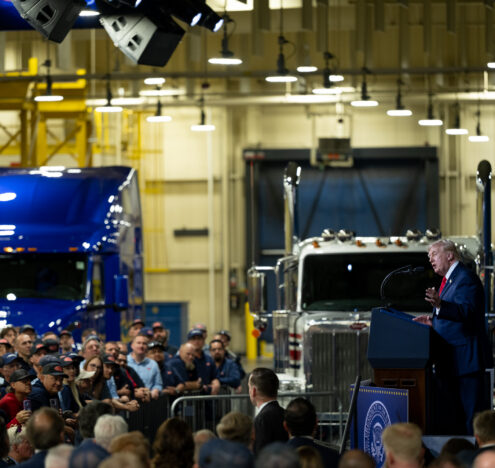
“If freeing Cuba requires military force, before you leave office, will you order that military force?” radio host Hugh Hewitt asked President Donald Trump last week.
“I want to get Cuba done before I leave, yeah,” Trump responded, adding that he would “certainly consider” a brief military campaign. Then the interviewer moved on to a question about Israel.
The exchange, less than a minute long, rattled Yuniel, who had been briefly optimistic that the Democratic Party’s outsized showing in the midterm elections could present some kind of check on Trump. He wasn’t sure what to believe and what to write off as political rhetoric, but he couldn’t shake the “unsettling” interview.
The president’s wish to “get Cuba done” is the latest of many threats from the Trump administration. Both Trump and Marco Rubio, the Secretary of State and son of Cuban immigrants, have referred to Cuba as a “failed state,” and Rubio has repeatedly cast the country as a threat to US national security. In May, when Trump entertained the possibility of a military invasion, Rubio said “the president always has the option to do whatever it takes to support and protect the national interest.” (The State Department did not respond to questions from Inkstick about Trump’s latest comments.)
Amid this posturing and America’s ongoing oil blockade of Cuba, people like Yuniel are wondering when or if life will ever return to something resembling normal.
“Cubans are always divided,” says Yuniel, who asked to use a pseudonym for fear of being surveilled or jailed by his government. “The Miami ones think Trump is the ultimate hero, but Cubans in Cuba are fed up with everything. We don’t trust anyone at this point.”
Earlier this year, Yuniel told Inkstick that most of his days were spent “trying to survive.” In between power outages that, in some cases, lasted more than a day, he talked about how much he struggles to find enough food, pay the exceedingly high prices caused by fuel shortages, and then hope the food doesn’t spoil before the power goes out again.
Simply getting around can be painful for Yuniel, who has a condition called chondromalacia, commonly referred to as “runner’s knee.” His doctor suspects it comes from the “Special Period” in the 1990s, when a devastating economic crisis on the island caused widespread hunger and long-lasting medical effects for people like Yuniel, whose lives were just beginning.
Not too long ago, the typically cheery Yuniel was giving tours to visiting college students (one of his many jobs). When the oil blockade began earlier this year, creating devastating fuel shortages and plunging the island into frequent, unpredictable darkness, Yuniel tried to find a sense of community via regular meet-ups with people learning other languages, like French.
But that recently ended, too. Because of his knee condition, walking or standing around for long periods of time can be painful for Yuniel. Now he mostly studies alone — practicing his French, honing his English.
“That keeps me really busy, and I enjoy it,” he says. “It gives me a sense of purpose during all this chaos.”
The chaos grew tenfold early this year, when the Trump administration cut off the Venezuelan oil supply upon which Cuba relies while threatening tariffs on countries that continued selling the fuel to the island. The administration’s campaign has since grown to enforcement on the seas, with the US Coast Guard seizing multiple oil shipments bound for Cuba. The impact on food production and water has created a humanitarian crisis ensnaring people like Yuniel and Odalys, a mother of three who also requested the use of a pseudonym for fear of government reprisal.
“Life was already tough, but the oil blockade just made things worse,” she says. “Getting basic groceries and packing school lunches became a struggle, and breakfast turned into a luxury.”
Food storage is her biggest worry, she explains, especially since one of her children has trouble absorbing nutrients and is underweight for her age.
“Some days I can’t even send the kids to school because we don’t have anything to eat,” she says.
These stories of widespread hunger have led some experts to claim the US is violating international law. For instance, William LeoGrande, a professor at American University who specializes in US foreign policy toward Latin America, tells Inkstick the administration’s actions against Cuba clearly constitute collective punishment: the crime of penalizing an entire group for something purportedly done by a small fraction of that group.
LeoGrande is equally critical of what at times has seemed like the administration’s vague gestures toward regime change. The indictment of former Cuban President Raúl Castro was unproductive as both a political power move and a negotiation tactic, he argues.
“You’re trying to convince the Cuban government to make certain concessions to the United States and basically trying to give the current regime a path to change that will satisfy US interests, and then you indict the historic leader of the revolution,” LeoGrande points out. “I think the message it sends to the Cuban leadership is the only way we’re safe is to hold onto power.”
In addition to using the social media platform X to encourage Cubans to seek a “discrete partnership with the CIA,” Rubio has recently hinted that some sort of regime change could come from within the halls of Cuba’s government.
“We are hopeful that the people that today sort of control the arms and the repressive regime, that there will be some people in there that open their eyes to the reality of what they’re facing,” he told Fox News host Sean Hannity in late September.
LeoGrande thinks the administration’s theory, if one exists, is essentially “we will continue to turn the screws, strangling their economy, making life unlivable, until the Cuban government surrenders.”
A surrender, he adds, is far from guaranteed.
Michael Bustamante, the director of Cuban studies at the University of Miami, told Inkstick something remarkably similar.
“They seem to be thinking this oil thing could sort of push the Cuban government against a wall and get them to concede on things and be pliant, but the Cuban government is very good at buying time, even at the expense of their own people,” he says.
For his part, Rubio seemed to acknowledge the pain the administration is causing — and can continue to cause — during his interview with Sean Hannity.
“Unfortunately, the people that continue there to chant revolutionary slogans — too many of them — still believe that they could wait out this administration and make no changes or do nothing,” he said. “They are wrong and they will learn the lesson the hard way if they don’t correct.”
Like Yuniel, labor lawyer Suzanne Adely, a fierce advocate for the Cuban people, has some cautious optimism that the Democrats’ major election victories could yield some positive results for the island.
But she knows there is still a lot of work ahead.
In September, Adely, a longtime leader of the National Lawyers Guild, spoke at a congressional shadow hearing on US-Cuba policy convened by US Representatives Delia Ramírez and Ilhan Omar. She argued that Washington’s blockade violates international law and amounts to collective punishment, and she called for an end to the fuel restrictions crippling the country.
“The US justification — that Cuba poses an ‘extraordinary threat’ to national security — is legally untenable,” she argued. “A small island subjected to six decades of economic warfare cannot credibly threaten the United States.”
Two months later, the political tides have turned. Democrats will soon have no need to host the shadow hearings put together by the minority in Congress; come January, the party will control both the House and the Senate.
Such power, Adely argues, makes using the existing War Powers Act all the more possible.
In April, Democratic Senator Tim Kaine introduced a resolution under the War Powers framework that would have barred President Trump from using US forces in military action against Cuba without congressional approval. But Republicans in the Senate (joined by Democrat John Fetterman) used a procedural objection to block the resolution from going to a full vote.
The incoming Congress must make it a priority to reintroduce the resolution, Adely says, pass it, then “actually use that vote to stop all military aggression and ensure that Cuba receives aid and fuel immediately.”
She then echoed the same thing she told Democrats at the shadow hearing earlier this year:
The lives of millions of Cubans are at stake.
“iis not time to assume anything; we cannot forget that the Dems are indeed an imperialist party,” she says. That hasn’t changed. It’s time to escalate pressure to protect Cuba today and in January.”