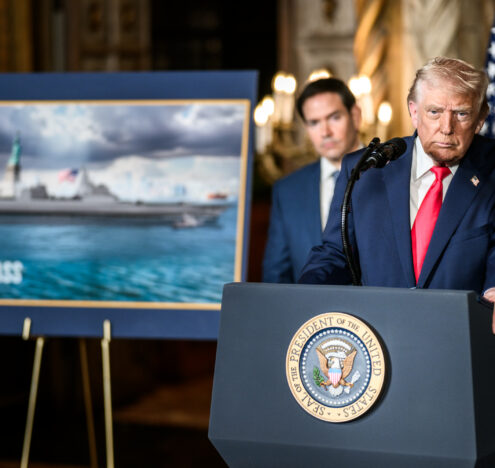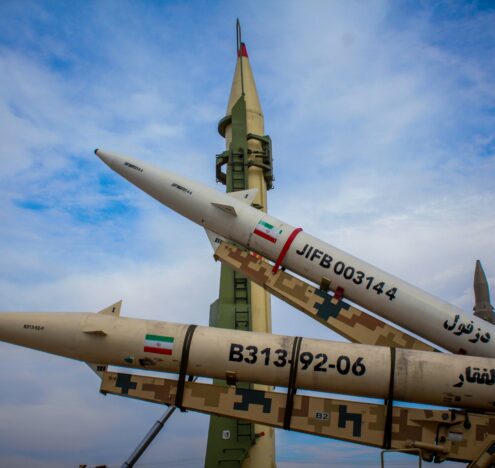








Public concerns about affordability have fueled opposition to the Iran war and plunging approval ratings for President Donald Trump. For his part, Trump has attempted to dismiss these concerns, but most Americans understand that surging gasoline and food costs are directly connected to the rise of global oil prices caused by Iran’s closure of the Strait of Hormuz, an action carried out in response to US and Israeli bombing raids on that nation.
But the full price of the current reliance on force and the threat of force as pillars of America’s foreign and domestic policies goes far beyond the costs of the Iran conflict, which the Pentagon estimates at nearly $50 billion in direct obligations in just over eight months of war. This is a huge sum — nearly three times this year’s combined spending on the Environmental Protection Agency ($8.8 billion) and the Centers for Disease Control ($9.1 billion). But the costs of the Iran war pale in comparison to the administration’s proposal for a $1.5 trillion Pentagon budget for next year, a $500 billion increase over current levels and roughly 30 times the cost of the war with Iran so far.
Meanwhile, the human cost of a hyper-militarized budget continues to grow. According to the official tally, at least 23 US servicemembers have been killed since the Iran war began in February. At the same time, the war has killed more than 3,500 Iranians, the rights group HRANA estimates, though the number could be far higher.
If the administration gets its full request for the Pentagon, or even a significantly lower top line that still exceeds the current level of $1 trillion per year, it will continue to severely restrict the ability of the federal government to address critical issues that have been neglected in the rush to fund war and preparation for war, from public health to environmental protection to education.
These military-heavy budget priorities are not just bad for the country’s ability to meet basic domestic needs. They amount to bad defense policy. The foundation of a strong defense is a healthy, well-educated, unified population. Without that, coupled with a more realistic strategy, no amount of money can keep the United States safe. In fact, Washington’s current approach to defense is making the country both weaker and more vulnerable.
As immense as the Pentagon budget is, it is just part of the federal government’s financial commitment to a strategy that prioritizes the ability to use force over other solutions to complex foreign and domestic problems. An analysis released in June of this year by the Project on Government Oversight has identified as much as $500 billion in spending tied to war, preparation for war, and militarized approaches to domestic security that is over and above the $1.5 trillion being proposed for the Pentagon.
The additional $500 billion is composed of spending on items like Veterans Affairs, Homeland Security (including spending on Immigration and Customs Enforcement and Border Patrol), military aid outside of the State Department, and the Pentagon’s contribution to federal deficits, which have helped fuel a sharp rise in the costs of interest on the national debt.
And that’s not all. Venture capital funds have been spending billions in support of military tech startups, money that is therefore unavailable to invest in firms working on medical research, environmental restoration, alternative energy, or upgraded transportation systems — all essential to modernizing the US economy and protecting the public from non-military threats to their lives and health.
A securitized approach to foreign and domestic policies could cost up to $2 trillion next year, and that doesn’t count private investment in the arms industry or the negative economic effects of endless wars like the current conflicts across the map of the Middle East.
This dramatically unbalanced, military-first approach to public investment is not sustainable. It will drive the interest on the debt to historic highs, undermine the strength of the economy, and reduce basic services in ways that will cause unnecessary harm to millions of Americans.
Congress has a chance — and indeed an obligation — to rebalance America’s budget priorities by shifting funds away from excess spending on the Pentagon and related agencies and towards investments in the healthy, well-educated population that is the true basis of security. There has been some promising movement in this direction, as key members of Congress have voted against the bloated defense authorization bill and supported a War Powers Resolution to bring an end to the Iran war. Their colleagues need to join in, and soon, if they hope to stop diminishing American strength abroad and undermining security at home.
Given how skewed the federal government’s current priorities are, the first obligation of elected representatives, both in the lame duck session and when the new Congress takes office in January, should be to shift funds from militarized activities to restoring the country’s diplomatic capacity and bolstering essential domestic programs. The security and prosperity of everyone depend on it.