







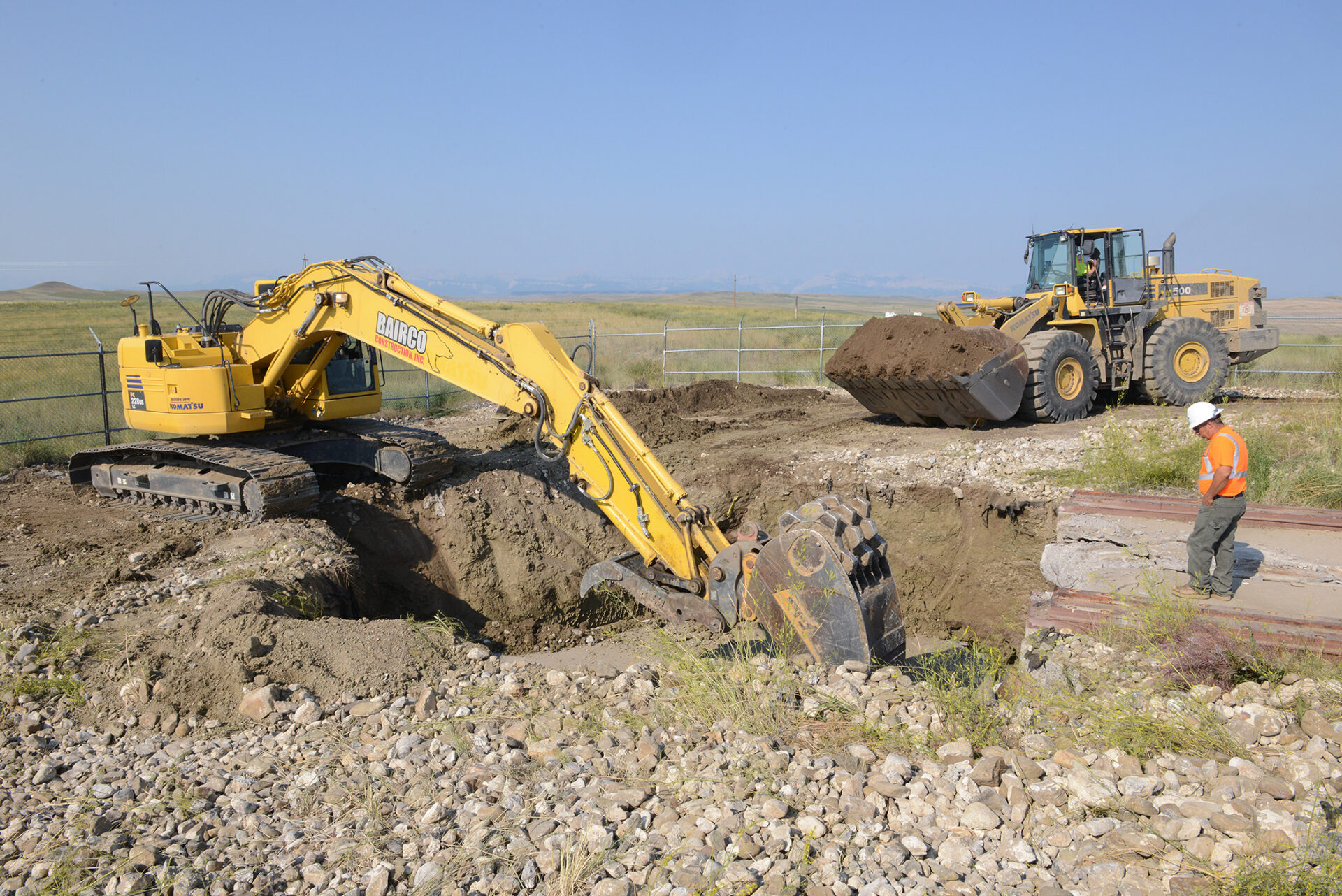
A little over a decade ago, Lisa Schmidt, a rancher in northern Montana, pulled out of her driveway and caught sight of something extraordinary. The Air Force had blocked off roads near her home, and a convoy of armored vehicles surrounded a missile silo, where military personnel were pulling the most dangerous weapon on the planet out of the ground in order to fill its gaping hole with gravel and make the weapon launcher unusable.
“You better watch this because we won’t ever see this again!” she shouted to her 10-year-old son.
“That was an amazing sight to see them pull that thing out of the ground, because that was huge,” she said of the Minuteman III intercontinental ballistic missile, which can launch nuclear warheads over the North Pole to Russia or China in about 30 minutes.
What she was witnessing was the result of years of international diplomacy, peace activism, and political wrangling that had led to an Obama-era arms control treaty in which the US and Russia reduced their nuclear arsenal by about a third. The treaty involved a dark bargain for Obama. He was fresh from winning a Nobel Peace Prize for, in part, vowing to pursue a world free of nuclear weapons. But he had cut a deal with hawkish Congressional Republicans who said they would back the modest arms control treaty only if Obama agreed to purchase a whole new generation of equipment for the nuclear weapons that remained in the arsenal.
Barely a decade after the missiles’ removal, Schmidt and her neighbors were surprised to hear the Air Force coming back to their Montana ranchlands. The Obama-era treaty expired this year, and there are currently no limitations on US or Russian nuclear arsenals. But the $2 trillion weapons replacement program continues.
The intercontinental ballistic missile (ICBM) the Air Force wants to install near Schmidt, called Sentinel, hit a major bump in the road in 2025, when the military and the missile’s contractor admitted that what had been initially described to locals as a minimally invasive “one-for-one” replacement of new missiles into existing silos would not be possible due to engineering and infrastructure concerns. A whole new generation of silos would need to be dug. And in the same year, the Air Force said it would assess options to “life-extend” missiles currently in silos through 2050, committing it to two ICBM projects in tandem.
That’s why the military is back in Schmidt’s town, officially announcing in October that it wants to re-arm the area it spent millions disarming barely a decade ago. The Air Force said it would carry out a Supplemental Environmental Impact Study about plans to expand its footprint beyond active missile silos and into new locations, some defined and some to be determined, across at least three states. The Air Force said in the announcement that one of the locations would be the deactivated 564th Missile Squadron in Montana, serene prairielands home to ranchers, small towns, and traditional religious Hutterite colonies about 45 minutes north of the city of Great Falls. In an email to Inkstick, an Air Force spokesperson also said the plans include the former 400th Missile Squadron in Wyoming, which covers three counties north of Cheyenne. Its expansion plans in a third state, North Dakota, are more vague. The October announcement that the military would acquire land east and west of a currently active missile field for 60 news silos and construct Launch Centers in “previously undeveloped areas.”
Doing so represents a turnaround in the nationwide footprint of the missile fields, which had, in recent decades, shrunk rather than grown. The original establishment of nuclear weapons production and testing facilities in places like New Mexico and more than 1,000 missile launchers across tens of thousands of miles in the Great Plains has been described as “the largest peacetime militarized zone on earth.” The missiles’ footprint peaked between 1967 and 1982, but as the Cold War drew down, hundreds of silos were decommissioned due to diplomacy. Entire states, like South Dakota, Missouri, and Nebraska, had all of their missile launchers shut down.
The implications for locals across the Great Plains range from ideological ones to pocketbook and personal safety considerations. Some say they are opposed to weapons of mass destruction; others are displeased at the Air Force’s growing encroachment on their land; and others don’t care much about nuclear policy but have whole other priorities for their properties, like setting up wind and solar farms, that can’t come to fruition because of Air Force restrictions or infrastructure impasses. Still others say they’re fine to follow the Air Force’s lead, be it when the military removes the missiles or when they opt to put them back in.
“To be honest, I’m conflicted about that,” Schmidt said. “I’m not in the business of killing people [and] at the same time I don’t want to be a target, and clearly if there are missiles around, we are going to be targeted. The first one [to strike] wins.”
Still, she said in this rural outpost of the state, locals remember the Cold War construction heyday fondly, as it was “a huge boom to the town.” There were more schools and grocery stores, and the long-term flow of federal investment created the pillars of a community. “Because of that era we have a really great retirement community that had been officers quarters, and we have a great assisted living place,” she said.
Even if they remember that heyday positively, many landowners told Inkstick that disarming the area about a decade ago in Montana didn’t mean much for their day-to-day life. “I couldn’t tell the difference to be honest with you,” said rancher Erik Gustafson, who lives close to the town of Conrad.
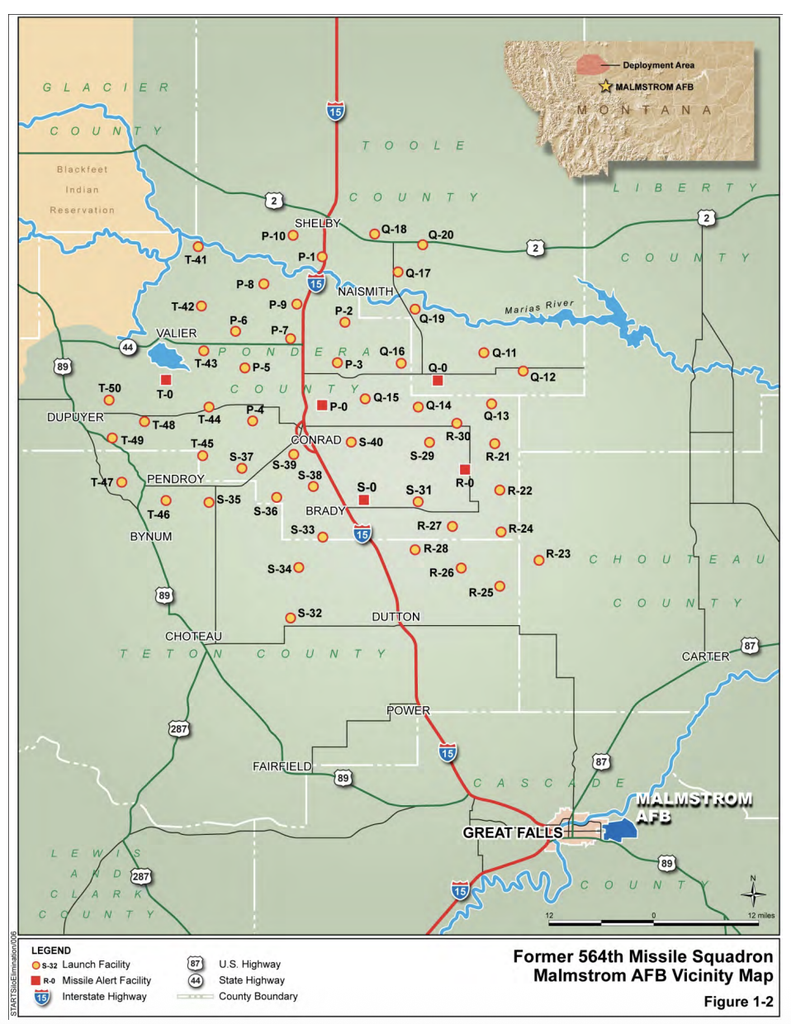
Chad Doheny, who lives east of the town of Brady, said that there are three decommissioned silos near his house and one silo directly on a property that he farms. He said he wasn’t concerned about whether new missiles came in. What had been a hit to him in recent years, however, was the undoing of a solar farm he’d been on contract to host, one that would have brought in leasing fees for decades that would have added up to an additional annual salary for him. At 800 acres, it would have been among the largest solar farms in Montana, a state sought after by renewable energy developers due to its long daylight hours.
“We all may want to have that big wind farm and that big solar farm,” Doheny said, but his contract fell through after he was told that establishing new transmission lines would be a multimillion-dollar undertaking. If he can’t have the windfall from the solar farm, he added, “might as well have the military fix our roads.”
For his part, Gustafson was pleased that the military had been proactive about documenting Native American archeological sites in the area before construction could disturb them. He was inclined to oppose the new missile, believing that the nature of warfare has changed, but also figured that the Air Force might have its own classified reasons for wanting it.
“I’m kind of against mass genocide, that’s my concern,” he said. “I’m not a military strategist, but for some reason they think this is necessary. … We don’t know what is going on behind closed doors.”
In Wyoming, the Air Force’s expansion will bring missiles back close to the state’s capital city, an area populated largely by cattle ranchers that’s also sought after by wind farms. The latter has come into conflict with the Air Force, which has thwarted projects near its missile fields on the grounds that the tall structures could impede helicopter access to silos during emergencies. A planned wind farm called the Chugwater Energy Project sits squarely in the middle of the field and is scheduled to begin construction by 2027; spokespeople for NextEra Energy, the company behind the farm, did not respond to requests for comment from Inkstick about whether the Air Force’s plans will impact their project.
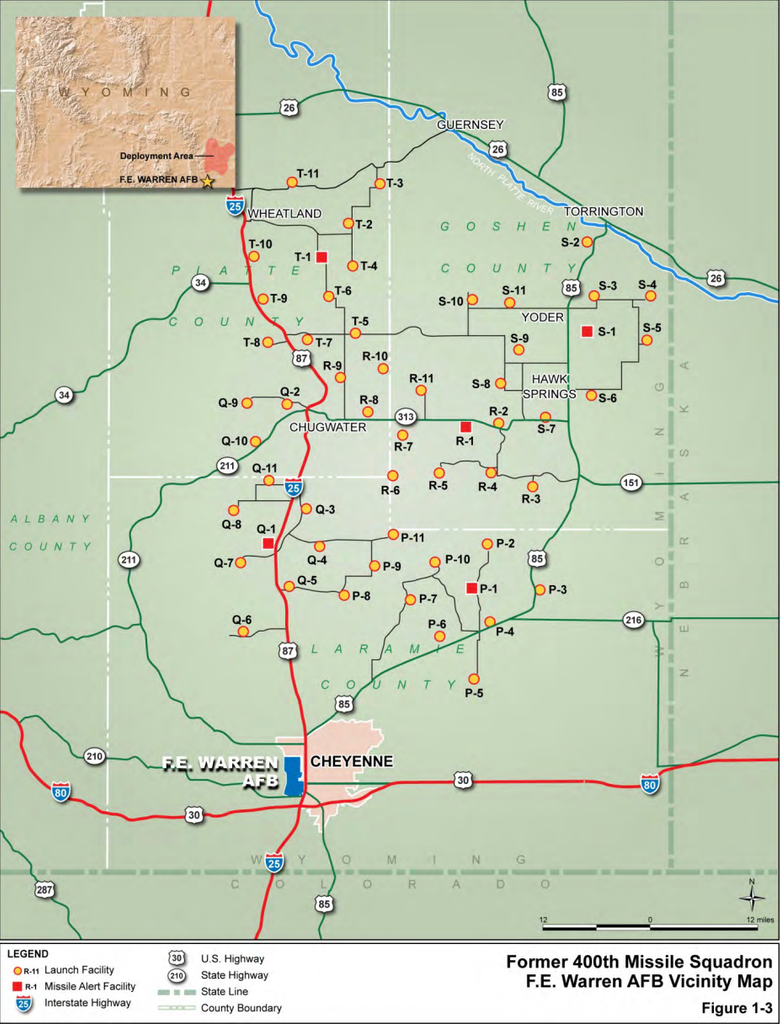
A rancher in Wyoming who owns property inside the boundaries of the former 400th missile squadron said the missiles — whether they were in the ground or removed — didn’t matter much to him.
“It’s national security,” said the rancher, who asked not to use his name to speak on the sensitive matter. “I think we better have some kind of defense. And if Wyoming is appropriate for it, then get ‘er done.”
A nearby rancher, who said her family has lived in the area since the 1930s and has seen the missiles come and go, echoed that sentiment and added that having military personnel patrol her area made her feel secure. “I have no preference. It has to be somewhere, and it makes me feel safe.”
The Air Force will host a new round of town halls in Wyoming and Nebraska starting on Nov. 30 to “highlight upcoming activity in the area,” according to a press release.
But Sentinel faces a variety of obstacles that will play out in the coming years. The Democratic wave in the 2026 midterm elections is likely to elevate skeptics to key positions in Congress, including US Representatives Adam Smith of Washington and John Garemendi of California, both members of the House Armed Services Committee who have expressed opposition to the missile on the grounds of its spiraling costs and hair-trigger nature. In a twist, a progressive congressional candidate won a competitive race in Montana in a district that overlaps with the 564th. Representative-elect Sam Forstag has said he’s committed to reducing the risk of nuclear war, though spokespeople for his campaign did not respond to emails from Inkstick requesting comment on rearming the 564th. The Air Force’s need to conduct a new environmental impact study will take at least a year and a half, through spring of 2028.
Missiles like Sentinel have been on the chopping block before due to shifting political winds. In the 1980s, the Reagan administration largely stood down on a “shell game” mobile missile project across Utah and Nevada called the MX following widespread civil society outcry, including from the Mormon Church. In 1991, President George HW Bush unilaterally retired 450 Minuteman II missiles. He said he did so in order to “provide inspiration for lasting peace” and to “take steps to make the world a less dangerous place.”
For Shmidt and her neighbors in Montana, any new missiles in the ground wouldn’t come before the early 2030s, according to the Air Force.
“It kind of surprised us all when they said they were going to reinstall new ones, because we thought that was a bygone era,” Shmidt said. She realized her family would once again have a bullseye on them should nuclear war break out. “What do they call that, collateral damage?”