









Mona Khalil’s smiling face appears on a large screen in the playground of Al-Carmelia school in Qoubayat, northern Lebanon. The school has been turned into an open-air cinema for REEF, a festival dedicated to environmental films.
On screen, Lebanon’s landscapes and biodiversity give way to images of war: bombed villages, damaged land, people refusing to leave their homes. This year, the festival chose to pay tribute to people who defend the country’s environment. Khalil, one of Lebanon’s most prominent sea turtle conservationists, is one of them.
Some 230 kilometers (142 miles) from the beach where she spent nearly two decades protecting sea turtles, emotion hangs in the chilly September air. Rami Khashab, a reptile and amphibian specialist and one of Lebanon’s best-known wildlife rescuers, walks onto the stage. Hailing from Mansouri, he spent more than ten years alongside Khalil. “Mona didn’t only protect the turtles. She made me understand that our life was linked to nature. And that if we didn’t protect it, we were putting ourselves at risk.” Today, he says, it is painful to see so much attention being paid to sea turtles only after Khalil’s death. “Lebanon is small. Just as it is easy to destroy it, it is also easy to protect it.”
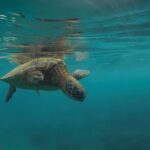
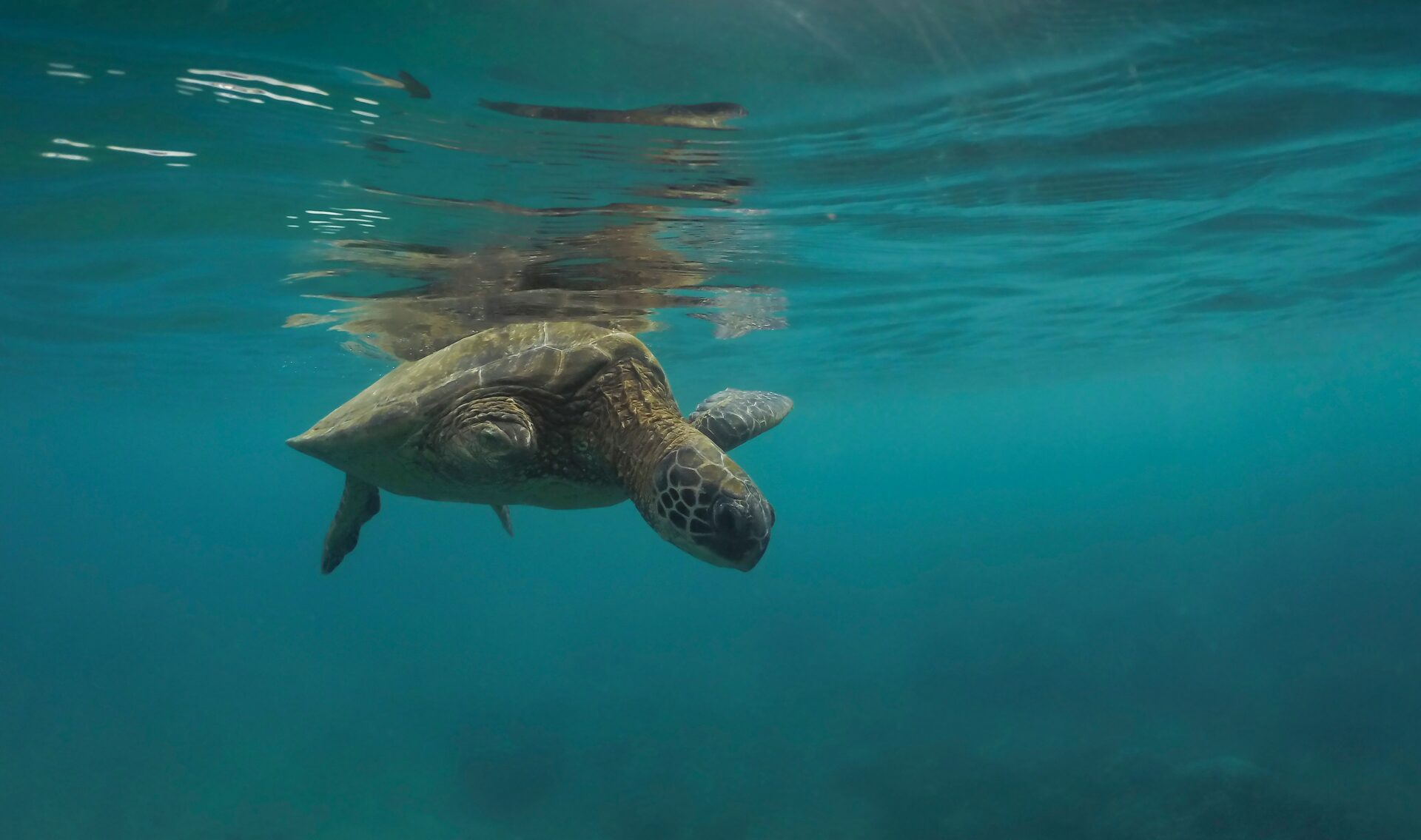
Khalil had devoted much of her life to protecting Lebanon’s sea turtles: the loggerheads (Caretta caretta) and green turtles (Chelonia mydas), two threatened species that return to the country’s southern coast to lay their eggs. She began protecting the nesting site, initially almost alone, against urbanization, pollution and development projects. Over the years, her work helped turn the beach into a protected natural site. She trained generations of volunteers, monitored nests and hatchlings, and built a body of knowledge about Lebanon’s marine turtles.
She played a central role in protecting and conserving the public beach of Mansouri, a village in southern Lebanon that has been subjected to months of bombardment (and since June 26 divided by the Yellow Line). She had already been displaced in 2024, during the first escalation of the war. But after the new escalation in March 2026, she refused to abandon the beach despite repeated threats and bombardments, waiting for the turtles to return and lay their eggs. On June 4, she was at her home, the Orange House on the beach, when an Israeli strike hit the building. She was seriously injured alongside her domestic worker, Hawi, who rescued her. Both were taken to hospital in Beirut, and Mona Khalil died on June 19.
“Environmental activists have paid a very high price during this ongoing aggression,” says Hisham Younes, president of the environmental organization The Green Southerners. The people documenting this destruction are people who already know the land: wildlife rescuers, farmers, journalists, beekeepers, conservationists.
Oussama Farhat, a member of The Green Southerners, was killed in an Israeli airstrike on May 1, 2025. “He played a key role in documenting environmental destruction and Israeli white phosphorus attacks in the border area, and he was also an exceptional wildlife caretaker,” continues Younes, who mourns another former member of the organization, Mohammad Skaf, who was killed on May 31, 2026, when an Israeli strike destroyed his home.
The same pattern extends beyond environmental activists. Journalists documenting the war and its consequences have also paid a heavy price. On April 22, Amal Khalil, a 42-year-old reporter for the Lebanese newspaper Al-Akhbar, was killed in the southern Lebanese village of Al-Tiri. Khalil had been reporting alongside journalist Zainab Faraj when the vehicle ahead of them was struck by an Israeli drone. The two women sought shelter in a nearby house, but the building was later hit as well. Faraj was eventually rescued; Khalil was killed. A subsequent investigation by local and international organizations concluded that her killing should be considered a possible war crime.
When I met Khalil’s sister, Zainab, a few weeks later at the family home, she remembered her not only as a journalist but as someone deeply concerned with animals and the natural world. “Zainab [Faraj] told us that, on the very day she was killed, Amal stopped to rescue a turtle she had found in the road, she recalled,” her sister recalled.
In Lebanon’s south, where war has made documenting destruction increasingly dangerous, the boundaries between environmental protection, journalism and simply caring for life have become blurred. People who know the land, its animals and its communities often become witnesses to what is happening to them, and, sometimes, target themselves.
Roland Riachi, assistant professor of political ecology at the American University of Beirut Mediterraneo (UABM), argues that environmental activists, journalists, academics and doctors can become targets because they document the consequences of the war. “They document the damage this war machine is causing in the region, which makes them a target,” he explains.
Around the world, many people protecting ecosystems would never describe themselves as environmental activists. They may be farmers defending ancestral land, Indigenous communities protecting forests, fishers defending access to a river, or residents opposing pollution. According to Global Witness, at least 196 land and environmental defenders were killed around the world in 2023. The organization stresses that its figures are an underestimate, since many killings are never reported or cannot be independently documented. And at least 124 defenders were killed or disappeared in 2025.
For Philippe Le Billon, researcher and author of the study “Environmental and Land Defenders: Global Patterns and Determinants of Repression,” which documented repression against environmental activists, the loss of Mona Khalil and others extends far beyond the borders of the countries where they lost their lives. “This scorched-earth military strategy may perhaps lead to a decline in the number of turtles in the eastern Mediterranean,” he said, “Hatred: our planet is its victim.” That is why Rami Khashab and other volunteers, like journalist and environmental activist Fadia Jomaa, continue to mobilize and carry on Mona Khalil’s mission.
Jomaa worked closely with Mona Khalil. “She taught me how to protect life. How to protect extremely vulnerable beings.” Khalil also taught her to fight those who wanted to take land, polluters, corruption and anyone threatening the possibility of life continuing. “She always told me: ‘Fight them,’” Jomaa says. She has also received threats, as reported by Reporters Without Borders.
The first time I met Jomaa was on a hot summer morning in the coastal city of Tyre. The journalist welcomed me with a bright smile, onboard a restaurant boat moored in the port. Small, colorful ceramic turtles were lined up on the counter. “They were given to us by Mona.” Her voice broke. “Israel knew exactly who they were targeting. They killed a symbol of environmental protection.”
The next day, 57 kilometers (35.4 miles) north of Mansouri, Jomaa and other volunteers were looking for turtle nests at a beach in Rmeileh. Here, Jomaa and her team had found two long parallel tracks cut across the wet sand, the faint traces of a turtle that had come ashore. For almost two hours, they pushed their sticks carefully into the sand to locate the nest. Beneath the surface, a turtle nest can be almost impossible to see. But where a female has dug into the sand, the ground is softer. “A few years ago, Mona told us: ‘I’m becoming too tired. The sea is now in front of you. Go down to the beach, prove what you are capable of and continue the work,”’ Jomaa recalled as she dug in the sand. Finally, the nest was carefully marked and protected. A few weeks later, the baby turtles made it to the sea.
Jomaa and the rest of the teams were able to protect the nests and the turtles. Like on other beaches up north — in Rmeileh, Jbeil, and Batroun — where people gathered and helped the experts.
In Akkar, Fadia Jomaa goes up to the stage. “Israel killed Mona, yes. But they didn’t kill her message,” she says. Behind her, Mona’s face fades from the screen, replaced by the image of one of her protégées on the sand of Mansouri beach.