





For most of US history, presidents have faced a central public image problem: They could not fully control how Americans perceived them. Newspapers chose which of their statements to publish. Photographers chose the angles. Television cameras could just as easily linger on an awkward pause as focus on a polished speech. Even presidents who mastered new media had to share control over the shaping of their public image with people outside the White House. Now, that long-standing tension has taken on a surprisingly literal form.
The White House revoked access for CNN, MS NOW, and Politico. Television networks that are part of the White House press pool subsequently stopped providing camera crews for presidential events intended for coverage by that pool. The immediate dispute concerns press access. The White House argues that the First Amendment does not guarantee specific news organizations a permanent pass, a seat in the briefing room, or a place in the press pool. The White House Correspondents’ Association has responded that freedom of the press does not depend on whether the president approves of a particular media outlet’s reporting. But for a historian, this episode raises another question that will remain relevant even after the current confrontation ends: Who shapes the public image of the president?
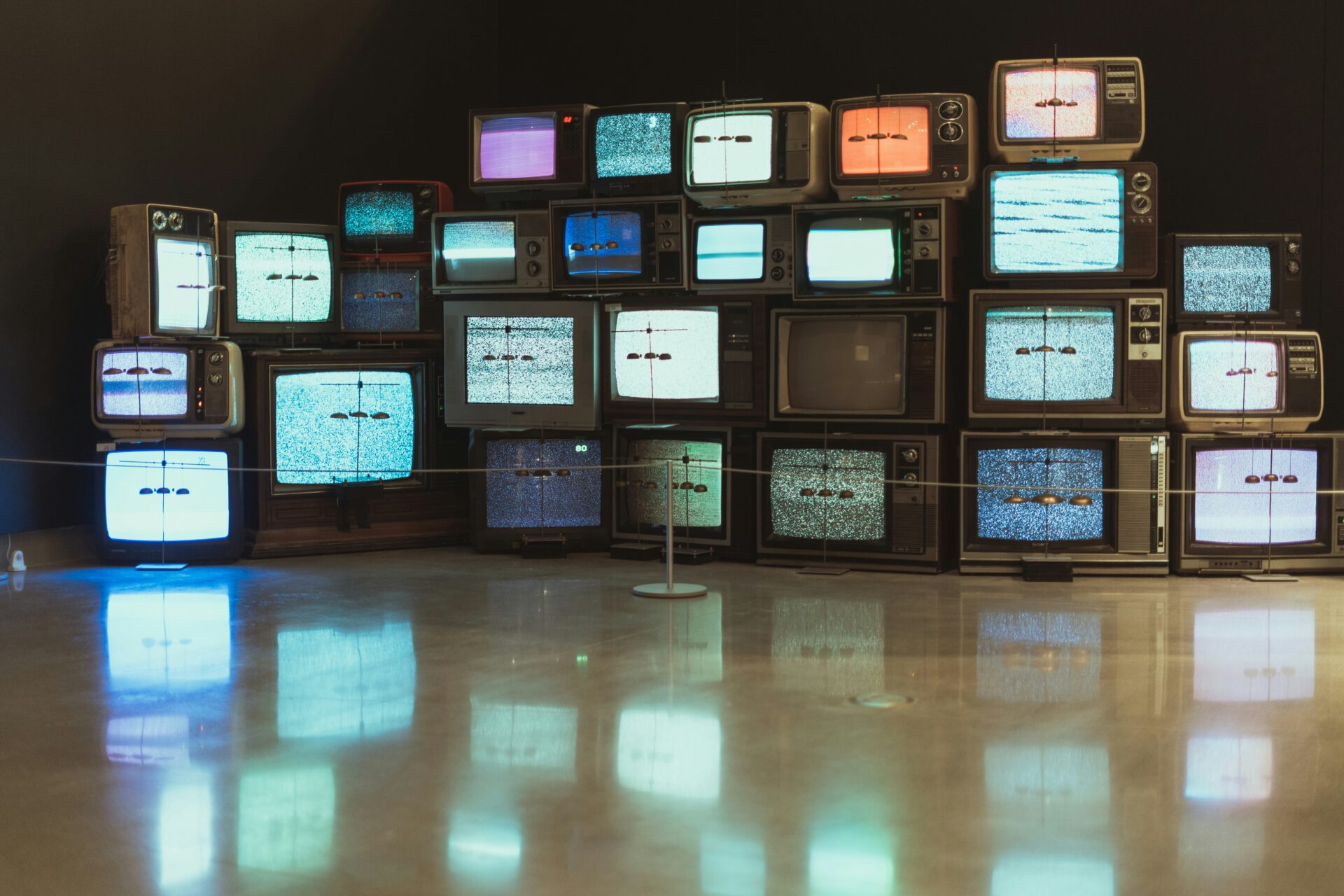
There was a time when visual contact with the president was inevitably limited by distance and delay. Speeches could be read about in the press; the president’s appearances were captured in photographs or newsreels. The development of television changed not only the speed at which images of the president were disseminated, but also the relationship between the president, the journalist, and the audience.
Dwight D. Eisenhower’s press conference on Jan. 19, 1955 was the first presidential press conference to be filmed for television and newsreels. However, at first, Americans did not watch the entire event live. Individual clips from the video recording and audio track were selected for broadcast on television, radio, and in newsreels. It was only later that year that the White House began to release press conferences in their entirety. In the documents held at the Eisenhower Presidential Library, the January event is even referred to simply as “Press conference (TV)”.
An edited recording and an independently operated camera may both show the same president uttering the same words. Nevertheless, they can create different historical records. A camera does not merely record political power; it exposes power to contingency.
An official photograph can be selected from a contact sheet. An edited video can determine where to point the camera, when to cut, and how long viewers remain on a particular shot. Independent observation introduces yet another decision-maker into the situation: An outside observer helps to determine what is worthy of being captured.
None of these images are neutral. Journalists choose angles and editors select video clips; even the decision to press the shutter button is a choice. What matters is the existence of more than one point of view.
A thousand images captured by the same institutional camera still constitute a single source.
Presidents have long sought to shape their own public image. This is not simply a narrative in which journalists create the “real” presidency, while the White House creates a false one. Presidential administrations have long created their own visual archives, and these archives are extremely valuable.
The scale of this documentation can be staggering. The Ronald Reagan Presidential Library holds around 1.55 million photographs taken by White House photographers between 1981 and 1989. They capture foreign trips, Camp David, staff meetings, press briefings, and meetings with heads of state, as well as the ordinary daily life of Ronald and Nancy Reagan. This collection bears witness to the work of an entire team of White House photographers, rather than that of a single observer.
Today, these images form part of the material that historians use to reconstruct the history of the presidency. But anyone who works with archives quickly realizes that an archive is not the past itself. It is what has been preserved.
Letters survive, while conversations disappear. Official portraits may remain, while chance encounters may not. Institutional archives are particularly good at preserving information about organizations, as organizations systematically document their activities. That is why historians ask about provenance: Who created a source, under what circumstances, and what has been preserved or omitted? These questions apply equally to a live broadcast featuring the president and to a 19th-century letter.
The modern White House does not need a television network to make images of the president available to the public. Photographs and other materials can be published directly by the administration. In a sense, this represents a remarkable democratization of access. Citizens do not need to wait for a broadcaster to decide whether a particular event merits airtime. The administration can present its own material to millions of people. But this abundance of images may conceal another kind of scarcity.
A thousand images captured by the same institutional camera still constitute a single source. This is precisely why the current dispute over the television pool has significance that goes beyond the purely technical aspects of covering events at the White House.
The pool exists because space constraints prevent every television crew from attending every presidential event. Consequently, television networks take turns providing a camera crew whose footage can be distributed more widely. This week, the television pool announced that it would cease covering events designated as the “presidential pool,” rather than replacing CNN when its turn comes.
Other forms of White House coverage continue, including in the print media. Thus, the president has not disappeared from public view, and independent journalism covering the president’s activities has not ceased.
Nevertheless, this change is of historical significance: one of the channels through which independently operated cameras create an independent visual record of the president’s activities has, for the time being, been suspended. Official and independent images can coexist, providing future historians with material for comparison.
They will be able to examine what the administration chose to make public and compare this with what was captured by photographers and camera crews outside the administration’s own communications apparatus. They will be able to compare angles, timing and the selection of shots. One source may reveal the assumptions underpinning the other. Remove either side of this equation, and the historical record becomes less plural.
Who owns the image of the president?
There is nothing particularly modern about political self-presentation, just as there is nothing inherently suspicious about a government communicating directly with the people it governs.
Nor should independent journalism be idealized as an absolutely objective alternative. A news camera is operated by a human being. A television network makes editorial choices. A reporter decides which question to ask, and an editor decides which answer deserves a headline.
Therefore, the issue raised by the current standoff is not whether Americans should receive an “official” or “objective” account of the presidency. The question is whether they should have access to competing accounts of presidential power.
When we talk about access, we tend to think of the present: whether journalists can enter a room, ask questions and observe what the president is doing. Historians, however, must also think about the future.
A hundred years from now, researchers studying presidential power in the US are unlikely to face the lack of visual evidence that historians of earlier periods encountered. They may well face the opposite problem. They may inherit an almost unimaginable volume of photographs, live broadcasts, social media clips, television programs, and digital video recordings. Their task will be to establish the provenance of these images.
Who was operating the camera? What lay outside the frame? Establishing provenance also means asking who selected the footage, what happened immediately before and after a clip, and whether the image originated with the institution itself or with an outside observer. These are archival questions. They are also questions of political power.
The current absence of a television pool may prove to be temporary. The legal and institutional dispute that led to this will reach its conclusion. But the underlying problem goes beyond any specific struggle between the president and the press.
Digital technologies have enabled political institutions to become their own broadcasters, photographers, publishers, and archivists. This has created exceptional opportunities for direct public access. It has also made the distinction between seeing power and seeing power through material produced by power itself increasingly important. Cameras do not merely show us the presidency. They help determine how the presidency will ultimately be perceived by history.