










For the first time, Inoussa Tapsoba recently spent $1,000 on gas. A nor’easter was thrashing the East Coast of the US, and Tapsoba, a 41-year-old professional mover in The Bronx, had three jobs to take care of in three different states across three days. He runs his own small business, driving an 18-wheeler to help families and businesses move across the northeastern US, and he typically spends anywhere from $500 to $700 to fill the tank on his vehicle. Recently, though, rising prices have hit his wallet and the business he relies on to care for his family.
Tapsoba has a wife and five children living in his home country of Burkina Faso, and he sends a large fraction of his earnings back home to his family. He’s tried to keep sending the same amount each month for the last several months, but sometimes, he’s simply unable to. Other times, he skips meals so he can stay consistent with the money he sends his family. Rising costs — and their impact on both his professional and personal lives — have darkened his typically upbeat mood.
“Trump says the prices will go down, but when?” he asks. “Some days I think we’ll be dead before that happens.”
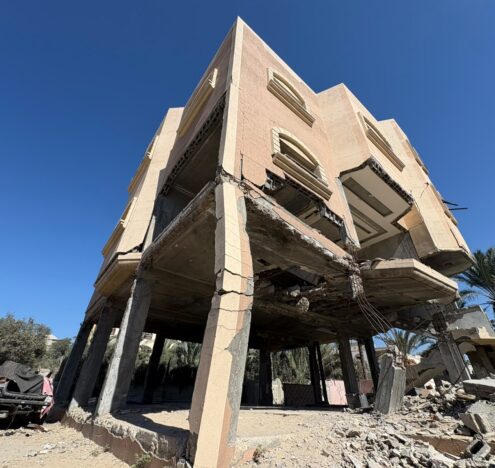
The war that the US and Israel launched earlier this year has rippled through supply chains worldwide. Disrupted shipping through the Persian Gulf and Strait of Hormuz makes transporting fuel, food, and manufactured goods more expensive, which, in turn, leads to higher costs for necessities like groceries.
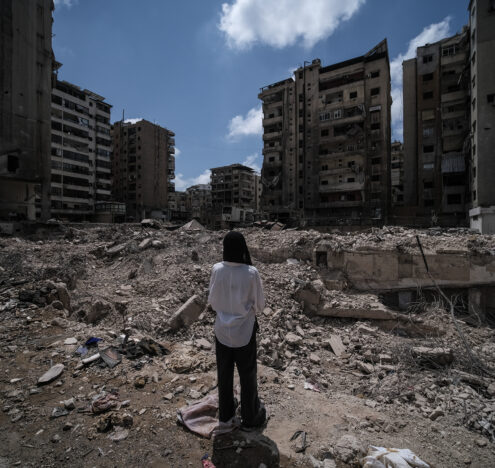
Roughly 6,140 miles from Tapsoba’s apartment in New York City, people and families in Iran are also feeling the hurt of a battered economy, even though there are vast differences between the two nations’ economies and some of the goods affected by the war that the US began in late February. For instance, gas is extremely inexpensive in Iran, even as dire inflation has led to sharp increases in the prices of eggs, meat and cooking oil.
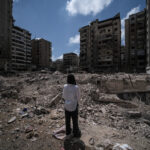
Djavad Salehi-Isfahani, an Iranian and a professor of economics at Virginia Tech University, explains that US bombs in Iran have destroyed businesses and led to layoffs, with some estimates claiming that as many as two million people had lost their jobs by April.
“A lot of these people become very poor, working class,” the professor says. “Once they lose that income, all that is left is a government stipend. They get a cash transfer, which just buys them bread, but not much else.”
Multiple people interviewed for this story — including Americans, Iranians, and people who study the politics, cultures, and economies of both countries — agree that the people most affected by the war are those who were already living paycheck to paycheck before it began.
Kaelin Rapport, a policy analyst for racial equity at the Center for Law and Social Policy (CLASP), calls this a “sharpening of the edges of inequality.” His colleague Isha Weerasinghe, director of CLASP’s Public Benefits Justice team, points out that higher prices are just one of many variables — including the loss of Medicaid benefits and food assistance cuts from the “One Big Beautiful Bill” — deeply impacting Americans’ wallets right now.
“People who are living in poverty or who don’t have high wages or are unable to work are being hit from all sides,” she says. “They already have less purchasing power because of inflation caused by economic circumstances, and then on top of that, they do not have the safety net to be able to support them.”
There is some data showing a widespread economic impact across the US. For example, Americans’ disposable income keeps falling, while the personal savings rate — the percentage of income saved per month — recently fell by half compared to the prior year. Corporate profits are booming; it’s the employees who are struggling.
At the same time, wealthier Americans are experiencing the war quite differently than people who rely on every dollar they earn. A recent study from the Federal Reserve Bank of New York found that households earning under $40,000 have cut their gas consumption by 7%, yet are still spending 12% more on gasoline.
In Iran, hard, reliable data can be more difficult to come by. Sara is a writer based in Tehran who, out of security concerns, doesn’t publish her last name. While it’s challenging to gain a “general judgment of what’s happening,” she says, it’s clear that prices on food rose sharply immediately after the early April announcement of a ceasefire between the two countries. Sara chalks this up to the “psychological impact” of what a long-term blockade would mean for working people: Even if there’s no dire shortage, the fear over a future shortage ultimately raises prices.
Sara also points out that the current government in Iran doesn’t seem as interested in helping working people as it is in pleasing investors.
“The fact of the matter is that the government is not reining in the market and is not implementing any kind of protective measures, and that’s what they did just before the January protests, as well,” she says.
Sara adds that Iran’s economy is “decentralized”; what’s referred to as “gig work” in the US is very common in cities like Tehran, especially food deliveries and rideshares. But people performing these important jobs are hurting, she says, because their earnings are just enough to disqualify them from benefits from the government-run and non-government charities and support organizations, including grassroots charities that are abundant in Iran.
Both Sara and Salehi-Isfahani, the economist, say that life in Tehran is far more normal than people in the US or elsewhere might realize. Levels of hunger and poverty are a far cry from what Cubans are experiencing, Sara points out. For the most part, many people are living their lives as they typically do. But Salehi-Isfahani sees a dark undercurrent at play here — right now, he says, Iranians feel as if the war is won simply because it’s not lost.
“It’s like somebody was beaten up in the street by someone who’s going to kill him and says, ‘Oh, you didn’t kill me, so you lost.’ But then he has to go away and be in the hospital for months to recover, right? That’s when he realized that he actually lost.”
The professor is wary of what a potential long-term peace plan might mean for internal strife within his home country because, as he sees it, “new peace, if it’s going to succeed, has to be more egalitarian.”
“The reason why I say that is because these costs of the war have been borne more severely by the poor and by the middle class,” he adds.
His concern is that a new agreement, whenever it is solidified, could produce macro-level economic improvements for those who already have power and resources without improving the lives of the people most impacted by the bombs and their fallout over the last eight months.
Rapport and Weerasinghe, the colleagues at CLASP, share similar concerns about people in the US. Just as the fighting over the Strait of Hormuz contributed to price increases in various goods all over the world, so, too, could the shockwaves of this war affect Americans’ long-term financial and mental well-being.
A recent piece the pair wrote for CLASP points out that, according to the American Psychiatric Association, financial stability is a key determinant of mental health. They also note that HR 1 — the legislation commonly known as the One Big Beautiful Bill — will ultimately lead to more than $1 trillion in cuts to healthcare funding over the next decade, as well as $186 billion in cuts to food assistance programs.
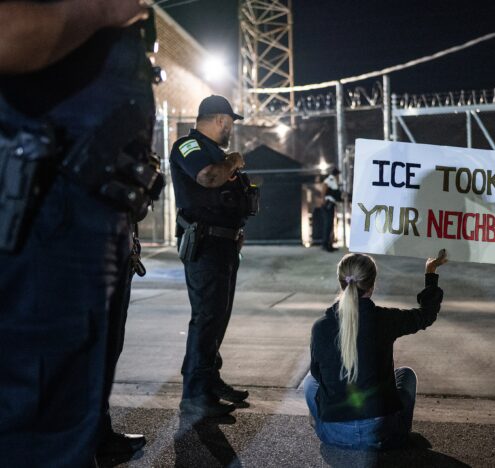
“There’s billions of dollars being put into rounding up people instead of being put into the social safety net,” says Rapport. “The average person who lives in the United States, who makes less than $100,000 a year, isn’t going to be able to eat more ICE jails or a prolonged conflict in Iran, but they’re going to feel that in their checkbooks.”
That includes people like Tapsoba, who, when interviewed for this story, was preparing for an upcoming trip home to Burkina Faso. He delayed the trip a couple of months in order to pick up more work, and he was missing the children he hadn’t seen in two years.
“They’re the reason I do everything,” he says. “When it’s times like this, and the world is crazy, they’re all I think about.”