










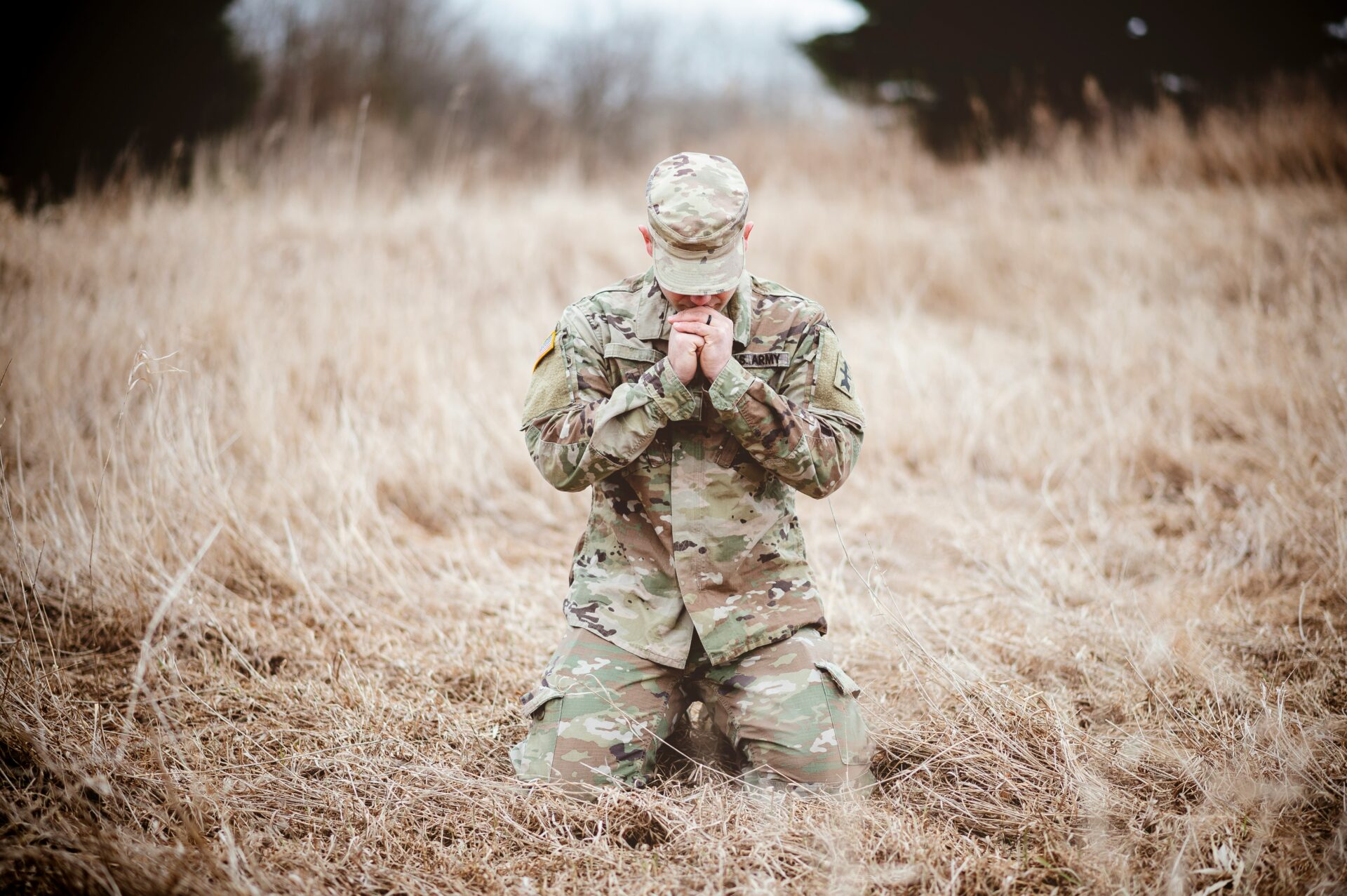
The United States Chaplain Corps was designed to be a constitutionally neutral office. Clergy are commissioned army officers who offer religious support, counseling, lead services and perform rites to soldiers during war and peace. Since its establishment in 1775, the chaplain corps has participated in every conflict. It is the very intersection of church and state, but the chaplain corps was founded to serve as spiritual caregiving and moral guidance, and not as an established or coerced theology. Historically, over 200 faiths and denominations have been part of the corps. However, the Trump administration has used the chaplaincy as a vehicle for a single, narrow Christian nationalist theology to inform military strategy and global policy. I term this “religious-state-military capture,” and it is not unique to the United States.
In terms of coalition building and multi-faith inclusivity, the Pentagon has made its agenda clear. In March 2025, Hegseth announced an overhaul: “Make the Chaplain Corps Great Again,” then, he fired the Chief of Chaplains for the first time in history. Deputy Chief of Chaplains, Brigadier General Jack J. Stumme is associated with the evangelical Liberty Baptist Fellowship denomination and is currently filling the top role of the chaplaincy while the Chief of Chaplains role is unfilled. The Pentagon also trimmed the faith codes from 211 to 31, most of which are Christian, and scrapped the Army’s Spiritual Fitness Guide because it didn’t mention “God” enough. This emphasis on the chaplain corps highlights how this administration sees religious rhetoric to be crucial to motivating and encouraging American soldiers for foreign conflict.
Israel has recently followed a similar trajectory. Both countries maintain a religious office that’s constitutionally or institutionally meant to stay neutral, and both have drifted in the same direction. Yagil Levy, a military sociologist at the Open University of Israel, articulates the “theocratization” of the Israel military. The military rabbinate increasingly wielded decision-making influence on the use of force, intervention, and internal policies, guided by a narrow state-sanctioned Jewish theology. Levy compares these developments in Israel to the evangelical Christian theocratization in the US military, pointing out that evangelicals have held over two-thirds of the military’s chaplaincy posts since the late 1980s.
For the Israeli military, starting in the early 2000s, the rabbinate evolved to focus less on pastoral care, and more on religious indoctrination. Under Chief Rabbi Avichai Ronsky’s rabbinate from 2006 to 2010, there was a clear expectation that military rabbis were warriors and that the Jewish faith and fighting for the mission of the state of Israel were deeply interwoven, a sentiment that has only strengthened over time, according to Israeli scholars. Rabbis Ronsky and his successor General Rabbi Rafi Peretz, who held the office from 2010 until 2016, expanded the “combat doctrine” branch (renamed the “Branch for Jewish Identity”) and rebranded and expanded the role of IDF rabbi as a “Kohen anointed for war.” The reference is to the Deuteronomy 20:2—4 passage of a Kohen, a designated priest who prepares the soldiers for battle.
The United States cannot, in good faith, claim to care about religious freedom while it privileges and promotes a certain theology from the Pentagon podium.
Furthermore, before many new recruits set foot in the Israeli military, they are indoctrinated in Israel’s pre-military academies as an institutional feeder pipeline for religious Zionist integration into the armed forces, leading to top positions and promotions. This is not unlike Hegseth’s backing of the Christian teachings of Hillsdale College or Liberty University. The IDF chaplaincy’s emphasis on certain types of orthodoxy or doctrine, the entanglement with the state, religion, and civic society, and the chaplaincy used as indoctrination are very similar in evolution to what Americans are seeing in our own taxpayer-funded, multi-faith chaplain corps.
This state-religious-chaplaincy capture isn’t new: Military rabbis were urged to take positions in the frontlines of war as early as the 2008–2009 Israeli operation “Cast Lead” conducted against the Hamas-governed Gaza Strip. The rabbinate passed out literature with a clear theological militant agenda: “We are the Jewish people, we came to this land by a miracle, God brought us back to this land, and now we need to fight to expel the non-Jews who are interfering with our conquest of this holy land.” And it is still active: In July 2026, Haaretz reported “cadets and graduates of the Israeli military officers’ course describing what they say is a right-wing ideological tilt associated with religious nationalism within parts of the officer training system, with some lectures veering into overtly political content in violation of military regulations.”
When this mechanism isn’t unique to one country’s military but recognizable across allied forces, it’s a military concern. When it’s the United States military advancing Israel’s strategies, rooted in religious ideology, it’s a global security threat. The United States cannot genuinely claim to care about religious freedom while it privileges and promotes a certain theology from the Pentagon podium. This jeopardizes relationships with allies, it impacts American military recruitment, it disrupts trust that America can function as a level-headed superpower on a global stage, and instead conducts foreign policy on the interpretation of a religion.
Chaplains have the right to freely proselytize their faith. And, soldiers of other faiths, or no faith, have an equal right not to have that faith imposed on them by the institution they serve. The chaplaincy’s job was never to convert the force. It was to serve whatever faith already sat in the pews or the barracks.
The American military chaplaincy was always intended to be pluralistic and tend to the diversity of faiths that served the country’s armed forces. Genuine, constitutional pluralism requires collaboration with interfaith and ecumenical organizations, employing diplomatic reasoning with Washington’s foreign allies, and maintaining a secular military policy. The capture of the chaplaincy as an extension of the political agenda is not unique to Israel, but is happening to the American chaplain corps, too. Against this backdrop, it’s worth asking if the motivations for the current armed conflict in the Middle East are not religiously extreme, too.