









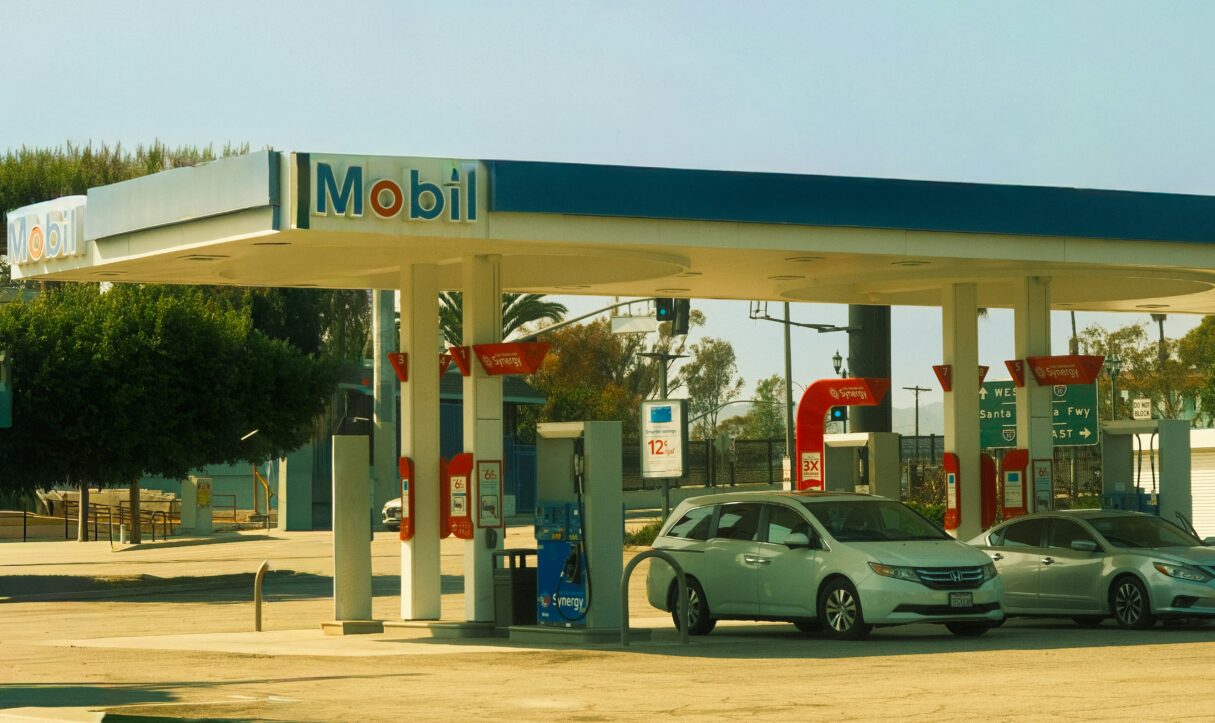
Montreh Nariman-Hassanabadi, a 32-year-old working in the music industry in Los Angeles, was already grappling with high prices long before the war in Iran. Rent in California is at historic highs (as it is across the US in general) and Californians are accustomed to paying higher gas prices. But not this high.
Over the past couple of months, Nariman-Hassanabadi watched prices inch closer to $6 per gallon. She’s even more worried about food; the cost of basic necessities at her local grocery have consistently lurched higher since the US and Israel attacked Tehran in late February. It’s forced her to make tough choices about healthcare, even though she had a brain tumor removed about eight years ago and benefits from consistent checkups.
“I’ve had to put a lot of my doctor necessities on hold,” she says. “I haven’t really gotten regular checkups because it’s insanely costly.”
Her story is just one example of the ways the war in Iran has created ripple effects in a global economy in which millions of people were already on the edge. Even with news breaking of a ceasefire agreement, experts warn that the cost of war will impact Americans’ wallets and wellbeing for a long time.
Jeff Colgan, a professor of political science at Brown University who studies the economic costs of conflict, has sought to quantify those effects. His team created a distressing live ticker that, as of this writing, shows the total consumer burden of the war in Iran is over $59 billion.
Colgan’s research also estimates that the average American household has already paid an additional $360 in fuel costs since the start of the war — far more than a week’s worth of groceries. This means more burdens for the roughly half of US households who, according to the Brookings Institution, did not earn enough in 2024 to cover housing, food, transportation, healthcare, and childcare. Further, even before the war, Federal Reserve researchers documented a sharp rise in food insecurity, with roughly one in 10 households reporting difficulty obtaining enough food and some reporting missed meals.
Colgan explains that the US has been dipping into petroleum reserves to keep gas prices from rising even higher. Replenishing those reserves, getting insurers comfortable with traveling the Strait of Hormuz, and repairing damaged production facilities will all keep energy costs high.
“This is a very clear case that [President Trump] made a decision that drove up the price of gasoline,” Colgan says. “That’s money coming out of your pocket and mine that didn’t need to happen, right? So that’s a choice that he made, and he’s been very clear that he doesn’t care. This is the guy that we put in charge.”
While framing the war as a matter of national security, President Donald Trump has repeatedly dismissed concerns about the cost burdens weathered by Americans. “The only thing that matters, when I’m talking about Iran, they can’t have a nuclear weapon,” he told reporters in May. When asked how much Americans’ financial struggles were motivating efforts to reach a deal, Trump responded, “not even a little bit,” adding that “the only thing that matters” was preventing Iran from obtaining a nuclear weapon. He later defended those remarks as a “perfect statement.”
Most recently, after inflation climbed to its highest level in three years, Trump said, “I love the inflation.”
Colgan was taken back by the callousness of those remarks, and he also pointed out that there is a “vanishingly small” chance that any deal Trump strikes with Iran receives the same security concessions as the Joint Comprehensive Plan of Action. That agreement, inked by the Obama administration in 2015, effectively restricted Iran from developing a nuclear weapon.
“What we’re really negotiating over, at its core, I think, is the price that Iran can extract for reopening the Strait,” Colgan says.
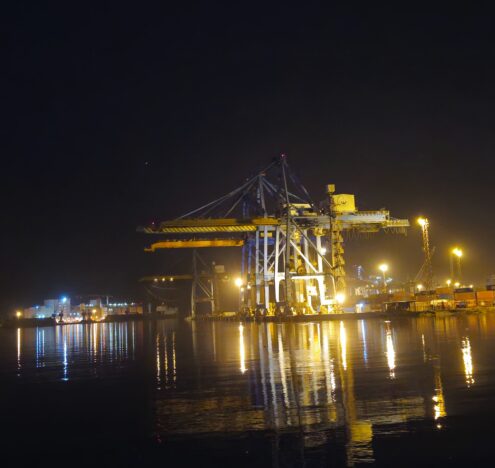
Abhiram Rajendran, a fellow at Columbia University’s Center on Global Energy Policy, says the strait’s closing has created “the biggest oil supply shock of all time.”
“It’s like three or four times the size of the second largest shock that we’ve ever had in the history of the oil market,” he says. For example, the war in Iran has tripled the number of disrupted or inaccessible barrels of oil.
“Nothing even comes close, because the other kind of big supply disruptions that we had in previous wars and embargoes were like three, four million barrels a day at most,” Rajendran says. “Now we’re looking at 10 plus.”
The World Bank recently lowered its global growth forecast, warning that higher energy costs and inflation will weigh on economies worldwide. The updated forecast signals the slowest growth since the COVID-19 pandemic (the rate of food insecurity, meanwhile, is even higher than it was at the height of the pandemic.)
People around the world are already feeling the hurt. Across Africa, the war’s economic shockwaves have disrupted daily life in countries already struggling with high food prices and fragile energy systems. In Somalia, soaring fuel prices have stranded fishing fleets, reducing access to a critical food source as the country’s people contend with violent political unrest. Kenya has also been rocked by demonstrations, and several people have been killed in recent protests over rising fuel costs.
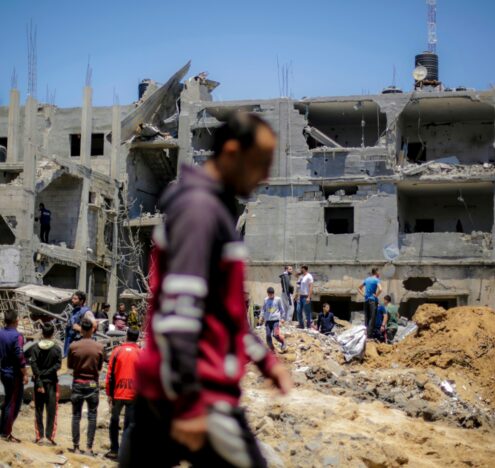
Of course, the war’s economic toll has been especially severe across the Middle East itself. In Iran, years of sanctions, inflation, and economic isolation had already left the country vulnerable well before the conflict began.
“It is really unprecedented since the time of revolution that you hear this from middle- and upper middle-class families, that they’re concerned about their economic wellbeing,” says Behrooz Ghamari, an Iranian-born historian. Ghamari has studied his home country for decades, and he recently wrote a book detailing US-Iran relations and the time he spent as a political prisoner in Iran.
Ghamari worries the war — which he deems a clear victory for Iran — has emboldened the country’s leadership and could lead to even worse crackdowns on dissent within the state. “The more Israelis and Americans try to influence and interfere [in] domestic affairs, the higher the level of repression inside the country,” he says.
Analysts at the Middle East Institute estimate the war has caused damage equivalent to more than half of Iran’s annual economic output, while disruptions to trade, shipping, and energy infrastructure have made the country’s disastrously high inflation rate even worse. Even after the fighting subsides, economists warn that recovery could take years. (In April, Iran’s own central bank predicted that recovery could take as long as 12 years.)
In addition to the economic devastation wrought by a war that the US initiated, Colgan is also thinking about the other ways the US could have spent the money it’s spending on war. The billions of dollars could’ve paid for a much-needed overhaul of the US air traffic control system and still have money left over for infrastructure projects like the Bridge Investment Program: a plan announced in 2024 to build, upgrade, or repair over 10,000 US bridges.
At the same time, he knows that millions of American families have much more urgent concerns.
“When we see hard times, when we see economic times that hit people directly in the pocketbook, people go to food banks because that’s what they can’t afford,” Colgan says. “To me, that’s maybe the saddest component of this.”
For families living paycheck to paycheck, the consequences of a prolonged price surge do not disappear when a peace deal is signed. Debt accumulated to pay for groceries, fuel, or medical care remains and compounds. And the difficult choices people made during the crisis — especially postponed doctor visits — have a lasting effect.
But Nariman-Hassanabadi isn’t worried about herself — at least not as much as she’s concerned for other people in her life struggling with high costs and crippling debt. “While I’m concerned about myself, I’m more concerned about the people around me that could use the help even more,” she says. “Families are my biggest concern right now.”