












Many across Washington view US security assistance as a blanket tool of influence over the domestic and foreign policy choices of allies and partners. As the largest provider of security assistance in the world, the United States dedicates an abundance of capital, equipment, training, and other resources to accomplish a range of economic and geopolitical goals abroad. Yet, how effective is security assistance in attaining US preferences? How do policymakers and congressmen know when US security assistance is “working”?
June’s Reimagining US Grand Strategy roundtable brought members of the foreign policy community together to examine these questions, and consider how security assistance policies continue to evolve under the Trump administration. Two guest speakers provided opening remarks on the logic behind security assistance and the recent adjustments in US military aid across Latin America and Europe. The group then discussed the policy risks associated with US security assistance and the challenges in measuring its success.
Renanah Joyce, Assistant Professor of Security Studies, Georgetown University
For decades, the US has used security assistance — weapons, materiel, financing, training, and advising partner security forces — both to help allies and partners fight more effectively and to influence their policy choices. Whether through arms transfers or military engagement, security assistance often aims to foster relationships with partner forces as a means of influence. As military leaders often say, “you can’t surge trust.” They are right — but there is a danger in mistaking trust and relationships for policy influence.
The crucial question is not whether security assistance can build relationships, but whether those relationships actually shape partners’ policy choices. Because influence is difficult to measure, policymakers and practitioners often substitute relationships for policy outcomes. When this happens, Washington risks falling into a substitution trap: Relationships gradually become treated as ends in themselves, making it harder to know if policy goals are being met or to recalibrate when they are not. Relationships are assets, not outcomes.
When relationships become a proxy for influence, policymakers can invest in military relationships in ways that are self-perpetuating, only to be surprised when relationships fail to produce alignment. Take Indonesia. For years, the US military tried to preserve relationships as a means of influence, even at the risk of undermining congressional human rights restrictions. More recently, those relationships have not prevented Jakarta from continuing to hedge between the United States and China, including hedging on US military access requests. Partners’ choices reflect domestic politics and strategic incentives. Relationships matter, but they are rarely enough to move fence-sitters or guarantee access.
The substitution trap can cause policymakers to misjudge how much influence security assistance actually provides — a mistake with knock-on effects for strategic competition. If relationships are a proxy for influence, then every military relationship a rival develops can appear equally threatening. Asking relationships to do more than they can also risks squandering a valuable asset. Used well, military relationships can deepen interoperability and encourage partner forces to organize and operate in ways that are compatible with US interests. To influence policy choices, however, policymakers need different tools. Relationships matter, but they should never be mistaken for influence.
Elias Yousif, Fellow & Acting Director of the Conventional Defense Program, Stimson Center
The Trump administration’s counterterror-centered approach to security in the Western Hemisphere bears an unfortunate similarity to the United States’ ill-fated Global War on Terror (GWOT), including the proliferation of initiatives in which Washington trained, equipped, and employed local forces to lead in counterterror campaigns. But the administration’s enthusiasm for these “by, with, and through” (BWT) operations ignores the lessons of the not-so-recent past, and invites the same failures, harms, and risks policymakers once pledged not to repeat.
To be sure, frustration with the rising rates of transnational crime and sub-state violence has drawn support among publics and policymakers across the region for securitized “mano dura” approaches, dovetailing with the Trump administration’s eagerness to apply military solutions to hemispheric challenges. Over the past year, the administration designated a number of gangs and cartels as foreign terrorist organizations, inked bilateral security agreements for joint operations with Latin American governments, surged security assistance to regional partners, and directly supported local military operations in Ecuador, Mexico, and the Dominican Republic.
Yet the GWOT offers a powerful, recent reminder of why this approach to Latin America is likely to yield familiar disappointments. Across the globe, the billions of taxpayer dollars poured into BWT initiatives after the 9/11 attacks produced meager results or, in many cases, coincided with worsening security. Moreover, US assistance frequently empowered predatory security actors, undermined good governance, and obscured core drivers of militancy. It also fundamentally overwhelmed US oversight mechanisms, resulting in an expanding US boots-on-the-ground presence, mission creep, and many instances in which US forces directly engaged in combat. Vitally, the prioritization of operational outcomes, the diffusion of responsibility between the United States and its proxies, and the perverse incentive of external patronage were among many factors that meant BWT campaigns were plagued by human rights abuses.
The disappointment of a decade of BWT produced an impressive body of academic research, policy lessons, and legislative guardrails intended to prevent a repeat of those failings. But with little reflection on those lessons and insights, the Trump administration is barreling towards a security strategy likely to force us to relive the shortcomings and harms of BWT in its own hemisphere.
Rachel Stohl, Acting President & CEO, Stimson Center
Any discussion of US security assistance usually includes the common phrase “if we don’t sell them arms, someone else will.” This axiom encapsulates a deep-seeded conviction among many in Washington that efforts to curtail or condition US arms transfers will lead countries to simply look elsewhere for their defense needs. The argument implies that any effort by the US to leverage arms transfers to shape or penalize a recipient state’s behavior creates the opportunity for competitors like Russia and China to replace Washington as a weapons supplier and draw US partners into their spheres of influence.
This argument has been routinely used to help justify sustaining US security cooperation with partners engaged in behaviors that are either contrary to US interests or anathema to values the US purports to defend. Indeed, the claim has proven remarkably effective in convincing key stakeholders, including those in Congress, of the necessity to keep US arms flowing, even when the tactical or strategic benefits are of questionable merit.
In reality, there is ample evidence that efforts to substitute US defense supplies with Russian or Chinese capabilities are exceedingly rare and very costly. Even under the most permissive circumstances, any effort to transition away from the United States as a defense supplier would require identifying and sourcing comparable capabilities, sacrificing interoperability benefits, and rebuilding logistical, maintenance, and training infrastructure.
Ironically, the unwillingness to put security assistance on the table when it comes to its defense partnership undermines Washington’s already questionable ability to use arms as a means of influence. Instead, partners are conditioned to believe that their behavior has little bearing on their access to US capabilities and see little incentive to alter their conduct. In short, the US should be wary of transactional approaches to security assistance, particularly if it undermines more durable alliances that allow US partners and allies to maneuver themselves into the spheres of influence of adversaries.
The effectiveness of the “if we don’t sell” premise has been a persistent source of frustration for those that wish to see a more responsible and effective approach to US security cooperation. If policymakers hope to use arms transfer as an effective means of meeting shared security challenges with allies and encouraging partners to engage in the world in ways that support US values, interests, and foreign policy objectives, confronting the myth of “if we don’t sell” would be an encouraging first step.
Gil Barndollar, Senior Research Fellow, Center for the Study of Statesmanship at The Catholic University of America; Non-Resident Fellow, Defense Priorities
The collapse of American-trained forces in Iraq and Afghanistan, and the inconsistent advising effort in Ukraine, have generated understandable skepticism of US security cooperation. The track record of American military assistance, especially in building armies in developing nations, is a mixed bag at best. Cynical observers assert that many security cooperation exercises amount to little more than “random acts of touching.”
Much of this critique is valid. The past century of US security cooperation is littered with failures, especially when one looks beyond the narrow realm of counterterrorism. American military advisory programs have an incurable habit of mirror imaging, to the fatal detriment of partners who try to master “the American way of war” without the American wealth it requires. But security cooperation missions can provide something that is often more valuable than partner capacity: credible information about partner forces.
The sudden collapse of the Islamic Republic of Afghanistan and Ukraine’s surprising repulse of Russia’s invasion, just six months apart, reminded the world that war is a fundamentally human and contingent activity. One army collapsed and one succeeded, one nation vanished and one endured, because of proficiency, morale, and leadership — all things that can’t be discerned by even the best satellites or signals intelligence.
Security cooperation missions, especially long-term ones, can provide vital firsthand intelligence about foreign militaries. Poor vehicle maintenance speaks volumes about the discipline and combat readiness of a force. A late afternoon watching a GCC security force counting every last piece of brass on a small arms range confirms the enduring salience of coup-proofing in Arab armies. Some Western soldiers and diplomats who had spent time training Ukrainians weren’t surprised by the battlefield outcome in the winter and spring of 2022.
The value of firsthand human observation is of even greater importance in an age of metastasizing AI use, social media penetration, and increased information operations. Though the profusion of sensors and drones is said to herald a transparent battlefield, technology is providing many new avenues for military deception, at all levels of war.
Building partner capacity and broad-based proficiency is often a quixotic endeavor for US military advisors. But the opportunity to watch partner forces up close may be worth the price of admission.
Ransom Miller, Research Associate, Institute for Global Affairs at Eurasia Group
The US sends weapons to many countries across the globe. In Washington, this is viewed as purchasing valuable influence. But there’s a problem: US policymakers are paranoid about military aid or sales from rival states like China, Russia, or Iran. This stymies the US from conditioning aid, because junior partners can credibly threaten to hedge with other powers. However, the literature on military aid is clear that conditioned military aid tends to be the most effective method to influence partners. Washington instead broadly relies on persuasion rather than coercion to attain its goals in military partnerships. In this way, US paranoia helps undercut the original motivations for sending military aid in the first place.
During the Cold War, when international competition was often ideologically motivated, junior US partners had few other guarantors on which they could rely. They risked abandonment if they didn’t concede to US goals. Policymakers aware of this could greatly leverage it to their benefit, as Victor Cha demonstrates was the case across 20th century East Asia in his book, Powerplay.
The modern policy solution to this problem has been the so-called “bear hug,” popularized by the Biden administration’s Israel policy during the war in Gaza. The administration was insistent to the public that its stalwart support for Israel granted it access and influence that enabled it to restrain Israel from its worst tendencies. It seems unlikely that this was true, given the administration’s strong human rights agenda and the broad international consensus that Israel was carrying out a genocide in Gaza throughout Biden’s final year in office. Aid used as persuasion was ineffective at soliciting the administration’s preferred Israeli behaviors.
Nor is Israel particularly unique in this respect. Junior partners are often more sensitive to Washington’s tendencies than vice versa. They are, therefore, adept at persuading the US that America should adopt their objectives as its own. For example, the Obama administration reproached NATO’s European members for their low defense budgets, but spent more in Europe, largely relying on persuasion to meet defense targets. Defense spending among European partners continued to stagnate throughout his term. The second Trump administration began to threaten conditions on aid. Shortly thereafter, military spending among some members rapidly increased to meet the new 3.5% of GDP target.
“Adults in a Room” is a series in collaboration with The Stimson Center’s Reimagining US Grand Strategy program. The series stems from the group’s monthly networking events that call on analysts to gather virtually and hash out a salient topic. It aims to give you a peek into their Zoom room and a deep understanding of the issue at hand in less than the time it takes to sip your morning coffee without the jargon, acronyms, and stuffiness that often come with expertise.
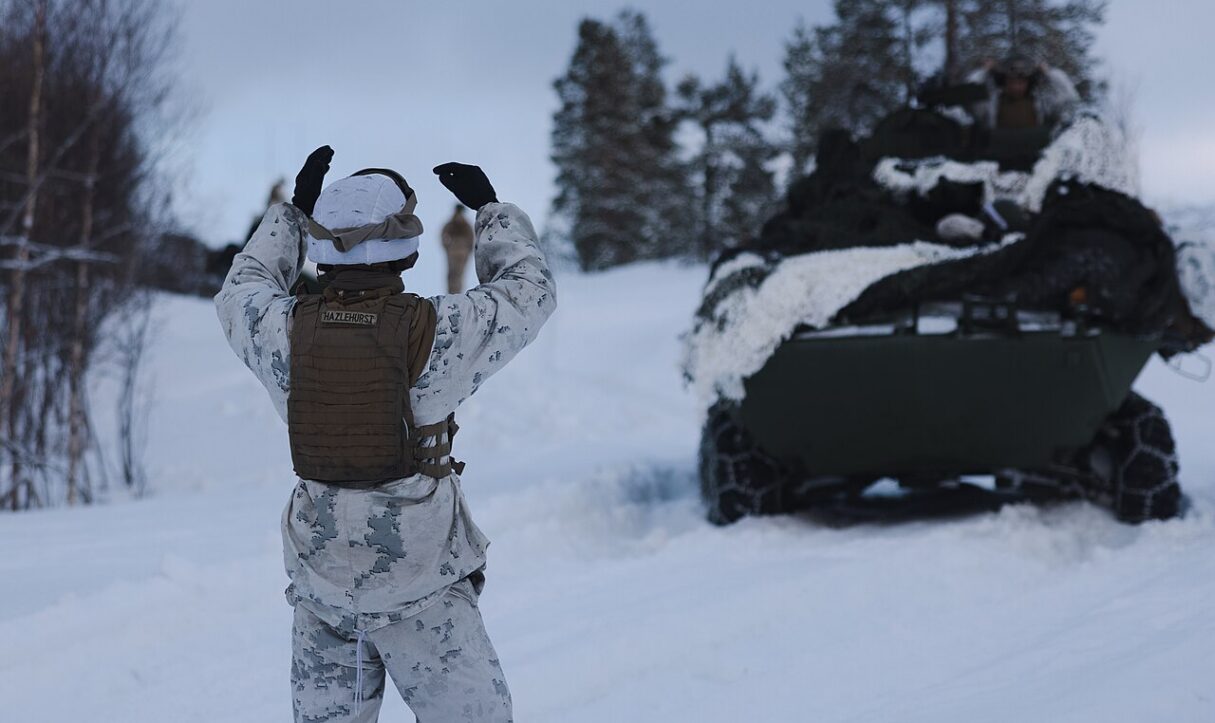
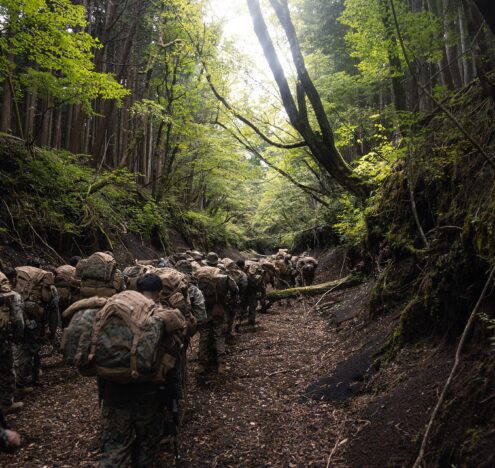
Top photo: US Marines conduct a joint training exercise with Norweigian military in Norway in February 2025 (Antonino Mazzamuto/US Marine Corps/Wikimedia Commons)



.jpg)