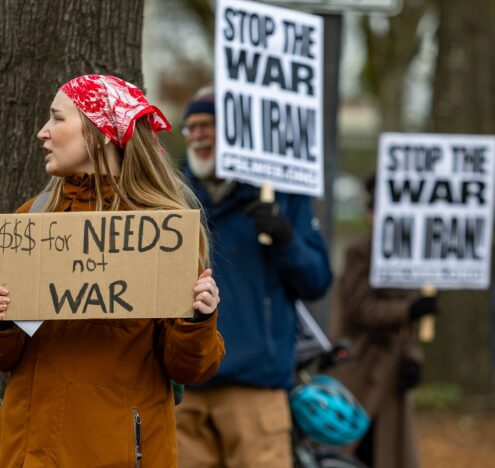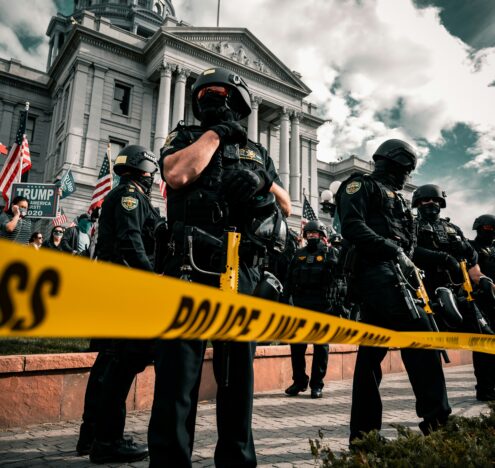







For nearly a year, immigration enforcement protests spread through US cities, and law enforcement met them with tear gas, pepper balls, and impact projectiles fired in ways that violated the very rules meant to govern their use. A new investigation from Physicians for Human Rights and the Human Rights Center at UC Berkeley put a number on that pattern: 412 documented incidents of crowd-control weapon misuse between June 2025 and May 2026, concentrated overwhelmingly in five cities where federal agents led some of the most aggressive enforcement operations in recent memory.
Researchers behind the report, entitled “Charting the Crackdown,” relied on open-source methods rather than official records. They gathered videos, photographs, news reports, and other public material, then verified each incident through geolocation against satellite and street-view imagery and through chronolocation using metadata and other temporal cues. Every incident went through two independent coders and a supervisor before it entered the dataset, which the team believed to be the largest of its kind covering a single year of protest activity in the country.
The geography of misuse was concentrated. Although protests against the immigration crackdown took place nationwide, more than 90% of the 412 documented incidents occurred in just five metropolitan areas: Chicago, Los Angeles, Minneapolis, Newark, and Portland. Researchers point to those cities as the sites of the Department of Homeland Security’s largest and most sustained enforcement operations, and note that nearly all of them also had sanctuary policies and durable protest movements.
Responsibility for the misuse fell disproportionately on federal agencies. DHS agencies accounted for 64% of documented incidents in which the responsible agency could be identified, while Los Angeles stood out as an exception, where local agencies including the Los Angeles Police Department, the Los Angeles County Sheriff’s Department, and the California Highway Patrol accounted for most of the incidents. Researchers argued the pattern reflected unresolved problems in Los Angeles policing dating back to the department’s handling of 2020 protests, while cities such as Portland, Chicago, and Minneapolis appeared to show the impact, however uneven, of police reforms adopted since then.
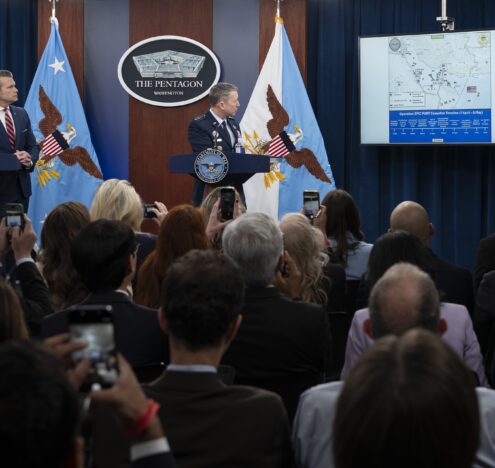
One figure recurred across the report’s timeline of escalation: former Border Patrol Commander Gregory Bovino. Researchers found that in cities where Bovino directed or oversaw operations, incident counts climbed sharply within days of his arrival. He operated as what he called a “commander-at-large,” working outside Border Patrol’s normal chain of command while reporting directly to senior DHS leadership, and many of the operations tied to spikes in documented misuse were promoted on his personal social media accounts.
The weapons involved varied by city but followed common national patterns of misuse. Chemical irritants and kinetic impact projectiles accounted for the bulk of incidents, with pepper balls alone making up more than a quarter of the total. Pepper balls predominated in Chicago, kinetic impact projectiles in Los Angeles, and MK-9 pepper spray in the Minneapolis area. Of the 412 incidents, 264 involved a weapon deployed in a manner researchers defined as prohibited, including projectiles fired at the head, chemical agents released in enclosed spaces, and weapons used against people with no way to escape.
The human toll was significant and, researchers stressed, undercounted. Of the 412 incidents, 119, or 28.9%, involved people with visible or self-reported injuries, and those individuals sustained 203 injuries in total since some were hurt more than once. Nearly half, 47.1%, reported seeking medical care. The report does not grade injury severity, but researchers note that documented harms such as blindness and head trauma indicated many were serious, and that invisible injuries like chemical burns or hearing loss could not be captured through video and photo evidence alone.
Journalists bore a disproportionate share of the documented harm. They made up 177 of the people subjected to crowd-control weapon misuse, or 43% of the total, the second-largest category behind demonstrators themselves, a pattern researchers attributed to journalists’ visibility and proximity while covering the protests.
The researchers are explicit that their dataset captures only a fraction of the true scale of misuse, since it excluded incidents that have never been filmed, never publicly shared, or could not be independently verified. They have called on the federal government to establish an independent, publicly accessible mechanism to track crowd-control weapon use, and recommend that authorities phase out weapons carrying the highest risk of serious injury, including stun grenades and scattershot kinetic projectiles, while strengthening training, transparency, and oversight.