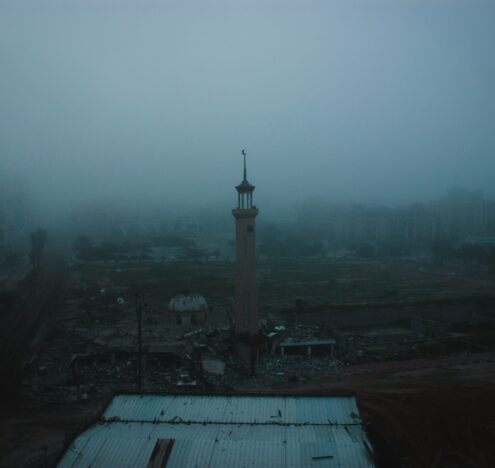










In October 2010, ABC broadcasted a town hall debate titled “Holy War: Should Americans Fear Islam?” Six panelists were grouped under a banner with a furling American flag on one side, and what appears to be a mosque’s minaret on the other. The debate question was first posed to Peter Gil, who lost his son in the Sept. 11 attack on the Twin Towers. Gil answered essentially, yes, saying that there was too great a “history of Muslim terror attacks,” and that “to ignore that threat is to ignore the history of Islam.”
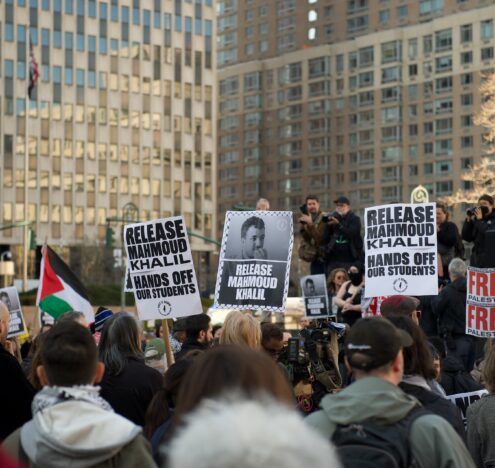
This conflating of Islam with terrorism, and situating it as an existential and oppositional threat to the United States, is common rhetoric in today’s America. It is the same logic that underpinned law enforcement’s focus on surveilling mosques under the Patriot Act, and the theory scaffolding Donald Trump’s 2015 call for a “total and complete shutdown of Muslims entering the United States.” Journalist Rozina Ali’s new book, Seasons of Fury: Four Families and the Rise of Islamophobia in America, performs a biopsy on these conflations, tracing an expansive history of how a very specific Islamophobia was fomented and inflamed in the US, and its impact on everyday people.
Ali follows her subjects over decades, detailing the lives of Muslims surveilled by the FBI and National Security Agency (NSA), Muslims elected to local government but still looked at askance, and Muslims trying to deal with neighbors who harass them. She demonstrates the personal vagaries of state surveillance, how immigration status was constantly imperiled and used as a bargaining chip, and the many ways immigrant and Muslim groups fought against violations of their promised civil rights.
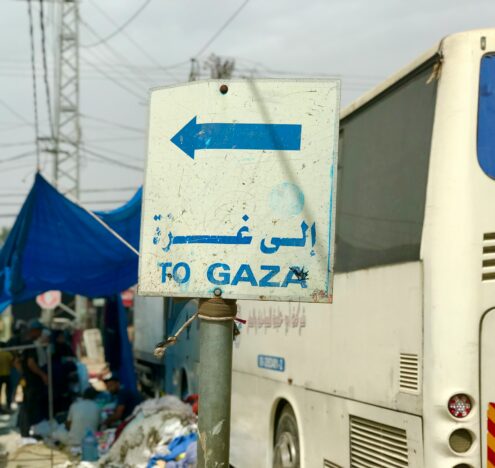
The book’s scope is vast, and Ali argues that American Islamophobia — the cries of “terrorist,” the state surveillance — began long before Al Qaeda’s attack on the Twin Towers, but rather in concordance with US support of Israel and suspicion of Palestinians.
Ali details, for example, how in 1967, as war raged in Gaza and the Syrian Golan Heights, attorney Abdeen Jabara and a group of academics founded the Association of Arab American University Graduates to educate the American public about Palestine and the region more broadly. That same year, the FBI and NSA began surveilling Jabara — keeping records of his relationships and bank transfers, and tapping his telephone communications. Jabara was not alone: Arabs were specifically targeted under the infamous COINTELPRO program and various FBI operations in the 1970s and ’90s.
What Seasons of Fury illustrates is the many epochs of this discrimination — that American targeting of Muslims during the War on Terror was an escalation and expansion rather than a sea change. “No one political or religious group alone was guilty of killings — when it came to slaughter, all humankind had a record,” writes Ali. “Still, American commentators continued to draw the moral trench lines of the War on Terror around select communities: Israel and the West versus Palestinians and Muslims.”
Ali’s coverage of the opaque and mercurial crackdown on Muslims in the US in the days immediately after Sept. 11 is particularly gripping. Her writing is evocative without becoming ornate, and she makes even the most well-known stories from the era compelling page-turners. Her focus is largely on state expressions of Islamophobia and how “the logic that Islamic beliefs could predict a penchant for violence swerved dangerously close to treating Muslims differently under law.”
Ali digs into these stories with detail gleaned from years of reporting and an even-handed questioning of tactics and impact. One of the people she profiles was described in a 2004 New York Magazine article as one of those “lone terrorists with no connections to Al Qaeda or any other international organization, who were motivated by all of the jihad chatter crackling in the air.” But Ali’s careful coverage of him, his lawyer, his mother, and his community raises questions about to what degree he was a terrorist, or rather just an angry young man pushed into empty talk by an informant.
US media and the national security apparatus have spent decades reinforcing a specific, often hate-fueled concept of all of Islam, which has led to every Tom, Dick, and Harry fearmongering about Sharia Law or throwing around phrases like taqiyya. Ali examines every shift and every player, such that when the timeline arrives at the unabashed rantings of President Donald Trump, there are no questions about how we got here: “Trump could not have gotten away with his anti-Muslim statements — or indeed have won the presidency — if they had not been sanctioned, in some way, all along,” writes Ali.
Seasons of Fury is an excellent autopsy of America’s last few decades and the Islamophobia that has riddled its politics and policies. The families she follows suffer no illusions about their persecution but resist the logic of it again and again, and it is the careful consideration of their stories that makes the book a damning expose of a country gone wild with delusion.
Rozina Ali’s Seasons of Fury: Four Families and the Rise of Islamophobia in America will be released on Aug. 25, 2026, and is now available for preorder.