








Skip to content
Ukraine Drone War
IMG_6738

What the World Is Learning From Ukraine’s Drone War

Ukrainian soldiers have spent years adapting to drones, electronic warfare, and rapidly changing battlefield technology. Now other countries are looking to Kyiv for lessons in modern conflict.

Words: KC Cheng
Pictures: KC Cheng
Date:

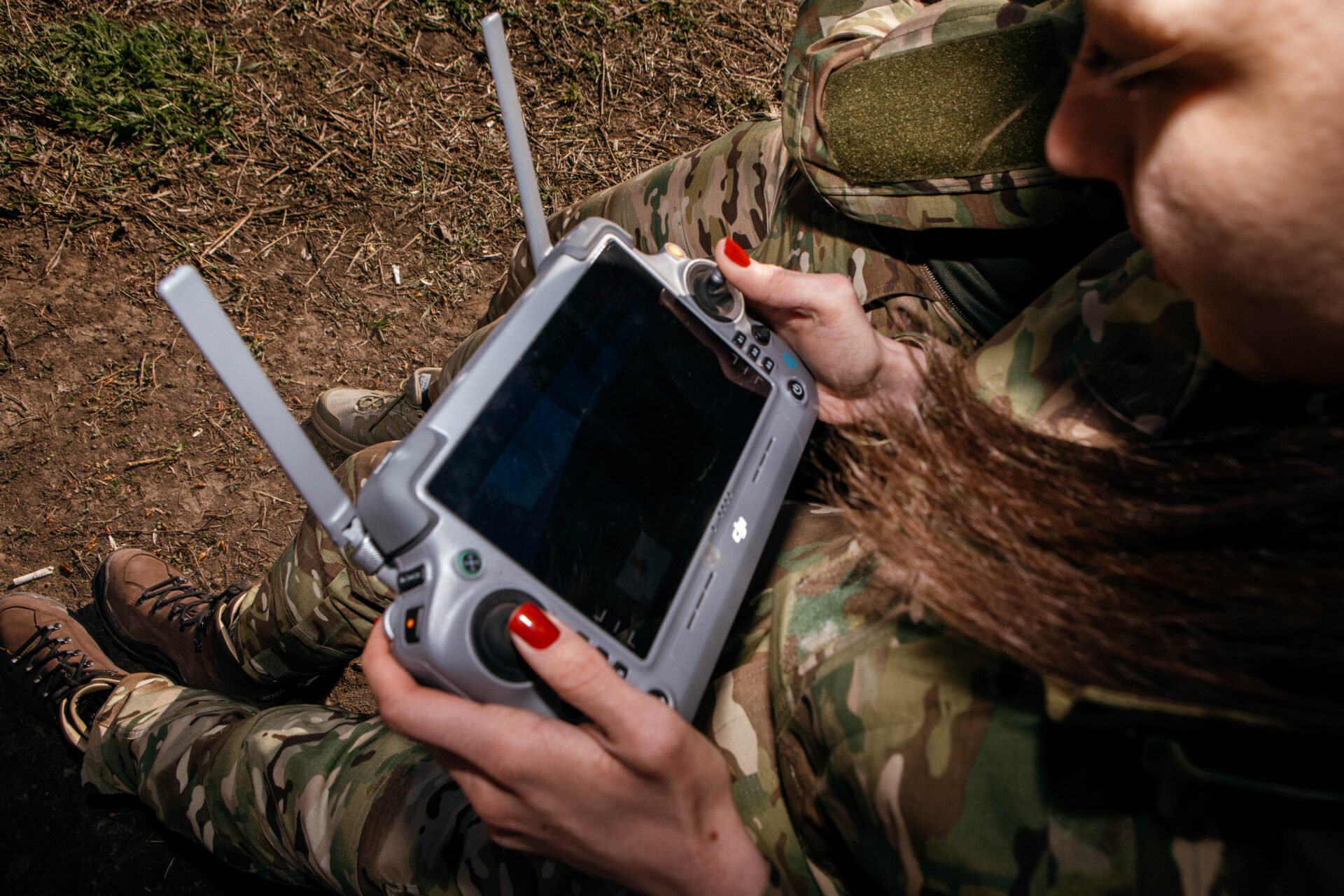
A drone eases smoothly into the blue sky with an aggressive buzz, before it is guided back into the outstretched arms of a soldier. The drone is carrying dummy weight, replicating the explosives drones will deliver to enemy positions when the brigade is on rotation in frontline trenches.

This field in an undisclosed location outside Sloviansk, a city in the southeastern region of Donbas where roughly a third of the Ukraine war is now concentrated, has become a polygon –– a designated training ground for tactical training. A small team of young female soldiers belonging to the 3rd Battalion, 60th Brigade, 3rd Corps of the Ukrainian Ground Forces practices flying a Mavic reconnaissance drone.

Across Ukraine’s battered eastern front, it is common to see military units practicing flying drones on abandoned farmland or roadsides lined with barbed wire, shells of burned tanks or cars, and other debris from active conflict.

Valeria, a 25-year-old who goes by the callsign Karnasha*, has served in Ukraine’s military since 2024. Hailing from the central Poltava region, she studied to become a teacher. Both weak salary prospects and a desire to defend her country led her to voluntarily join the army.

Sloviansk was occupied by Russians for a few months in 2014. Donbas is an economic powerhouse, home to heavy industry and coal mining, that lies along the border with Russia. Although Sloviansk remains under Ukrainian control at present, it is heavily targeted as one of Donbas’s “fortress belt” cities, a network of heavily fortified Ukrainian cities and defensive positions. 

According to data from DeepStateMap, an open-source intelligence interactive online map of Russian and Ukrainian military operations, 99.6% of Luhansk and 79.7% of Donetsk are currently occupied. 

Different iterations of the same story play out across eastern Ukraine. Every meter counts. On Ukraine’s eastern front, small territorial gains from increasingly mechanized slaughter can translate into the loss of villages, towns, and strategic positions. Seizing all of Donetsk would contribute to the narrative of victory Putin desperately wants to fashion –– that Russia is winning the war –– regardless of the cost. 

A specialist in electronic warfare (EW), Karnasha works to jam enemy drones, deliberately blocking satellite signals for navigation. She also specializes in reconnaissance, gathering information about Russian movements and terrain. 

That expertise has started to have global relevance. In mid-March, Ukraine sent more than 200 military experts to protect American military bases and counter drone attacks in the Gulf. 11 countries have sought support from Kyiv to counter Iranian-designed Shahed drones as the US-Israeli war in the Middle East intensifies.

“The main problem is that drones are very cheap to produce, but expensive to shoot them down –– either with interceptors, using other drones, or spoofing (cyberattack that deceives a drone’s navigation system with fake GPS or radio signals),” says Olha Polishchuk, the Eastern Europe Research Manager of Armed Conflict Location and Event Data (ACLED), an independent global violence monitoring organization. 

As for a long-term solution to end the war, Ukraine still counts on international support. The concurrent conflicts around the world have been diluting attention and support to Ukraine, she continues. “Shipments of weapons are diverted elsewhere, which is worrying.”

Ukraine Drone War
Members of the 3rd Battalion 60th Brigade, 3rd Corps at drone flight practice, April 6, 2026.
Ukraine Drone War
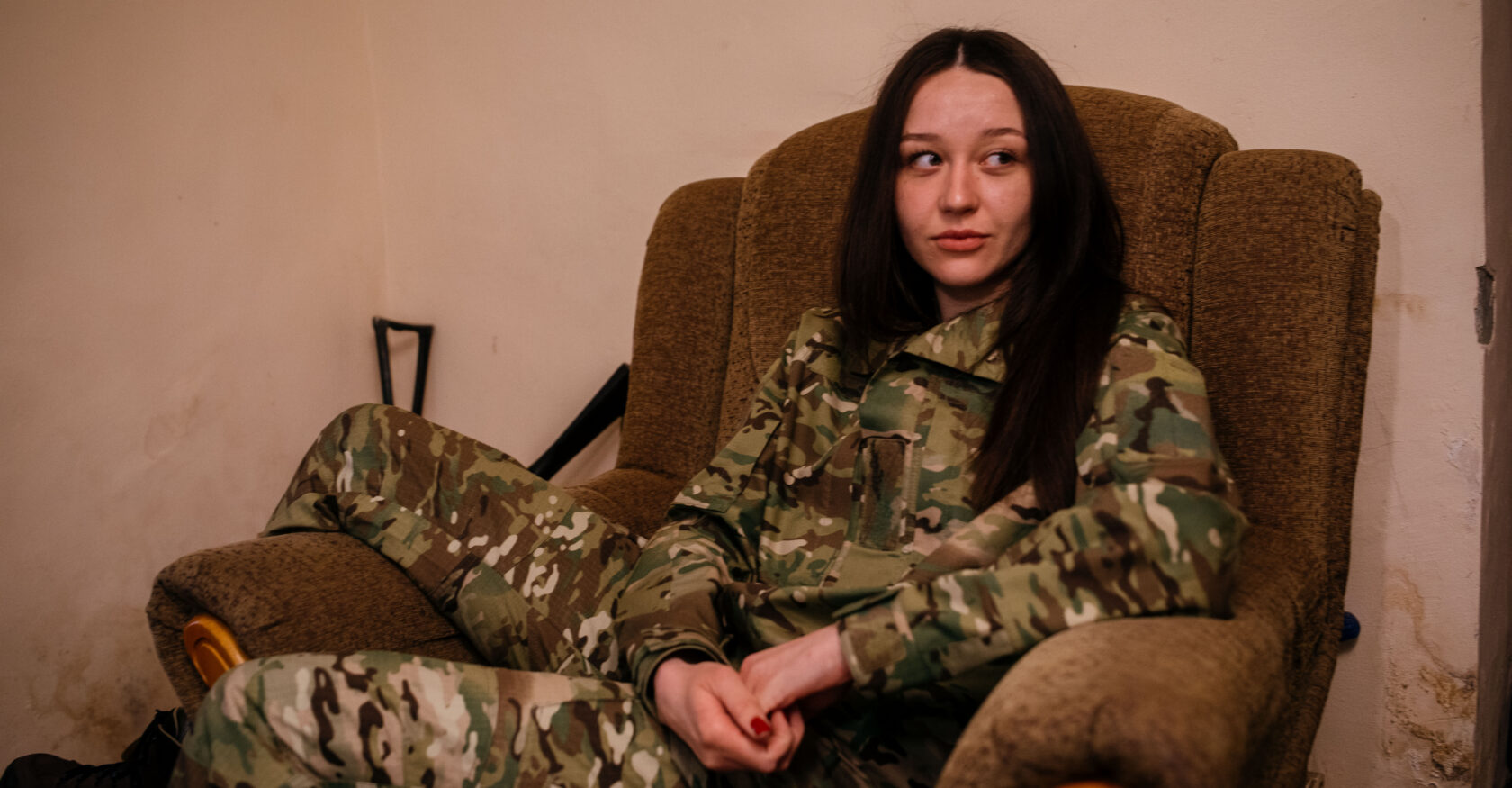
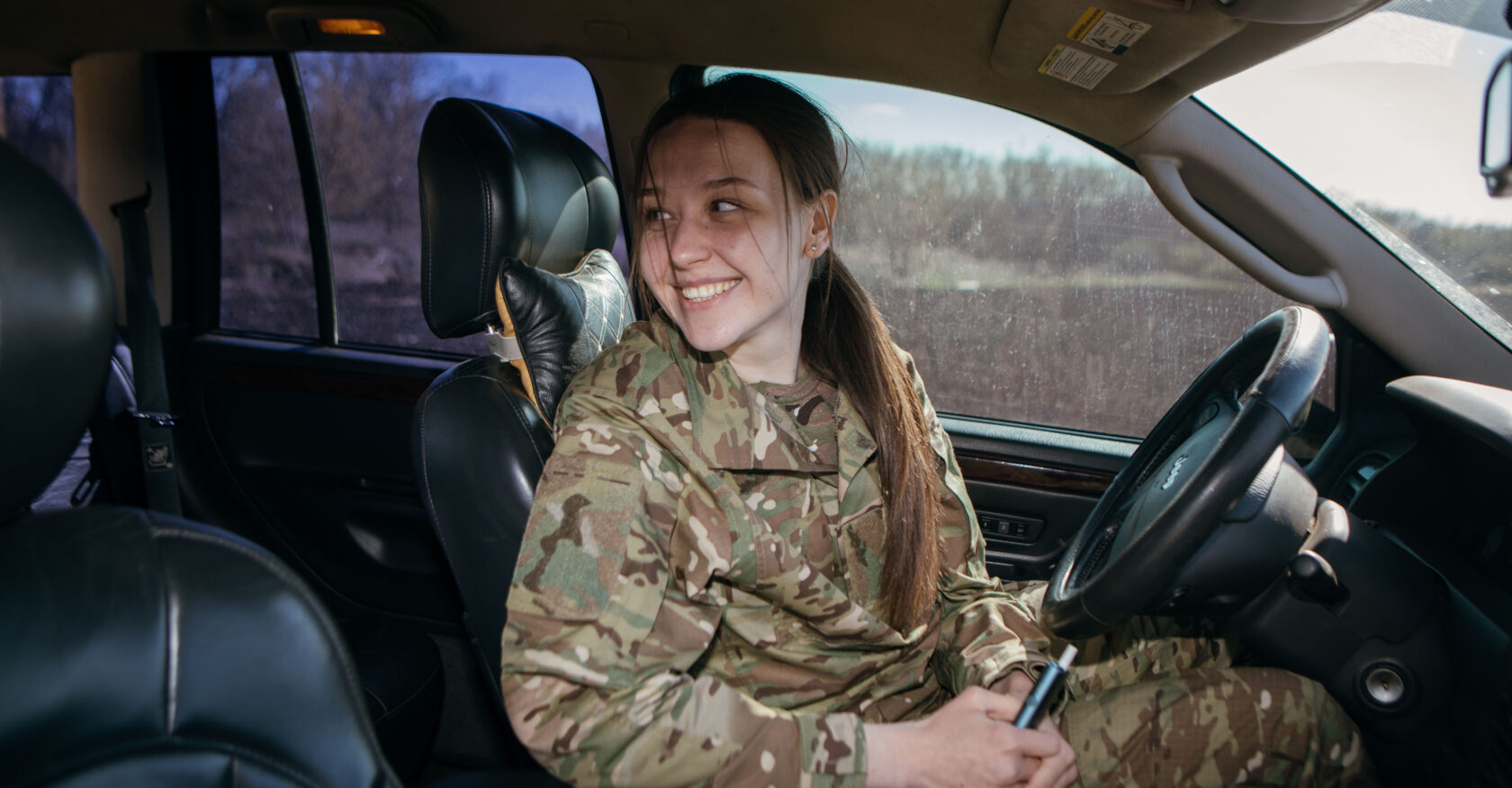
Freya after polygon drone flight practice in the Donbas, April 6, 2026.
Ukraine Drone War
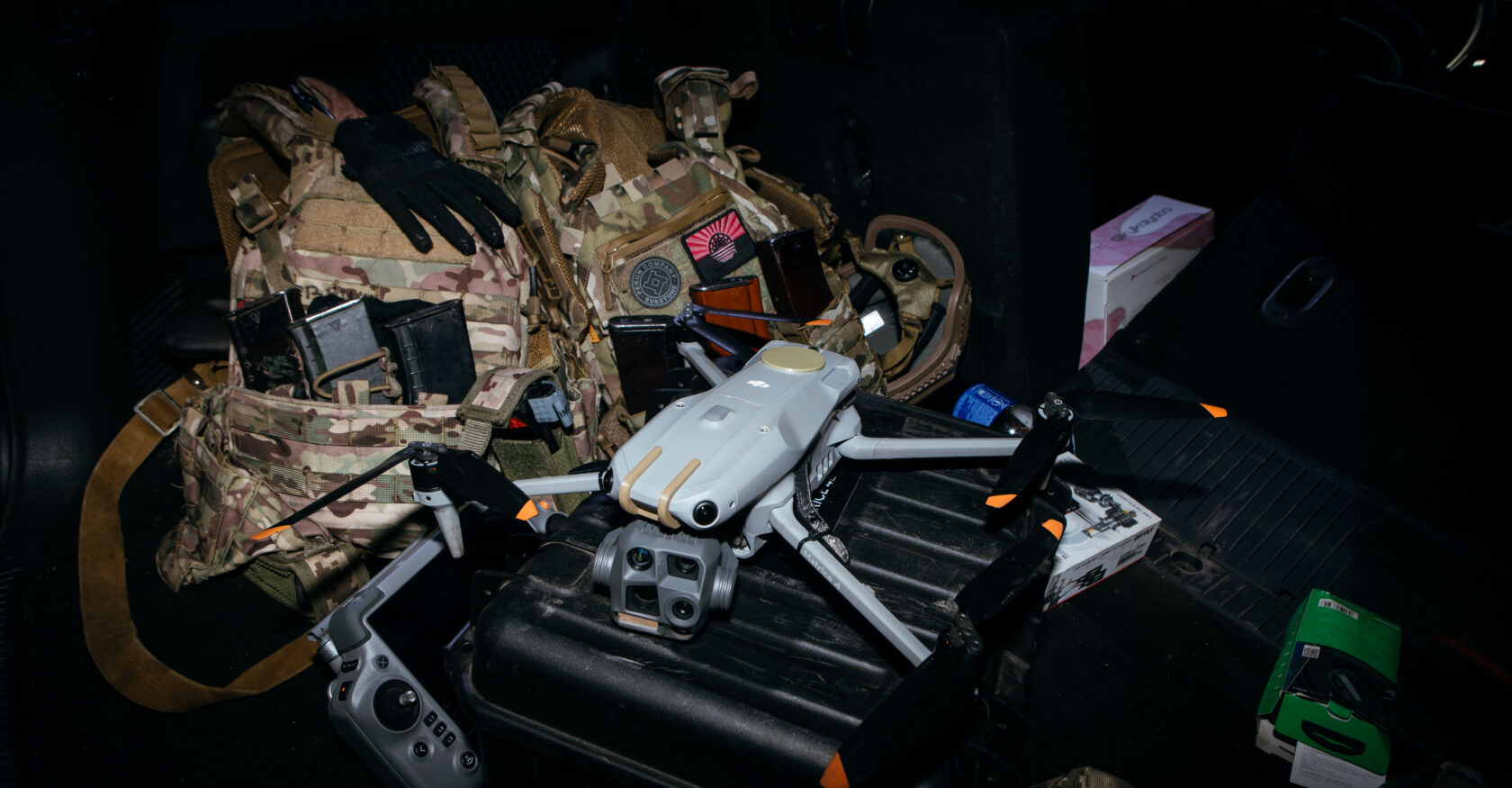
DJI Mavic drones belonging to the 3rd Battalion 60th Brigade, 3rd Corps, April 6, 2026.
Ukraine Drone War
Freya off rotation at an undisclosed military base in the Donbas, April 6, 2026.

Dispatching drone experts has been a major investment, considering how the war-torn nation’s manpower is at a critical low. There are dire shortages in both frontline units and their resources (hence, the uptick in civilian tech), fatigue among long-serving soldiers, reductions in voluntary recruitment, and record rates of absence without leave.

Yet, there are those such as Karnasha who believe that sending Ukrainians abroad was a worthwhile investment. “This is a good advertisement of the Ukrainian army and expertise.” She thinks it also could be an opportunity to avoid attention fatigue or the perception that it has become a far-off, forever war.

“Now, other countries can have a better understanding of how Russia has been keeping this war going, what we’ve had to do to survive. People interested in fighting [for us] will come to Ukraine.”

“The world has changed,” says 21-year-old Fiksyk, who serves with the 13th Khartiia Brigade. “Drone pilots are very in demand right now. It’s a war of drones.” This is simply the direction that the war took around the end of 2023, he continues, which led to a sharp ramping up of drone technology development. It has become a life-and-death competition between Ukrainians and Russians to out-develop and out-maneuver each other, he continues.

Bar, Fiksyk’s colleague in the same unit, says that since Ukraine has fewer resources and less manpower than Russia, they have been pushed to be more innovative and creative. “When we started getting fucked by FPVs in early 2024, I switched from the infantry to becoming a drone pilot.”

“Not that long ago, no one understood EW –– people thought it was just electronic equipment on the roof of a car. When I first started, FPVs were very easily jammed — switching on noise (high radio frequency signals) was enough,” she continues. “The pace of military technology is changing very fast. This war feels like ‘weapons testing’ at a training ground. If this is the future of my country, then we must involve others to not disappear as a nation.”

“The more soldiers who understand ‘modern warfare,’ the higher the chances of victory,” Karnasha believes, hoping that other countries can have more lead time to prepare their armies while they have the opportunity, something Ukraine did not have.

Although attention to the urgency of the war –– onto which Ukrainian identity and fate are hinged –– has waned with time, both at home and abroad, there’s a wave of young people who have been waiting for the right time to join the army.

22-year-old Alina, who chose her own callsign of Freya, is new to military life, having joined at the beginning of this year. She comes from the central Cherkasy region and is in her fourth year studying international economic relations. 

Freya believes that Ukrainians were jolted into collective clarity on their reality in February 2022. “No one was expecting the full-scale invasion. We were united with a sense of purpose to defend ourselves from the enemy.” But the drawn-out nature of the war has diluted the populace’s attention, both at home and globally, especially considering the current era of forever wars.

She plans to serve in the military until the end of this war. “I don’t know what my abilities are yet,” Freya explains. “Right now, my job is to learn and do, learn and do. I will show up here to grow and do the work.”

Her parents did not respond well to her signing up. “My mom was crying,” says Freya. But they had to respect her decision. “Those who aren’t near the front lines, they don’t understand anything. Even if you have family, a husband in the military, people don’t necessarily understand what’s at stake.”

* Soldiers are identified by their first names and call signs, in accordance with the Ukrainian military’s security protocols.

Tetiana Burianova contributed to this reporting.

KC Cheng

KC Cheng is a Nairobi-based photojournalist covering stories about the environment, cultural continuity, and outdoor adventure (recently: Atmos, The Wall Street Journal, The New York Times, Mekong Review, Ori Magazine, Christian Science Monitor, Summit Journal). Her work began in the Arctic and extends globally.

Hey there!

If you made it this far, you’re exactly why Inkstick exists.

The institutions shaping our lives rarely get the scrutiny they deserve. Inkstick investigates the systems behind war, surveillance, borders, emergency politics, and public spending — and traces their consequences in real communities.

Every story is made possible by readers who believe these issues matter.

If that’s you, help keep this reporting free and accessible to everyone.

Join the people paying attention
album-art

Sorry, no results.
Please try another keyword
  • Ah Long spent years building a life in Shanghai. Then the pandemic arrived. China's Zero-COVID policy cost him his job, his relationship, and eventually his faith that he could build a future there. So he did something almost unimaginable: he set out alone for the United States, crossing the Darién Gap, surviving robberies, and surrendering[...]
00:00

SIGN UP FOR OUR NEWSLETTERS