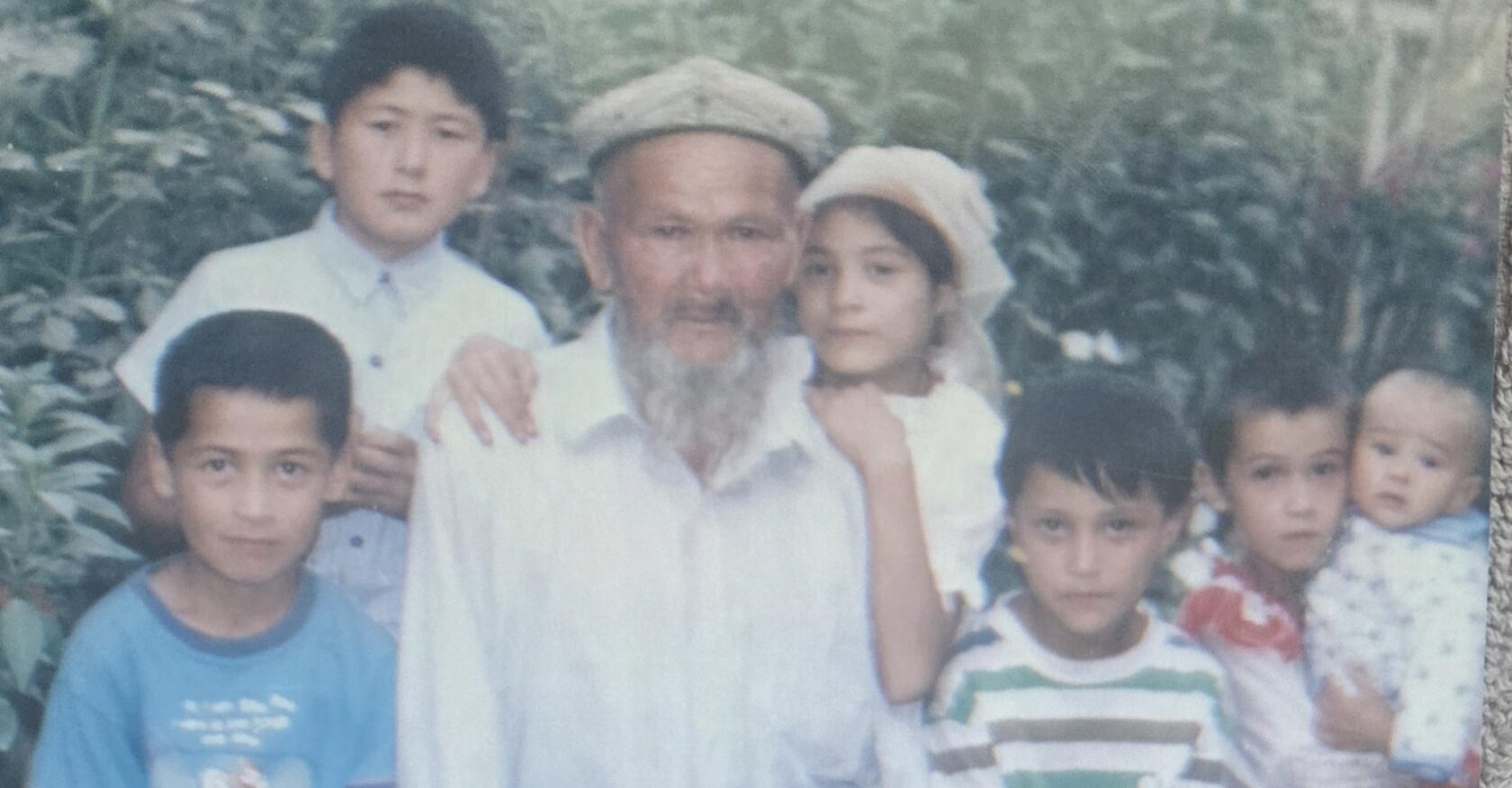
He said that the United Nations granted him refugee status and relocation to Edmonton in 2001. Nearly all of his family had to stay behind, including his three children. He believes Chinese intelligence forced family members to call and coerce him into coming back several times. Shortly after Nur refused during one such call in 2006, he said, two of his children were killed.
This half of his dual life never really fades from the other. “When I’m driving and see kids the same age as mine were when I left, I think about why my own children are not here,” he said.
He hasn’t been able to speak to his family back home since 2017, after mass detentions swept the region. Nur doesn’t know if his parents, siblings, or remaining daughter are in the detention centers or are even alive. What he does know is that if he ever returns, it’s either “be killed or stay in jail forever.”
Since being elected prime minister in 2018, Nur has spent nearly all his free time on this role. But leading a cause from his house isn’t easy. Juggling immense time differences (ETGE leadership dials in from the likes of Australia, Kazakhstan, and Sweden), everyone’s multiple jobs (positions are voluntary), and a shoestring budget, the group doesn’t conjure typical images of the word government. It more closely resembles a remote neighborhood watch committee that somehow inherited a flag and the task of convincing the world of its statecraft. Between the time zone arithmetic and taking calls in the dark, predawn quiet, “I feel lonely at times,” Nur admits, being distant from his colleagues.
Nearly 2,000 miles (3,193 kilometers) away, as Nur drops children off at school in Edmonton, Foreign Minister Salih Hudayar unlocks what serves as the East Turkistan Government-in-Exile’s capital: a windowless office tucked deep inside a large glass building just behind Capitol Hill. It’s barely large enough for two desks, a map, and a few grainy images on the wall commemorating past leaders. This is all they need. While Nur runs the government from his home office in Edmonton, Hudayar is the only one who works in the ETGE headquarters.
Like Nur, Hudayar is a political refugee whose East Turkistan life was marred by repression. His childhood home, as he showed me on Google Earth from this office, is now gone. In its stead stands a monolithic police station, and beyond the mountains, an even bigger detention facility.
The official term for these is “vocational education and training centers,” but Nur and Hudayar — as well as many governments, rights watchdogs, and nonprofits — call them internment camps. The US government and many international watchdog groups believe that many of the “made in China” products on US shelves are made by enslaved people in these centers. It’s also where Nur and Hudayar believe they would end up if they ever return.
They’ve faced torrents of transnational repression for saying things like this. Mentions of these camps or of independence trigger intervention by China-backed groups in the form of threats and bribery attempts, the two men tell me, a narrative supported by reports of the area. Even the name is controversial: China’s framing is so tightly controlled that most people in Western countries have never heard of East Turkistan. “Xinjiang,” meanwhile, the name the Chinese conferred on the region in the 1700s, essentially translates to “new frontier” in modern Chinese, Lowsen pointed out.
Governments-in-exile have historically helped preserve the political identity of ousted groups. Still, unlike those that once ruled a country, the ETGE is trying to persuade the world that it could ever claim one at all, he added. Running a place that most haven’t heard of makes it all that much harder.
While Nur presses Canadian officials and diaspora organizations, Hudayar spends his days walking the halls of Congress to convince lawmakers that East Turkistan belongs on the US foreign policy agenda. Their advocacy has contributed to modest shifts so far: Canada and the United States have officially censured China’s treatment of Uyghurs as genocide. Several governments have condemned Beijing’s human rights record. But no country has expressed support for East Turkistan’s independence, and the two ministers have found few bureaucratic ears willing to entertain the conversation. This isolation is a defining characteristic — and haunting limit — of the job for both men.
“There are days where I just want to cry,” Hudayar admitted. His candor came as a surprise after a passionate tirade to me about Uyghur history. “There’s nothing more humiliating, nothing more painful than watching your own nation being wiped out in front of you and not being able to do anything to stop it.”
Regardless of the outcome or the feelings it might evoke, the men persevere. By afternoon, Nur is back on Edmonton streets, waving children aboard to bring them home before returning to his own to draft another statement, while Hudayar tries other representatives in DC.
On July 1, an “Ethnic Unity Law” went into effect in China that rights groups say codifies forced assimilation and raises concerns about arbitrary enforcement. While several groups are working toward awareness of these issues, Nur and his cabinet think this is a surface-level solution to a much deeper problem — sovereignty. For Nur, developments like this reinforce why ETGE believes these efforts are no longer enough. “Time is running out for us.”
His own life continues in rhythms that have little to do with diplomacy. He finished his last bus route of the school year on June 25. He devotes the found time to ministerial duties until school starts again, including visiting parliamentary colleagues overseas and hosting a three-day Uyghur festival in Edmonton.
But by September, Nur will begin making rounds in his yellow bus again between fragmented stints at home, leading a government whose land he can’t safely enter, and that doesn’t officially exist.
I asked him if he finds it hard to stay optimistic, watching school-year cycles pass while East Turkistan makes little progress. Often, he remarked. But “we Uyghurs have a saying,” he added. “‘A soul that has not died still has hope.’” Whether the proverbial soul in this case is the territory itself, or those of the people fighting to save it, he didn’t elaborate. To Nur, it doesn’t seem to matter.