“The role of unmanned systems on the battlefield is growing, and therefore the production of innovative instruments of war is our number one priority,” Then-Defense Minister Denys Shmyhal said in December. In 2024, the country produced over 2 million FPV drones per year. By early 2025, overall production reached around 4 million units annually, and Ukrainian producers had begun exporting the technology to allies in Europe. The mobilization extends beyond manufacturing: Ukrainian authorities say more than 5,000 UAV operators were trained for the armed forces in 2025 alone, and 70-80% of casualties come from drone strikes.
It is a race against time, as Russia is also dramatically scaling up long-range drone attacks in what analysts describe as an effort to wear down Ukraine’s air defences. Since early November, Ukraine has reported 1,105 Russian drones entering its airspace. An average of 85 a day, compared with 11 daily in June, according to data compiled by the conflict-monitoring group ACLED.
People no longer wanted to buy flowers, and I needed to be useful.
Kseniia Kalmus
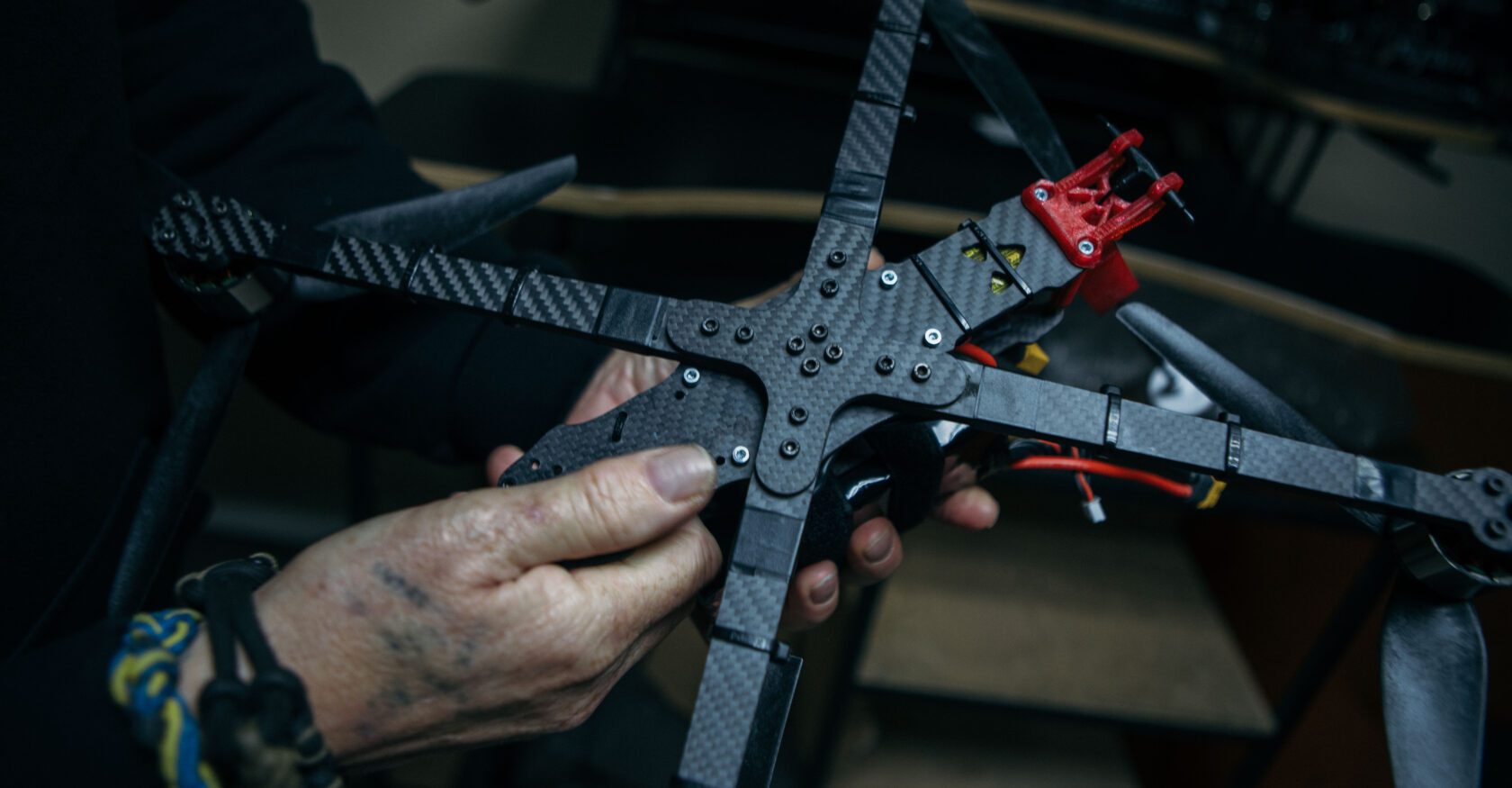
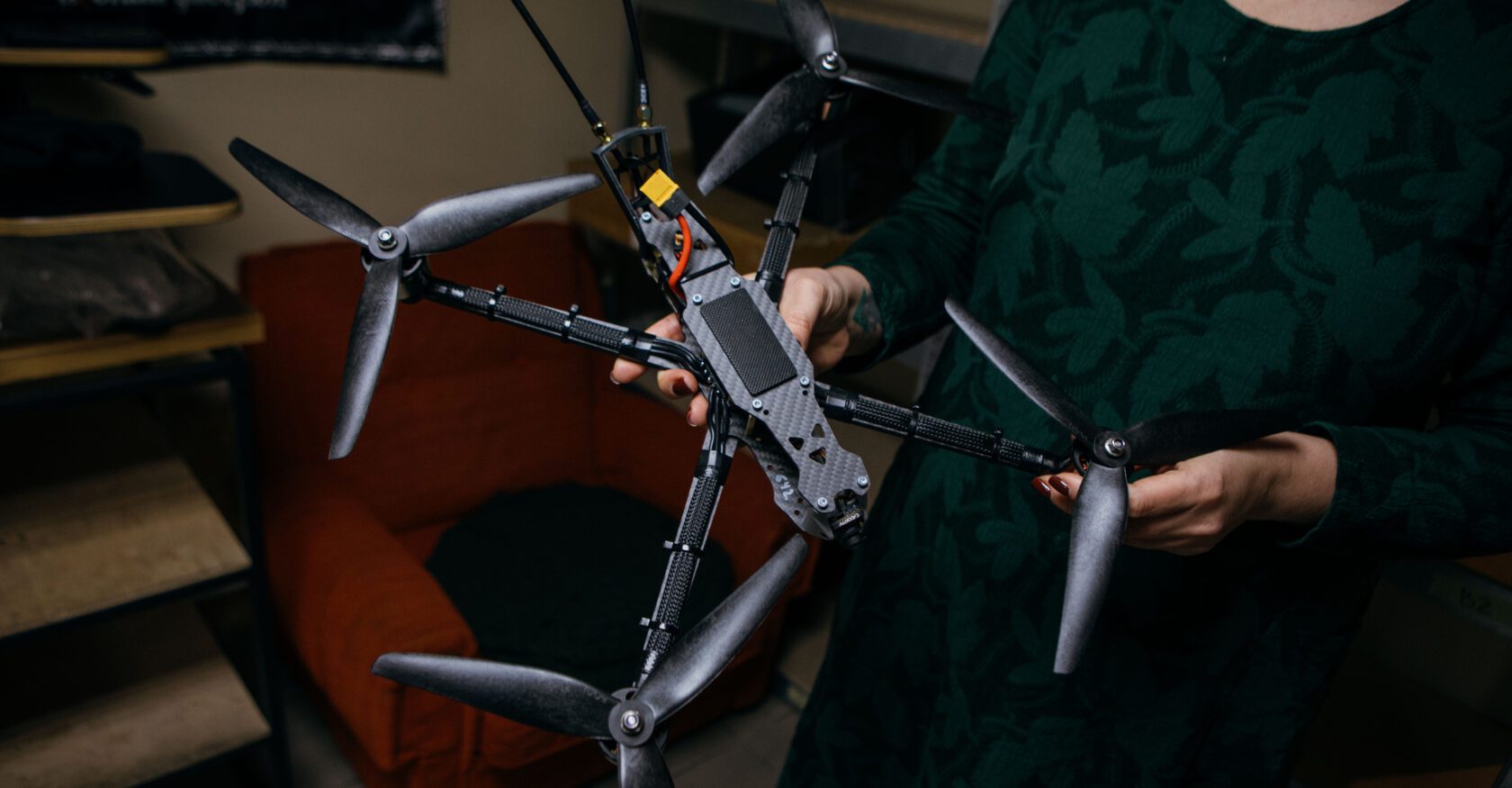
Volodymyr Vasylovych never stays long inside the workshop, but comes in and out regularly. He is retired now. He trained as a mechanical engineer long before the war and lived a quiet life until the occupation of Melitopol brought the war home. He comes whenever a new batch of drones begins. “It’s like Lego,” he says, with a faint smile. The difference is that every piece he tightens is already meant for the front.
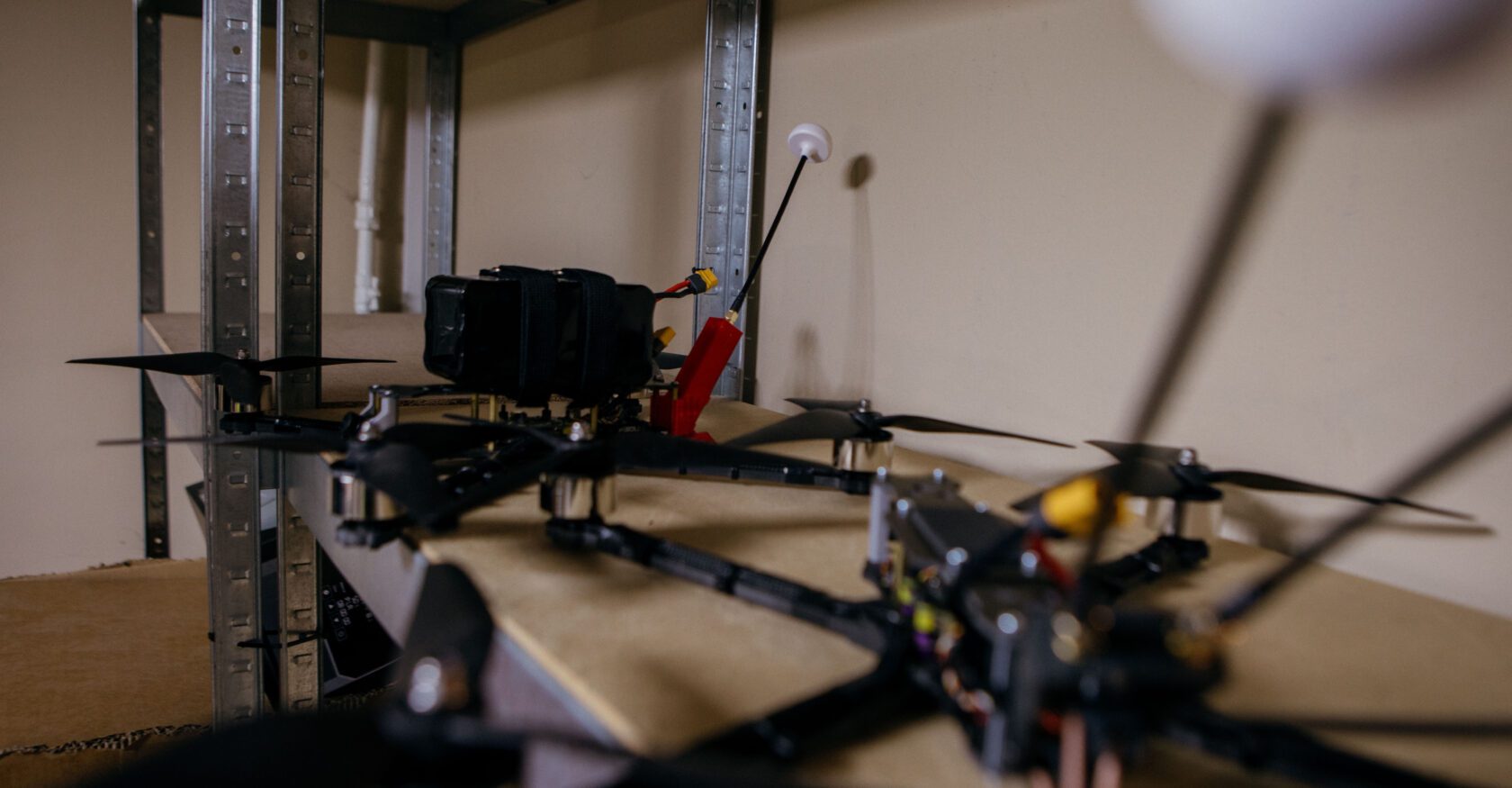
A basic 10-inch drone costs about 360 euros ($422), battery included. These are manually piloted unmanned aerial vehicles. At the front lines, they are equipped with a high-explosive payload the drone makers refer to as “candy.” Most drones are designed for single use, crashing directly into Russian soldiers or their position and equipment. A larger model, under development in the workshop and nearly ready, will lift up to 8 kilograms (17.6 pounds). These larger drones will bring food and medicine into places where cars are constantly targeted by the enemy.
Kseniia calls the drones “gifts.” She doesn’t like seeing them resting on shelves. “They should be in the sky,” the founder says.
She knows too well that, if inside the workshop time seems to unfold slowly, outside, the war is racing ahead.
In the eastern part of Ukraine, long stretches of road are now covered by anti-drone nets, hanging across fields and highways. The front is no longer a line. It runs through fields and cities. Soldiers, just like aid workers and journalists, carry drone detectors while in areas close to the front. But those devices are soon to be outdated.
New tactics are spreading along these deadly zones. Among them are so-called “sleeper drones,” machines left by the roadside. They power down during the night, silent and invisible, then wake at dawn to strike the first vehicle that passes.
In Ukraine, the threat no longer starts in the trenches. It now hangs permanently overhead.
Yet, inside the basement, no one talks about nets or detectors. They talk about frequencies.
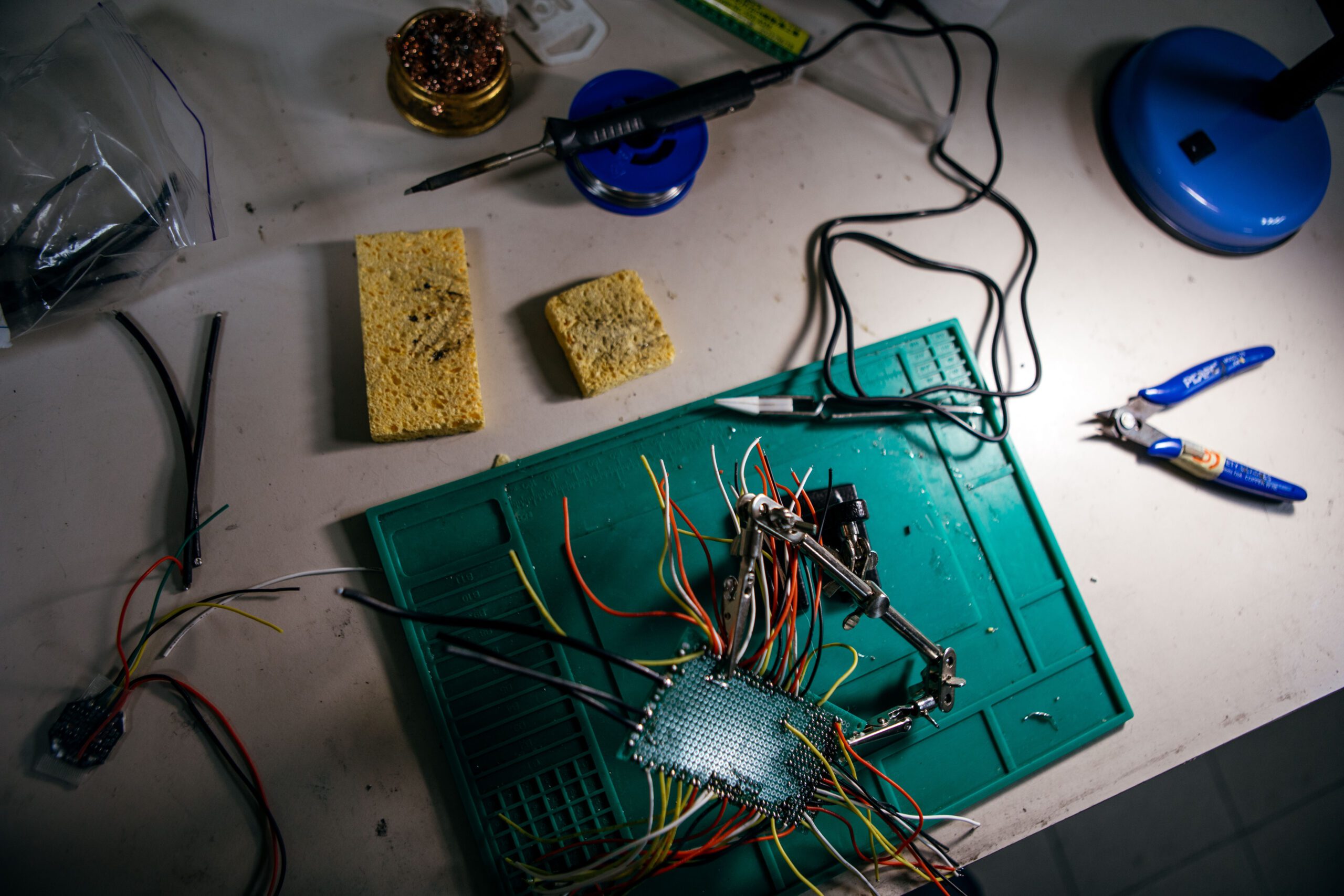
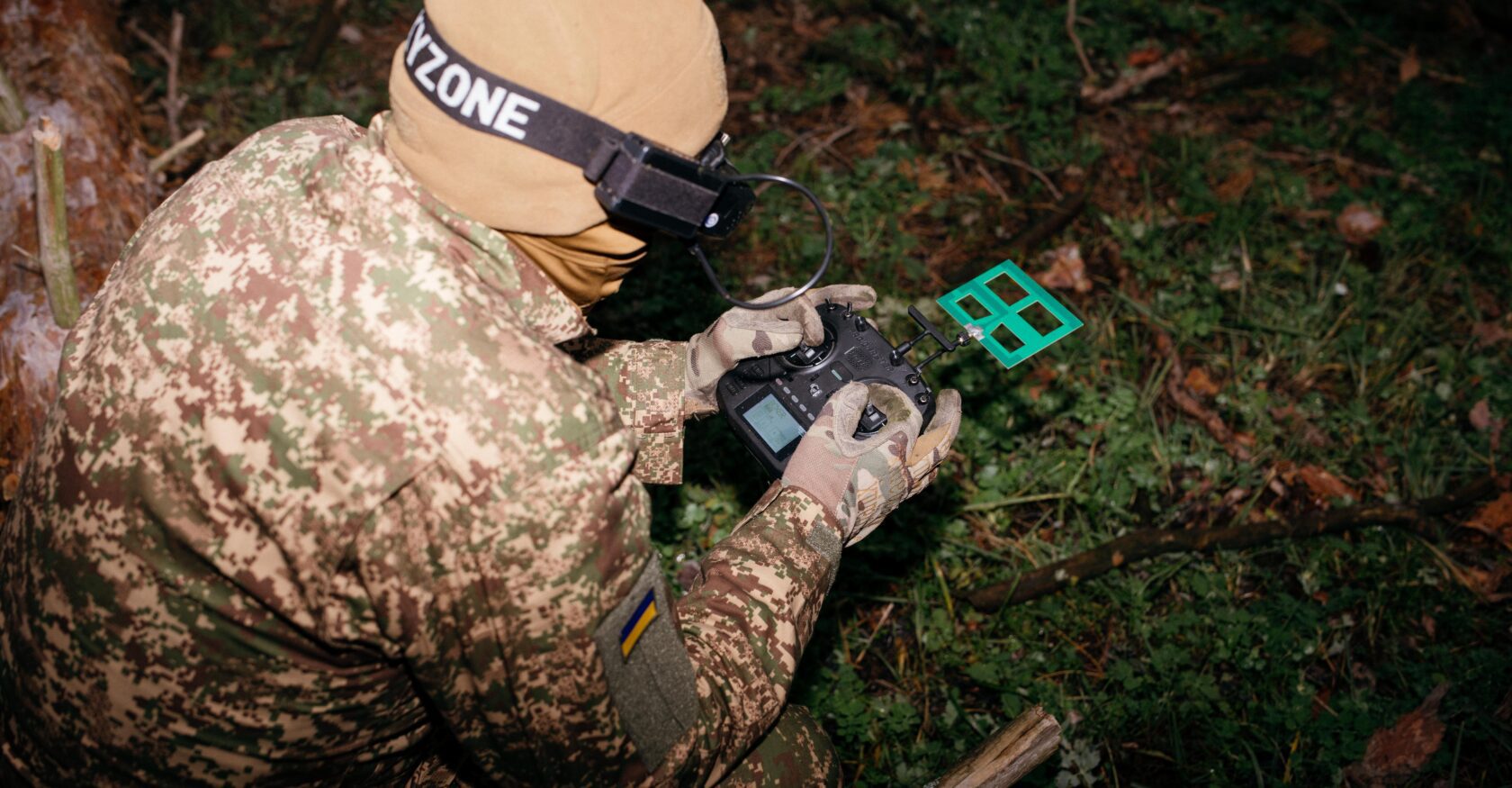
Each unit that receives drones from Kseniia fights in a different electronic landscape. Near Kharkiv, some frequencies are jammed out within seconds. Around Zaporizhzhia, others last longer. Thus, every batch is made for a specific place, a specific unit, and a temporary window in the electromagnetic noise of the front. Video transmitters are changed. Control systems are tuned. Nothing is standard for long.
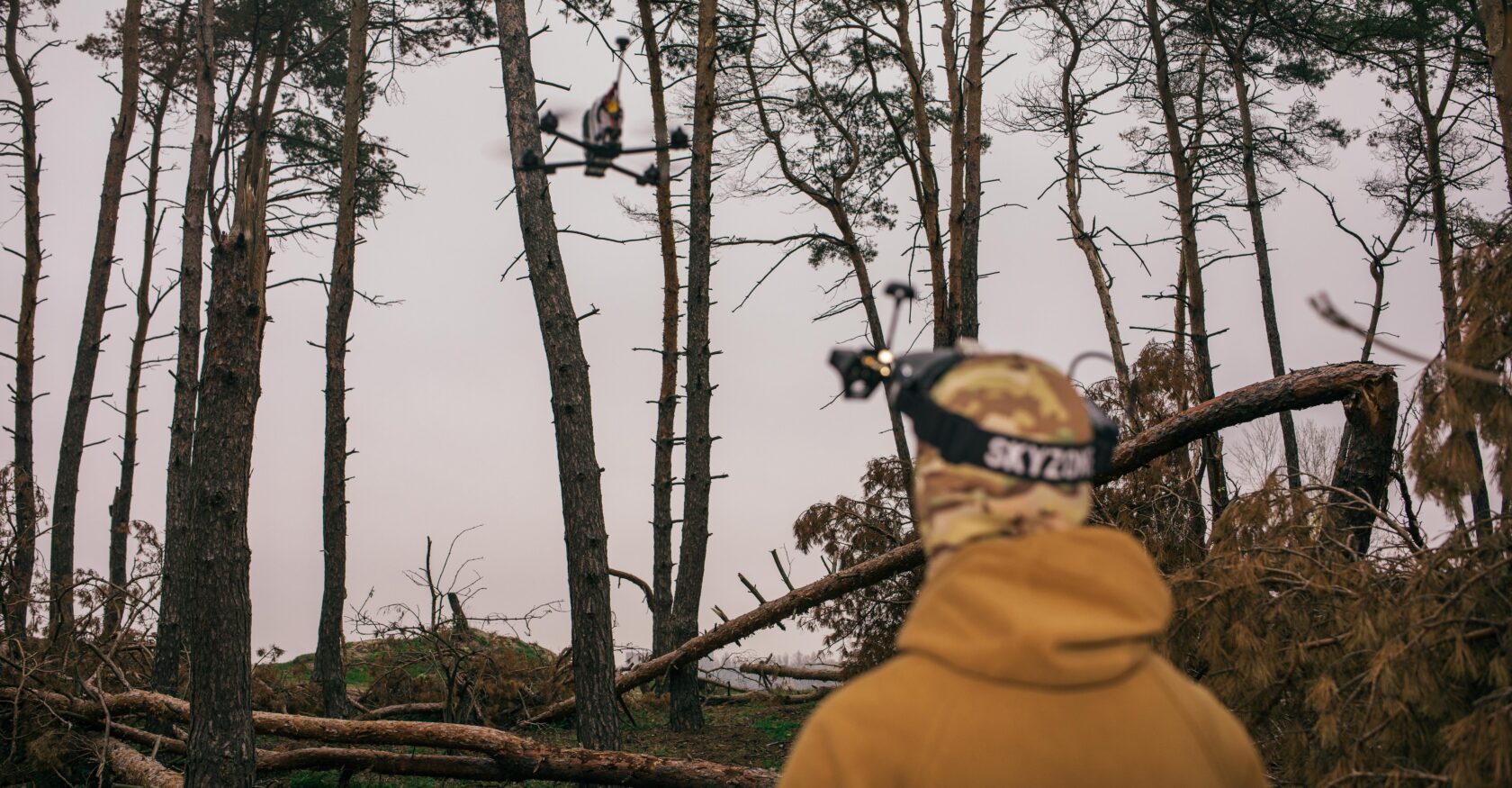
The battlefield has become a laboratory. Every flight teaches something. Every crash changes the next design. Currently, 10% of every Klyn batch is taken to a field outside the city and flown. If it fails, it is rebuilt. If it flies, it is sent east.
Khrystyna Pashchenko, a 32-year-old who left her job to join the war effort, tightens another screw. She does not know which road this drone will cross, which village it will pass over, or which Russian soldier it will hit. To her, it does not matter, as long as it fulfils its purpose. The rest is decided in the eastern part of the country. Somewhere in an advanced position, a pilot will guide it through jamming and wind, toward a target chosen minutes before launch. When the button is pressed, there won’t be any sound or image, only distant killing.
Kseniia checks her phone. Videos just arrived from the front — short, shaky clips. Some capture success. Others show failure. She watches and updates her strategy accordingly. Soldiers who perform receive more drones. Those who do not are set aside. “Every failure is a loss of money,” she says. And money here means Ukrainian lives that can be saved. “Pacifism is a luxury,” she says. “We simply cannot afford it.”
This reporting was supported by the International Women’s Media Foundation’s Women on the Ground: Reporting from Ukraine’s Unseen Frontlines Initiative in partnership with the Howard G. Buffett Foundation. Tetiana Burianova contributed reporting to this story.
Correction: An earlier version of this article misidentified Volodymyr Vasylovych as Volodymyr Zelensky. His last name is Vasylovych. Jan. 31, 2026.