



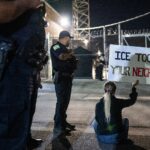






This past winter, the United States’ militarized migration enforcement system laid bare its disregard for human dignity in Minnesota’s Twin Cities. People were abducted in broad daylight, civil liberties were trampled, and state killings continued with impunity. Yet instead of reckoning with these atrocities, Congress responded by approving $70 billion in new funding for ICE and Border Patrol — without attaching a single reform or guardrail.
Of course, Operation Metro Surge, the Trump administration’s name for the immigration enforcement occupation in the Twin Cities, was not an aberration. It was an escalation of the same inhumane immigration and national security policies the country set in motion during the so-called “Global War on Terror.” The unchecked violence carried out abroad has long been mirrored at home, metastasizing along US borders and into cities across the country. Only by confronting the roots of this violence can we begin building a foreign policy that fosters peace, and a just migration system untethered from the hawkish national security agenda of decades past.
In the aftermath of the Sept. 11 attacks, the United States entered a watershed moment in migration policy. The impulse to police immigration through a lens of enforcement and criminality long predated 9/11, with roots stretching back through the 1800s and intensifying throughout the 20th century. Governments have a legitimate responsibility to protect people from future terrorist attacks, but 9/11 gave policymakers a new rationale for folding immigration squarely into the nation’s counterterrorism agenda. Conflating migration with national security breathed fresh life into a dangerous policy framework with devastating consequences. Because the hijackers were foreign nationals present in the United States on nonimmigrant visas, policymakers used the attacks to harden an already punitive immigration system under an explicitly national security framework.
Congress created the Department of Homeland Security (DHS) the following year, consolidating 22 offices from five federal departments into one sprawling entity. The Patriot Act granted unprecedented new surveillance, search, and detention powers, while the National Security Entry-Exit Registration System (NSEERS) required tens of thousands of immigrant men — primarily from the Middle East, South Asia, and North Africa — to register with the federal government, including those who had already been living in the country for years.
Thousands of immigrant men, largely of Middle Eastern or Muslim background, were swept into prolonged detention through NSEERS, often with officials refusing to disclose either the charges against them or their whereabouts. Many were detained or placed into deportation proceedings not for any connection to terrorism, but because the registration process had exposed minor civil immigration violations, such as visa overstays or failing to file a change of address. Deportations were expedited, and an increasing number of immigration hearings were closed to the public. More than 80,000 men complied with NSEERS, over 13,000 were placed into deportation proceedings, and not a single terrorism conviction resulted.
Perhaps nowhere is a clearer symbol of the Global War on Terror’s far-reaching abuses than the Guantánamo Bay naval base. On Cuban territory despite Havana’s consistent protests since 1959, Guantánamo is both the site of chilling injustices and an apt illustration of the overlap between US war-making and migration policy. The base became synonymous with horrific human rights abuses, including the indefinite detention and torture of terrorism suspects, carried out beyond meaningful legal oversight and justified under the 2001 Authorization of Use of Military Force (AUMF), the law that was rashly enacted with no guardrails just three days after 9/11.
Yet, Guantánamo Bay has also long housed a Migrant Operations Center, where Haitian migrants were detained in inhumane conditions in the 1990s. In 2025, for the first time, migrants were illegally transferred from the US to Guantánamo during deportation proceedings, placing civilians in areas only authorized under military control without due process. Now, as US officials threaten to “take” the sovereign nation of Cuba, US military planners are reportedly preparing for the possibility of detaining Cuban migrants at the base.
From Afghanistan and Iraq in the first two decades of the 2000s to Cuba and Iran today, the foreign policy that fueled the “Global War on Terror” has been instrumentalized to feed violent immigration enforcement domestically. Many Americans may not realize that the United States has been bombing Somalia since 2007, using the 2001 AUMF as legal cover. At the start of this year, while the Department of Defense conducted more strikes in two weeks in Somalia than it had in all of 2024, DHS sent 2,000 federal agents to surge into the Twin Cities, home to the US’s largest Somali American community. Neither Somalis abroad nor Somali Americans in Minnesota have become safer or more secure as a result of this multi-front, militaristic surge.
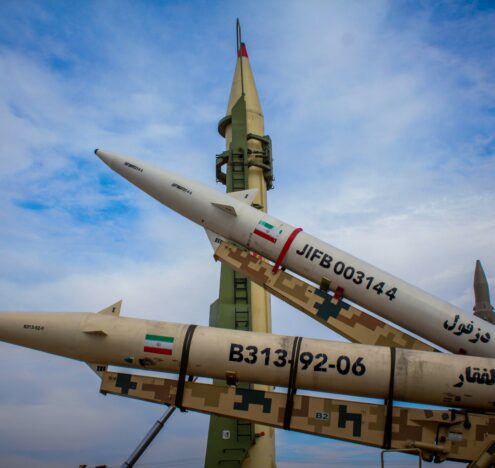
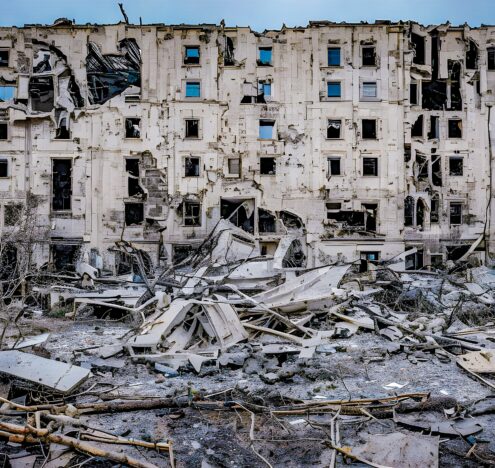
This pattern extends beyond Somalia, as US militarism continues to rage abroad in concert with militarism at home. The United States is funding and fueling genocide in Palestine’s Gaza while detaining and attempting to deport peace activists within its own borders. Simultaneously, with flimsy justifications reminiscent of the US invasion of Iraq two decades ago, the US-Israel coalition is waging an illegal, destructive war against Iran, Lebanon, and Palestine, once again displacing millions of people throughout the Middle East.
At the same time, in the Western Hemisphere, Trump has claimed that the United States is at war with drug traffickers, labeling seafarers with the invented term “narco-terrorists,” in an attempt to justify murderous strikes on boats in the Caribbean Sea and Eastern Pacific Ocean. Currently being litigated, he invoked the Alien Enemies Act of 1798 — most known for its use to justify Japanese internment camps during World War II — to detain Venezuelan migrants he alleges are affiliated with the gang Tren de Aragua and deport them without due process to El Salvador’s notoriously abusive CECOT prison. By repurposing the rhetoric, legal authorities, and extraordinary powers of the “Global War on Terror,” the president has sought to expand his power to use lethal force and detain and expel migrants.
A “homeland” that is neither safe nor secure for the most vulnerable among us is no homeland at all. Security cannot be hoarded or rationed with the rights of some privileged over the rights of others; true safety is collective, or it is not safety at all. Our well-being as humans is fundamentally mutually dependent.
Over the past year, communities across the United States have weathered the collective impacts of this uneven paradigm as militarized immigration enforcement has expanded into everyday civic life. Schools, houses of worship, and healthcare facilities have become hotspots for armed agents. For decades, DHS was subject to guidance that mandated discretion when conducting immigration enforcement at or near these spaces. That policy was rescinded in January 2025. Since then, arrests at courthouses have undermined our justice system, encroachment on church grounds has disrupted food ministries, and our children’s right and access to education has been disturbed. The same militarized logic the United States has exported abroad for decades has increasingly turned inward, transforming courthouses, churches, and schools into spaces of fear and force — violating the sanctity of the institutions that make our communities whole.
These forms of violence are intertwined, mutually reinforcing, and mutually legitimizing, but Congress has yet to respond with the clarity this moment demands and dismantle the legal architecture that enables unlawful and abusive practices. The 2001 AUMF remains on the books, discretionary “terrorism” designations are permitted and flaunted, and constitutional authority over war is surrendered as Congressional lawmakers move to fund unjust and unlawful wars abroad.
Still, ending abuses abroad is insufficient if the same legal authorities, institutions, and militarized logic continue to be redirected inward. After a year of documented abuses, Congress has time and again insisted on continued funding for migration enforcement without a single reform, safeguard, or accountability measure. Schools, churches, and courthouses — the institutions that anchor our communities — have become battlegrounds for militarized immigration enforcement, while governmental oversight bodies have been systematically gutted. Legislators should have to answer a simple question: Why are you willing to sacrifice the very communities you were elected to serve?
Ultimately, the question is whether the United States can embrace an affirmative vision of the future — one in which the inherent dignity of every person, regardless of documentation or location, is respected and upheld. Rejecting the false choice between national security and human rights means recognizing that the same commitment to dignity, accountability, and the rule of law must guide US actions abroad and the treatment of communities at home.