










The United States war with Iran has, at least for now, ended. But even with the ink not yet dry on the ceasefire agreement, it’s not too soon to offer an assessment of US President Donald Trump’s decision to attack Iran. It’s a strategic calamity that has brought no tangible benefits for the United States and produced significant strategic, economic, political, and diplomatic costs.
It’s not just that thousands of Iranians and dozens of US service members have been killed or wounded, but the war has left Iran’s nuclear capacity broadly unchanged, its missile force largely intact, its hardliners empowered, and its leverage over the Strait of Hormuz — and consequently the global economy — enhanced.
Why did the war go so badly? Because Trump made the same mistake that US leaders repeatedly make when going to war: He overestimated the benefits of using military force and badly underestimated the costs.
Trump failed to take into account the old military adage that the enemy gets a vote. Yes, the US possesses the world’s most powerful and sophisticated military, but administration officials severely underestimated the possibility that Iran would respond to force by closing the Strait of Hormuz to maritime traffic. Once that happened, Trump, who seemingly expected a quick and painless victory, sought an exit ramp. Hence, the ceasefire extension signed last week only demands one major concession from Iran: to reopen the Strait of Hormuz, which is only necessary because of the war itself.
Indeed, the US has made little progress toward the objectives that Trump laid out when he announced his decision to launch military strikes against Iran in late February. Those objectives were to destroy Iran’s missiles and missile production capabilities, annihilate its navy, weaken its support for regional militants, and prevent it from acquiring a nuclear weapon.
Trump also hinted the war could lead to regime change and promised the Iranian people that the government “will be yours to take.”
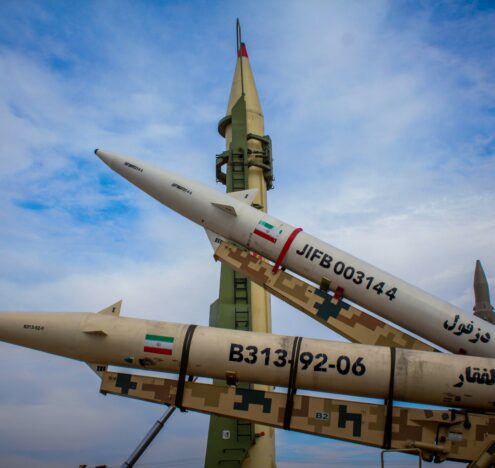
Nearly four months later, the results are bleak. Classified intelligence assessments indicate that Iran retains roughly 70% of its prewar missile stockpile and mobile launchers, has regained access to approximately 90% of its underground launch facilities, and its missile and drone production infrastructure remains largely intact. Iran’s ability to produce a nuclear weapon is broadly unchanged since last summer. And while US strikes have done significant damage to Iran’s naval capabilities, it didn’t stop Tehran from closing the Strait of Hormuz.
As for regime change, the assassination of Ayatollah Khamenei did not topple the mullahs. Instead, it elevated his son Mojtaba — widely regarded as more hardline — while passing effective decision-making authority to a cohort of similarly hard-line commanders. Iran is battered but still dangerous, now led by harder-line actors, with a better, credible understanding of how to impose pain on the United States and its partners in future crises.
Still, as bad as it is for the US to fail so miserably, the far bigger problem was that none of these objectives were crucial to US national security interests.
Does annihilating Iran’s navy or wiping out its missile production make the US demonstrably safer? Not really. Per US intelligence, Iran is more than a decade away from even developing a missile capable of hitting the US homeland. Likewise, Israel and Tehran-backed militants still threaten one another, but Iranian proxies have not posed a serious, direct threat to core US interests in years. In fact, they were already significantly weakened well before the US attacked in February. Preventing nuclear proliferation has long been a key US national security interest. But Trump declared Iran’s nuclear infrastructure “obliterated” last June. If that was true, how was another round of fighting worth the cost, especially when it’s left Iran’s nuclear capacity largely unchanged?
What is even more remarkable about Trump’s decision to go to war is that it directly contradicts his own National Security Strategy (NSS), published in November.
That document described the Iranian regime as “weakened,” argued that the Middle East should play a less dominant role in US foreign policy, spoke of “a high bar for what constitutes a justified intervention,” and deemphasized nuclear non-proliferation efforts.
In going to war with Iran, the Trump administration ignored its own stated priorities, but even if the US had achieved its stated goals, the juice would never have been worth the squeeze.
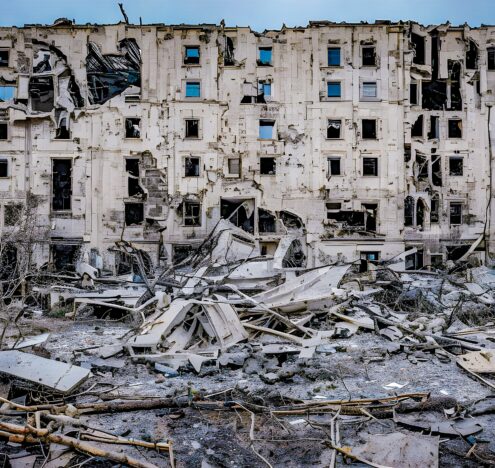
The costs, meanwhile, are staggering. As of mid-May, the Pentagon estimated the cost of the war at almost $30 billion, and closer to $50 billion when including the reconstruction of bases damaged by Iranian attacks. That number is almost certainly higher today.
The closure of the Strait of Hormuz has led to a global spike in gas prices, which now average around $4.00 per gallon. The extra cost to consumers tops $60 billion — or an average of $300 per American household.
Increased fuel prices have pushed up shipping costs and airfares for consumers. Inflation is now cresting above 4%, which has tied the hands of the Federal Reserve and made it far more difficult for the central bank to cut interest rates. Keeping rates at their current level alone could lead to slower growth and cost the US hundreds of billions in lost output.
Hundreds of businesses have cited the conflict as a trigger for everything from production cuts and price increases to suspended dividends and reduced earnings guidance.
And there are the other indirect costs. For example, a third of the world’s helium passes through the Strait of Hormuz, affecting semiconductor manufacturing, medical imaging, and other industries. The Persian Gulf is also a major artery for fertilizer inputs. The price of urea, the most popular synthetic nitrogen fertilizer, has risen by 80% since February, threatening to reduce global food production and lower crop yields.
The war has also strained US relations with partners in the Gulf and beyond, reinforcing perceptions of Washington as a reckless actor on the world stage. Worse yet, the US is now in a worse position to defend key allies or deter military adventurism elsewhere in the world — particularly in Asia.
Since February, the United States has fired roughly half its stockpile of long-range stealth cruise missiles, a third of its Tomahawks, half of its THAAD interceptors, and up to 60% of its Patriot interceptors. It could take years to replenish these stocks. For an administration that in the aforementioned NSS identified deterring possible Chinese aggression over Taiwan as a top priority, the decision to burn through scarce, hard-to-replace munitions against Iran is difficult to square.
In short, the Trump administration chose war to address problems that were either peripheral to US national security interests or could not be solved by military force alone. In the process, it created a bigger problem — the closure of the Strait of Hormuz — and weakened its ability to respond to future global crises.
If there is any positive outcome from the Iran war, it would be in forcing US leaders to think more broadly about the efficacy of using military force. That the United States can project power and achieve narrow tactical successes is unquestionable. But that does not equal strategic success. Strategy requires matching means to ends, distinguishing core interests from peripheral ones, and understanding the potential costs that adversaries can impose in response.
The Iran war is yet another reminder that the benefits of force are often oversold, and the costs are always underestimated.