Once it finished with the Qur’an, the mosque nearby began blaring songs from the Iran–Iraq war, and about the seventh-century battle of Karbala, in which the Prophet Muhammad’s grandson Hussain was martyred. Overnight, new posters of Khamenei have been plastered over the city, with the words Martyr Leader emblazoned beneath him. At the request of the government, religious people have begun gathering in the city squares to mourn. They cry and heave in supposed collective grief. Among everyone else, the mood is lighter. On my way to the supermarket, two shopkeepers regale passers-by: “Go back to the front line!” They are both laughing, enjoying themselves.
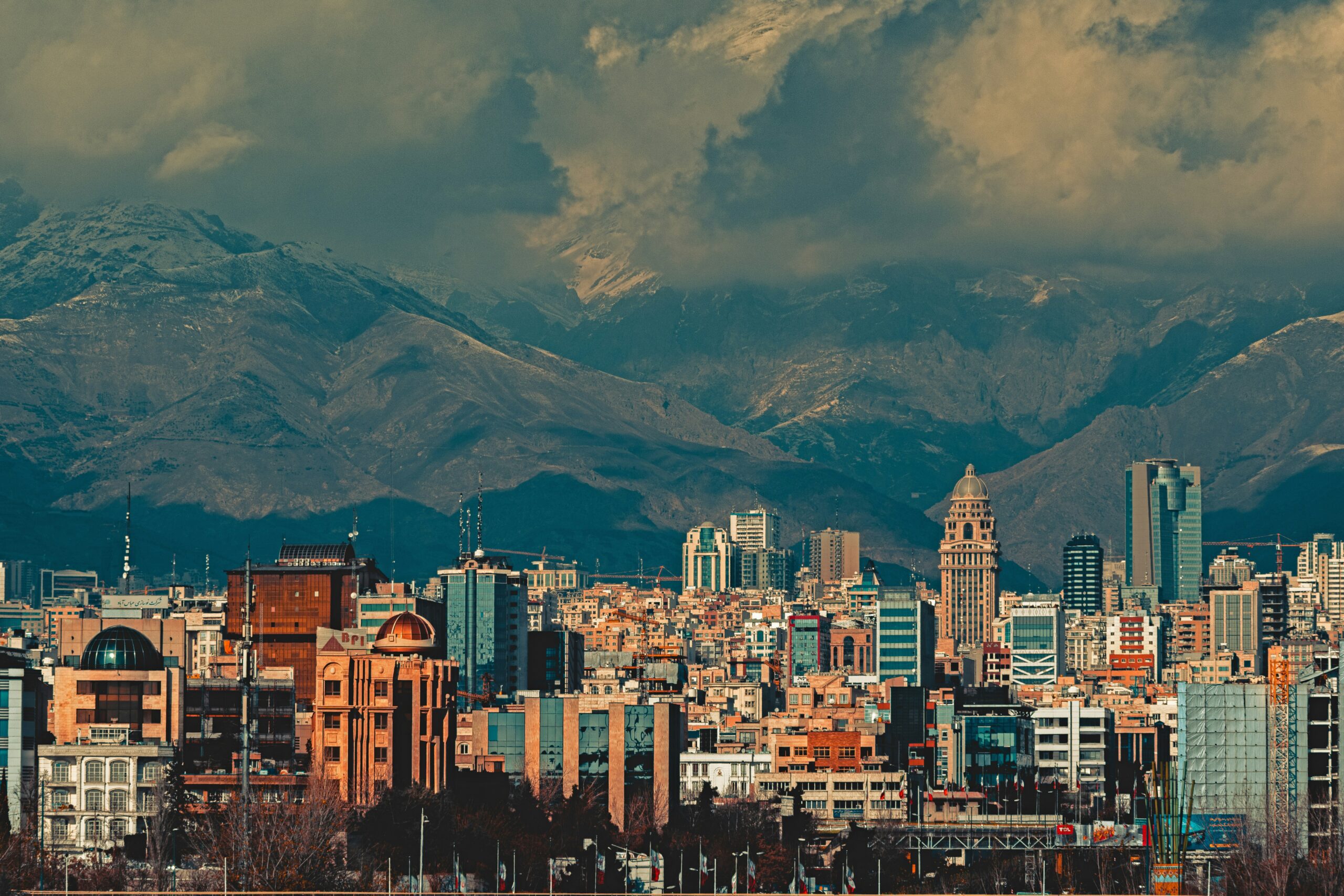
I live near one of the larger squares. Every day like clockwork, from 9 pm to midnight, crowds of the regime’s Basiji supporters gather en masse to shout anti-US and anti-Israeli slogans. This is the government’s attempt to bully ordinary Iranians into silence. However, for the majority of us, their songs and slogans are meaningless. We’ve heard them ad infinitum since 1979.
Once the Basiji go home, precious silence once again reigns in our neighborhood. Ever since he was killed, paintings of Khamenei have appeared in the city. Everywhere you look, you can see this kind of stencil-style graffiti. Under them, there are short phrases: Superman of Iran, Father of the Nation. There are even some pictures of his son, Mojtaba.
When I walk past one of the paintings again, someone has covered up Khamenei’s face with garden soil.
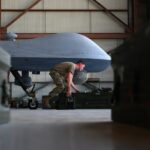
After 10 days of war, the sounds of the explosions and bombings have almost become normal. When will it end? And where are our leaders? State TV has no information: It broadcasts war propaganda or mourning dirges for its dead spiritual commander.
On the streets, people talk about Iran’s missiles and their failure to prevent US and Israeli attacks. A friend tells me, Khamenei’s death is akin to targeting the brain; the rest of the body loses control and coordination. He and I watch US fighters and drones in the skies above us. On the ground, my friend believes that one group is running the country and another is fighting the war, and neither side knows what the other is doing. Meanwhile, this fairy tale of the return of Reza Pahlavi, the son of the last Shah and the prince on a white horse, is fading fast.
At 1:46 am, I receive a text message from the government: Mojtaba Khamenei is the new spiritual leader of Iran.
Nearly two weeks into the war, one of my sisters, with her daughter and our mother, came over for dinner. As we prepared the food, two intense explosions shook the building. We didn’t know where we could hide. My sister was extremely frightened and held tightly onto her daughter’s hand. In a panic she kept calling to my mother in the kitchen to make sure she was okay. My mom, sitting on the floor, yelled back, “I’m fine, I’m fine.”
The blast wave shattered two of my windows. Thick smoke rose outside as an unusually strong wind moved eastward through the streets. Later, on Nowruz, the Persian New Year, my family joined me again. To celebrate, we prepared a Haftseen table with ritual foods. All of them start with the letter sin, a soft s — senjed (the fruit of the lotus tree or oleaster) for wisdom; seeb (apple) for beauty; sabzeh (green sprouts) for rebirth and renewal; samanu (sweet wheat pudding) for power and strength; seer (garlic) for health; serkeh (vinegar) for age and patience and somāq (crushed sumac berries) for sunrise, that moment of transition from darkness to light.
But we had no such transition this year. Like every gathering these days, the festivities were punctuated by bombardment. As we stood around admiring the table, two intense explosions shook the building.
Nobody moved. Our fear was palpable. Then, my niece, who is only 12, broke the tension. “Don’t be afraid,” she told the adults and began to laugh.
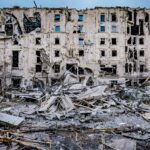
Now that my windows are smashed, I have no escape from the sounds of the Basiji in the mosque. To be honest, I don’t know what is worse, the sounds of the bombing or the Basijis’ pleas for God’s mercy. While they are blasting prayers, all I can think about is the blood of ordinary people on the streets after every aerial attack.
When I woke up the next day, someone was playing piano in a neighbor’s flat. For a brief second, it seemed like a normal morning in Tehran. Then explosions from five heavy bombs are a stark reminder.
The war has exacerbated another problem that Iranians have to manage: inflation. The economy was already in free fall, but now prices have doubled even compared to last month. Before, you might have been able to buy items at the supermarket. Now you have to check prices and not be surprised by a triple price increase. The challenge is trying to find the lowest-quality food, which is at the cheapest price. Still, there are plenty of fruit and vegetables in the supermarket that no one can afford. This is another kind of famine.
After the Nowruz holiday the government announced that schools and universities would be held online using the government’s own internal internet. At the same time, they have outlawed practices as basic as photography. My phone constantly lights up with text messages: “If a person attempts to take a picture of a sensitive site or building, he or she can be detained. Therefore, if you see this taking place, you are required to send the matter immediately to Ministry of Intelligence Official.”
It is unclear how universities can continue teaching arts or journalism courses when documenting the war is outlawed.
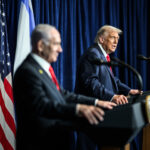
People are scared and believe the country is no longer secure. The attack on the South Pars gas field, followed by Trump’s repeated threats to target Iran’s nuclear power plants unless the Strait of Hormuz is reopened, mark a dangerous escalation. When, after 40 days of continual bombing, he threatened to send Iran back to the Stone Age, I saw fear in people’s eyes. You can’t imagine the effect of knowing that someone wants to kill you, and that everyone is waiting to die.
After he said that, I couldn’t sleep. I got out of bed and looked out the window. All the lights inside the flats of the surrounding buildings were on. Everyone was awake, watching the news. IITV was keeping a countdown of how long until Trump’s deadline.
How much more are we expected to endure? If gas is cut off, how are people supposed to cook or keep warm? If the nuclear facilities are destroyed, we will all be thrown into darkness. Trump’s repeated 48-hour ultimatums, with bridges and other infrastructure next in the line of attack, amount to collective punishment.
I have taped up my living room windows to protect them. When I check them again, I notice what a poor job I’ve done. I must have been nervous. Some of the tape doesn’t even stick to the glass. I also notice something I hadn’t seen before: My niece has stuck her cartoon stickers all along them.
I get through to my friend’s phone in another country: Tomorrow Trump plans to bomb the electricity plants. If that happens, I will no longer be able to charge my phone and will lose all contact with the world.
This is an excerpt of Tehran Diaries: Dispatches from Iran Under Siege, which will be published in North America by OR Books on July 14, 2026, and is now available for preorder.