









The Congressional Budget Office (CBO) estimates that the war with Iran has cost the Pentagon roughly $38 billion as of Aug. 1, a nonpartisan accounting that comes in below the administration’s own public figures and has only deepened the confusion over how much the six-month conflict has actually cost.
In a letter to US Representative Brendan Boyle, the House Budget Committee’s ranking Democrat, CBO Director Phillip Swagel laid out the most detailed independent tally yet of a war that the Pentagon itself has resisted documenting.
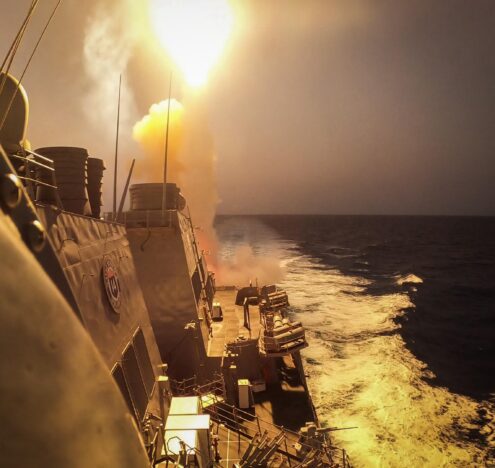
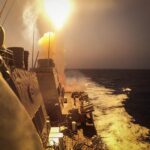
The Defense Department dubbed the opening phase of the conflict Operation Epic Fury, a five-week barrage that began on Feb. 28, 2026, when US cruise missiles and coordinated Israeli airstrikes hit Iran with the stated goal of trying to “obliterate Iran’s ballistic missile arsenal and production capacity, annihilate its navy, sever its support for terrorist proxies, and ensure the world’s leading state sponsor of terrorism will never acquire a nuclear weapon.”
A ceasefire took hold on April 8. It lasted three months. On July 10, after a wave of Iranian attacks on tankers in the Strait of Hormuz as the Trump administration failed to uphold portions of its requirements under the Memorandum of Understanding, the president declared the truce over, and low-grade fighting has continued since.
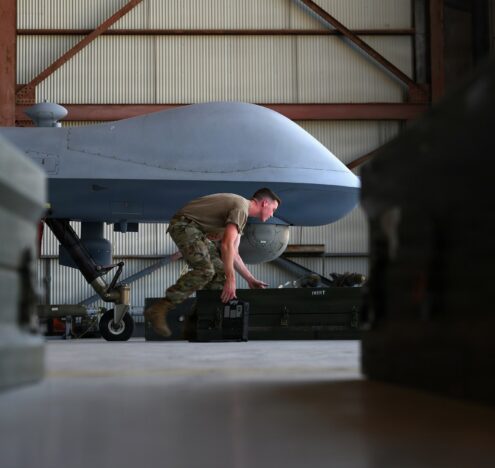
CBO’s $38 billion figure breaks down into four buckets: $21.7 billion to replace expended munitions, split between $7.3 billion in land attack cruise missiles and $13.1 billion in missile defense interceptors; $1.9 billion in lost equipment, most notably a THAAD radar system destroyed by Iranian fire; $10.4 billion in increased flying hours across Air Force and Navy aircraft; and $2.7 billion in higher fuel costs, driven by a Defense Logistics Agency surcharge and mounting losses on fuel sales.
CBO reached those numbers despite the Pentagon’s silence. “DoD did not respond to CBO’s requests for information,” the letter noted flatly, forcing analysts to rely on government databases and public reporting instead.
That gap between what the Pentagon says and what it will document runs through the entire estimate. Defense Secretary Pete Hegseth told the Senate Armed Services Committee on July 22 that combat costs through September would reach $37.5 billion, a figure close enough to CBO’s own that the two roughly lined up on everything except one line item: munitions.
The Pentagon initially told committee staff it had spent $25 billion on expended munitions, then revised the number upward to $27.7 billion two weeks later. Both are well above CBO’s $21.7 billion estimate. Swagel’s office could not say for certain why the figures diverged, though it noted the higher Pentagon number might simply reflect weapons fired after CBO’s cutoff date.
The disagreement widens further when set against the $87.6 billion supplemental funding request the administration sent Congress in June, of which $67.1 billion was earmarked for the Defense Department.
Of that request, CBO calculated that only $42.3 billion appeared directly tied to the war, and even that partial figure exceeded the agency’s own $38.1 billion estimate by roughly 10%. The largest source of the mismatch was a $17.3 billion line item the administration labeled “operational costs,” a category CBO said should have totaled closer to $13.7 billion under its own methodology. The rest of the supplemental request, some $20.5 billion, went to other departments and purposes with only loose ties to the war, including $11.1 billion for the Agriculture Department to offset fuel and fertilizer costs and, oddly, $1 billion for the Transportation Department’s Penn Station construction project.
Beyond the headline dollar figures, CBO flagged the erosion of the US missile defense stockpile. Between the Iran war and the 12-day war fought in Israel’s defense in June 2025, the United States has burned through an estimated one half to two thirds of its inventory of Patriot, THAAD, SM-3, and SM-6 interceptors, munitions that cost between $4 million and $28 million apiece and take years to replace.
CBO warns that rebuilding those stocks will likely take at least five years, a shortfall the agency says “would become especially problematic” in any future confrontation with a country like China, whose ballistic and cruise missile arsenal dwarfs Iran’s.
The war has also left its mark on US wallets. Brent crude prices jumped from $64 a barrel before the conflict to a peak of $103 in the spring, pushing core inflation an estimated 0.3 percentage points above CBO’s pre-war forecast and nudging short-term interest rates higher as well. Those pressures are expected to fade only gradually, CBO projects, with the effects of the war on prices persisting into 2027 even as the fighting itself grinds on without a clear endpoint.