







Skip to content
Children hang out outside the Circo Colombia circus tent in Supatá, Colombia, on Wednesday, April 8, 2026. (Natalie Skowlund, Inkstick Media)

Inside Colombia’s Military Circus

In Colombia, soldiers perform as clowns, acrobats, and trapeze artists. Is it public service, propaganda, or something more complicated?

Words: Laicie Heeley
Pictures: Natalie Skowlund
Date:
album-art

Sorry, no results.
Please try another keyword
  • A few hours outside Bogotá, a giant yellow circus tent rises above the countryside. Inside, families laugh at clowns, gasp at acrobats, and cheer for trapeze artists soaring overhead. The performers are all members of the Colombian military. For more than three decades, Circo Colombia has sent active-duty soldiers across the country to perform for[...]
00:00

A few hours outside Bogotá, a giant yellow circus tent rises above the countryside. Inside, families laugh at clowns, gasp at acrobats, and cheer for trapeze artists soaring overhead.

The performers are all members of the Colombian military.

For more than three decades, Circo Colombia has sent active-duty soldiers across the country to perform for communities, many of them in regions shaped by decades of armed conflict. Military officials say the circus builds trust, provides entertainment, and offers a different face of the armed forces.

But not everyone sees it that way.

Some Colombians view the circus as a sophisticated public-relations project for an institution still grappling with allegations of corruption, violence, and abuses committed during the country’s long civil conflict. Others argue the performances can blur the line between entertainment, recruitment, and intelligence gathering.

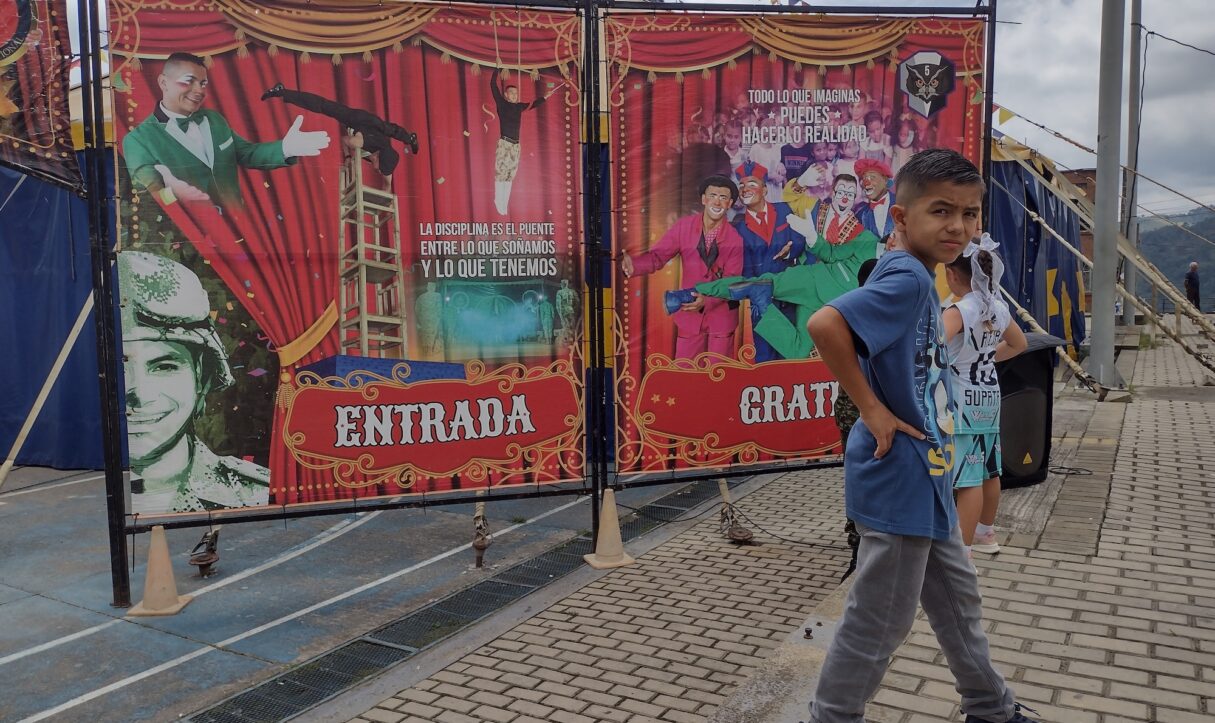
People wait in line for the Circo Colombia show in Supatá, Colombia, on Wednesday, April 8, 2026. (Natalie Skowlund, Inkstick Media)
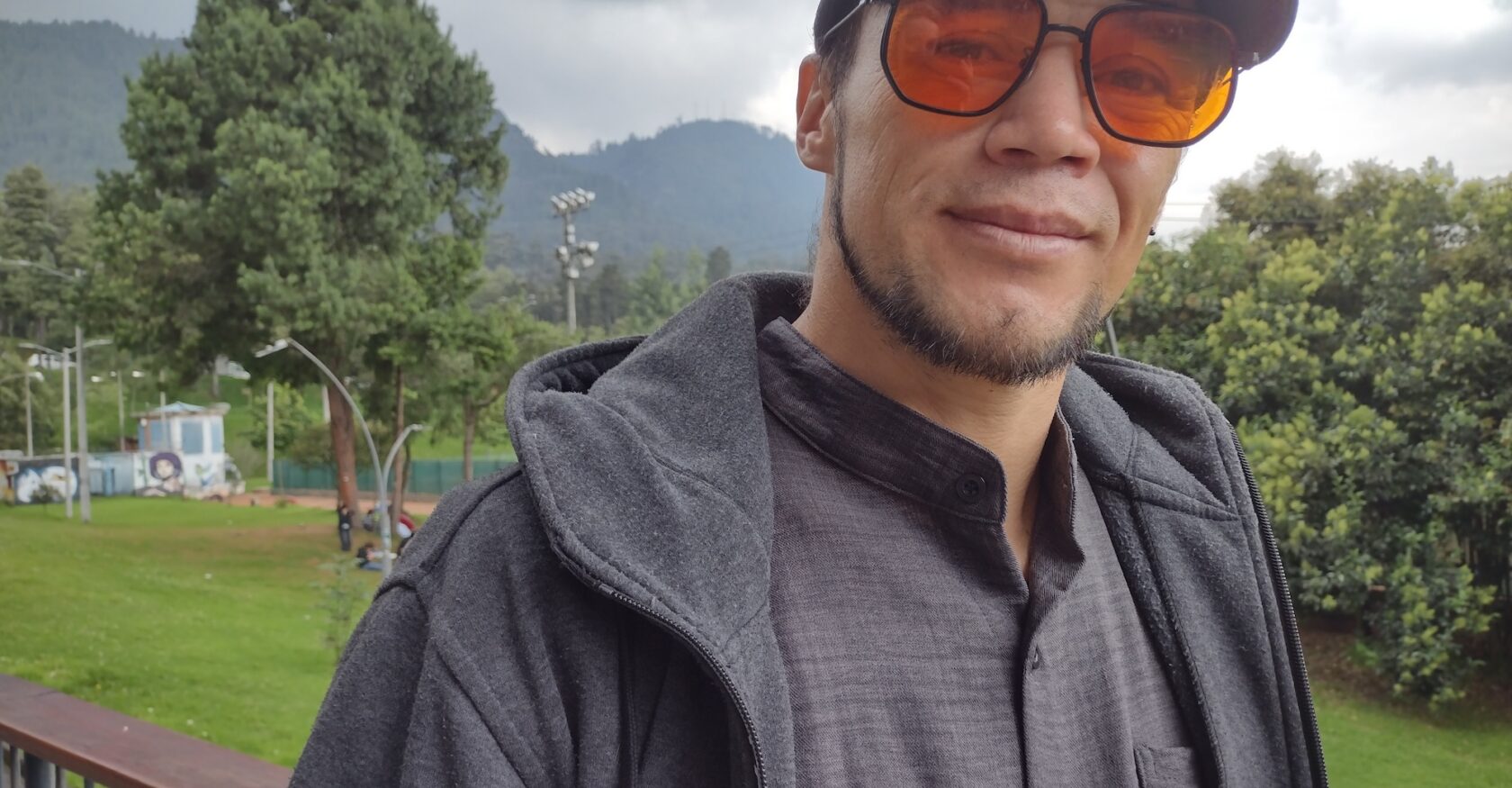
Portrait of former Circo Colombia soldier performer Jonathan Hernandez, whose circus name is "Tatán." (Natalie Skowlund, Inkstick Media)
Portrait of former Circo Colombia soldier performer Jonathan Hernandez, whose circus name is “Tatán.” (Natalie Skowlund, Inkstick Media)
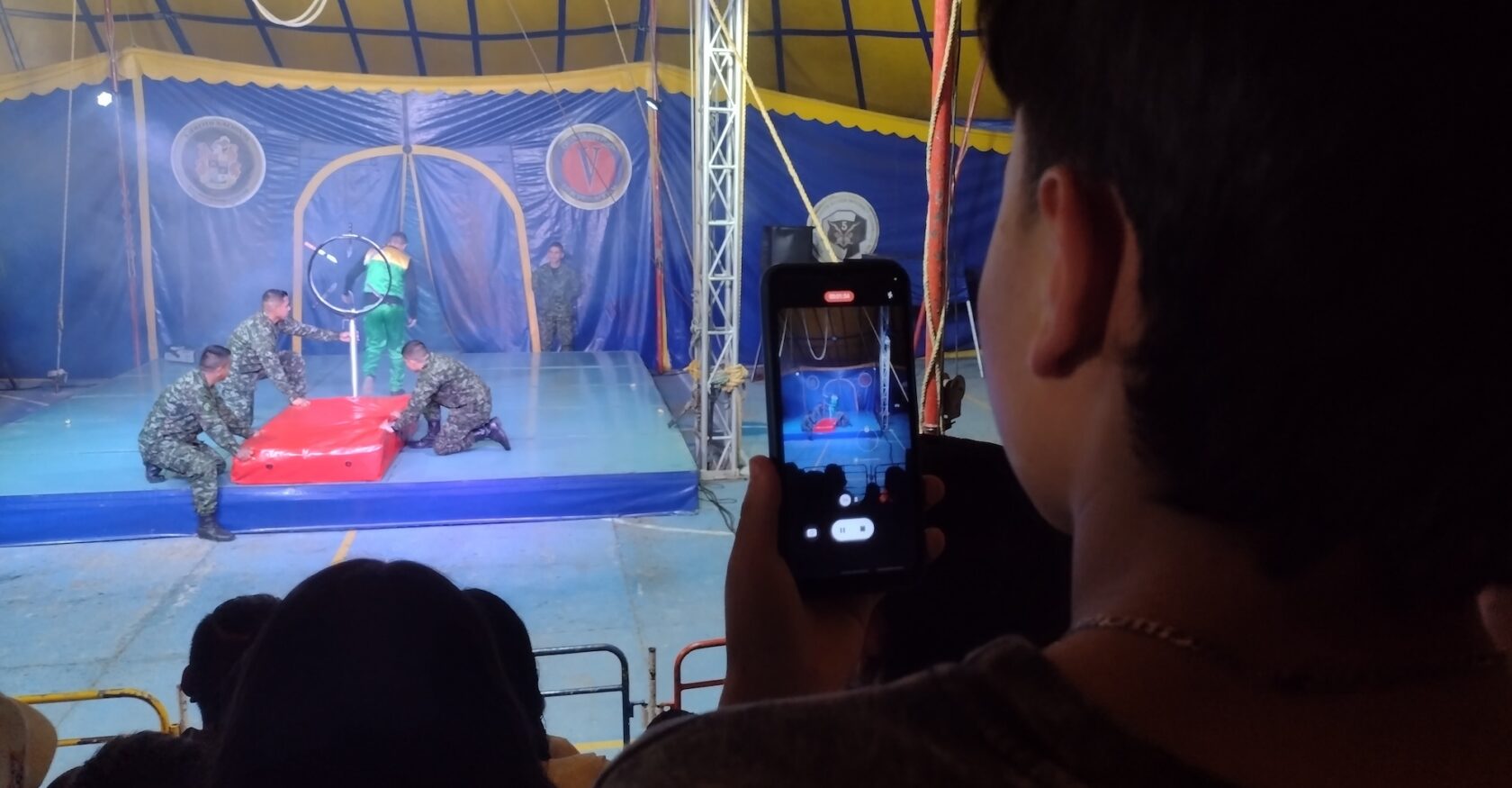
Soldiers prepare the next circus act as a young audience member films in Supatá, Colombia, on Wednesday, April 8, 2026. (Natalie Skowlund, Inkstick Media)
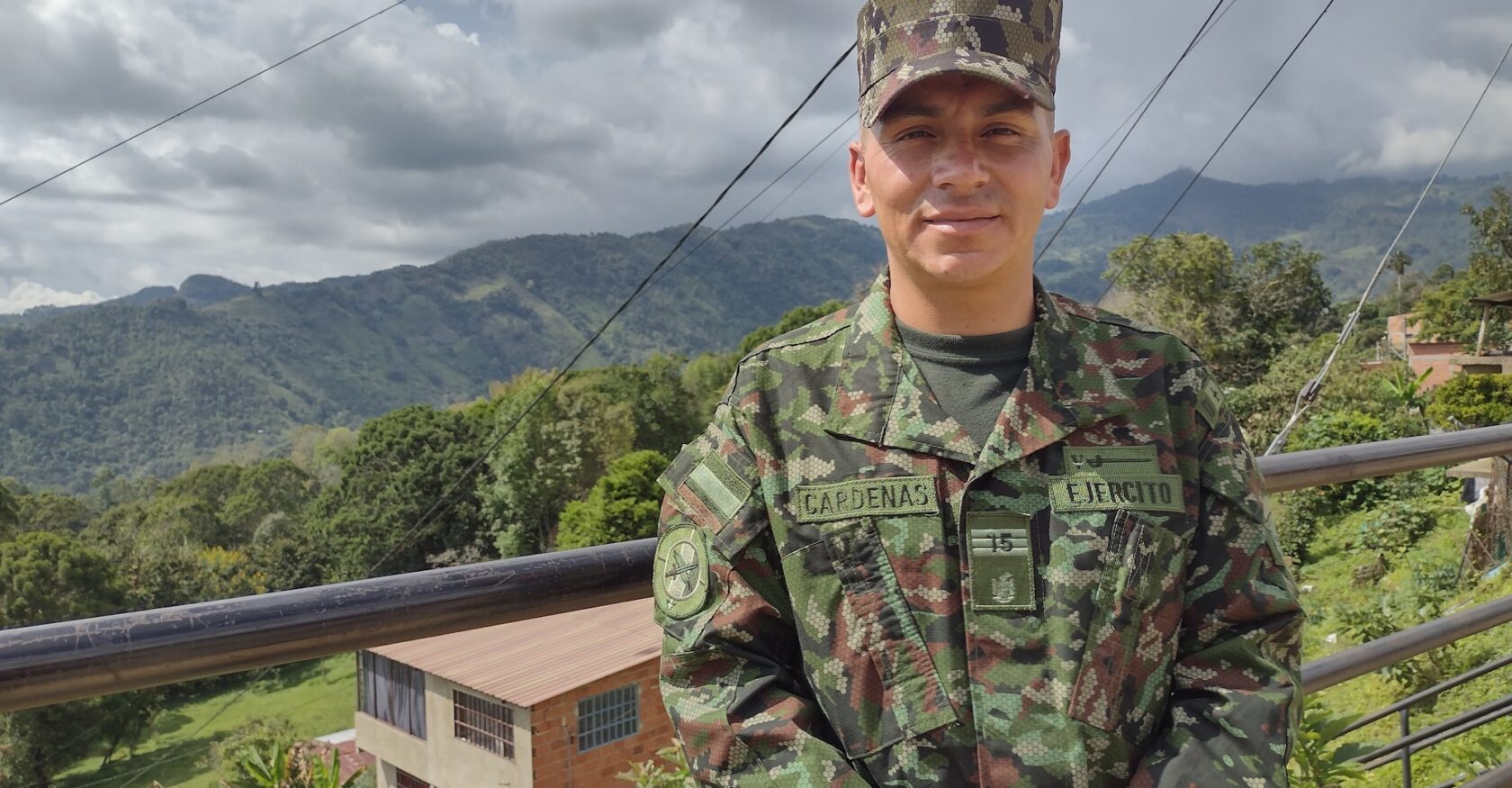
Portrait of Colombian soldier-clown Luís Javier Cardenas, who is also known by his circus name "Sancochito." (Natalie Skowlund, Inkstick Media)
Portrait of Colombian soldier-clown Luís Javier Cardenas, who is also known by his circus name “Sancochito.” (Natalie Skowlund, Inkstick Media)
Soldier-clown Luís Javier Cardenas, or "Sancochito," interacts with the audience during Circo Colombia in Supatá, Colombia, on Wednesday, April 8, 2026. (Natalie Skowlund, Inkstick Media)
Soldier-clown Luís Javier Cardenas, or “Sancochito,” interacts with the audience during Circo Colombia in Supatá, Colombia, on Wednesday, April 8, 2026. (Natalie Skowlund, Inkstick Media)
Portrait of Rosa Elena Gonzalez Moreno, circus coordinator with Colombia's culture ministry, in her office. (Natalie Skowlund, Inkstick Media)
Portrait of Rosa Elena Gonzalez Moreno, circus coordinator with Colombia’s culture ministry, in her office. (Natalie Skowlund, Inkstick Media)

Reporter Natalie Skowlund travels to the town of Supatá to step inside the tent and meet the people at the center of this unusual story: soldier-clowns, former military performers, circus historians, government officials, and audience members trying to make sense of what happens when the military puts on a show.

In this episode: Why Colombia has a military circus, what it reveals about the country’s relationship with war and memory, and how one former circus soldier came to see the circus not as a tool of the military, but as a path to freedom.

Guests:

Professional Soldier Luís Javier Cardenas, clown and trapeze artist with Circo Colombia
Franci Guzmán and Ana Pinzón, audience members at Circo Colombia show in Supatá, Colombia
Rosa Elena González Moreno, Colombian Ministry of Culture Circus Program Coordinator
Jonathan Hernández, professional circus artist and former soldier performer with Circo Colombia
Olga Lucía Sorzano, PhD, Colombian circus scholar and director of Artemotion

Additional Resources:

Spanish-language report on the history of circus in Colombia.

Tatan’s Instagram account.

Colombia’s military circus, live, in the AP archive.

Laicie Heeley

Editor in Chief

Laicie Heeley is the founding CEO of Inkstick Media, where she serves as Editor in Chief of the foreign policy magazine Inkstick and Executive Producer and Host of the PRX- and Inkstick-produced podcast, Things That Go Boom. Heeley’s reporting has appeared on public radio stations across America and the BBC, where she’s explored global security issues including domestic terrorism, disinformation, nuclear weapons, and climate change. Prior to launching Inkstick, Heeley was a Fellow with the Stimson Center’s Budgeting for Foreign Affairs and Defense program and Policy Director at the Center for Arms Control and Non-Proliferation. Her publications include work on sanctions, diplomacy, and nuclear arms control and nonproliferation, along with the first full accounting of US counterterrorism spending after 9/11.

LEARN MORE

You made it this far.

You’re exactly why Inkstick exists.

The institutions shaping our lives rarely get the scrutiny they deserve. Inkstick investigates the systems behind war, surveillance, borders, emergency politics, and public spending, and traces their consequences in real communities.

Every story is made possible by readers who believe these issues matter.

If that’s you, help keep this reporting free and accessible to everyone.

Join the people paying attention
album-art

Sorry, no results.
Please try another keyword
  • Germany's internal border checks were supposed to be temporary. Introduced in 2015 as an emergency response, they've now become a familiar part of daily life across much of Europe. Reporter Sam Baker travels to Germany's borders with France and the Netherlands, where commuters sit in traffic, businesses absorb mounting costs, and local leaders question whether[...]
00:00

SIGN UP FOR OUR NEWSLETTERS