













The war with Iran has ushered acute uncertainty into global energy markets, disrupting flows through the Strait of Hormuz and triggering sharp price volatility and supply shocks. Beyond hydrocarbons, the conflict is reverberating across a wider set of commodities, exposing the depth of global dependence on Gulf supply chains.
April’s Reimagining US Grand Strategy roundtable brought members of the foreign policy community together to consider the economic fallout of the Iran war and subsequent closure of the Strait of Hormuz. Two guest speakers provided opening remarks on the basics of energy markets, notable trends in energy markets that have emerged since the start of the war, and the lasting economic consequences of the conflict. The group then discussed the wide-reaching impacts of the Iran war and how to best prepare for future energy disruptions.
Rosemary Kelanic, Director, Middle East Program, Defense Priorities
Gasoline prices in the United States have increased by over 50% since President Donald Trump launched the disastrous Iran war — belying Trump’s insistence that massive US domestic oil production renders the country “totally independent” from Persian Gulf oil and the effects of the Strait of Hormuz closure.
The US is the world’s leading oil producer — and a net petroleum exporter — but US consumers are just as exposed to the Iran war oil price shock as everyone else, thanks to the global nature of the oil market. The Yale economist William Nordhaus has famously compared the global oil market to a giant bathtub with many spigots and many drains, representing petroleum-producing countries and petroleum-consuming countries, respectively. Prices are determined not by which molecules flow into which drains but by the total level of petroleum available in the bathtub. If the oil level rises, prices decrease for everyone drawing supply from the tub. But if the oil level falls — as it has with Iran’s Strait of Hormuz closure effectively “turning off” many Persian Gulf spigots — prices increase for everyone across the market, even those that consumed no Persian Gulf oil at all.
In the context of the global market, then, oil “independence” is an illusion. The US can “drill, baby, drill” all it wants, but as long as it remains connected to the global market, the price-moderating effects of any increased US production would just diffuse across all users of the tub. More pressingly, the US cannot quickly ratchet up output — nor can any other countries except for Saudi Arabia and the UAE, whose spare capacity is located on the wrong side of the Strait of Hormuz. The lead times for new development range from several months to years, even for relatively quick-responding US shale oil producers, who held off on greenlighting new production for the first two months of the Hormuz closure in part because Trump so persuasively talked down markets to keep prices artificially low.
According to the International Energy Agency (IEA), Iran’s suppression of oil traffic through the Strait of Hormuz has removed over 10 million barrels per day, or roughly 10% of total global supply, from the world market – the largest supply disruption ever recorded.
Contra Trump’s rhetoric, the Hormuz closure poses a major risk to the US economy. Oil price shocks are linked to economic recessions for many reasons, but perhaps the most straightforward mechanism is that oil is a necessity for transportation and consumers cannot easily decrease their petroleum demand in the short run. With oil taking up a larger portion of household’s budgets, consumers are forced to reduce their spending on everything else, leading to an economy-wide demand contraction.
In fact, the United States faces a worse situation than peer countries because the US economy is highly oil intensive — it consumes significantly more oil to produce each unit of GDP than Russia, China and the EU. There are two reasons why. First, transportation in the US has always relied more heavily on cars than in other countries, and second, the US has been slow to transition away from oil-burning cars to electric vehicles (EVs).
The painful truth is that by closing the Strait of Hormuz in response to Trump’s reckless war, Iran has created a major economic upheaval that is likely to disproportionately harm the US economy. Yet Trump continues to prolong the crisis, for instance, by refusing to drop the US blockade in exchange for Iran immediately reopening the strait in the absence of a nuclear deal.
Time is not on Trump’s side. He will need to back off from maximalist demands to reopen the strait sooner or later — and let’s all hope for sooner, because as the Hormuz standoff continues, the economic crisis facing US consumers will only deepen.
Emma Ashford, Senior Fellow, Reimagining US Grand Strategy Program, Stimson Center
The war in Iran has created the biggest shock to global energy markets since the oil crisis of the 1970s, thanks to the effective closure of the Strait of Hormuz, the waterway through which a significant chunk of Gulf energy production flows. This scenario has long been the bête-noir of market and energy analysts, expected to produce a disruption so significant that it was assumed that no state would have an interest in blocking the passage to all. Yet America’s war with Iran has proven that hypothesis wrong, allowing us to see in real time how past theoretical assumptions about this kind of disruption line up with reality.
The problem itself is simple enough to understand. With a key maritime chokepoint closed, ships carrying oil and gas cannot exit the Persian Gulf, denying supplies to customers around the world. This physical stoppage in the flow of energy then spills over into prices globally, as supplies of oil — a relatively fungible and essential global commodity — becomes insufficient to meet global demand, causing price spikes.
In the two months since this war started, it has become clear that the reality is somewhat more nuanced than this model of disruption. One notable difference has been the divergence between physical markets and financial markets. For financial markets, which do not expect the commodity to exchange hands immediately, prices have risen less than one might have assumed, with traders hedging their bets. On the ground in Asia, in contrast, a barrel of oil costs significantly more to actually procure. The divergence between these two prices (as much as $50 in some cases) is historically unprecedented. It remains unclear how the market will resolve this disparity: a sudden panic that causes prices to snap back together, or a long-term gradual narrowing of the gap over time.
Another interesting difference from theory has been the time lag it has taken for this crisis to become apparent. One can almost see disruption and increased costs rippling out from the Gulf at about the speed that tankers sail. Energy shortfalls are already producing destructive impacts in parts of Southeast Asia where loss of supply was first felt weeks ago, but prices in the United States have not yet risen that high. If the crisis continues, those prices will start to rise in the coming weeks, as tankers diverted from the Middle East begin to bid for Gulf Coast cargoes against American consumers.
“With a key maritime chokepoint closed, ships carrying oil and gas cannot exit the Persian Gulf, denying supplies to customers around the world.”
There’s also been a curious cycle of mitigation and complacency created by the slow-rolling nature of the crisis. In the early weeks of the stoppage, countries and companies opened strategic petroleum reserves, and the US loosened sanctions on “floating storage,” a euphemistic description for sanctioned barrels of oil from Russia, Iran, and elsewhere. These steps helped to cushion the actual impact of the initial shock, but in doing so, have kept oil prices down and reduced some of the political pressure on leaders to end the conflict more expeditiously. Paradoxically, this mitigation makes it less likely that the crisis will be resolved in the near term.
As of late April, we’re in what the energy analyst Javier Blas has described as a “no fighting, no peace, and no oil” situation. A ceasefire and associated talks have produced little of substance to end the standoff; both Iran and the United States are now blockading the strait. Yet over time, oil prices are likely only to tick higher until demand destruction or other measures help to bring the market back into balance.
Eamon Drumm, Research Fellow, The German Marshall Fund of the United States
The energy crisis unleashed by the war in Iran will affect the Trump administration’s “energy dominance” agenda in Europe and longer-term US energy diplomacy in the region. The question is how much, and through what channels. Transatlantic oil and gas trade is ultimately a private-sector affair, but politics shapes the terms on which it operates, and those terms are under pressure.
Energy policy issues don’t always move public opinion, but oil shocks do, and this one can be credibly tied to the Trump administration. Since late February, European prices at the pump rose roughly 14% for petrol and 30% for diesel, though they are coming down at the cost of tax relief and other support. (Natural gas prices have risen too, but like electricity prices, which can rise and fall with gas, they have so far been moderate compared to the Russian gas cutoff in 2022.) Oil shocks don’t need to be apocalyptic to move the needle politically: a 2021 study of 207 elections across 50 democracies found that even modest oil price increases a year before elections systematically reduced incumbent parties’ chances of reelection, with both left and right governments getting punished.
Ironically, the current crisis is hitting some of the European partners most invested in the US energy relationship especially hard. Outside last year’s US-EU trade deal, with its unrealistic commitment to buying $750 billion of US energy products, the administration has pursued more long-term, consensus-driven energy diplomacy through the Three Seas Initiative and P-TEC, which engage central and eastern European countries taking harder political and economic risks to pivot away from Russian supply. Measured against disposable household income, Bulgaria and Greece saw some of the biggest hits from the current energy shock and had to introduce expensive consumer relief.
In the short term, EU imports of US petroleum products and natural gas will probably continue to increase, and inflation could push interest rates higher, raising the cost of financing for renewables and grid investment. That’s a problem because the EU’s response to the crisis has been to push countries and the private sector to speed up and expand exactly those projects, but they take time to deliver, and member states are absorbed in managing the immediate costs.
Political backlash could arrive during 2027 elections in Poland, France, Italy, and Spain through two channels. The first is on policy programs: incumbent parties will have to own rising prices and inflation, while challengers will be primed to blame the US or slow-walk politically sensitive deals, including on small modular reactors that the administration has been heavily promoting. The second is compositional: the oil shock could accelerate political realignments already underway, bringing into office parties less invested in close US ties, or at least more in deeply diversifying away from fossil fuel imports. France will be a pivot in both cases. The far-right National Rally has a serious shot at the presidency and legislature in spring 2027. On energy, its platform overlaps with Washington’s objectives in places (both want to grow civilian nuclear power and are hostile to renewables), but as a nationalist, sovereigntist party with an anti-American streak, it would have outsized influence over EU energy policy and transatlantic cooperation for years. Whatever the specific results, the 2027 cycle is likely to leave Washington seeking deals with European governments that see proximity to US energy policy as a growing liability rather than an asset.
T.X. Hammes, Distinguished Fellow, Institute for National Strategic Studies, National Defense University
In the first Gulf War , Iraqi mines disabled the USS Princeton and the USS Tripoli. At the time, the Tripoli was leading a mine clearing task force with significantly more mine clearing assets than in the Gulf today. Despite the task force’s best efforts, mines precluded any amphibious operations in the northern Gulf.
Unfortunately, the challenges of mine clearing today are an order of magnitude more difficult than in 1991. Today’s mines are much more sophisticated. They can be deployed at multiple levels — floating on the surface, floating or moored in the water column, and placed on the bottom. Bottom mines, like the Manta bottom influence mines that damaged the USS Princeton, can be covered with silt and employ sophisticated sensors that can defeat countermine measures. For instance, some have counters that mean they will not detonate until a certain number of ships that meet their targeting parameters have passed over. Others can be programmed to hunt only specific acoustic signatures tied to specific target classes. Some are even mobile so they can reposition themselves.
Make no mistake, mine clearance remains a huge challenge, but it is only one among many. Uncrewed weapons, drones, cruise missiles, rocket and tube artillery all can target ships passing through the strait.
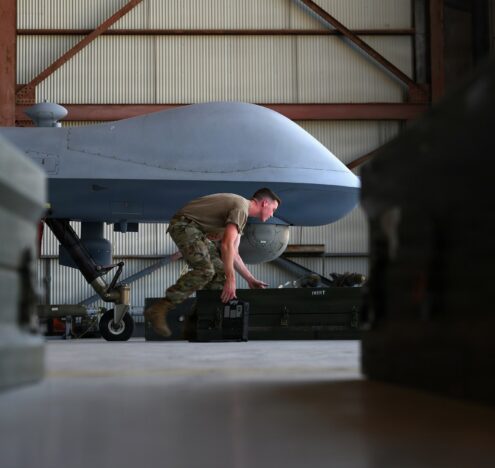
Iran developed and produces the Shahed 136 drone, which has a range of 1,600 kilometers (994 miles) and carries up to a 200-pound warhead. Variants have been found with Starlink receivers to allow real time remote control. Given the recent progress in autonomous drones in the Russo-Ukrainian War, a Shahed may have autonomous on-board targeting. Iran has launched hundreds since the war started. Russia has offered Iran fiber optic guided quat copter drones and the training to use them. Although limited in range to less than 30 kilometers (18.6 miles), these drones cannot be jammed and could be useful in the confined waters of the Strait.
Iran also has a family of unmanned surface vessels (USVs) that have hit two tankers. Ukraine has used similar craft to effectively drive the Russian Navy from the Black Sea. Ukraine has repeatedly demonstrated how deadly and long range these craft can be. Further complicating the picture, Iran has struck several other ships with a variety of weapons.
“Despite a massive US and Israeli bombing campaign, US intelligence estimates that Iran still maintains a substantial missile and drone reserve.”
Despite a massive US and Israeli bombing campaign, US intelligence estimates that Iran still maintains a substantial missile and drone reserve. It also retains launchers and launch sites along the rugged coast. Many of these systems can be hidden in urban areas like Bandar Abbas and expose themselves only to fire.
While much of the focus is on the narrow shipping lanes of the Strait, Iran’s cruise missiles, UAVs and USVs mean it can reach hundreds of miles into the Arabian Gulf, the Gulf of Oman, and well into the Arabian Sea. Recently, Iranian Revolutionary Guards Corps declared the Strait extended 200 to 300 miles beyond the narrow neck.
The oft-stated proposed tactic of “killing the archer” simply won’t work. The Shaheds have a range of 1,600 miles. To be sure to destroy the drones before launch, the US would have to maintain constant surveillance to a depth of 900 miles inside Iran. And be capable of striking any target in the few minutes it takes for the launcher to move from a covered position and launch its weapons. Iranian missiles present a similar problem and its suicide craft can be hidden along the hundreds of miles of coastline from the northern Gulf to the port of Chabahar near its border with Pakistan. Short of occupying a major part of Iran, “boots on the ground” will not be able to interdict a weapon before it can launch either.
“The problem with the straits is this: let’s say we do a great job. We say we got 99% (of their missiles). One percent is unacceptable, because 1% is a missile going into the hull of a ship that cost a billion dollars,” Trump recently said at a televised cabinet meeting.
He highlighted the near impossibility of the United States keeping the Strait open as long as Iran chooses to fight. The Iranians only have to get lucky a few times to maintain an effective blockade of the Strait. Conversely, the United States has to be very close to the 100% suggested by Trump. To understand how difficult this would be, it has taken the Ukrainians four years to build a layered and highly effective anti-drone defense that covers the 700-mile border between Russia and Ukraine. They kill up to 96% of Russia’s Shahed/Geran long-range munitions. While an incredible accomplishment, 96% isn’t good enough to protect the Strait. If Iran launches 100 Shaheds, then four get through — and if even one hits a target, it will keep shipping out of the Strait.
In sum, as difficult as mine clearance would be, it is only one part of the massive effort it will require to restore safe transit of the Strait.
Paul J. Saunders, President, Center for the National Interest; Publisher, The National Interest
Even those who regularly think about energy rarely contemplate the scale of the global energy system. With that system under the greatest stress it has endured in decades due to the US-Israel war on Iran, Iran’s closure of the Strait of Hormuz, and America’s blockade of Iranian shipping, it is worth considering the size of what might break during indefinite conflict in the Persian Gulf — what one so disposed might call a new “forever war.” It could become a big deal.
Indeed, one could reasonably argue that no previous war has threatened the global energy system to this extent, in part because the global energy system has never been quite as global as it is today. In rough terms, about 70% of the world’s oil is exported somewhere (and, thus, imported somewhere, by people who want it and don’t have it.) Natural gas is a little different, in that only around 20% crosses a border, though it is still closing in on one trillion cubic meters per year. The 884 billion cubic meters of natural gas traded internationally in 2024 takes up a lot of space. This is one aspect of the global energy system’s scale: geographic scope.
But that is not the only way to measure the scale of the global energy system. In his book Grand Transitions, the Canadian scholar Vaclav Smil described the global fossil fuel energy system as “the most extensive and the most expensive investment undertaken by our civilization.” It isn’t hyperbole: in 2024 fossil fuels provided over 86% of global primary energy. Oil alone provided about a third of global energy, with another quarter from natural gas. This is a colossal planetary system that required massive international effort across over a century. To quote The Hitchhiker’s Guide to the Galaxy’s entry on space, “You just won’t believe how vastly, hugely, mind-bogglingly big it is.”
America’s national conversation about the war’s energy consequences has not gone too far beyond gasoline prices, which understandably have been a politically salient issue since the country’s first real energy crisis, the 1973 OPEC oil embargo. That episode produced skyrocketing prices and long lines at gas stations and stimulated considerable policy changes, including boosting nuclear energy, restarting a quest to turn coal into oil, accelerating research on early solar panels, and creating the Department of Energy. It also prompted then-President Jimmy Carter to urge Americans to use less energy and, more memorably, to wear sweaters. And it created an enduring public reflexive response to oil supply disruptions that focuses immediately on gas prices.
But less than half of a barrel of oil that goes into a US refinery comes out as gasoline. Close to a quarter becomes diesel fuel, less than a tenth becomes jet fuel, and the remaining amount, let’s call it around 15%, turns into plastic and a host of other products. Less than a tenth of one percent becomes naphtha, which, it turns out, goes into products like commercial printers’ ink and microchips. This is the third way in which the global energy system is huge — its outputs go into almost everything we touch, all day long, from light switches to toothbrushes to mobile phones, ballpoint pens, food packaging, and more.
Natural gas illustrates this too.
One might take the view that only about a quarter of global oil transited the Strait before the war and just one fifth of LNG, which in turn makes up only about half of the gas trade and just a tenth of consumption, since most gas is used where it is produced. From this perspective, just one-fourth of global oil and just 2–3% of global LNG are disrupted. Can’t the world do without this, at least for a time, or find other energy?
This is easier said than done, because as many have written, natural gas is an energy source but also a fertilizer feedstock. Also quite important is the fact that LNG goes largely to a small number of places that can afford to pay for it and where it solves an important problem, namely, the lack of good alternatives. Around one-quarter of Europe’s post-2022 gas consumption relies on LNG. The picture is much worse for Japan and South Korea. The former is an island and the latter, with its only land border shared with North Korea, is functionally an island. In both cases, all their imported natural gas comes as LNG rather than through pipelines. America’s closest allies are therefore among the most vulnerable to LNG disruptions. (China, for its part, has been preparing for 25 years for an American blockade to cut off its energy imports, though Beijing didn’t get quite the blockade that Chinese leaders expected.)
Trump and many other Americans are eager for the United States to fill the oil and natural gas supply gaps that have emerged. This is an important economic and energy security opportunity. But it is regrettably easier said than done, in that expanding capacity is expensive and time-consuming and, as a result, it isn’t something that energy companies or their investors will do lightly, especially if they think that the war might end soon, as Mr. Trump has repeatedly suggested. As a result, if it doesn’t, and the current no-war no-peace closed-Strait environment endures, things could get pretty sticky.
Vaclav Smil’s work clarifies this too. In another of his excellent books, How the World Really Works, he describes four pillars of modern civilization: steel, cement, ammonia, and plastics. All four have so far required vast quantities of energy and specifically of fossil fuels (primarily coal for steel and cement, at least so far, primarily natural gas for ammonia, and primarily oil for plastics). All four also mostly require fossil fuels to move them from place to place in large quantities. Enormous quantities, if you think about the scale of those four industries. The point is that allowing this situation to last will increasingly risk breaking important parts of the largest, most expensive, and most complicated artifact that humanity has ever built, especially when supply reductions force refineries and factories to shut down, and that our global society rests upon this artifact. On top of this, some things aren’t designed to be turned off, making it expensive both to do that and to start them up again. If this occurs, it could be a global, uncontrolled economic experiment, to which few of the subjects have willingly consented. It’s not an outcome that anyone, even Iranian leaders desperately holding on to power, should want to explore.
“Adults in a Room” is a series in collaboration with The Stimson Center’s Reimagining US Grand Strategy program. The series stems from the group’s monthly networking events that call on analysts to gather virtually and hash out a salient topic. It aims to give you a peek into their Zoom room and a deep understanding of the issue at hand in less than the time it takes to sip your morning coffee without the jargon, acronyms, and stuffiness that often come with expertise.