






Beneath the relentless thunder of shelling that falls daily on Kharkiv, Ukraine, another sound persists, unexpected, insistent, swelling into resonance from the bowels of the Kharkiv National Academic Opera and Ballet Theater Mykola Lysenko. In the basement, out of reach of incoming fire, the orchestra runs through the final notes while the ballerinas rise onto their toes, lifting their legs against coat racks turned into an improvised barre. Here, unlike in other traditional opera houses, there is no velvet, no gilded ornaments, only raw walls, exposed wiring and the pale flicker of fluorescent light trembling over music stands. In the midst of a country that has been at war for more than four years, Kharkiv’s opera house prepares to play.
Not long ago, the grand auditorium unfolded in all the splendor of gala nights, gilded balconies, wood paneling worn smooth by generations and an ornate ceiling casting soft light over the orchestra pit. Today, that world remains frozen in the past, dimmed by dust and darkness. War has driven away both performers and audiences into the depths below, out of reach of deadly drone attacks.


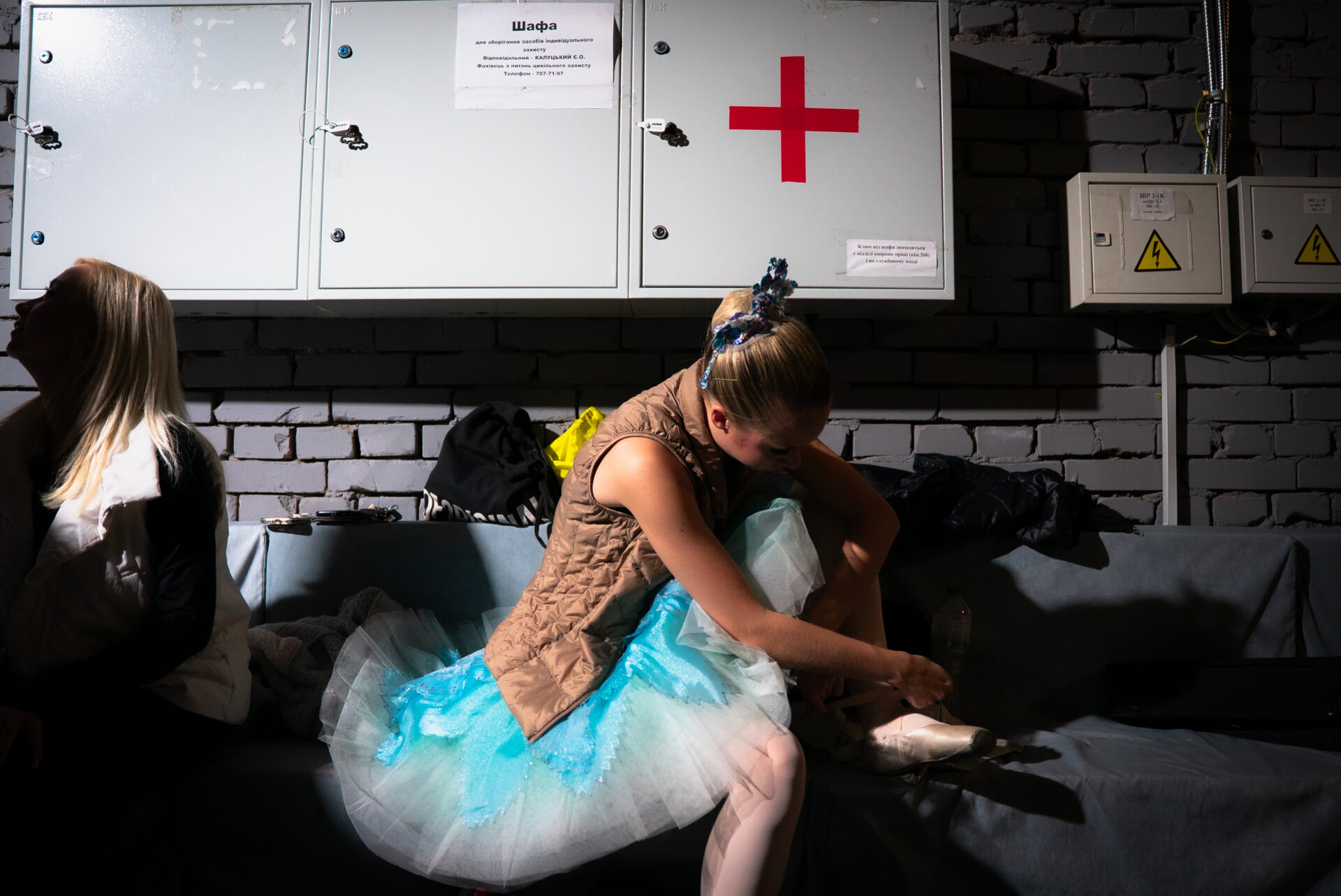


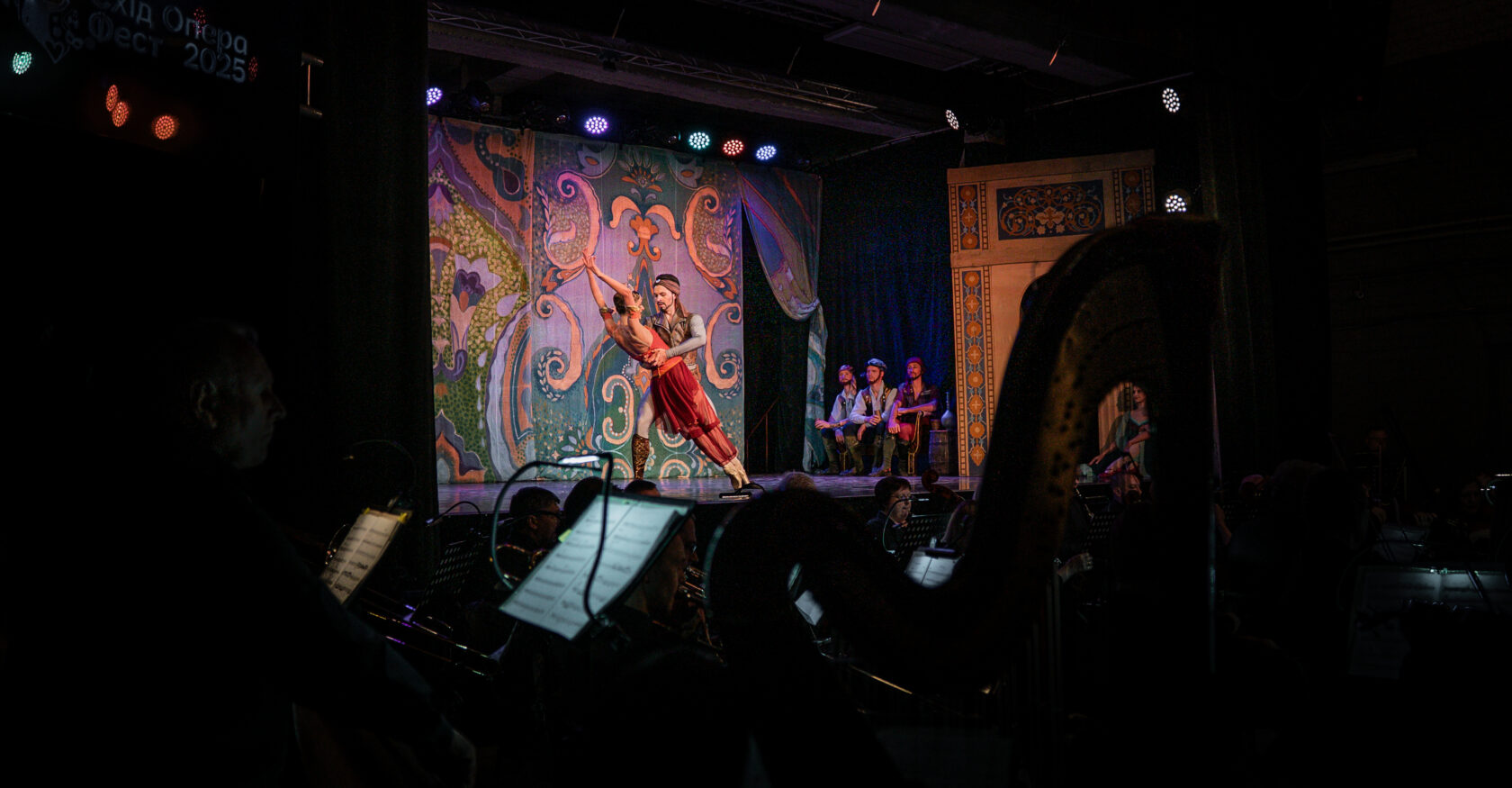
In spring 2024, authorities allowed performances to return to this subterranean refuge. It started with short programs, lighter works and children’s ballets. Then, with a production of Verdi’s La Traviata in April 2024, the opera began to reclaim the rhythm of the suspended grace of former evenings. Still, they stayed underground, under concrete vaults built in the 1960s as a nuclear shelter by Soviet architects.
The war’s impact is impossible to ignore. Performances take place three nights a week. Where 1,800 spectators once filled the hall, no more than 400 now gather in this bunker, seated close to the artists, on tightly packed plastic chairs, with their coats folded over their knees. The golden glow of spotlights has been replaced with harsh neon light.
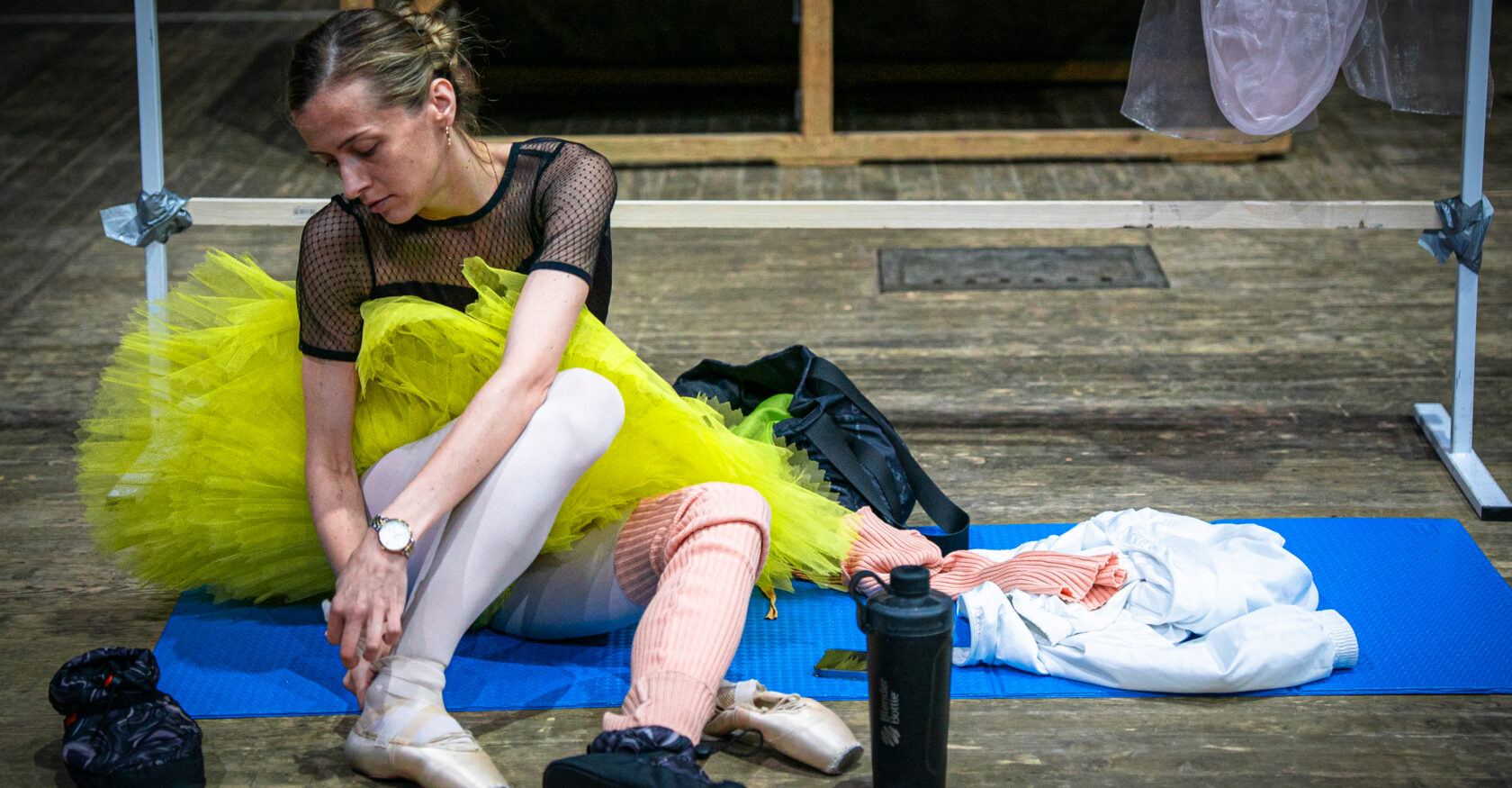
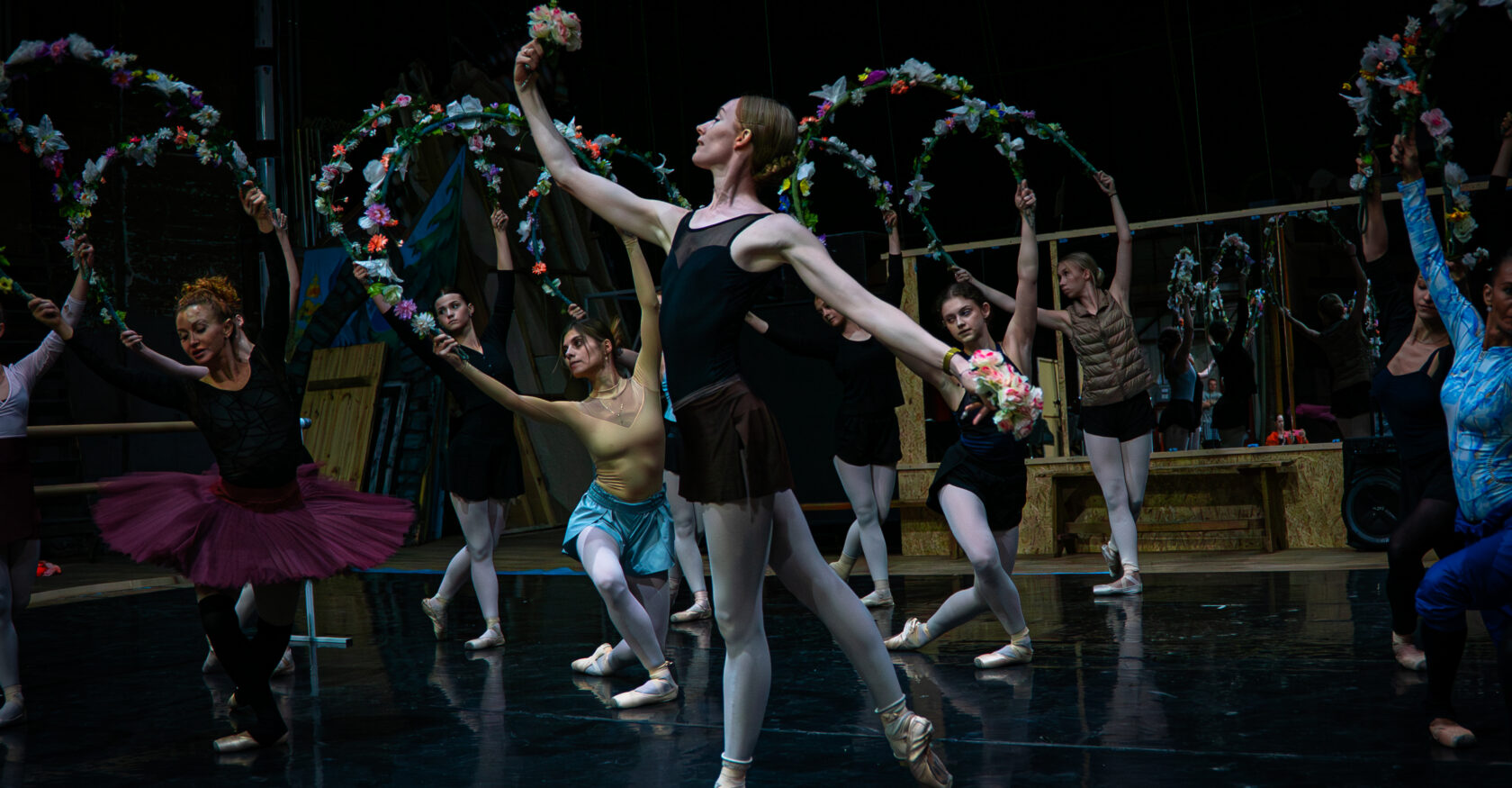
The stage, three times smaller than the original one, has forced artists to rethink everything. Entire acts have been cut, choreography tightened, gestures reworked, make-up pared back, and staging stripped to its essentials. “You have to watch every step,” says ballerina Elenka Matsakova, 38, as she finishes applying her make-up, minutes before her performance. Stage lights, hanging just a few meters (feet) above, thicken the air. The shadow of an arm can fall instantly across another dancer’s face. “Our teachers always told us to extend our movements, to appear more elongated. Now it’s the opposite. We have to watch every step to avoid encroaching on someone else’s space. Even the floor, rough and uneven, puts our pointe work to the test,” Matsakova says.
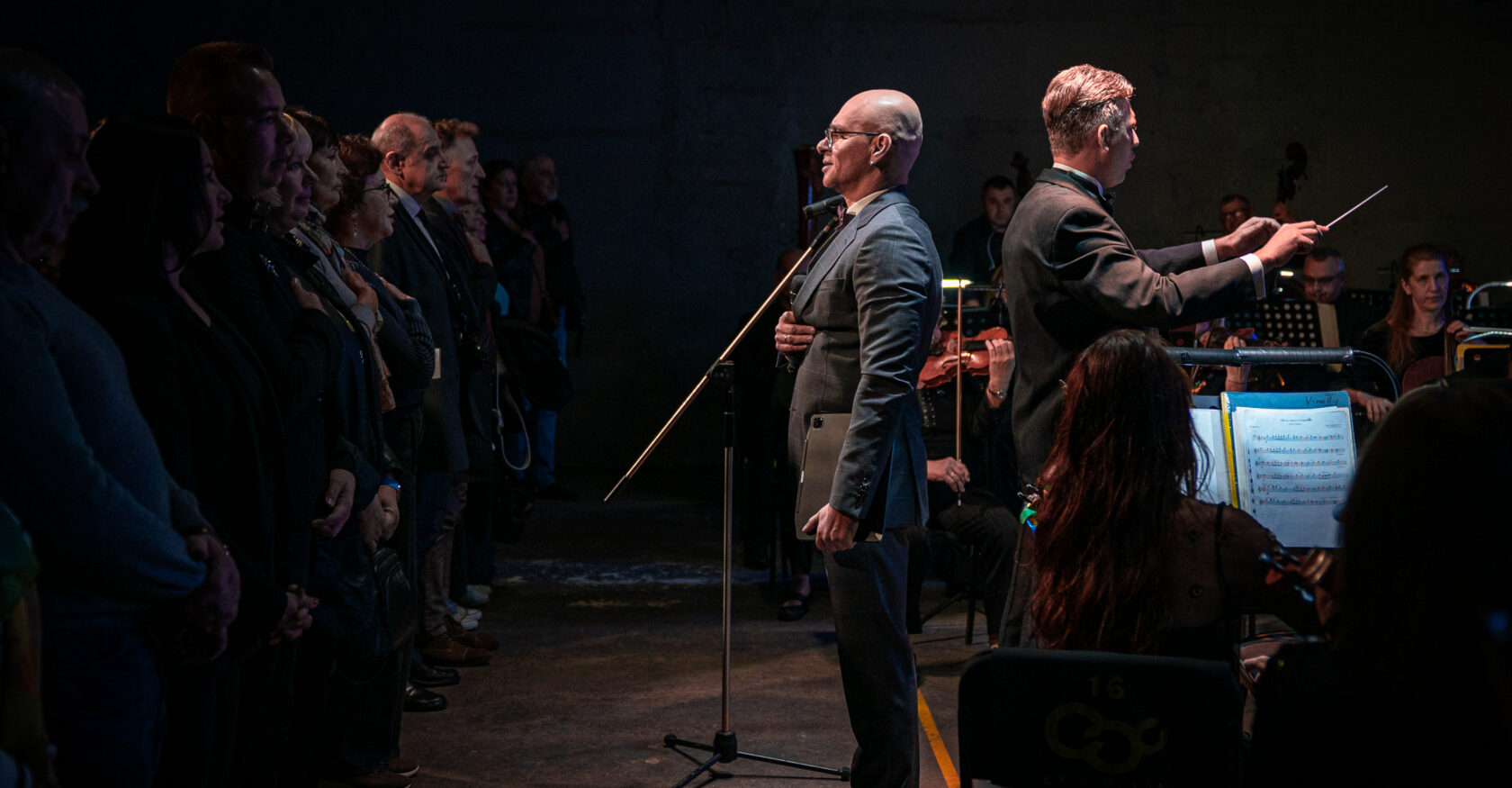
For the orchestra, this proximity changed everything. With no pit, musicians now play fully exposed, at the same level as the audience. “The concrete absorbs the low frequencies and throws back the high ones,” explains conductor Sergii Gorkusha, 33. “We’re constantly rebalancing. The sound saturates very quickly in a space like this. It doesn’t travel with the same freedom as it does in the main hall.” In this bunker, there is no longer any distance between musicians and the public; the music circulates just meters (feet) from them. “I think people value that closeness. They see our movement and instruments much better,” says trumpeter Vadym Figurskyi. “But the altered layout also changes how sections interact with the strings, the winds, the brass. We’ve had to adapt and we keep adapting,” he explains.



Before Russia’s full-scale invasion, Kharkiv had four symphony orchestras. Today, only one remains — the opera’s, with 44 musicians. Out of the 160 musicians once employed, many have left the country. A dancer and two technicians went to the frontline. One will not return. “Every departure is a loss for culture. It’s the human cost of this war,” says the opera’s director, Igor Tulusov, 67.
In Ukraine, men aged between 25 and 60 are eligible for mobilization into the army. Half of Kharkiv Opera’s musicians are exempt from the draft. Still, anxiety lingers. Younger players, when not sent to the front, leave for Western Europe, instruments in hand. “I fear they won’t come back. It’s not only Kharkiv’s musicians we risk losing, but an entire generation. We see it everywhere,” Gorkusha warns.
Those who now make up the orchestra were not always such a cohesive ensemble. In Kharkiv, Philharmonic musicians were accustomed to symphonic repertoire, focused on collective precision. Opera musicians, by contrast, served as accompanists, following the tempo of the stage, adjusting to a singer’s breath. Two closely related crafts, yet distinct: “One is governed by orchestral unity, the other by dramatic flexibility. For instance, in Brahms, a conductor leads an orchestra; in Puccini, he follows an emotion. The gesture no longer commands. It converses,” explains the conductor. That delicate mechanism, usually refined over seasons, had to be rebuilt in haste amid shortened rehearsals, reduced ensembles, and musicians unaccustomed to playing together.

Yet despite a daily life shaped by war and its impact on their work, each morning both dancers and musicians rehearse in the empty grand hall, beneath dimmed frescoes. In the pit, bows align, voices warm, and within that suspended silence, music gradually reclaims its place. Nothing has changed, save the setting: the discipline remains, and the rigour is intact. “The opera team has done something remarkable,” says the trumpeter. “Even if we have less men to work with, even if we move in a circle instead of diagonally, even if there is less public than before, we are still dancing. That’s the only thing that matters,” Matsakova smiles, her voice bright with joy.
In late September, the company marked a double anniversary: the institution’s centennial and the 85th birthday of Svitlana Kolyvanova, a legend of Ukrainian ballet. At intermission, a visibly moved audience member says she has not missed a single performance since the venue reopened. “It has become such an important part of my life. Seeing them on stage gives me strength and inspiration. They keep dancing despite everything. They’re heroes,” says Olena Kryshta, 55.
The director is adamant. “We have to remind people that Kharkiv is still alive and so is its culture. Before moving underground, we staged performances in different tube stations of the city. The show must go on. It is our absolute necessity,” he stresses.
Suddenly, the curtain falls to a thunder of applause, muffled by the thickness of the concrete. Throughout the performance, no one has heard the air raid sirens warning of imminent drone attacks. Bouquets in hand, smiles still lingering, the dancers leave the stage and climb the narrow stairs back up to the wounded city. Here, the war rages on. Drones continue to strike Kharkiv, oblivious that deep within the opera house, a defiant grace is holding its own against the roar of bombs.
Donate
YOU MADE IT THIS FAR.
You’re exactly why Inkstick exists.
Independent reporting on war and power shouldn’t belong to billionaires or governments. It survives because readers like you decide it matters.
Help keep this reporting independent, free, and accessible to everyone.
Related articles