



Skip to content

Trump’s Nuclear Testing Threat Isn’t Just Reckless — It’s a Betrayal of History

I’ve spent years documenting the human cost of America’s nuclear legacy. Trump’s call to resume testing feels like erasing everything we’ve learned.

Words: Chloe Shrager
Date:

On Oct. 30, in one fell swoop — a single post on Truth Social — President Donald Trump seemingly undid decades of American nuclear policy and international diplomacy. In reaction to Russia’s announcement of a component test of its new nuclear missile, Trump called for a return to US nuclear weapons testing for the first time in over three decades. He framed it in his usual tit-for-tat style of diplomacy and emphasis on American dominance, but for me and for other nuclear experts, his call is a shocking and irresponsible threat to life as we know it.

“Because of other countries testing programs, I have instructed the Department of War to start testing our Nuclear Weapons on an equal basis,” Trump’s post read. “That process will begin immediately.” No further details were given.

The ambiguity of the statement opened the door to a horrifying range of possibilities. What this would accomplish, or what it even means, no one truly knew in the moment. Trump administration officials have since told media outlets that the testing will not include explosions. Nonetheless, experts have reiterated that there is no strategic reason to continue nuclear testing. And nuclear watchers have debunked the misinformation in Trump’s statement, calling into question whether the new nuclear weapons Russia boasts of are even useful. The Kremlin itself pointed out its tests “cannot in any way be interpreted as a nuclear test,” BBC reported. 

In addition to being ambiguous and baseless, the statement was also wildly unprecedented. No nuclear power has carried out an above-ground explosive nuclear test in over four decades, and the last underground test was carried out in 2017 by North Korea. The only outcome of a revival of regular nuclear testing would be an increase in nuclear risk and an alarming acceleration of the new arms race — something the world has not felt since the Cold War and hoped to never feel again. It seems that the Trump administration, fundamentally, cannot learn from the lessons of history.

Untitled
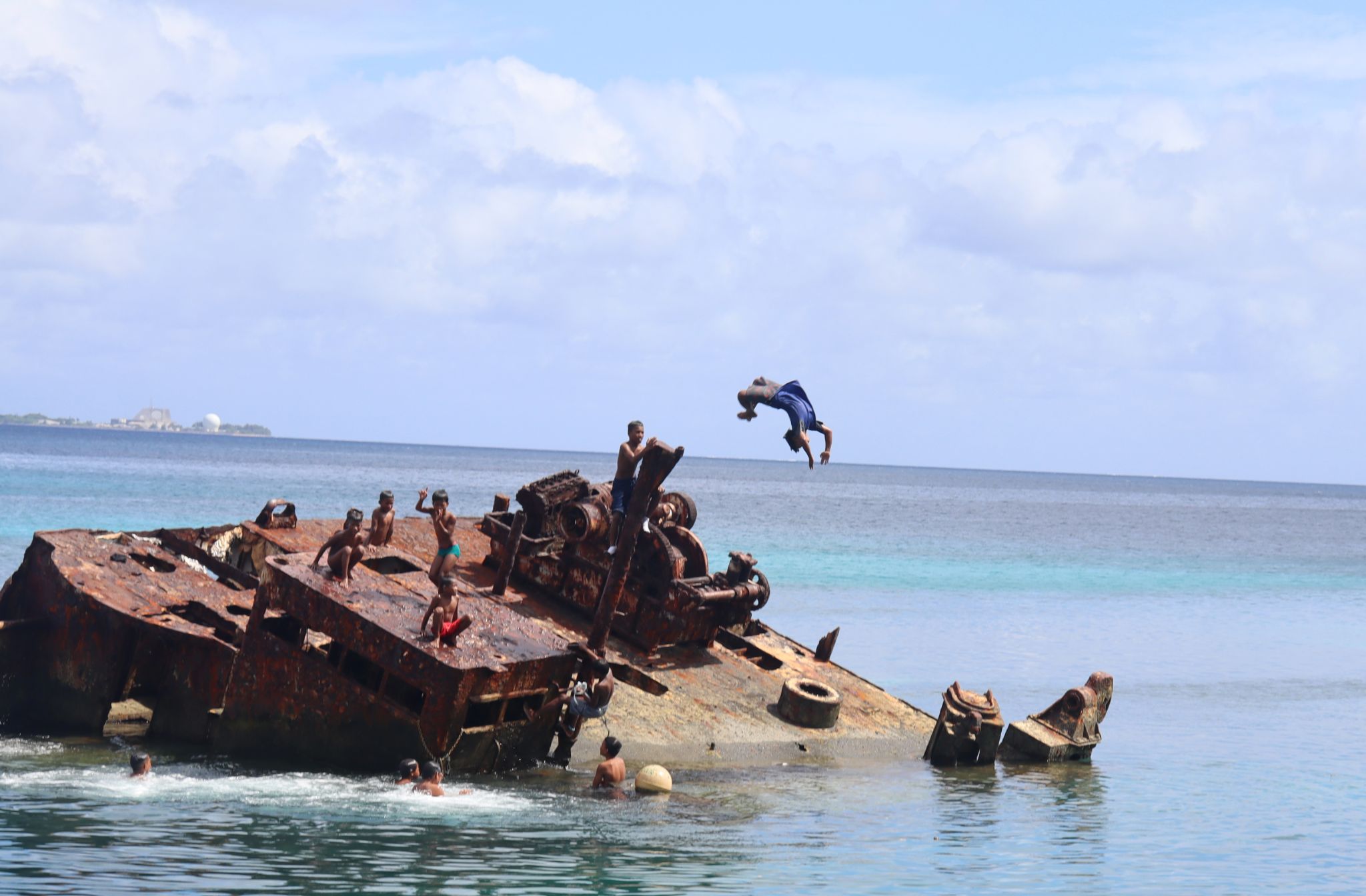
Mina Titus, 75, sitting in the backyard of her home on Majuro Atoll in the Marshall Islands. She is one of the last living survivors of the Castle Bravo nuclear explosion. Photo by Chloe Shrager, July 1, 2023.

Two years ago, I published a long-form feature in Inkstick Media on the United States nuclear testing legacy in the Marshall Islands, where the US detonated 67 nuclear bombs in the mid-20th century. Before and since then, I have studied, researched, and reported on nuclear policy, power, and justice, both on the ground in the United States and beyond, all in the pursuit of educating the public on the ongoing risk the nuclear weapons industry poses — even in peacetime — and communicating to policymakers that these weapons must never be used again. Last week, it suddenly felt like all of that had been for nothing.

The stories of those impacted by the nuclear testing haunt me. In the Marshall Islands, women have given birth to “jellyfish babies” with translucent skin and no limbs. In St. Louis, Missouri, abandoned radioactive waste in steel drums from a Manhattan Project-era uranium enrichment plant leaked into the river running through Cold Water Creek neighborhoods. In impacted communities, pervasive cancers and other chronic diseases seem to have touched nearly every family, even generations later.

These are not far-off realities or nightmarish fantasies — these happened, continue to happen, and will happen again were nuclear testing to resume. Despite what some historians argue, these are not dramatized memories that morphed over generations of being told; these are firsthand accounts I have documented that, in many cases, were watered down until recently due to the cultural stigma surrounding radiation exposure, especially in the Pacific. Those I spoke to in the Marshall Islands told me they never wanted to talk about their infertility, miscarriages, or birth defects, feeling the shame of being poisoned by America’s hegemony.

Since Thursday, other experts and I have been waiting for more clarity on what Trump’s statement means. What kind of testing did he mean, and where? Will this take place again in our own backyard on American soil? In New Mexico, where the nuclear bomb was first built, and in Nevada, where tests poisoned citizens for decades, Americans are only now receiving a fraction of the compensation they deserve under the expanded Radiation Exposure Compensation Act. Or will testing be relaunched in our neglected neighbor’s backyard in the Pacific? There the US infiltrated, conquered, used, and abused territories for decades, started its nuclear dominance campaign, and destroyed the culture and health of nations we called our brothers. Even if testing were to happen again in these places — irresponsibly and inaccurately characterized decades ago as remote and insignificant — research has since demonstrated that radioactive fallout from explosive nuclear tests is uncontainable.

The entire chain of domestic nuclear production already poses a threat to the United States. The renewed production of nuclear weapons is already underway. And earlier Executive Orders have jump-started the systematic deregulation of nuclear power and loosening of US radiation exposure safety standards. 

Even the best-case scenario — in which Trump was simply posturing and power projecting with an empty promise — is, at best, irresponsible, and at worst, dangerous, triggering other countries to issue and follow through on nuclear testing threats. To me, a journalist who has dedicated her career to documenting the impacts of radioactive weapons, nuclear American hegemony is this: Once the United States restarts atmospheric, explosive nuclear weapons testing, all other nations will follow “on an equal basis.” Statements such as the one we saw last week, even if empty, poke the pressure points of volatile nuclear nations to puff out their chests and also prove their dominance, with weapons that are bigger and better than ever before. Once that snowball starts, it won’t stop. And nowhere will be safe.

Chloe Shrager

Chloe Shrager is an award-winning California-based journalist who covers local issues on the Central Coast and nuclear issues nationally, including as a nuclear risk editorial fellow for the Bulletin of the Atomic Scientists. In 2023, while a Political Science undergraduate student at Stanford University, she published an investigative feature on the Marshall Islands nuclear testing legacy with Inkstick Media. Previously, she has reported for the San Francisco Chronicle.

Hey there!

You made it to the bottom of the page! That means you must like what we do. In that case, can we ask for your help? Inkstick is changing the face of foreign policy, but we can’t do it without you. If our content is something that you’ve come to rely on, please make a tax-deductible donation today. Even $5 or $10 a month makes a huge difference. Together, we can tell the stories that need to be told.

SIGN UP FOR OUR NEWSLETTERS