










For a month now, Mo’s personal corner of the world has been his assigned top-bunk bed, draped in donated blankets, and one-third of a clothes closet. For now, it serves as home.
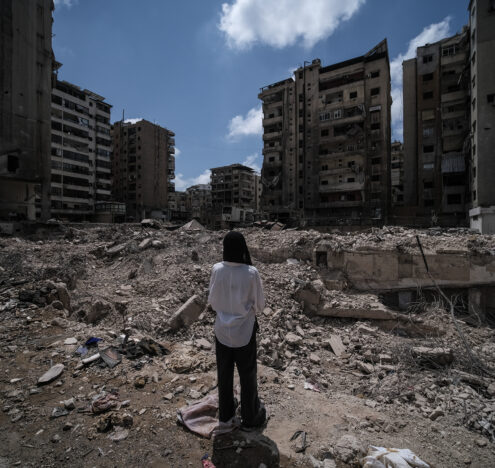
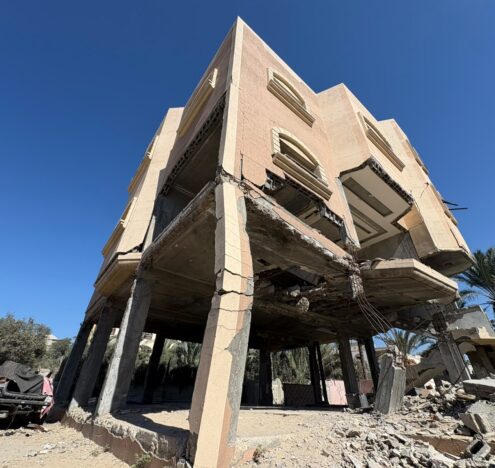
The 42-year-old fled his home city of Sidon, in southern Lebanon, back in March. Israeli forces bombed his apartment building at the start of a renewed, brutal war between Hezbollah and Israel that had been simmering since 2024. Luckily, Mo had been out at the time of the attack, but the damage was done. He needed to find someplace safer.
But finding a new place to live, further north in Beirut, would prove yet another challenge. Mo, who is among the more than one million people displaced by Israel’s renewed bombs on Lebanon since March, is also among the unknown numbers of LGBTQ+ people who have been forced to flee home. Displaced LGBTQ+ people often face discriminatory landlords, or are unable to pay for hiked-up wartime rent as employers often overlook them for jobs.
On top of that, Lebanon’s public government-run displacement shelters have also turned away visibly transgender people, with the excuse of keeping the facilities “family friendly,” LGBTQ+ advocacy groups told me. Some transgender people have given up altogether on seeking spots in the public shelters, out of a preemptive fear they’ll be turned away at the door, according to Samer Dada. He is the senior programs manager at Helem, an LGBTQ+ advocacy group in Beirut.
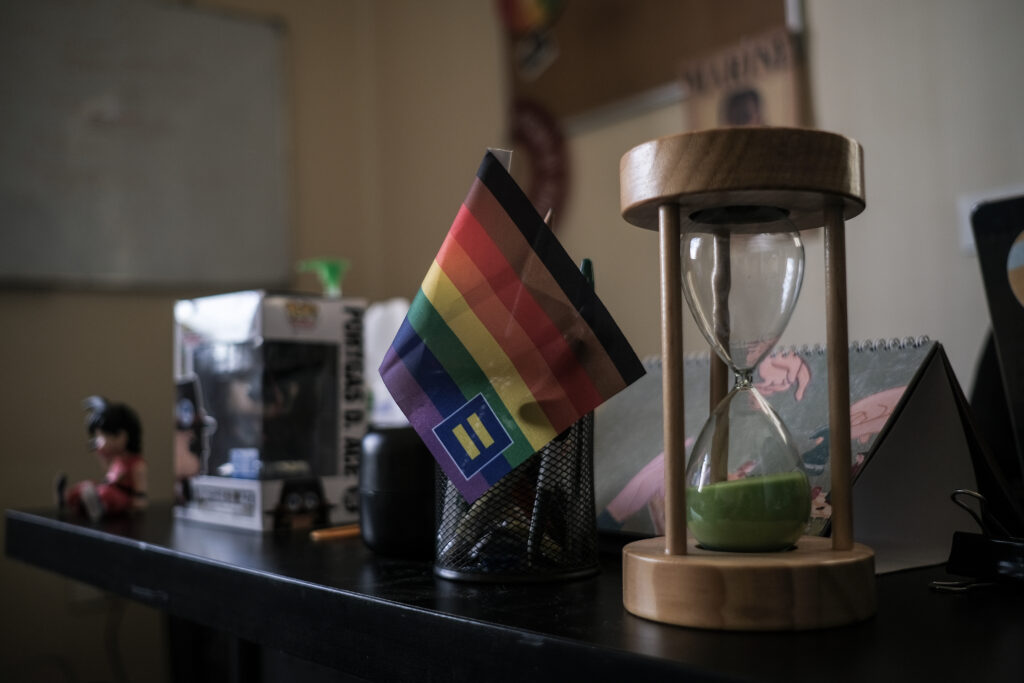
Dada estimates at least 20 people have contacted Helem’s emergency helpline since March. Some have been turned away from the public displacement shelters, located within school buildings. Others are too scared to try entering one, for fear of mistreatment. Some people haven’t been able to reach any shelters at all; one transgender woman spent days calling Helem’s helpline from Tyre, where she was stranded beneath Israeli bombs with no money to pay for a trip north to Beirut. “She was calling us daily, just for mental [support],” Dada explains. “She was totally alone.”
To survive, she’d simply sit at the beach all day, figuring that was safer than staying among the bombed-out buildings in the city. By nightfall, she’d go back to her apartment, alone, beneath the bombs. Eventually, after receiving cash assistance, she made it to Beirut.
In 2024, during the last round of war, some alternatives were available. Helem, for one, had enough funding to open three LGBTQ+-specific displacement shelters, housing up to 90 people at a time.
But since then, funding cuts from international agencies have meant Helem and other organizations have drastically reduced capabilities to help this time around. “This war, everything shifted,” Dada says.
Now there is just one shelter left in Lebanon specifically for displaced LGBTQ+ people. It is run by Mosaic, another LGBTQ+ advocacy group. That’s where I met Mo, who had called Mosaic for help after fleeing Sidon alone.
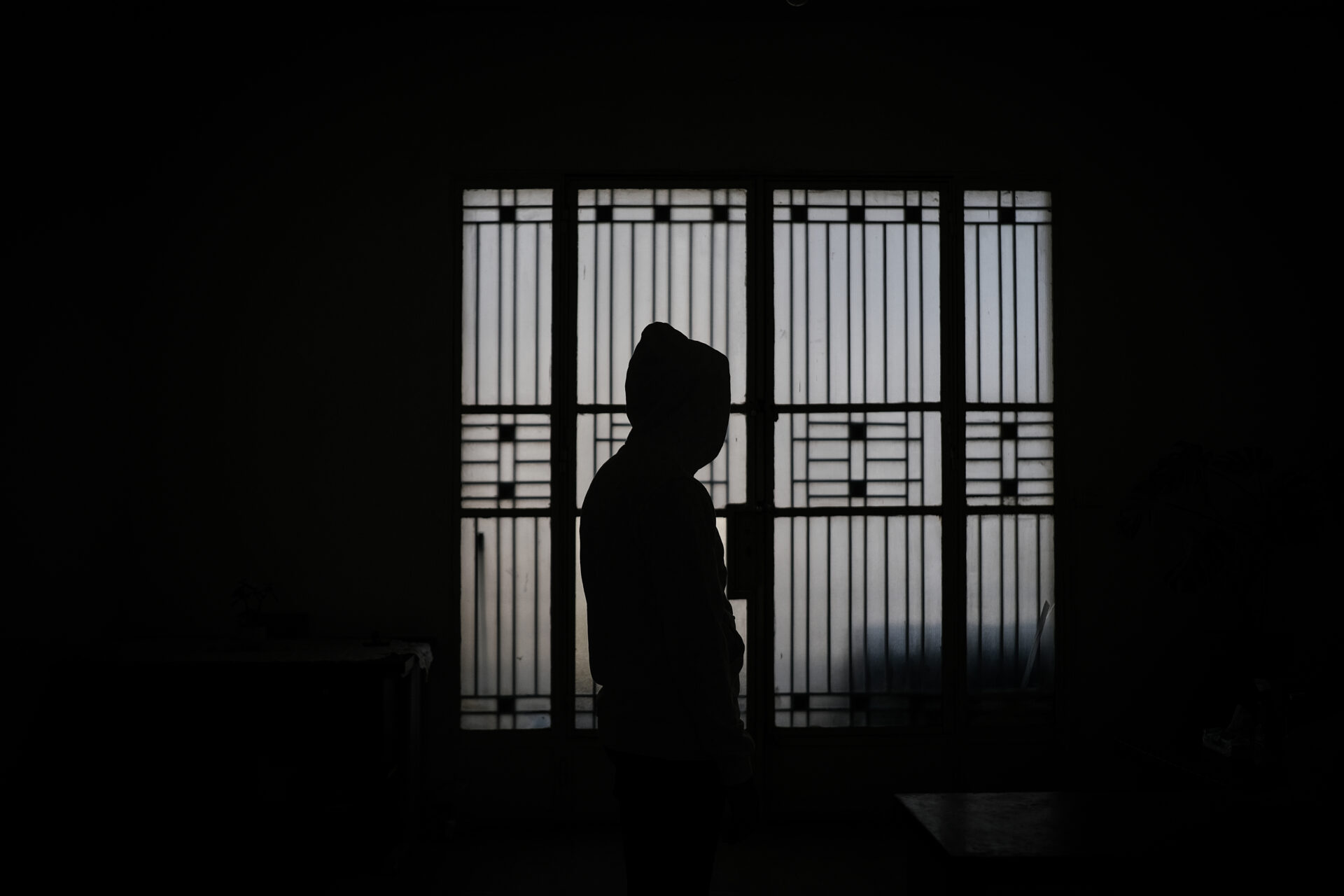
The Mosaic shelter’s location is kept secret, and the administrators use pseudonyms for safety. I’ve been asked not to share specific details that could reveal which neighborhood it’s in, or take photos of the outer windows or balconies that could give hints to discerning geolocators.
That’s due to attacks in recent years on LGBTQ+ people and queer-friendly businesses, despite a longstanding and vibrant LGBTQ+ scene. One group, the extremist Christian Jnoud al-Rab, stormed a much-loved gay bar back in 2023, a year after the then-culture minister effectively banned openly LGBTQ+ public gatherings.
Now Lebanon’s queer community is facing the even deadlier threat of Israeli airstrikes.
As many as eight people stay in the Mosaic shelter at any given time, though that number swelled to 10 in the days immediately after Israel reignited the war back in early March. “We couldn’t say no to those [extra] people,” Karen, Mosaic’s case manager, says, using her work pseudonym. Some residents stay only for a few days before finding more permanent housing elsewhere; others stay weeks.
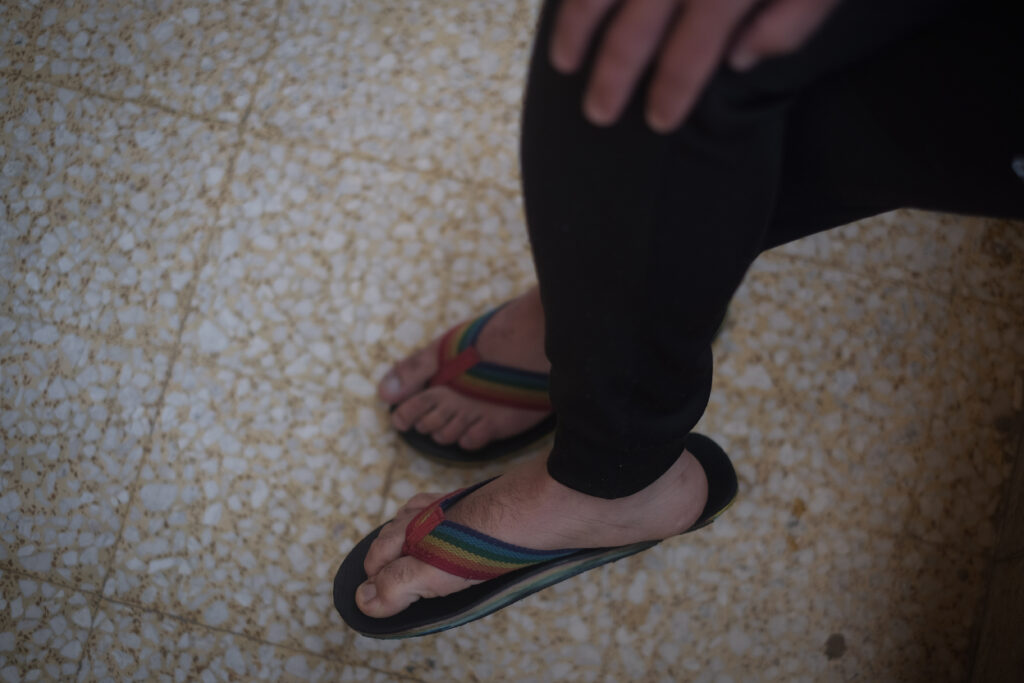
Surrounding her in Mosaic’s office, a couple stories downstairs from the shelter, are other young administrative employees, rainbow pride flag stickers, and a poster of Dr. Martin Luther King Jr. In the next room, someone’s handwriting on a whiteboard explains the gender spectrum and sexual identity. Gray fleece blankets sit in a donations pile.
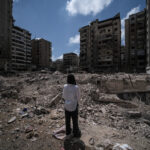
So far, there are about 20 people on the shelter’s waiting list for hopeful newcomers in need of a spot, Karen tells me one afternoon in early May. When we meet, it’s been less than a month since “Black Wednesday,” when Israeli forces unleashed 100 airstrikes across Lebanon, including residential areas in the heart of Beirut, killing more than 350 people. Plumes of black smoke rose from the city in broad daylight, above apartment blocks that crumpled down on top of their residents.
Most of Mosaic’s shelter applicants are from Dahieh, Beirut’s southern suburbs, where Israel unleashed heavy airstrikes until a deeply flawed ceasefire came into effect last month, days after Black Wednesday.
Yet the strikes have only continued in South Lebanon, with at least 600 people killed since the April “ceasefire.” That number includes two dozen children, as well as paramedics targeted as they run in to save the wounded.
On another visit to the Mosaic shelter this month, an Israeli spy drone buzzes loudly overhead, spiking my conversation with Lina, a young transgender woman from Syria. Other residents mill about, hanging up laundry to dry in the sun.
Lina is originally from Idlib city, the northern Syrian stronghold of former hardline Islamist militant Ahmad Sharaa. The latter seized power in an unexpected offensive in late 2024, ousting Bashar al-Assad after half a century of ironfisted Assad family rule. Transgender Syrians I met in the ensuing months told me that though life for them under Assad was often brutal — with arbitrary checkpoint stops, harassment, and even imprisonment and torture — but they feared what might happen to them under Sharaa’s new Syria. Some of them told me they were already facing beatings or had friends suddenly disappear.
“There was no LGBTQ+ community, no LGBTQ+ life in Idlib” that Lina knew of, she says.

So last November, she fled to Lebanon via a smuggling route, ending up in a suburb of Beirut. She had been working in a supermarket in Dahieh, keeping her head down, when the war broke out again in March, making it too dangerous for her to keep going to her job. Going back to Syria feels too risky.
In between checking in on her mother in Idlib, she’s now hoping for a new job to pay rent elsewhere, “anything, as long as I can make a living.”
Here in the shelter, Lina spends her days simply cooking lentils in the communal kitchen or going on walks in the surrounding neighborhood. It’s been about three weeks since she arrived. She dreams of being granted asylum abroad, somewhere she can feel safe as herself.
Mo, too, has found some solace in cooking for his fellow shelter residents, he tells me, sitting next to his bunk bed in one of the two dorm rooms. Tomorrow, he’ll have to walk more than an hour to the nearest government hospital to receive his next dosage of HIV medicine — he says the disease is now “undetectable” in his body thanks to the regular treatment. Every now and then, when he has the money, he’ll buy a bag of secondhand clothes from Beirut’s Sunday flea market to share with the other residents. They eat meals together at a small dining table just off the main living room, surrounded by huge balconies washed in sunlight from the busy residential street outside.
It is a tenuous peace.
At one point last month, the Israeli military issued a forced evacuation order for a wide swathe of Beirut that seemed to include the area where Mosaic’s shelter is located. But the street map included with the order was blurry — administrators were unsure whether to evacuate the shelter. Could the neighborhood be bombed?

“We asked our neighbors in the building what they were going to do,” Karen remembers. They were staying, so Mosaic decided to stay in place, too, hoping for the best. Israel didn’t end up bombing the neighborhood.
Yet with recent ceasefire negotiations in Washington extending the truce another 45 days, it’s not yet clear whether the relative quiet in Beirut might hold. The killing has continued unabated in Lebanon’s south, with no sign of stopping soon.
All the while, the spy drone still circles above almost daily, making itself known.
Like Lina, Mo also hopes to leave someday. Abuse from his brother left him jobless and with no passport. He’s trying to scrape together funds to buy a new passport so he can rebuild elsewhere — anywhere safe.
“I’m starting from zero.”
** All photos by João Sousa. Sousa is a photojournalist based in Lebanon and focused on social issues.