












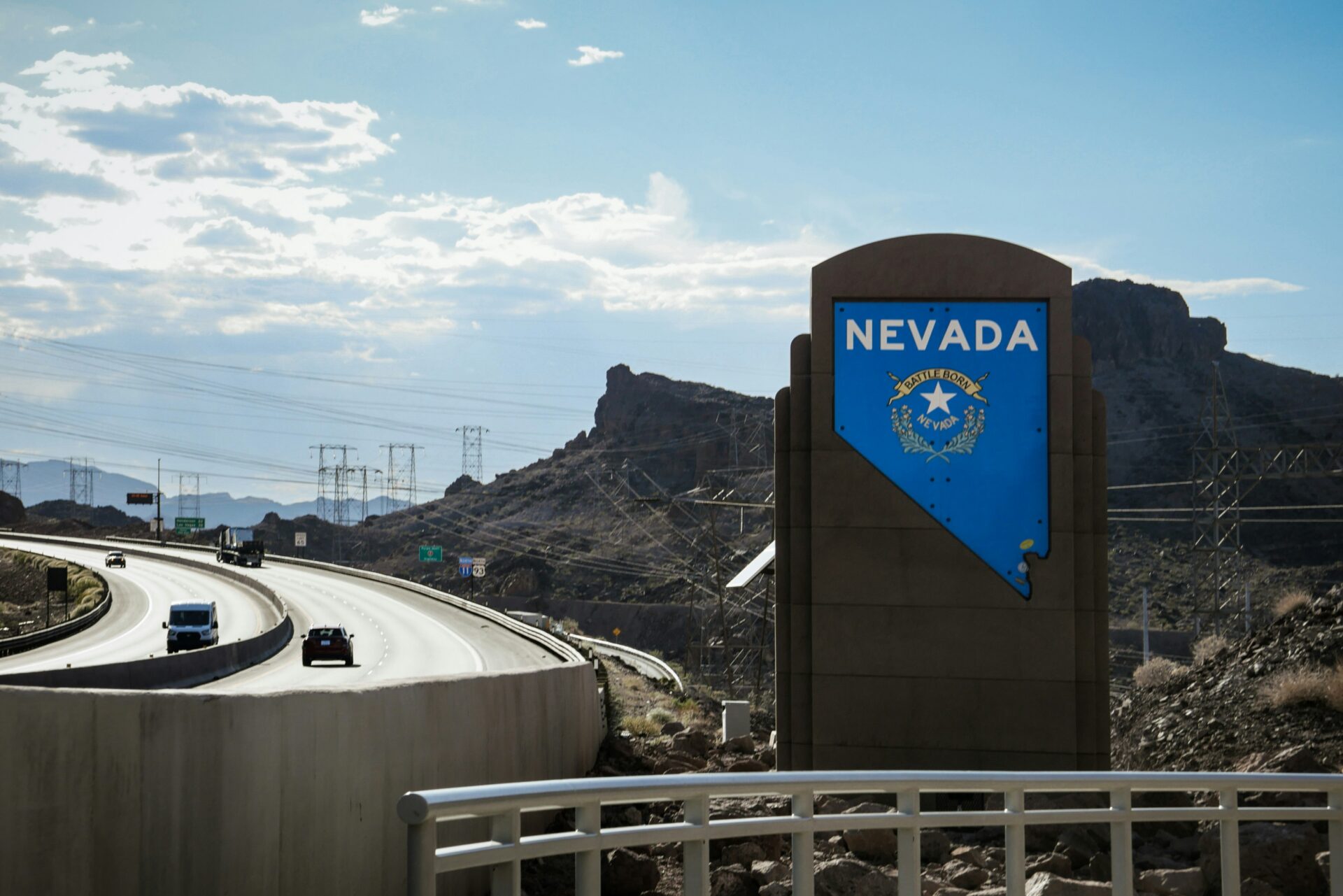
Nevada holds around 85% of the country’s known lithium reserves. It also has the highest number of abandoned mines of any state in the country, nearly 200,000 sites, many of them leaching heavy metals into soil, air, and water. That history is the template for Nevada’s current lithium boom.
A new Amnesty International report, “‘We’re here to Protect Mother Earth’: Indigenous Rights and Nevada’s Lithium Boom,” examines three lithium projects currently under development on land that Indigenous communities across the state identify as ancestral territory: the Thacker Pass Lithium Mine in Humboldt County, already under construction; the Nevada North Lithium Project in Elko County, where exploration activities have already begun; and the Rhyolite Ridge Lithium-Boron Project in Esmeralda County, approved in 2024 with a nearly $1 billion federal loan from the Department of Energy. Amnesty’s central finding is unambiguous: For all three projects, Indigenous Peoples’ right to free, prior and informed consent is violated. Consent is never sought, and it is never the objective of any consultation that is being undertaken.
The report documents a consistent pattern across all three sites. Tribes were given inadequate time to review project documentation that sometimes runs to more than 1,500 pages. Requests for extensions on public comment periods were denied. Letters sent to Tribal governments went unanswered, a result the Bureau of Land Management treated as confirmation that no concerns exist, despite the EPA pointing out that sending unanswered letters did not constitute meaningful consultation. Technical materials were written in jargon inaccessible to communities without the resources to hire independent experts. And in at least one case, a public notice period was timed to begin just before Christmas, when Tribal offices were closed and BLM staff were unavailable to field questions.
The Thacker Pass case illustrates the problem most starkly. Federal permitting for the mine lasted less than one year, compared with the agency’s own average of more than three years for similar projects. A joint investigation by Human Rights Watch and the ACLU found the BLM’s engagement with Tribes amounted to three rounds of letters with no follow-up, much of it sent during the COVID-19 pandemic when many Tribal offices had closed entirely. Tribal members told Amnesty researchers that most community members remain unaware a mine is being proposed at all. Since a Community Benefits Agreement was eventually signed between Lithium Americas and the Fort McDermitt Paiute and Shoshone Tribe’s then-council in 2022, interviewees have said it happened without access to independent legal or technical advice and under conditions of severe socioeconomic pressure. Dackota York, a former Tribal Council Chairperson, puts the dynamic plainly: “[T]hey have way more money than us, they have better attorneys than us.”
The report also documents an undisclosed conflict of interest that drew Congressional attention in early 2026. A senior Interior Department official named Karen Budd-Falen reportedly failed to disclose that her family received $3.5 million from the sale of water rights to a Lithium Americas subsidiary in connection with Thacker Pass, while simultaneously overseeing the review process. Lawmakers wrote to the Acting Inspector General in January, alleging the official may have used her position to fast-track the project while allowing the company to bypass environmental review steps. The agency has not responded to Amnesty’s inquiries at the time of publication.
The broader policy context is that the Trump administration has treated lithium extraction as a national security priority, using executive orders to fast-track permits and reduce the scope of environmental review under the National Environmental Policy Act. The December 2025 passage of the Mining Regulatory Clarity Act through the House further weakened protections. Amnesty notes that this deregulatory momentum is replicating patterns it has documented in the Philippines and the Democratic Republic of the Congo, where the energy transition’s mineral demands have already produced displacement, pollution, and the systematic removal of communities from their ancestral lands.
An estimated 79% of all known US lithium reserves lie within 35 miles of Tribal reservations. Under international law, as established by the UN Declaration on the Rights of Indigenous Peoples, Indigenous Peoples hold rights not only to lands they formally occupy but to lands they have traditionally used or owned, regardless of how the US government has since classified those territories. Both Lithium Americas and Ioneer, the Australian company developing Rhyolite Ridge, emphasized in their responses to Amnesty that the projects are located on federally designated public land and that FPIC is not a legal requirement under US domestic law. Amnesty’s position, consistent with international standards, is that neither fact alters the territories’ status as ancestral lands or diminishes the rights that attach to them.
The companies involved in the supply chain include General Motors, Ford, Toyota, and Panasonic. Ford’s sourcing policy is the only one among them to include an explicit FPIC requirement for raw materials. None of the others demonstrate that they have verified whether consent has been sought, let alone obtained, for the sites from which they plan to source lithium. Shelley Harjo, a member of the Fort McDermitt Paiute and Shoshone Tribe and a former Tribal Council member, described what the mine’s advance felt like from inside the community. “We are people,” she said, “we matter, just as much as anybody else.”