








For 39 years, insulin arrived on time. Dr. Fatima Mohamed Omer is a retired English professor from Wad Madani in central Sudan who has lived with diabetes for almost four decades. In this time she has witnessed changes in government, economic crises, and international sanctions. Then came the war.
War did not enter Omer’s life through a bullet or a shell. It arrived through a power outage and a medicine that could no longer complete its journey. The problem was never that insulin disappeared. It didn’t. The problem was that everything it depended on to reach the patient began disappearing, one by one: electricity, open roads, functioning hospitals, and the invisible network of people and infrastructure that had quietly carried it across the country for decades.
Wars are often understood through maps of military control. Civilians experience them differently. They experience them through the necessities that become scarcer and scarcer until they stop arriving. Somewhere between Port Sudan and a refrigerator in Wad Madani, war interrupted the journey of an utterly ordinary medicine.
Today, millions of Sudanese are asking questions that rarely appear in daily military briefings: Will they find insulin tomorrow? Will there still be enough electricity to keep it cold? Will the humanitarian aid truck arrive? Is the dialysis center still operating? Will medicines reach them before their expiration date passes? The war has changed the questions people wake up asking every morning.
When the war began power outages became part of daily life. In Sudan’s extreme heat, keeping insulin safely refrigerated became extraordinarily difficult. Then another problem emerged: Medicine that remained available in other states could no longer reach Al Jazirah state after the war severed supply routes.
Omer’s doctors were forced to switch her treatment from insulin to oral medication. Over time, interrupted treatment and the consequences of war led to serious complications affecting her kidneys and eyesight. When she traveled to Egypt for treatment, she learned that she had developed atherosclerosis, a condition that causes plaque to build up in the arteries, narrowing them and restricting blood flow. She continues to undergo treatment and surgical procedures to this day.
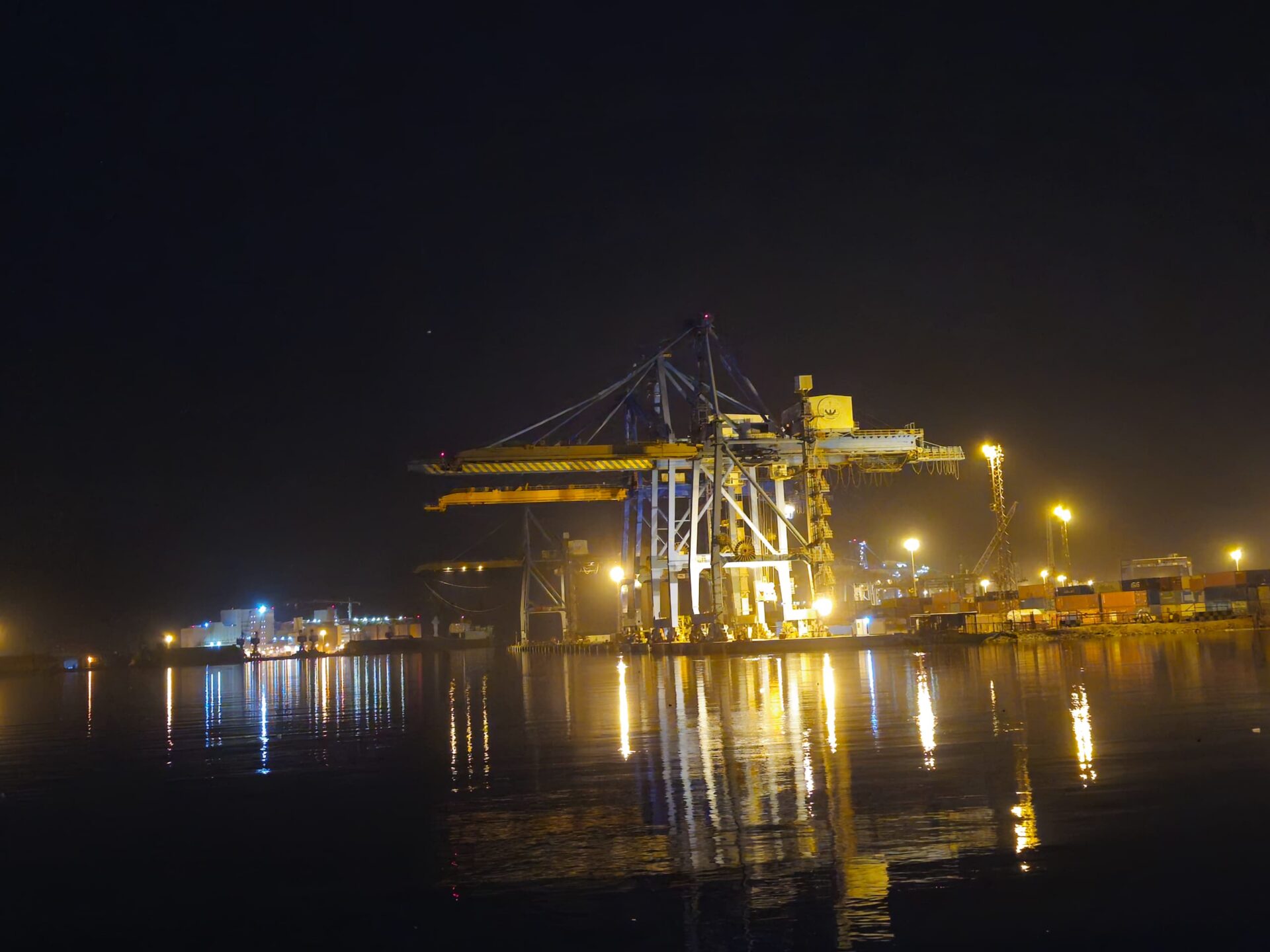
Follow the journey of a single box of medicine in Sudan today, and it will eventually lead you to Port Sudan. Now, most commercial and humanitarian shipments enter Sudan through Port Sudan, which has become the country’s primary gateway for humanitarian aid and commercial imports, as well as the administrative and logistical center for the government and international organizations operating in the country. Port Sudan’s importance is not simply a matter of geography. As other routes into and across Sudan became increasingly difficult to use, the city became a critical point of connection between the country and the outside world. What enters through its port must still travel onward to reach civilians elsewhere, making the city’s ability to function a condition for the survival of supply networks far beyond the Red Sea coast.
Port Sudan has been transformed by war. A city once defined largely by port activity suddenly found itself carrying more than it was built to bear after government institutions, diplomatic missions, international organizations, and tens of thousands of displaced Sudanese relocated there. It became Sudan’s de facto administrative capital, the country’s principal entry point for commercial imports and humanitarian aid, and a logistical hub through which the lives of people hundreds of kilometers (hundreds of miles) away now pass.
“Many people in Port Sudan feel that their city has become responsible for carrying the burden of the state under extraordinary circumstances,” Amjad Al-Sawi, a resident of the city, told me. But, he added, that sense of responsibility is accompanied by exhaustion. Electricity, water, and health services are under unprecedented pressure, while the cost of living and residential rent have risen dramatically as a result of the transformations imposed by war.
Despite the drone attacks that targeted the city and its vital infrastructure throughout 2025 — causing power outages and temporary disruptions to some humanitarian operations — ships have never stopped docking at Port Sudan’s ports. The port’s activity may not match its prewar levels, but the supply chains have not ceased to function.
According to the United Nations Humanitarian Needs and Response Plan for 2026, more than 33 million people in Sudan require urgent humanitarian assistance — the largest humanitarian and displacement crisis in the world. For millions of Sudanese, the congestion of Port Sudan’s streets, soaring rent prices, or the number of ships arriving each week may be entirely invisible. Yet their daily lives pass through the city in ways that cannot be avoided. The retired professor waiting for insulin in Wad Madani, the dialysis patient in Darfur, and the trucker spending long days on Sudan’s roads all depend, in one way or another, on Port Sudan’s ability to keep functioning.
Of course, for a box of medicine to reach a patient in Darfur or Al Jazirah, it is not enough for it to enter Sudan. It must survive a long journey through administrative approvals, checkpoints, roads damaged by war and seasonal rains, and constantly shifting maps of military control.
Ahmed Mohammed Ahmed understands the life-or-death question of movement better than most. He has driven trucks across Sudan for decades. His first journey during the war was to evacuate his family from Darfur to Al Dabbah before returning to work. Today, Ahmed travels between Port Sudan, Al Jazirah, Khartoum, and northern Sudan, transporting food supplies and, at times, humanitarian aid shipments. At the beginning of the war, movement, though difficult, remained possible. But as fighting expanded, checkpoints multiplied, and accusations were exchanged among the warring parties, the roads themselves became part of the war.
Wars do not create military frontlines alone. They also create long lines of waiting. Trucks wait at checkpoints. Humanitarian organizations wait for permits. Medicine waits in warehouses. Patients wait for treatment. Roads are no longer merely distances connecting cities. They now determine whether people will eat or receive treatment on time.
Today, the journey between Port Sudan and Al Jazirah takes no fewer than 10 days. According to reports by the UN Logistics Cluster, medical and humanitarian shipments face numerous obstacles, including permit delays, the complexities of crossing conflict lines, armed checkpoints, and deteriorating road conditions, particularly during the rainy season. The UN has also cautioned that humanitarian aid movements across Sudan are subject to ongoing bureaucratic, security, and operational constraints that delay the delivery of life-saving supplies to millions of civilians.
Perhaps that is why civilians no longer experience war merely as a military event, but as a daily test of whether the essential necessities that sustain life can continue moving. What is true for medicine is equally true for food, fuel, financial transfers, and healthcare services. The daily lives of millions of Sudanese now depend on the ability of these logistical networks to continue functioning — even when political and military institutions fail to provide the minimum conditions for stability.
Every additional day a truck spends on the road means another day of waiting for a patient in need of medicine, a family awaiting food supplies, or a humanitarian organization struggling to fulfill its commitments. For Ahmed, transporting goods is no longer simply a job. It has become part of a daily struggle that is less visible than military battles and far more closely tied to civilian life.
On paper, medicine is simply another shipment. In reality, every shipment is a negotiation — with geography, bureaucracy, time, and war. And sometimes, patients do not survive the wait.
Dr. Marwa Hassan, Director of the Hospitals Administration in East Darfur State, told me, “We received the medicine in April, and some of them will expire in August of the same year.” This medicine had spent months in transit before reaching their final destination. Those with longer shelf lives will expire in 2027. Most are treatments for chronic illnesses and life-saving medications supplied in limited quantities by humanitarian organizations.
Before the war, these services were provided through the federal health system. More than three years into the fighting, humanitarian organizations are often able to offer only limited and basic health services. Approximately 38% of health facilities in conflict-affected areas are completely non-functional, while only 14% are operating at full capacity, according to the World Health Organization.
Nowhere is this crisis more evident than in Darfur. According to Médecins Sans Frontières, the region’s healthcare system has reached the point of collapse as a result of attacks on hospitals, shortages of medical supplies, and the breakdown of essential health services. In East Darfur, the only dialysis center serving more than 100 patients has ceased operations. After the dialysis machine donated by a local benefactor stopped functioning, patients were left with limited choices: travel lengthy distances in search of treatment, wait, or die. Hassan said that all kidney failure patients who had been receiving treatment at East Darfur’s only dialysis center died after the center was destroyed and services collapsed.
Dr. Mohamed Hamed, a Sudanese psychiatrist working with displaced people and patients affected by the war, said that the patients he sees each day are less concerned with when the war will end than with another, more immediate question: Will they find their medicine tomorrow? Will the hospital still be open? Will they be able to continue treatment next week? “The war a person fights alone is often the fiercest of all,” he said.
When institutions collapse, people do not stop living. They reorganize their lives around the things that are still capable of moving — medicine crossing grueling stretches, a truck surviving countless checkpoints, a ship docking at a distant port, a humanitarian organization waiting for permission to pass, and a doctor trying to keep a patient alive until supplies arrive.
The war has revealed that daily life is not something that happens automatically. It is the product of a complex network of people, infrastructure, institutions, distances, and constant negotiation. What determines people’s chances of survival today is not only who controls the territory, but whether that network remains capable of movement.
In Sudan today, the most important question may not be who controls a particular city, but whether the essentials that keep people alive are still able to continue their journey. In modern wars, people do not survive only because violence has stopped. They survive because something, somewhere, never stopped moving.