



Just as the weather turned to autumn, a Peshmerga fighter named Talib Ibrahem traveled from his home in the rural district of Pshdar to the larger city of Sulaymaniyah for cancer treatment. His cousins, who also all serve as Peshmerga, came along to help and keep him company. It is a job that commands respect — “those who face death” in Kurdish. They represent the collective sacrifice of Kurds in Iraq, putting themselves at risk in service of their neighbors and nation. After visiting the hospital, the cousins took Ibrahem to the home of a relative and they all sat around drinking tea and eating cookies and fruit while he lay back and let the chemo drip into his arm.
That night, social media lit up with the news that oil exports would resume from Iraq’s Kurdistan Region via the pipeline to Turkey. Official exports had been suspended for two and a half years amid serious disagreements between Iraq’s Baghdad-based federal government and the Kurdistan Regional Government (KRG), although illicit shipments by truck to Iran had continued. Caught in the middle were more than a million public servants, whose salaries either went unpaid or were severely delayed. In theory, the deal to resume exports would resolve the impasse. KRG leaders framed the agreement as a historic breakthrough and an opportunity to resolve a major political and economic crisis that has hobbled Iraqi Kurds for more than a decade. When informed about the news, the cousins responded with a shrug. “Same old, same old,” they said. It wouldn’t matter, they felt, because things would remain the same as always.
For ordinary people in Iraq’s semiautonomous Kurdish Region, disillusionment runs deep. They want to lead dignified lives, care for their loved ones, and speak out against the everyday injustices they face, but find themselves constrained at every turn by a political system, economy, and civil society that is controlled by self-interested party forces. The region’s two ruling parties, the Kurdistan Democratic Party (KDP) and the Patriotic Union of Kurdistan (PUK), impinge on every aspect of day-to-day life. The power struggles between and within each party dominate politics, sometimes breaking out into violence. At the same time, the parties have tightened their grips on civil society, pumping money into favored groups and causes as a way to boost their influence.
It was not always this way. Both parties have their roots in the revolutionary movement that battled for Kurdish rights. They fought for decades in the face of oppression and violence at the hands of the central government in Baghdad, including dictator Saddam Hussein’s genocidal Anfal campaign in 1988. Attacking towns and villages across the region and using chemical weapons, the Anfal assault killed between 50,000 and more than 100,000 people and destroyed 2,000 villages. When the Kurdistan Region achieved a measure of autonomy in the aftermath of the 1991 Kurdish uprising, known as the Raperin, the people turned to the parties and leaders, who had fought against overwhelming odds, to build a new, democratic society. In the first election, held in May 1992, nearly 90% of eligible voters cast their ballots.
Since then, though, the hopes of ordinary Kurds have gradually eroded. They remain fiercely protective of their political rights, but the ruling parties’ constant dysfunction has left them exhausted and pessimistic about the future. Democracy has been pushed to the margins, while a growing number of people find themselves in a state of perpetual disappointment about the region’s future.
In the early hours of Aug. 22, the normally peaceful city of Sulaymaniyah erupted in violence between political factions. It shocked the population, who sat riveted to their phones and TVs all night watching videos of tracer bullets tearing across the sky while the sounds of explosions shook their windows.
Aram Kakoyi, an economist living in the city, recounted that the security forces had built up all the previous day. Helicopters from the US-trained Counterterrorism Group circled in the sky, and soldiers guarded checkpoints with machine guns. Ordinarily busy streets became ghostly quiet as night fell. Around three o’clock in the morning, the clashes began.
“I didn’t sleep that night. It was depressing to the bone knowing that this is happening in your city. This was just reminiscent of the civil war time in the 1990s,” he said, referring to the brutal four-year conflict between the KDP and the PUK that split the region into two separate zones. Violence between Kurdish factions — referred to as brakuji, or fratricide, in Kurdish — is typically a red line that political leaders are loath to cross.
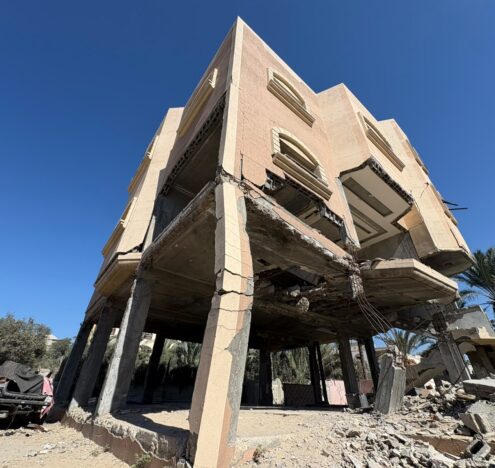
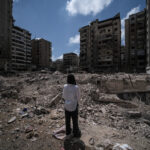
The clashes centered around the Lalezar Hotel in the Sarchinar neighborhood, a densely packed area full of civilians. By the morning, the hotel was a shattered husk and one of the Kurdistan Region’s most prominent politicians was behind bars.
It was the decisive climax of a long-running rivalry between Bafel Talabani and Lahur Sheikh Jangi. They are first cousins who became co-leaders of the PUK in 2020, but fell out dramatically the following year. Talabani accused Sheikh Jangi of conspiring to poison him and expelled his cousin from the party.
Talabani subsequently consolidated his power within the notoriously factional PUK, but never strongly enough to dispel his fears that Sheikh Jangi, who went on to form his own small opposition party, and other sidelined PUK members might try to do the same thing to him as he had done to them.
Over the summer, Talabani caught wind that discussions about his future as leader were underway, several sources speaking on background confirmed. According to PUK statements, some of those plans involved violence, including assassinations and plans to kidnap prominent party officials.
It constituted both an intolerable threat to his power and an opportunity. He moved quickly to eliminate his rivals, targeting people from both the broader world of the PUK and from opposition parties. Talabani framed his actions as necessary to reinforce the rule of law in Sulaymaniyah, but many critics saw his actions as arbitrary and a personalized abuse of power.
On Aug. 12, security forces in Sulaymaniyah arrested Shaswar Abdulwahid, a businessman and the leader of the New Generation Movement, which is the Kurdistan Region’s largest opposition party. Abdulwahid was charged with offenses related to his real estate business and jailed for five months, conveniently keeping him off the campaign trail ahead of Iraq’s parliamentary elections on Nov. 11.
Talabani then turned his attention to Sheikh Jangi, first dispatching security forces to encircle the Lalezar compound with tanks and other heavy weapons and then launching an assault when Sheikh Jangi refused to surrender.
Each side was heavily armed, including with weapons supplied by the International Coalition in order to fight the Islamic State (ISIS) militant group. Throughout the four-year fight against ISIS, Kurdish security forces were the sharp end of the spear. They benefited from significant transfers of weapons from international partners, including small arms, ammunition, tanks and armored vehicles, anti-tank rockets, communications equipment, and night-vision goggles. Both sides also appeared to employ small drones, a growing if underreported competency among the security forces in the Kurdistan Region, during the clashes. While Talabani maintains control of the PUK’s military and internal security forces, Sheikh Jangi was largely responsible for building them up during the 2000s and 2010s and retained the loyalty of several hundred fighters, who held out for several hours before being overwhelmed.
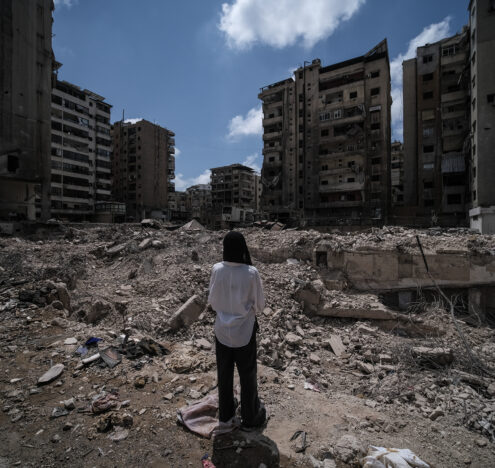
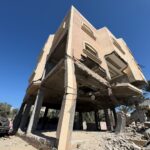
The fighting killed five people, including three from Talabani’s forces and two from Sheikh Jagni’s. RPGs and heavy caliber weapons left many of the surrounding buildings pockmarked, damage that remains visible weeks later.
At its heart, the Lalezar incident is emblematic of politics in the Kurdistan Region: leaders with too much power and too little accountability. While the population has largely recovered from the shock of the violence that the cousins used to settle their dispute, they are worried that it constitutes a new normal. The prospect of clashes between the far more powerful KDP and PUK, whose relationship is so dysfunctional that they have yet to form a government more than a year after the elections, potentially presents even graver consequences.
“This was just an attempt [by the PUK] to send a message to any future opposition and people that ‘we can go to an extreme if we think our power and control are in jeopardy,’” said Kakoyi. “To be honest, there is nothing left to say except that people have reached the point where they think democracy will not bring a change. They have reached the point that they would have to simply accept this reality or leave.”
If the power struggle between political elites often feels to most everyday citizens like a storm gathering above their heads, something much more insidious is happening at ground level. The parties are increasingly using their power, money, and influence to insert themselves into civil society. This crowds out other voices and points of view, with non-partisan organizations struggling for money and attention.
“Party-affiliated NGOs have begun to mushroom overnight, often receiving generous public funding with no transparency or accountability. These organizations serve partisan agendas rather than community needs,” said Dr. Harem Karem at Pasewan Organization.
Genuine civil society represents a potential threat to their power, so co-opting the place where independent thought, accountability, and action can flourish neutralizes the last lines of defense against systemic corruption and abuse of power.
He explained that many “independent, reputable, and long-established NGOs” are struggling to survive. There are few domestic sources of funding that are not connected with the parties, so they have historically relied on partnerships with international donors. These are now drying up as Western governments cut foreign aid and direct it to other urgent needs around the world, leaving a smaller pot for Kurdish organizations.
The political connections of the new partisan NGOs give them a competitive advantage in competing for attention and funding. Karem said that his organization has cut back on a wide range of programming after losing funding, including media literacy and fact-checking initiatives, election integrity and parliamentary training, and interfaith dialogue groups.
“International donors, foreign embassies, and development agencies often direct their funds to these politically backed NGOs — visiting their offices, praising their ‘impact,’ and renewing grants without due diligence into their affiliations or governance,” he said, later adding: “Ultimately, aid becomes another tool of local political control rather than a means of community empowerment.”
This foray into institutionalized civil society mirrors the dynamics in the media, where partisan-affiliated outlets predominate. Social media is also deeply plagued with misinformation and disinformation driven by political figures, known collectively as the shadow media. The parties are also leaving their imprint on public infrastructure by utilizing the NGOs and businesses they run. Recently, a PUK-affiliated foundation requested that the Iraqi government formally rename the airport in Sulaymaniyah after Jalal Talabani, the party’s founder and Bafel’s father. This caused outcry from activists who argued that it denies the city’s political diversity and noted that the elder Talabani had “opposed naming public institutions and places after himself or his close associates” while he was still alive.
Even cherished symbols of Kurdistan are subject to partisan promotion. On Oct. 15, UNESCO announced that the KAR Group, an energy conglomerate and oil pipeline operator with close ties to the KDP, allocated $10 million to continue the work on restoring the Erbil Citadel. KAR is the first major corporate donor to the effort.
Similarly, the residential area around the Citadel is getting a facelift courtesy of an NGO run by Barav Barzani, the nephew of Kurdistan Region President Nechirvan Barzani. For outsiders, this may seem like a generous bit of corporate social responsibility. Still, the political semiotics for ordinary Kurds could not be clearer: Without an independent civil society, they have few ways to fight back. “I think expressions of dissent have been on the decline,” said Shivan Fazil, a doctoral candidate and analyst. “People have grown apathetic and weary.”
Despite this dour public mood, the power of the parties is undiminished. Collectively, they won 62 of the 100 seats in the Kurdistan Parliament in the regional election last year. In the upcoming Iraqi parliamentary election, they are expected to win a similar percentage of the seats in Kurdish constituencies, or even improve on that margin.
It is a paradox of contemporary Kurdish politics: how to explain the continued loyalty to the parties shown by the public at the ballot box in the face of the profound disappointment with the governance on offer. “The rational voter is a myth,” said Fazil, explaining that numerous factors go into the decision, including political ideologies like Kurdish nationalism and economic incentives provided by the parties.
This was powerfully highlighted in a recent documentary by BBC Eye — “Turkey’s Hidden War – The Forbidden Zone” — that investigated Turkey’s cross-border military campaign deep into the Kurdistan Region against the Kurdistan Workers’ Party (PKK). For decades, the PKK has fought against the Turkish government in an effort to secure political and cultural rights for Kurds in that country, like the KDP and the PUK did in Iraq, although the active conflict has persisted until the present day. Because the PKK uses the Kurdistan Region as strategic depth, with bases tunneled deep into the mountains, Turkey insists its actions are necessary to combat the PKK. Yet, many locals feel they are living under a violent military occupation by an irredentist foreign power. They hope that recent overtures between imprisoned PKK leader Abdullah Öcalan and the government of Turkish President Recep Tayyip Erdoğan will lead to peace and the demilitarization of the borderlands.
According to war monitor Community Peacemaker Teams (CPT), at least 344 civilians have been killed by Turkish military action inside Iraq since 1991, with the years after 2018 being some of the bloodiest. Nearly half of all casualties occurred in Duhok governorate. Despite a recent pause in cross-border bombardments and the armed group’s announcement that it would disband, both Turkey and the PKK remain militarily active in the area.
The BBC investigation revealed the ongoing complicity of the KDP leadership in enabling Turkish military activities and, in doing so, also showed a profound disconnect between the actions of the Kurdistan Region’s ruling parties and the political support they receive. While filming the documentary, journalists spoke with a farmer in Duhok governorate, Salam Saeed, who bitterly recalled how his vineyards and orchards burned during Turkish shelling. The KDP security forces, in close coordination with the Turkish military, tightly control access to the area and often block farmers from accessing their land. This harms the livelihoods of Salam and other locals who depend on agriculture to make ends meet. The KDP security forces also intimidate and imprison people who speak out against Turkey or demand compensation if their relatives are killed or wounded. Yet when it comes time to cast their ballots, Salam and his family vote KDP, like most of their neighbors in Duhok. The party received 71% of the more than half a million votes cast in the governorate in last year’s election.
Pervasive patronage is partly to blame. Political connections are crucial for securing even low-level positions in government and the security forces. Maintaining them is contingent upon demonstrating political loyalty come election time. In the Kurdistan Region, nearly 40% of the workforce has jobs in the public sector, so patronage is deeply rooted in the economy and family life. Worse yet, a divided and largely ineffective opposition means voters have few options beyond the ruling parties. In 2009, a new party, the Gorran (Change) Movement, ran on a platform of reform. Eventually, it rose to become the second-largest party, briefly displacing the PUK. Ultimately, it failed to implement its reform agenda and then succumbed to the same kind of internal corruption it was born to combat.
That legacy only adds to ordinary citizens’ disillusionment. The opposition forces that came after Gorran pale in comparison. Voters may disagree with the PUK’s arrest of New Generation’s leader, but they view Abdulwahid as a distinctly shady figure who could never deliver on his promises. New Generation and the other opposition parties do not have a credible answer for how they will succeed where Gorran failed.
As a result, the ruling parties are the only game in town. They wield the arbitrary power to play both patron and punisher — and ordinary people recognize this, whatever their struggles. It creates dissonant expectations. “A lot of us were taken by surprise after the last election in Kurdistan, with a quite remarkable turnout rate of 72% after so many years of economic problems and political dysfunction,” said Fazil.
Indeed, life in the Kurdistan Region goes on. Relatives take their sick family members to the hospital and then sit around drinking tea and talking politics late into the night. They go back home and pull on their boots as Peshmerga, even if their salaries might not come. They watch the news and see a shattered hotel and political enemies hauled off to jail. They hear that the NGOs that gave them hope and help are shutting down, replaced by another party PR front. With nothing left to do, they shrug and say, “same old, same old.”