Skip to content

How Years of War Have Deepened Lebanon’s Cost of Living Crisis

Israel's war on Lebanon has deepened Lebanon's longstanding economic crisis, driving up rent, utilities, and food costs.

Words: Madeline Edwards
Pictures: João Sousa
Date:

In a family of too many widows, Aida Kandeel is something of a matriarch. At 67, and grandmother to seven, she wears a shimmery floral scarf around a kind face. She lives in the working-class Laylaki suburb just south of Beirut, in a modest ground-level apartment where she’s welcomed me on a handful of occasions: grandchildren gathered for Eid lunch; the neighborhood women’s prayer circle and lament during Ashura; just regular afternoons as the sun slips away. 

The TV shelf at the center of her living room was once filled with a rainbow of family photos, little plants, and life’s random knick-knacks. 

Today, as I visit around lunchtime, it is empty. Thieves stole the TV, clothing, and her home beauty salon business supplies earlier this year after she fled Israeli bombs over Laylaki. At the time, Lebanon had come under renewed daily bombardment amid a broader US and Israeli attack on Iran and the Strait of Hormuz. The new escalation, still ongoing in much of south Lebanon, came after a previous round of deadly Israeli attacks here in 2024 that culminated in a not-quite-ceasefire. 

At Aida’s house, the thieves left behind only a small plaque bearing a Quran quote, and some posters on the wall. “This house used to be a gathering place for the whole family, for anyone who needed a place to stay,” she remembers. 

The highlight of most days in her home, as in many Lebanese households filled with extended family, is afternoon lunch: mountains of vermicelli rice, meats, fresh salads dripping with olive oil, and glasses of fizzy soda over decades-old inside jokes. Maybe an arghileh pipe, and cardamom-spiced coffee.

But that mood has darkened. Today Aida lives between the place in Laylaki and with displaced relatives outside of Beirut, where it’s a bit safer from potential Israeli attacks. Often, that once-vibrant house in Laylaki sits empty. 

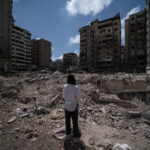
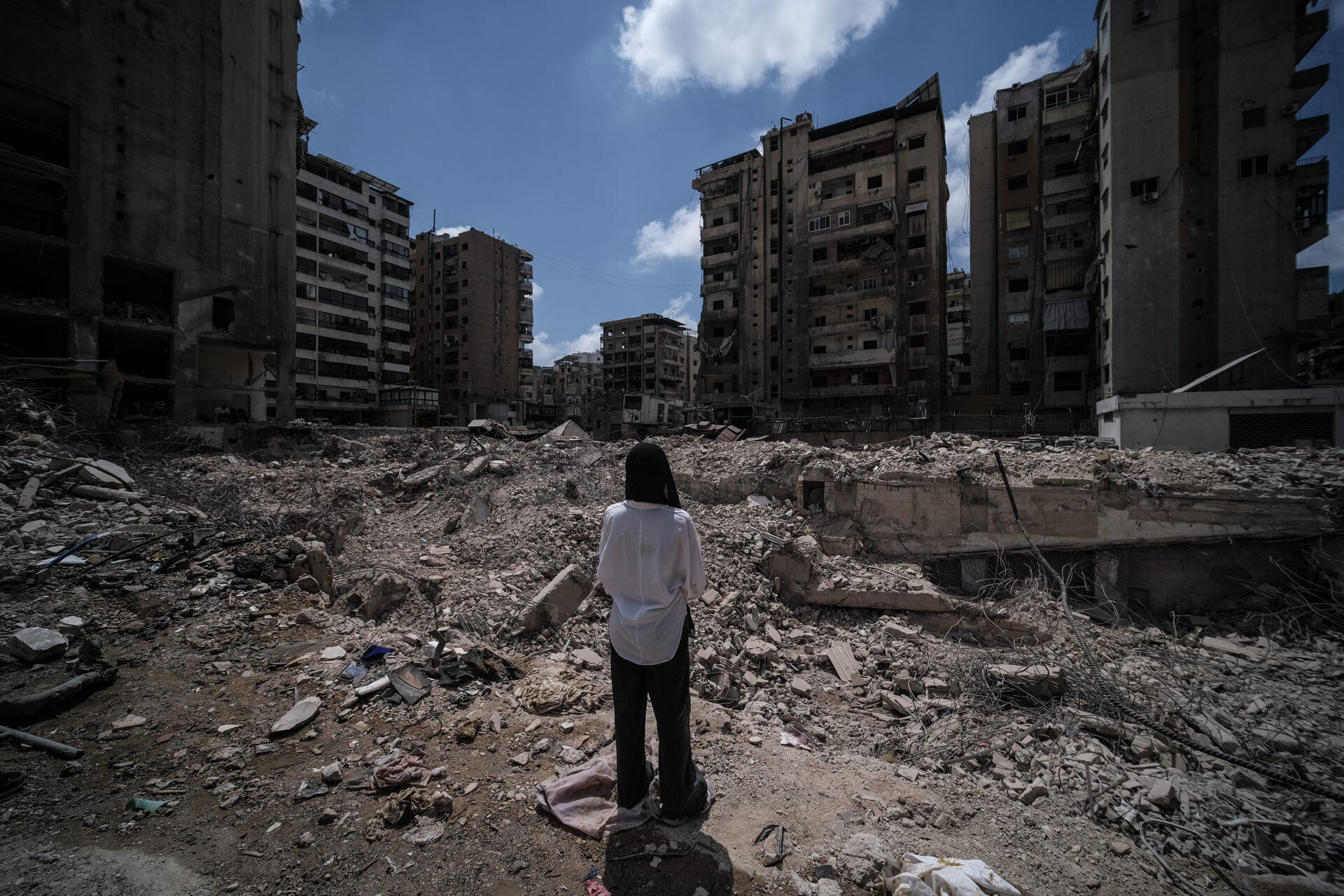
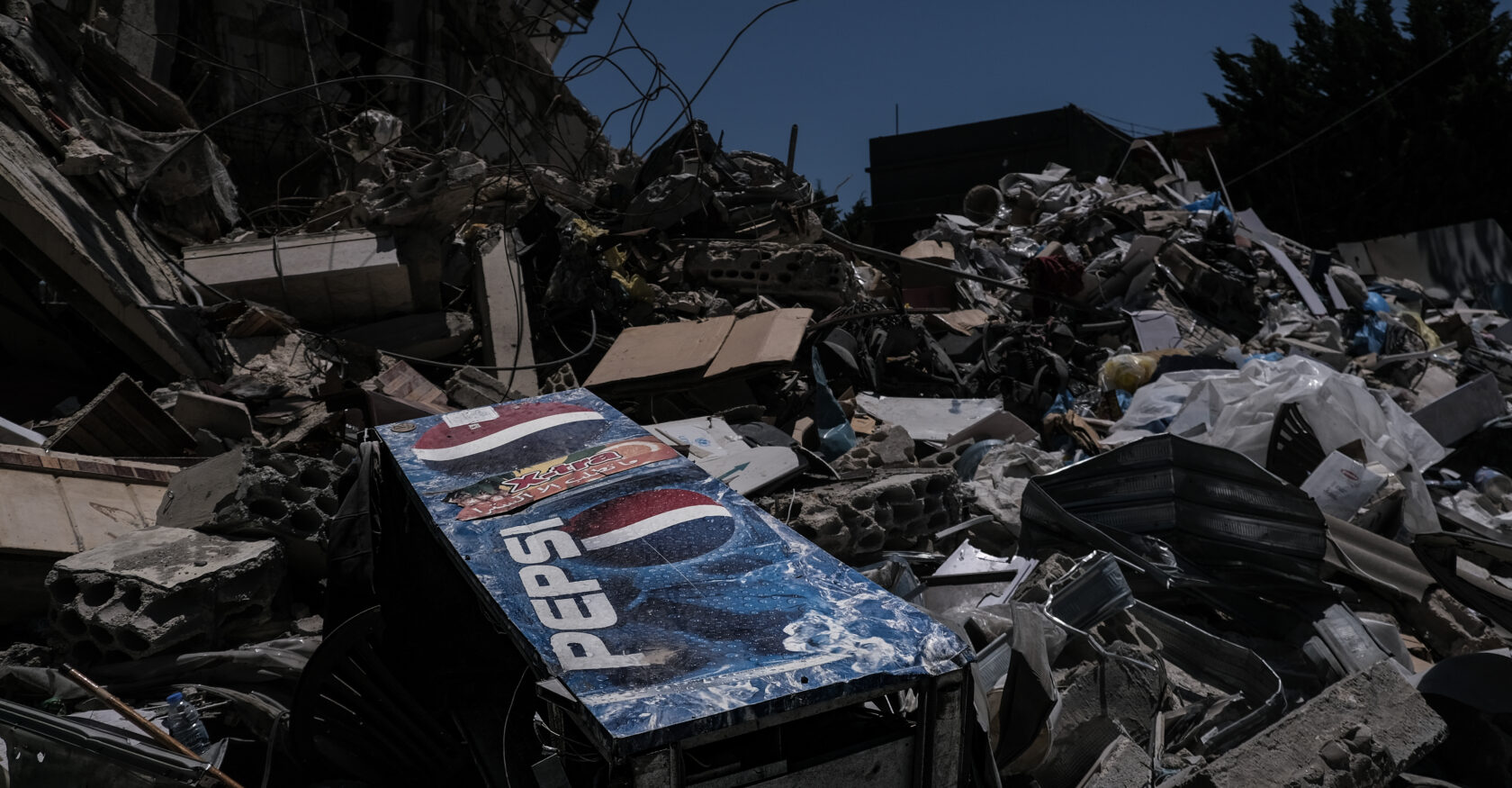
A Pepsi machine sits amid the wreckage left by an Israeli airstrike in Beirut (João Sousa)
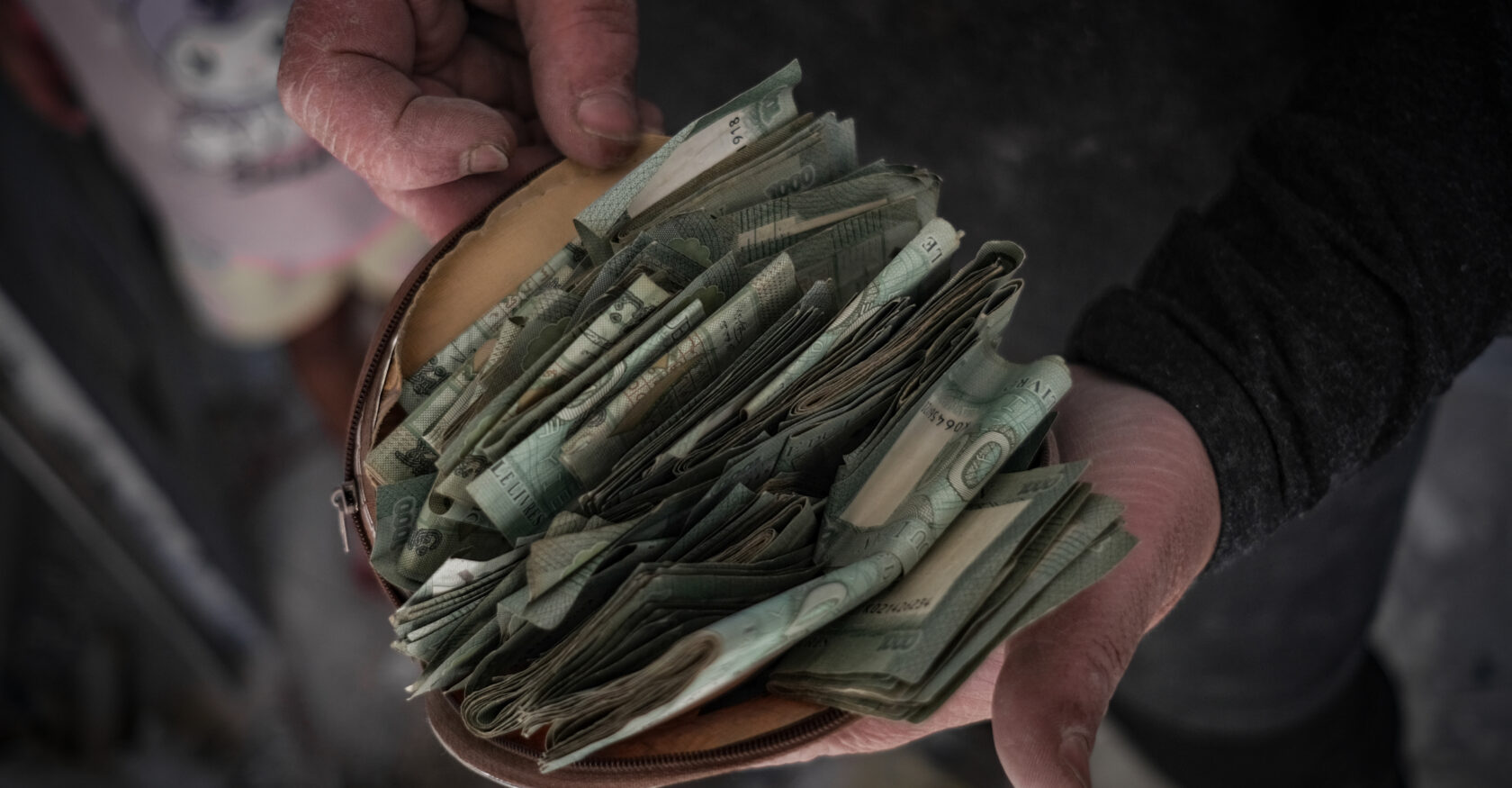
More than a million people are now experiencing 'crisis'-level food security in Lebanon (João Sousa)
More than a million people are now experiencing ‘crisis’-level food security in Lebanon (João Sousa)
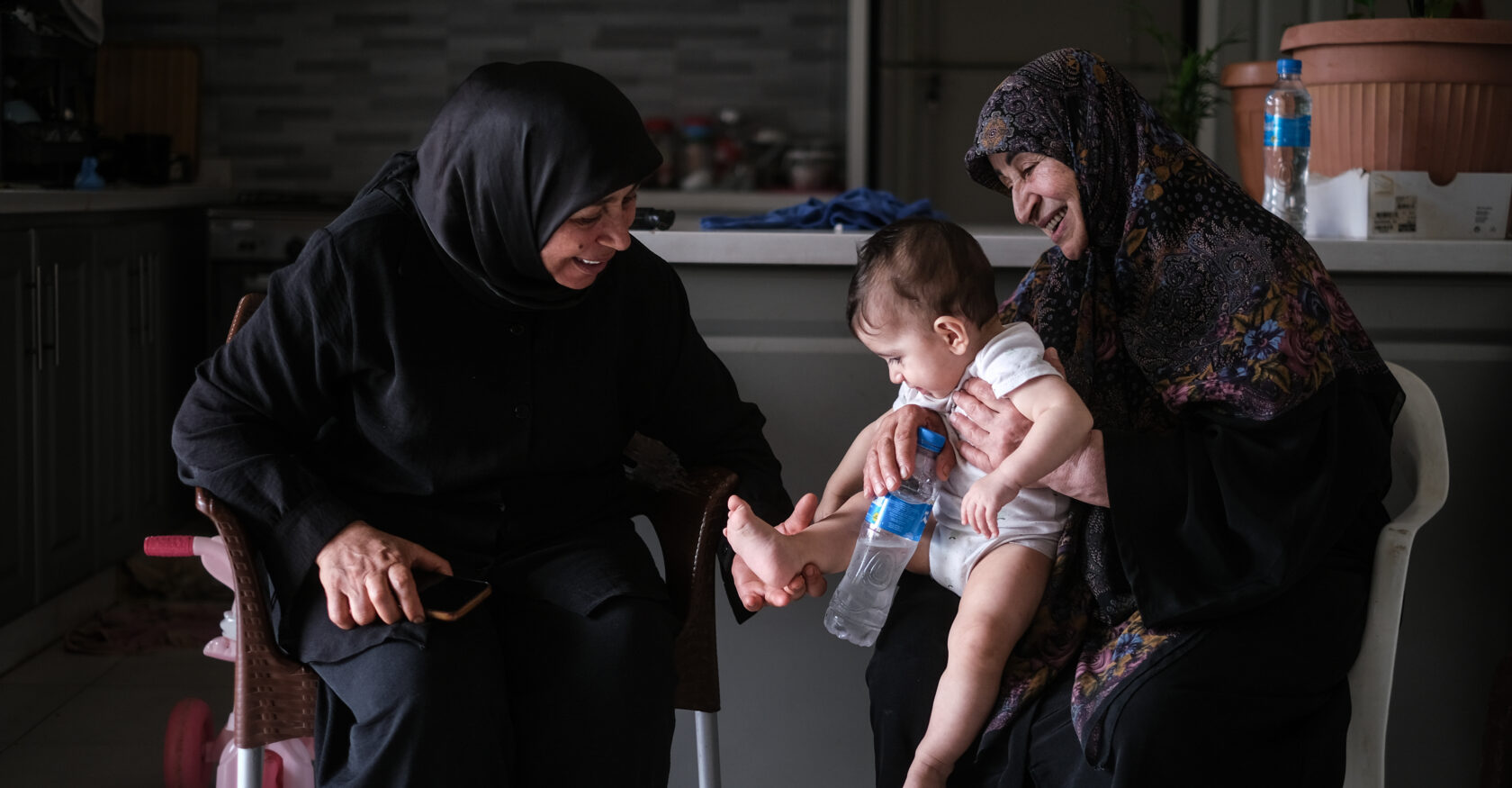
Siham and Aida hold Aida's granddaughter (João Sou
Siham and Aida hold Aida’s granddaughter (João Sou

Now another, quieter battle looms over their days: Amid so much uncertainty, and wildly inflating prices for everything from taxi rides to grocery bills, how will they keep paying for everything?  

On a typical day like the early October Sunday when I visit her, Aida figures groceries for feeding her family cost about $50. That’s no small expense. When Aida still ran her home beauty salon, she brought in several thousand dollars per month. But now, with so many former clients either displaced or unable to afford manicures and waxing, she only makes “maximum $200.” More than half it goes towards paying utilities. 

She’s not alone. For people across Lebanon — but especially the displaced, who are now renting apartments away from their hometowns — the war comes alongside endless bills for gas, electricity, groceries, housing, and transportation that are all climbing up. 

More than one million people in Lebanon are now experiencing acute, “crisis”-level food insecurity, largely due to unaffordability wrought by the war, according to the most recent United Nations count — that’s the stage where people start cutting out some foods or selling their belongings in order to buy groceries.

The annual inflation rate reached 16.6% in August, with prices going up across the board, including for groceries, according to Lebanon’s Central Administration of Statistics (CAS). But food isn’t the only worry hounding people like Aida. Costs for water, gas, and electricity rose by 32% since this time last year, while transportation rose by 31.7%. 

In the first few days of September, households across Lebanon got a shock: some of the highest electricity bills they have ever owed. In some areas, the bills for privately-run diesel generators, which provide most daily electricity amid a years-long national shortage, were hundreds of dollars. (My own bill came out to $420, the highest since I moved to Lebanon at the start of the country’s financial crisis seven years ago.) That’s when the national currency, the lira, tanked to as-yet-unexplored depths, vaporizing hundreds of thousands of citizens’ life savings in Lebanese banks.

Add years of war costing Lebanon’s economy billions and now a dragged-out US-Iran-Israel conflict, with its flashpoint on the key shipping bottleneck in the Hormuz Strait, spurring high fuel prices worldwide. Lebanon saw its highest-ever gas prices last month, at about $31 per 20-liter (5.3-gallon) tank of 95-octane gasoline.

In January, the World Bank projected a recovery of 4% GDP growth in 2026 if the country remained stable. That, of course, didn’t happen. Since March, Israeli strikes on Lebanon have killed more than 4,000 people and flattened entire villages as part of a de facto occupation. Finance Minister Jaber Yassine predicted in May, after months of bloodshed, that the economy would contract by seven to 10% this year. 

“There just isn’t any money,” Aida says, in between washing her cooking pots in Laylaki.

A few minutes’ bus ride from Aida, Maha Salameh manages a minimarket her brother owns in another corner of the Dahieh suburbs. Israel has hit the area hard since 2024. “The prices are changing day to day because of fuel,” she says. 

Maha’s shop’s old location, just across the street, is now a pile of concrete rubble after Israel struck the building two years ago. One year and $20,000 worth of new equipment later, the new Minimarket Salameh is now up and running, selling toilet paper, laban yogurt, candy, and daily necessities.

Some of her customers are now going into debt to buy their groceries from her, putting their bills on a running tab instead of simply paying her at the register each day — though Maha only lets people living in the surrounding neighborhood do this so she doesn’t fall into debt herself.

Siham Kandeel, Aida’s younger sister, walks into the doorway from the street saying her hellos. Though she’s tired, she smiles as she takes a seat. The past two years have been harder on Siham than on Aida.

Siham, a widowed taxi driver, had been living in the south Lebanon village of Burj Qalawayh until 2024, when an Israeli airstrike flattened her home. Another bomb destroyed the van she had used as her taxi, reducing her sole source of income to a burned-out hull. She and her two children, 25-year-old Ali and 23-year-old Fatima, fled north to the southern suburbs of Beirut, where they’ve been renting a series of small apartments ever since. 

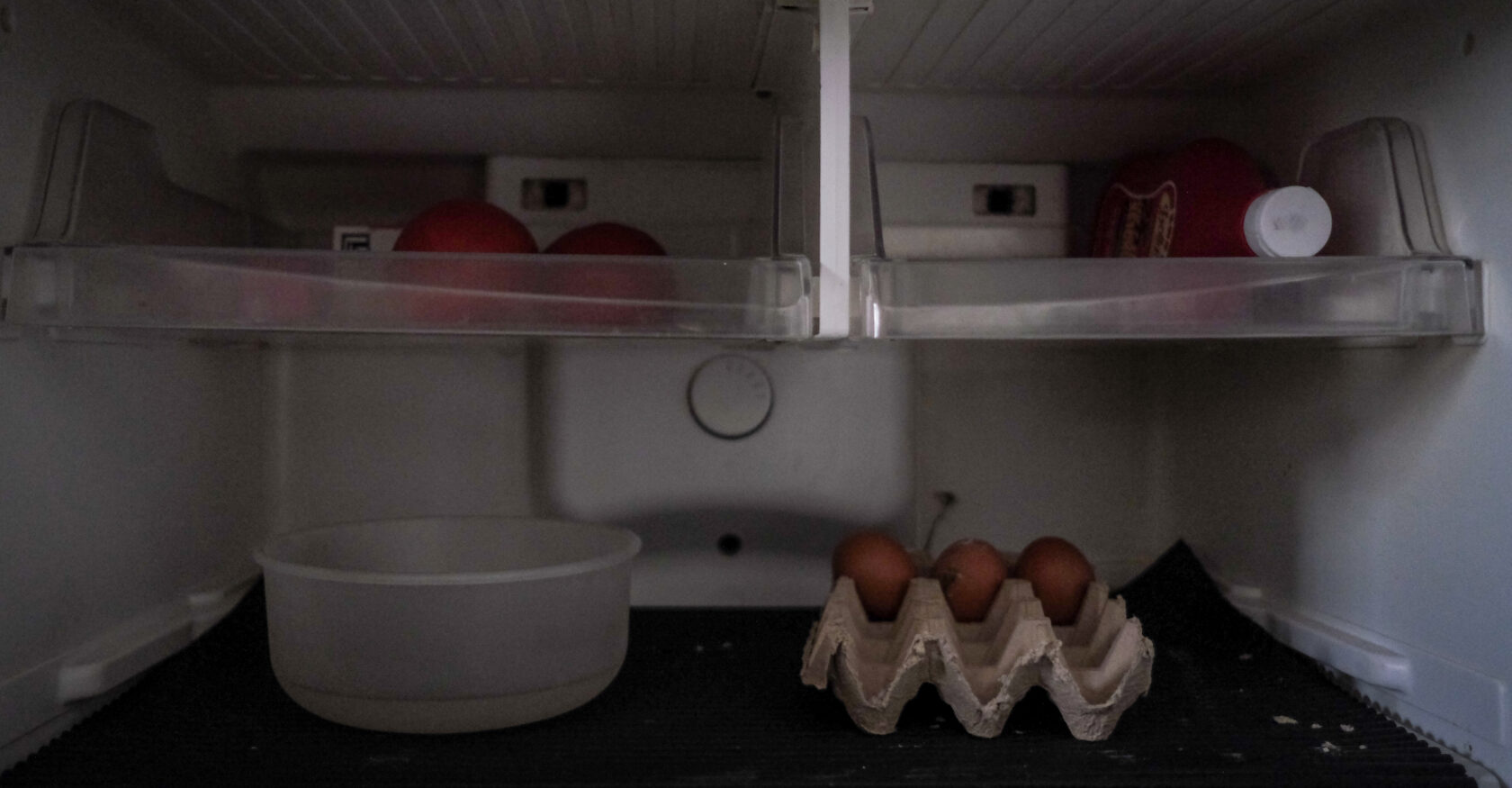
Yet here, in a vibrant mishmash of alleyways and working-class apartment blocks, the 54-year-old uses a bag of ice and some spare clothing as a makeshift fridge. That’s all she can spare to keep her daily groceries cool until she can cook them. A new refrigerator — let alone the electricity costs to run it — would simply be too expensive. 

“I didn’t know that,” Aida interjects, surprised. “Why did you never tell me?”

That’s not all. Here in Laylaki, Siham pays $300 in monthly rent and about $150 in groceries. 

With no income after an injury forced Ali to leave his job at a grocery store,  the family rely on small handouts from the local Hezbollah office in their home village. Still, it’s not enough to cover rent. Otherwise, they borrow from relatives or, like Maha’s local customers across town, buy groceries on credit. “Sometimes I have to put my groceries on an ongoing ledger [at the shop] instead of paying,” Siham admits. 

Displaced people have been hit doubly hard as they rent temporary apartments and prices soar (João Sousa)
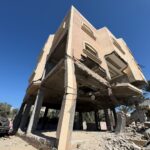
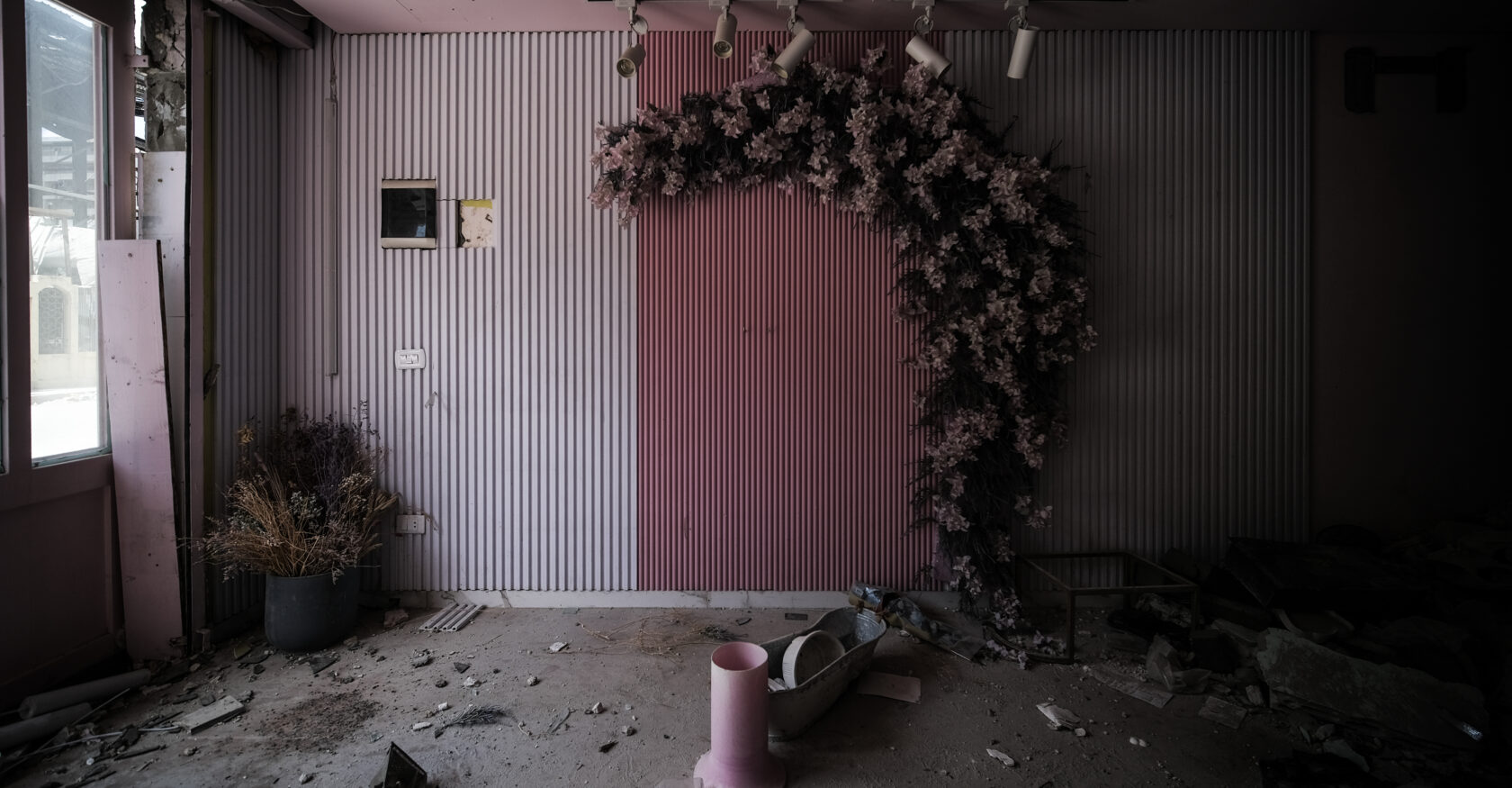
A flower shop in Haret Hreik, part of the Dahieh suburbs in Beirut, was destroyed by Israeli bombings (João Sousa)
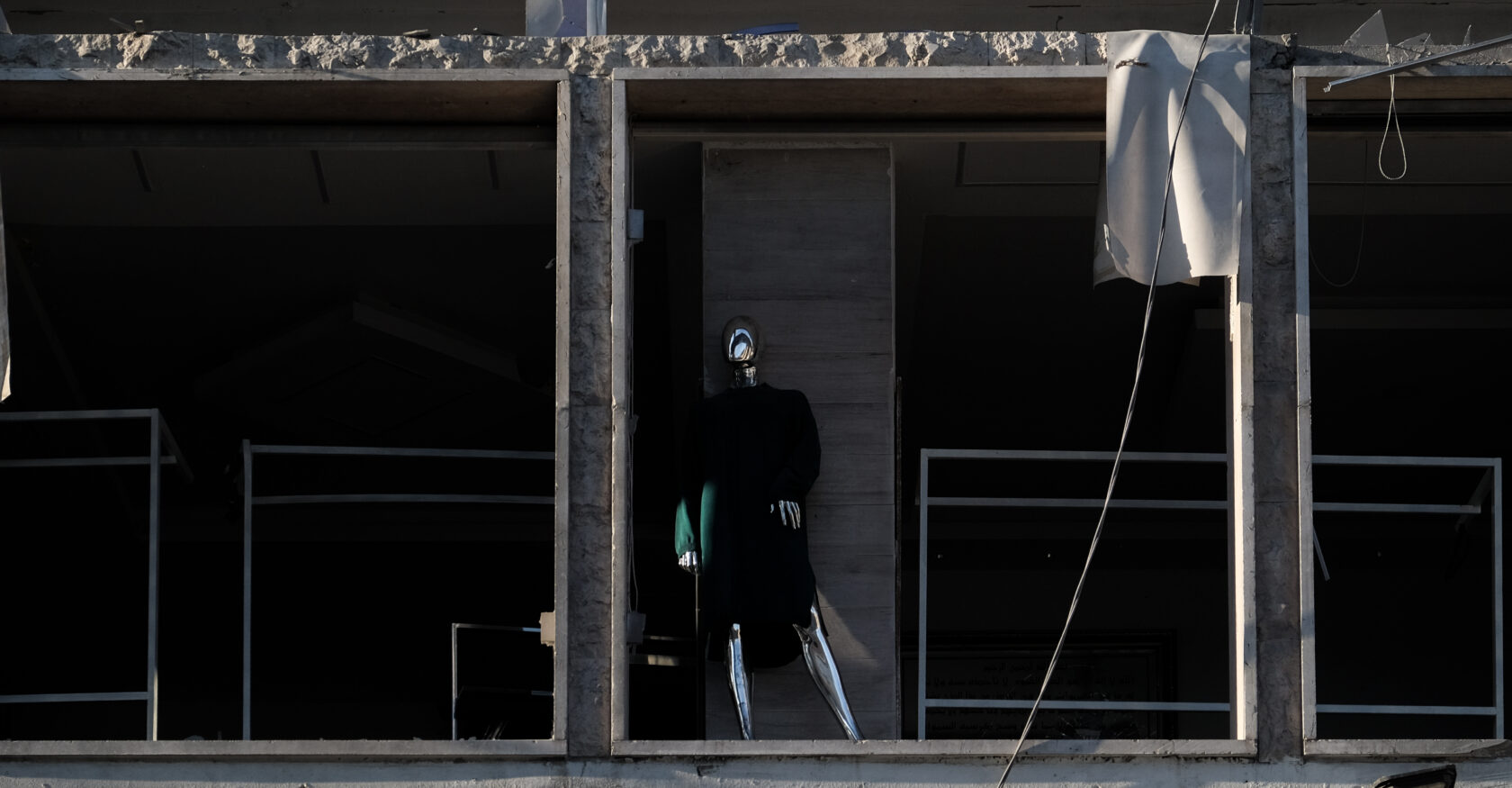
A mannequin stands in the bombed-out front of a store in southern Beirut (João Sousa)

“I get simple things: lentils, lettuce, onions,” Siham tells me from her sister Aida’s living room, just down the street from her rental apartment. She shows me old photos on her phone: her daughter as a little girl, her son’s blond curls, her husband Zulfiqar, who passed away 20 years ago. She allows a big smile, recounting the food she used to cook in the old house in Burj Qalawayh, before the war. “I used to make whatever I felt like. Meats, lunch gatherings, beach picnics in Tyre.” She swipes through yet more grainy photos. 

“Those memories are gone with the rubble,” Siham sighs. She wears an outfit of all black.

Even for those who still have jobs, the Lebanese minimum wage is only about $312 per month after a government-approved increase last year, meaning many families and individuals spend entire paychecks on ever-more-expensive gas, groceries, and rent.

There are only small, fragmented glimmers of a social safety net to help those now struggling to scrape together enough for their daily needs. “Until now, we still don’t have a universal protection program,” according to Khaled Saad, an economist with The Policy Initiative in Beirut. 

A new pension system adopted in 2023 has yet to go into effect, he explains, while the budget for the government’s emergency cash assistance program for vulnerable families is simply too low to meet the staggering numbers of displaced people. In their absence, Siham and others are looking elsewhere: family members, and in some cases, small cash handouts from political parties. 

Hezbollah also announced last week it would provide up to $14,000 to families whose homes had been destroyed by Israeli attcks, to help cover rent and furniture. It wasn’t clear when the cash handouts would start. 

It is a Saturday afternoon in Rami’s family home. His mother and aunts stream through the kitchen as they bake a lunchtime batch of oiled arayes flatbreads lathered in ground beef, spices, and parsley. Rami’s out back, on the walled-in balcony.

It’s an upbeat day in a difficult year. Rami, his parents, and sister fled south Lebanon earlier this year, as the Israeli strikes ramped up again.  So did his aunts, his cousins, his grandmother, and his grandmother’s in-home care worker, a woman from Ethiopia. Some 11 or so of them have been living off and on in an apartment near Beirut ever since, cramped into shared bedrooms hours from the houses they own down south.

“But we’re lucky,” Rami tells me, asking that I use a pseudonym to protect his family’s privacy. At least they don’t have to pay rent, as the apartment here on the outskirts of Beirut is owned by an uncle who lives abroad. And some family members still regularly visit their home village of Deir Mimas, which directly overlooks the southern border with Israel, for their jobs as school administrators. 

The jobs once guaranteed the family a stable, middle class life. So did Rami’s computer science degree. But after graduating last year, he has yet to find a job — same with most of his friend group, only one of whom is employed. 

“We did the math,” he says, between bites of arayes, “and I could just drive a taxi.” It would help cover expenses, especially for groceries — since fleeing the south, the family still sometimes receives parcels of basics like lentils and rice from Christian charities. They’re also doing what they can to save on their generator bill, waiting until the precious couple of hours of government-supplied electricity are running in order to use the laundry machine and other appliances. It’s a bit of a calculus.

“Would you like for him to drive a taxi?” I ask Rami’s mother, turning to her after she walks in from the kitchen. 

“Of course I don’t!” she gasps. And yet, she can’t remember ever having been so worried about money before, she admits later on. That’s despite the roughly $700 she still earns per month working as an administrator at a Catholic school down in Deir Mimas, where she braves the three-hour drive every week since the school year began. 

Until he can find a job, Rami says he simply spends his days either at home, or hanging out at the nearest Stories, a sort of Starbucks riff-off cafe, with his buddies. His biggest goal now, with few hopes left of a return to normalcy: “Leaving Lebanon.” 

Siham, meanwhile, is simply taking things day by day. She hopes her children Ali and Fatima, both young adults, can leave Lebanon and build new lives elsewhere. As for herself, “I no longer have hope. Here in Lebanon, you no longer feel that you can stay steadfast.”

Which is harder for Siham: the bombs of war, or the daily struggle over bills?

“They’re both the same,” Aida, her sister, interjects.

“Of course not!” Siham laughs. “The war is still harder.”

Aida, the grandmother of a family that has lived through multiple wars since 1975, retorts: “I’ve gotten used to all of this.”

“I still get scared. I want to live, for my kids.” 

“I could die, it would be fine,” Aida shrugs, still smiling.

It’s time for Siham to leave, to walk the few streets over to cook the day’s lunch. Waiting for her in the apartment are Ali and Fatima.

On the menu for this afternoon: “I’m just throwing something together,” she shrugs. Her eyes moisten. “Tomatoes, bulgur, some onions.”

The living room is empty once again, almost. On the shelf left bare by thieves are, I finally notice, a few shy little plants that Aida scavenged from somewhere outside, rehomed in makeshift plastic-bottle flowerpots.  

She doesn’t know their names. One, a tiny tree-looking thing, is brown and naked with no leaves. “I’m trying to save this one, I’m watering it when I can,” she says, bringing it closer to me. It does, in fact, have new little leaves of green sprouting out when I squint closer. 

Aida waves at the air. “But if it dies, that’s okay, too.”

** All photos by João Sousa. Sousa is a photojournalist based in Lebanon and focused on social issues.

Madeline Edwards

Madeline Edwards is a journalist writing about society, the environment, offbeat histories, and rural life.

YOU MADE IT THIS FAR.

You’re exactly why Inkstick exists.

Independent reporting on war and power shouldn’t belong to billionaires or governments. It survives because readers like you decide it matters.

Help keep this reporting independent, free, and accessible to everyone.

Join the people paying attention

SIGN UP FOR OUR NEWSLETTERS