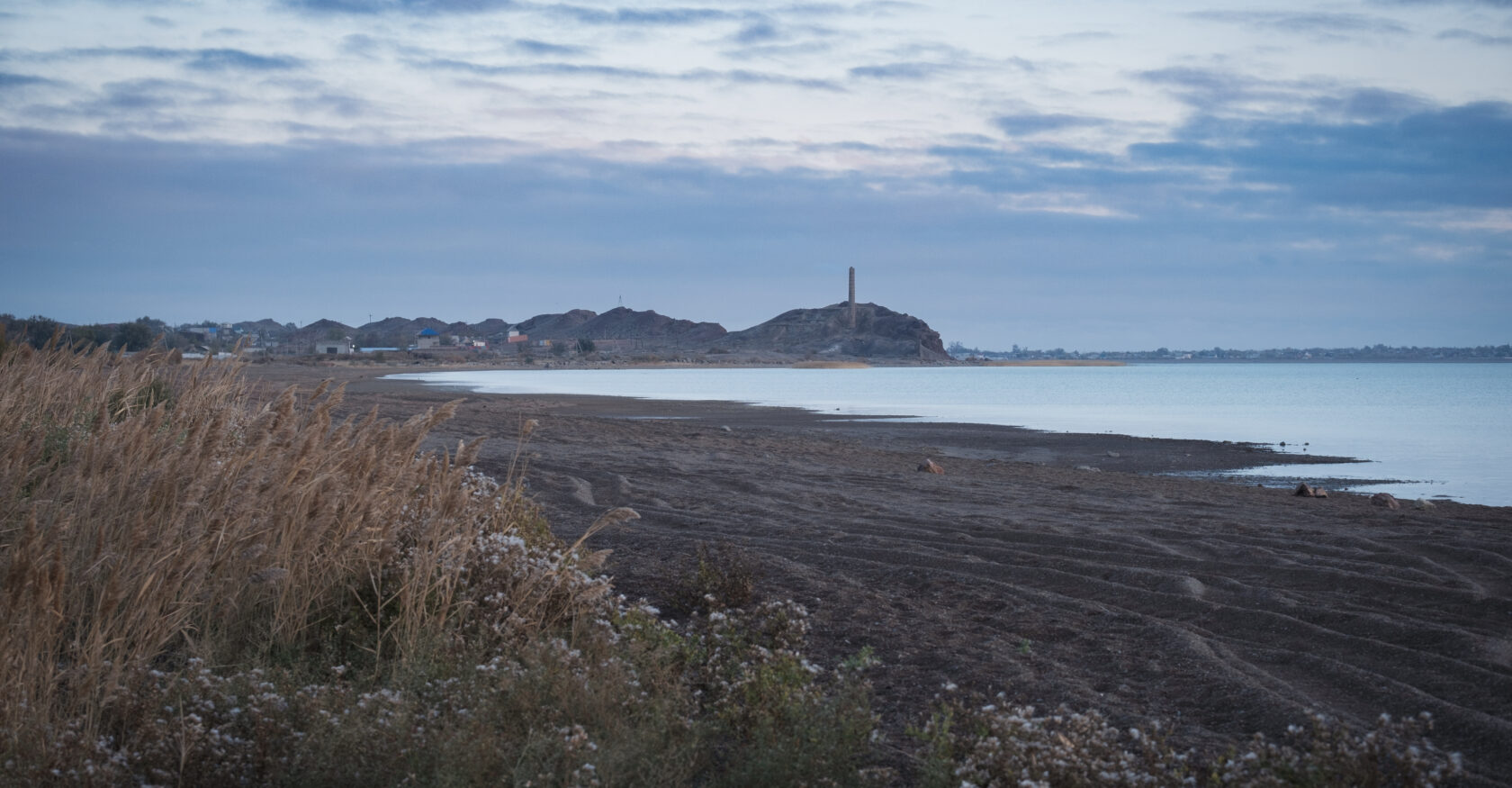














On a cold and rainy fall morning, Omirkeldi Mukhtaruly Abeuov looks through the steamy window of his art studio towards Lake Balkhash, the 15th largest lake in the world. What used to be covered in water, has now given way to look-alike Soviet-era buildings overlooking the vast and dry Kazakh steppe. For decades, Omirkeldi’s artistic work focused on the collective history of Lake Balkhash, but now, the grim outlook of the lake has forced him to change his craft to focus on environmental issues. ‘’In the past, the lake covered all the area right after the road [in front of his house], but now [the water] has gone quite far. We must save the lake. If the lake disappears, there will not be any living,‘’ the 74-year-old says.
Omirkeldi’s parents, like many others in the Lake Balkhash region, arrived during the Kazakh famine of the early 1930s. The devastating famine claimed the lives of around 1.5 million people, driving survivors to the lake in search of fish and employment in nearby mines. Now, almost a century later, scientists fear the lake is following in similar footsteps as the Aral Sea, which went from being the world’s fourth largest lake to near complete evaporation over fifty years. Reduced precipitation due to climate change, rapid industrialization around the lake’s shores, and the growth of agriculture and industry in China’s Xinjiang province — where the Ili River flows and supplies 80% of the water — are placing a severe strain on the lake’s ecosystem.
On top of that, on Oct. 6 this year, Kazakhs overwhelmingly voted in a referendum to build a nuclear power plant along the lake’s shores. The government claims this nuclear plant will address the country’s longstanding energy shortages and meet the demands of an ever-growing population. However, nuclear plants consume billions of gallons of water annually to cool down their reactors, discharging warm water into nearby bodies — a process that can disrupt the habitat of numerous fish species and increase evaporation, adding new risks to an already fragile ecosystem.
If things remain unchanged, research suggests the lake could disappear in as little as 20 years. The nuclear plant could speed up its disappearance. ‘’We don’t need this nuclear energy,’’ says Omirkeldi. ‘’There is an interconnection between nature and human beings. If they build this nuclear station there will be no living creature in the future. Humans should feel from the bottom of their hearts; they should feel empathy [towards their home].’’
A Fragile Environment
‘’From 2021 to 2023, the level of the river has gone down by 2 meters,’’ explains Kumataev Erkynbek Erikovich, 32, director of the Center of Fisheries in Balkhash City, the largest settlement in the region, home to 77,000 inhabitants. ‘’We have a dry climate here. Before we got 15,000 cubic kilometers of water from the Ille River coming from China, now we only get 10,800 cubic kilometers a year.’’
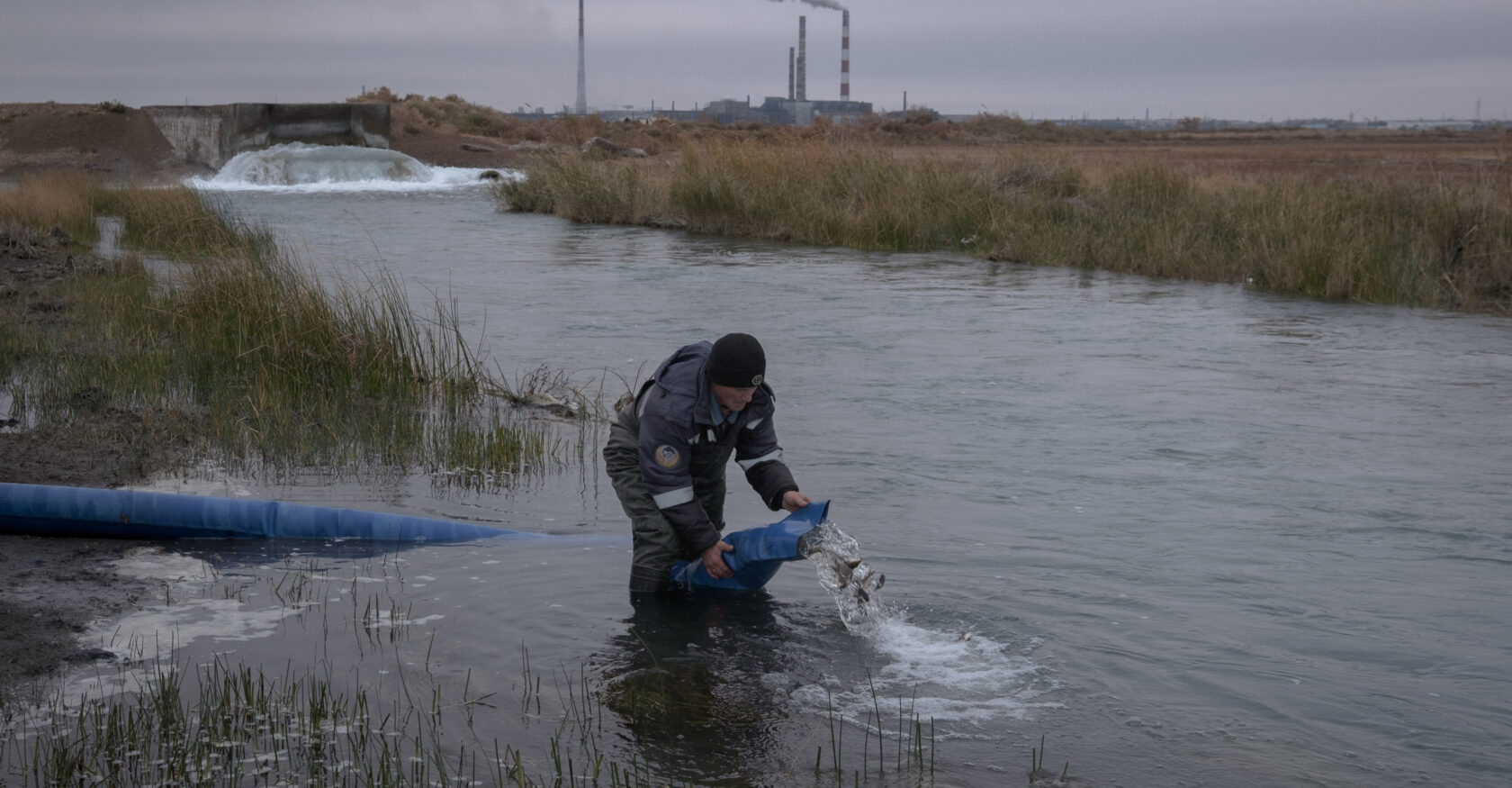
Given the lake has an average depth of six meters, relatively small changes in the level of water could severely affect the percentage of salt in the water. ‘’It is affecting fish. The fish need a lot of water to survive. In some places, it’s so salty that animals cannot drink the water. If the lake dries up, wind could bring salt to the mountains and affect glacier melt. In the last 20 years, the quantity of fish has gone down by 20% due to illegal fishing, dams stopping the natural flow of fish, and overuse of water,’’ says Kumataev from his office in the city’s outskirts after a long day working in the field repopulating carp fish stocks in the lake.