“I think one of the biggest things I’m struggling with right now is finding the balance between acceptable personal risk, and NGO risk,” he continued. “If I’m not responsible for a team, I’m okay with taking more time loading or going to hotter places. I certainly have self-preservation, and have actually become more cautious over the years after seeing death, but people look to me to set an example and this can be a struggle.”
Kramatorsk has been repeatedly attacked by Russia throughout the full-scale war, and experienced more limited violence in 2014 and 2015 during fighting between Russian-backed separatists and Ukrainian military forces. Some high-profile attacks include the April 8, 2022 strike on the city’s train station that killed 58 people and wounded more than 100, and the June 27, 2023 attack on a pizza restaurant that killed at least 13 civilians, including Ukrainian novelist Victoria Amelina. But the frequency of large-scale airstrikes, along with drone attacks, has severely increased in recent months.
“Compared with the beginning of the year, the situation has changed rapidly over the past two months. At the beginning of the year, there were not such massive strikes with FAB-250 and FAB-500 guided aerial bombs against residential areas, but now there are; particularly against the city center, infrastructure and municipal facilities, shops, supermarkets, and apartment buildings. Almost all gas stations have also been destroyed,” explained Sasha, a 44-year-old resident of Kramatorsk and former engineer at a local factory who requested his last name be withheld for security.
“There is also a very high level of activity by small FPV drones throughout the city, which are destroying civilian vehicles and public transportation, including buses, on a large scale,” he continued. “Partial electricity and water outages have become more frequent, and this is connected to attacks on the city’s critical infrastructure.”
“My wife and I are planning to leave soon, but right now it’s difficult because there are only a limited number of transport providers and long waiting lists. There are charitable organizations that evacuate people, but they cannot take a large amount of belongings with them, only personal items, and there has also been a major problem finding somewhere to evacuate to,” he explained.
Not knowing where else to go, or lacking the resources to leave, are common reasons people choose to stay in their homes as danger increases. Supporting the displaced has also been a significant challenge for both the Ukrainian state and the numerous humanitarian organizations working in the country. This past January the International Organization for Migration estimated that there were at least 3.7 million internally displaced people in Ukraine, while another recent report by Depaul Ukraine estimated that 40% of Ukraine’s homeless population, roughly 400,000 people, may actually be internally displaced.
“There are thousands of reasons why people do not leave, but the main problem is there is no solution for them if they do not have a place to go,” explained Patrick Munz, a 32-year-old volunteer from Germany and co-founder of the Kramatorsk-based humanitarian organization BaseUA. “We start our outreach months before the frontline gets closer; we deliver flyers to people and speak with them and they’ll say, ‘Okay, if I come with you, where will I go?’ and all we could say was ‘We can pick you up on this date and take you to this IDP center, and then they will tell you where you will go,’ so of course they choose not to go,” he explained.
In an effort to address some of the gaps in long-term IDP support, BaseUA recently decided to transition away from frontline evacuations to focus on raising funds to buy housing for families with children, while also experimenting with methods to help the displaced find jobs. To date, they’ve bought ten homes for ten families and are in the process of acquiring eight more, according to Munz.
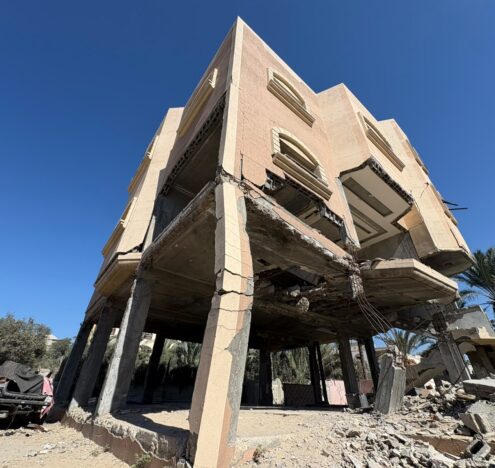
“As we understand it, that work is not as relevant anymore, because basically now you have state actors that could evacuate all these people, and the risk is just massively higher than it was before,” Munz explained. “Before we were dealing mainly with cruise missiles and S-300 rockets, but today it’s like all glide bombs, and they are dropping them with such intensity on Kramatorsk. If they’re the big ones, they can take down a whole apartment building, and if they are the small ones, they will definitely destroy your house.”
Of the few remaining groups like ARC and BaseUA, most focus on what is called “second-line” evacuations, while a special unit of Ukrainian police called the White Angels is tasked with evacuations from areas considered the most dangerous.
Munz and BaseUA have extensive experience conducting evacuations from nearly all the major Donbas cities that have been lost in battle over the last four years, from Sievierodonetsk to Bakhmut and beyond. While risk has always been present in the past, from artillery, mortars, mines, rockets, and even gunfire, the era of FPV drones has largely made evacuations in the style of the war’s earlier years practically impossible. With their team sleeping in the basement for safety, and FPV fiber optic cables covering their back garden, the organization has decided to leave Kramatorsk. Their last evacuation was on Aug. 24.
“It’s really heartbreaking to see this happen to Kramatorsk,” said Munz. “I mean, it’s always been heartbreaking to see this happen to other cities, but here there was still kind of this possibility of a little break, to have a little social life, where you could go and grab coffee somewhere, and today it’s just part of the kill zone.”
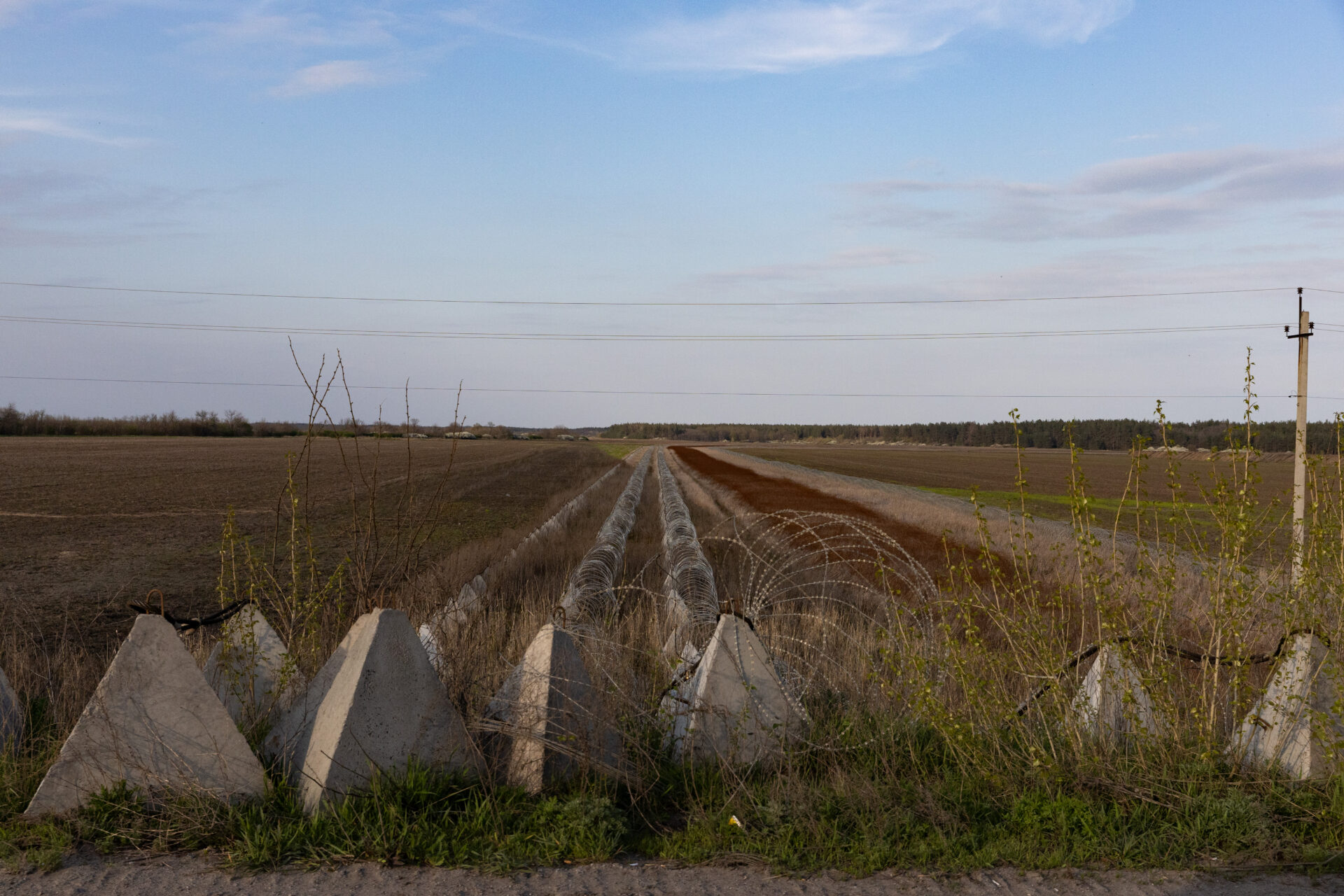
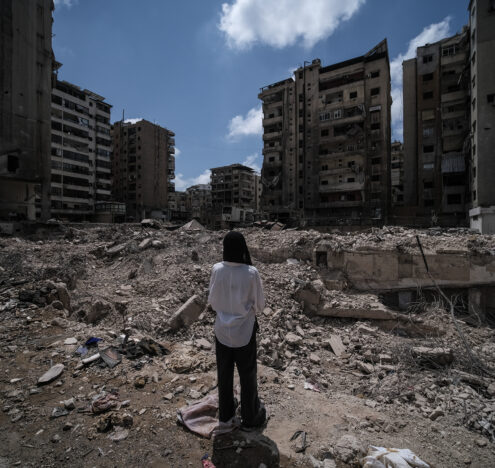
Across the city, tunnels of anti-drone netting have been erected along with concrete road blocks. The Russian glide bombs hitting the city on a daily basis are gradually turning ever more buildings into rubble, while the night remains particularly dangerous.
“Lately, when I go to sleep at night, I probably wake-up 10 to 12 times to the sounds of FPVs hitting something; you can just hear them swarming around at night,” said 33-year-old Ben Kochenburger, a volunteer from the US who works with a Ukrainian NGO called the Kramatorsk Association of Volunteers.
“Our ambulance was hit five days ago; it was struck during the night just outside our apartment building, and another was hit three weeks ago,” he explained. “Kramatorsk can be very dangerous. We’ve retrieved corpses of civilians who were killed in the night, and recently we were on an evacuation only like five minutes from the city center, and the place was just flooded with drones. We saw three that were close and five explosions, but I’m not sure if they were shot down.”
The constant threat of drones and airstrikes is taking its toll on Kramatorsk’s remaining population, pushing many to their limits.
“They shoot down drones around the clock. The air-raid siren is always going during the day. It’s very loud, especially when they’re above us, but the situation has always been bad. I just want to get some sleep,” explained 64-year-old Kramatorsk native Sergey Borisovich Milinteev. A local tattoo artist, Milinteev has already survived one missile attack that hit his apartment directly, covering him in debris in 2023. More recently, in 2025, his 44-year-old son was lost in battle.
“Eventually, the city will be wiped out,” he explained. “Zelenskyy won’t give up the Donbas; so Russia will simply bomb it to pieces.”
Passenger trains stopped running to Kramatorsk in November of last year, while train service to nearby Sloviansk was also halted this past March. As of now, buses or private vehicles are the only means of getting out of the area, and as bad as things are currently, they are likely to get worse.
“We’ve been getting at least 20 people out each day; our cars have been full daily, and we are not even at the beginning of this whole disaster, of what is going to come,” warns Munz. While BaseUA transitions out of Kramatorsk, ARC is also making plans to mitigate risks as the situation evolves.
“We’re already going to start transitioning to meeting outside Sloviansk, and only enter to drop off aid,” explained Lan. “We’re going to have to set up one meeting point instead of going door-to-door, picking people up.”
This is not the first war that Kramatorsk and the surrounding region have experienced. Though the situation remains undoubtedly difficult, for residents like Sasha, the engineer planning his family’s departure, there is still much to admire.
“Despite everything, the city is still functioning. Cafés, shops, the market, and restaurants are still open, and in spite of all the destruction, in my view, the city remains an embodiment of the resilience and unbreakable spirit of the Ukrainian people.”