









When Republican Governor Greg Abbott appeared on Fox News to advertise his latest attack on Muslims last November, he was flanked by an American flag and a Texas flag. Hundreds of thousands of Muslims call Texas home, but Abbott was speaking to Sean Hannity that day to vilify them. He boasted of his recent move to designate the Council on American Islamic Relations, an American civil rights group, and the Muslim Brotherhood, a foreign political organization, terrorist outfits. Abbott had also recently issued what he called a ban on “compounds” that adhere to Sharia law, or Islamic jurisprudence, in the state. Feigning disbelief, Hannity asked Abbott whether Texas truly had “Sharia courts.”
“We know of at least two that exist in the Dallas area,” Abbott claimed, later adding that he was “deploying the Texas Department of Public Safety to also root out any Sharia courts anywhere in the state of Texas.”
The courts Abbott likely referred to are not, in fact, courts all. Rather, they are private arbitration tribunals that issue voluntary, nonbinding decisions on civil matters related to business disputes, family matters like divorces, and other religious affairs. With some caveats, religious arbitration is common and legal in the United States, including in Texas, and the country has long been home to Christian, Jewish, and Islamic arbitration bodies. But legality had little to do with Abbott’s campaign. After all, paranoid claims of Sharia courts in Texas were only his latest attack on the state’s Muslim communities. The governor had also instructed state agencies and law enforcement to investigate a planned religious community called the East Plano Islamic Center, or EPIC, and ordered the project to halt construction.
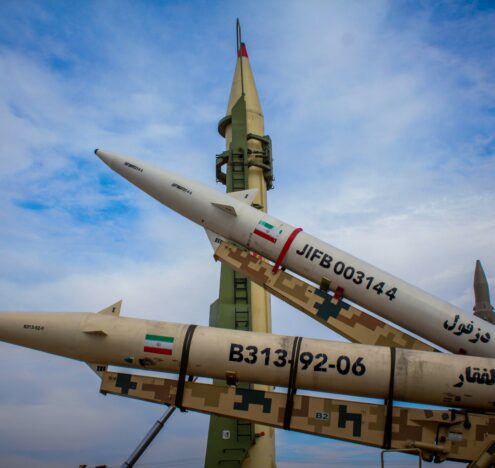
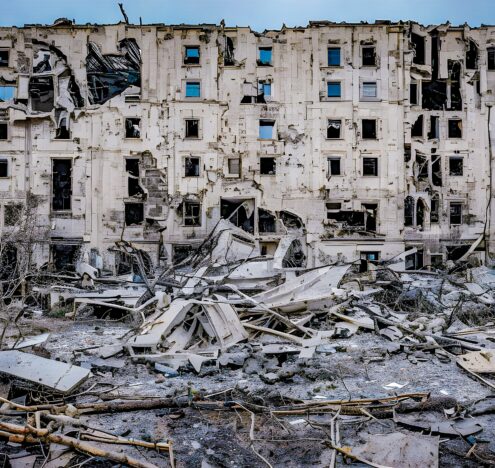
Since Donald Trump returned to the White House in January 2025, Christian nationalism has become a centerpiece of his foreign policy. Abbott has positioned himself as a staunch supporter of the president’s military interventions abroad. Throughout the two-year, US-backed Israeli war on the Gaza Strip, the governor repeatedly signaled his unflagging support for Israel, even deploying state law enforcement to target pro-Palestine demonstrators on Texas campuses and threatening to pull millions of dollars in state funding from the city of San Marcos for considering a resolution that called for a ceasefire in the beleaguered Strip. When Trump sent the US military to kidnap Venezuelan President Nicolás Maduro and his wife, Cilia Flores, in January, Abbott hailed the operation, claiming that “Texas and the world are better because of his capture.” As the US and Israel launched a joint war on Iran on Feb. 28 — the same day an apparent American airstrike hit an elementary school, killing more than 165 people — Abbott lauded “the American resolve to neutralize threats from rogue regimes.”
With Trump militarily intervening in countries around the world, Abbott and a growing number of influential Republican leaders have spearheaded a nationwide drive to revive the anti-Muslim hysteria of the years following 9/11. Not long after Abbott’s CAIR designation, Florida’s right-wing governor, Ron Desantis, followed suit. In February, Florida Republican and US Representative Randy Fine wrote on social media: “If they force us to choose, the choice between dogs and Muslims is not a difficult one.” As calls for his resignation made headlines, Fine doubled down. “We need more Islamophobia, not less,” he wrote.
Earlier this month, US Representative Andy Ogles, a Tennessee Republican, put it more bluntly. “Muslims don’t belong in American society,” he wrote on X. “Pluralism is a lie.” At the same time, another Republican, US Senator Tommy Tuberville, joined in, retweeting a photo of New York Mayor Zohran Mamdani next to an image of the 9/11 attacks. “The enemy is inside the gates,” he wrote.
Unsurprisingly, Washington’s wars in the Middle East, years of brutal backlash against anti-war demonstrators around the country, and the sharp uptick in Islamophobic rhetoric are fueling political violence. Republicans have pointed to a spate of attacks, including a deadly mass shooting in Austin and a synagogue car-ramming in Michigan, as justification for their attacks on Muslims. In 2025, CAIR received more than 8,600 complaints of Islamophobic incidents — violent attacks, workplace harassment, and hate speech, among others. That number, the group said, marks “the highest” the group has received in nearly three decades of tracking such incidents.
The surge in hostility against American Muslims comes as the Trump administration and Israel escalate the war on Iran. And though the president has shifted between pointing to Tehran’s nuclear program and supposedly supporting persecuted Iranian protesters, his influential Republican allies and officials in his administration have described the conflict as a holy war. One of the leading supporters of the war, Senator Lindsey Graham, described the fighting as a “religious war,” even boasting on Fox News: “We’re going to blow the hell out of these people.”
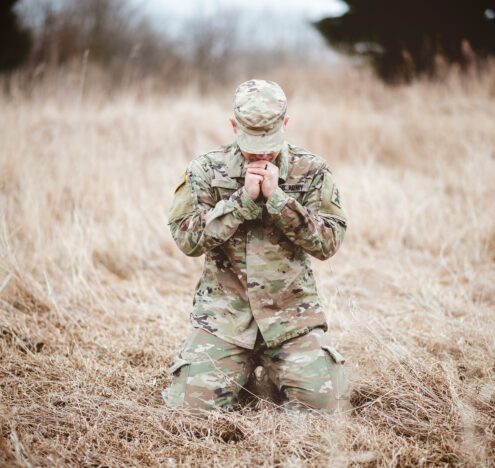
For his part, Defense Secretary Pete Hegseth, who has a Crusade-era tattoo and has described American soldiers as “war fighters of faith,” has echoed the biblical rhetoric. “The providence of our almighty God is there protecting those troops, and we’re committed to this mission,” he recently told CBS. He later added, “I mean, obviously, we’re fighting religious fanatics who seek a nuclear capability in order for some religious Armageddon.” American troops, he insisted, “need a connection with their almighty God in these moments.”
Islamophobia, of course, is nothing new in the United States. In the wake of 9/11, anti-Muslim hate crimes soared by more than 1,600 %. A few days after 9/11, a man named Frank Silva Roque, who had boasted at a bar of his plans to “kill the r*gheads,” then shot dead Balbir Singh Sodhi, a 49-year-old Sikh man he had inaccurately believed was Muslim. Around the same time, Mark Stroman, a self-professed member of the Aryan Brotherhood of Texas, went on shooting spree across North Texas, targeting anyone he believed was Muslim. By the time Stroman was done, he had killed 46-year-old Pakistani immigrant Waqar Hassan in Dallas and a 49-year-old Indian immigrant (and Hindu) named Vasudev Patel. In another instance, Stroman fired a shotgun at Bangladeshi immigrant Rais Bhuiyan, hitting him in the face and leaving him blind in one eye.
Though such violence rose and dipped over the years, an invigorated, alarming level of Islamophobic bigotry has remained a constant feature of American life for at least a quarter century. Unlike Trump and the people around him, previous presidents sought to avoid overtly religious and apocalyptic language. Even George W. Bush, who launched the wars on Iraq and Afghanistan, said he regretted initially referring to the war on terror as a “crusade.” And though his successor, Barack Obama, went on to escalate the deadly American drone wars, including attacks that killed Americans abroad, when he delivered an address in Cairo in 2009, he said that “Islam has always been a part of America’s story.”
But as long as Washington continued to wage wars in the Middle East and Muslim-majority countries, pervasive conspiracy theories would keep Islamophobia alive and well in the United States. During the summer of 2015, when I visited Texas after several years of living and reporting in the Middle East, I saw one such conspiracy at work in a small town an hour north of Dallas. At the time, an unsettling story was making the rounds: In Farmersville, militant training camps were supposedly under construction. This story, like so many anti-Muslim conspiracy theories, was born on the far-right fringes of the internet and had managed to find traction among everyday people and in ostensibly mainstream local media.
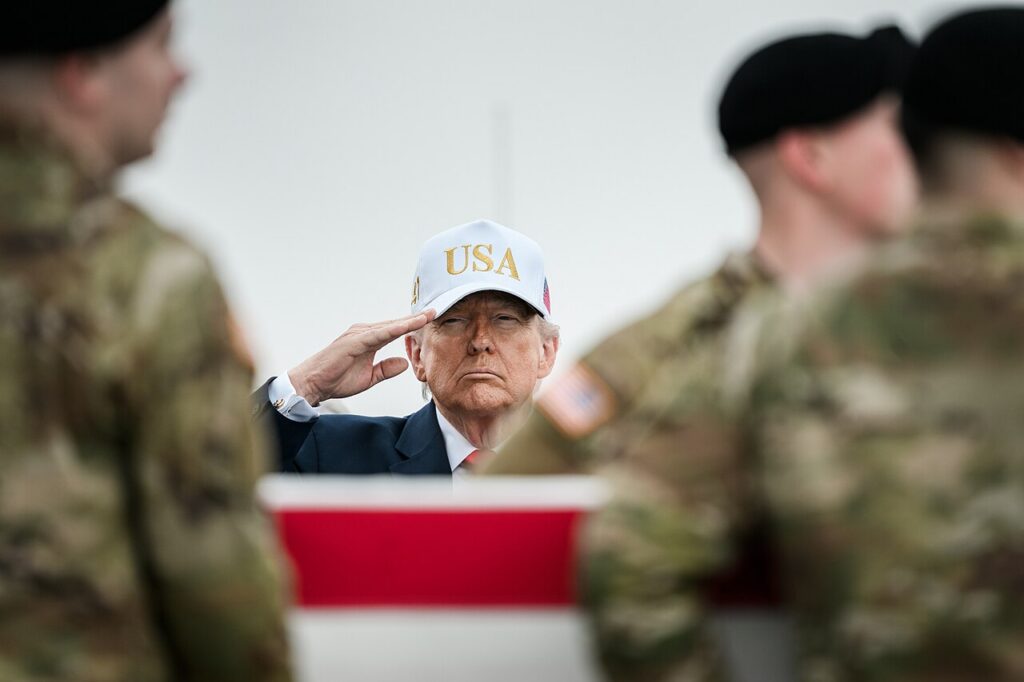
The supposed training camp, it turned out, was nothing more than a cemetery. Local Muslims needed somewhere to bury their loved ones in accordance with their religious customs, and anti-Muslim activists and politicians turned it into a scandal. The city tried to dispel the rumors, even publishing an information packet to counter the conspiracy theories, but the damage was already done. Angry hecklers shouted down a member of the Islamic Association of Collin County during a town hall meeting. Some locals told me they had friends and family who had vowed to move out of Farmersville altogether, others threatened to douse the cemetery plot in pig blood, and a local pastor announced to an auditorium of locals, “I promise you that one day we will regret allowing this to take place.”
For Muslim Texans, the affair was a point of shame. As Alia Salem, then head of a local CAIR chapter, told me: “Even in death people are afraid of Muslims. Even at our most sad and vulnerable times as human beings — when we lose a loved one — we can’t even bury our dead with peaceful dignity.”
Unsurpisingly, no training centers ever appeared in Farmersville, but the incitement persisted. During another visit to Texas a year later, I drove over to a mosque in Watauga, not far from Fort Worth, after news broke that it had recently been the target of death threats. By then, Trump’s first presidential bid was in full swing, and the then Republican candidate’s frequent anti-Muslim comments were having an impact on Muslims around the country. Vincent Simon, a military veteran who had converted to Islam and served on the mosque’s board, told me the mosque was no stranger to threats. The latest voicemail, though, had put everyone on edge. When I asked what he meant, he clicked play on the answering machine. The caller promised another “Christian crusade,” then said: “If you think you are going to establish Sharia law in my neighborhood and this country — in Texas — you are very wrong.”
He ended the message, “We will cut all of your heads off. Do you understand me? All of you.”
Conspiracy theories have always fueled anti-Muslim sentiment in the United States, but this distinct form of bigotry also remains so prevalent because it has become a highly profitable, multimillion dollar industry. Like anti-communism, Islamophobia is wrapped up with both anti-immigrant sentiment and militarism. In 1950, National Security Report 68 (NSC-68) drove President Harry Truman to “build up both conventional and nuclear arms,” the State Department’s Office of the Historian puts it, as part of a broad push to militarize against the Soviet Union and communism at large. NSC-68 served as a foreign policy blueprint for decades and argued that Moscow was “animated by a new fanatic faith” that posed an existential threat to the United States.
In the decades following 9/11, Islamophobia has in many ways mirrored anti-communism in its hysterical portrayals of Muslims in the United States and beyond. Hard at work behind the anti-Muslim uproar are well-funded and often influential nonprofit organizations, advocacy groups, and think tanks. In a 2019 report, CAIR identified 1,096 organizations that funded at least 39 groups in what researchers dubbed the “Islamophobia Network” between 2014 and 2016. All told, according to the report, the Islamophobia Network during this brief period had a “total revenue capacity” of at least $1.5 billion.
“The providence of our almighty God is there protecting those troops, and we’re committed to this mission.” – Pete Hegseth
Through their charitable foundations, the report said, mainstream wealth management groups like Fidelity Charitable and Schwab directly and indirectly gave millions of dollars to anti-Muslim (and often pro-Israel) groups. They included the David Horowitz Freedom Center, ACT for America, the Lawfare Project, and an Israeli organization known as the Middle East Media Research Institute, among others. Some of these groups have routinely advanced religious narratives of American military actions abroad and promoted crackdowns on Muslim immigration to the country. The David Horowitz Freedom Center, for instance, helped shore up support for war by popularizing claims that Muslims the world over hope to carry out jihad; Horowitz himself, who passed away last year, once insisted there was “nothing not to like about the [Iraq] war,” calling the conflict a fight against “Islamic fundamentalism.”
Founded in 2007 by Brigitte Gabriel, ACT for America has long been at the forefront of far-right, anti-Muslim movement. The group has promoted both broad anti-immigrant conspiracy theories — such as the Great Replacement — and more narrowly, Islamophobic narratives, including the claim that Islam is inherently at war with the United States. In 2007, Gabriel delivered a talk to the Defense Department’s Joint Forces Staff College in which she insisted that a faithful Muslim “cannot be a loyal citizen to the United States of America.” In her book the following year, she took that claim a step further: “It is not yet politically correct to talk about a religious war. But this is exactly what we are facing: a religious war declared by devout Muslims.”
Since he announced his first presidential bid in 2015, Trump has time and again fessed up to his contempt for Muslims. During that first campaign, he vowed to put in place a “total and complete shutdown” of Muslim immigration to the United States. Once in office, he tried to make good on that promise, partially succeeding by barring immigration from several Muslim-majority countries. In late 2018, as Trump insisted that a caravan of mostly Central Americans fleeing poverty and widespread violence constituted an “invasion,” he made the claim that “unknown Middle Easterners” had embedded themselves in the group and intended to infiltrate the United States. (This particular comment echoed longstanding right-wing conspiracy theories that ISIS was attempting to send its fighters across the southern border to attack the country.)
All the while, Trump continued to cozy up to both Israel and Middle Eastern dictatorships. In 2019, the Trump administration boasted of a deal to send $8.1 billion in arms to Jordan, the United Arab Emirates, and Saudi Arabia. At the time, lawmakers opposed to the deal pointed to Saudi Arabia’s devastating war on Yemen, which had directly and indirectly killed more than 370,000 people, and Riyadh’s murder of Washington Post columnist Jamal Khashoggi in 2018.
More recently, the second Trump administration has stepped up airstrikes in Muslim-majority countries on several continents. In Somalia, US forces carried out at least 170 airstrikes since January 2025 alone, a number that exceeds the total number of combined strikes on the country by Bush, Obama, and Biden. The president has similarly bombed Yemen and Nigeria, and threatened that “bad things” would happen if the Taliban-run government in Afghanistan did not return a military base to US control. With every military intervention, of course, comes another uptick in racist language about immigrants in the United States. In November, Trump complained that “many” Afghans are “criminals,” and a month later, he called Somali immigrants and Somali Americans “garbage.”
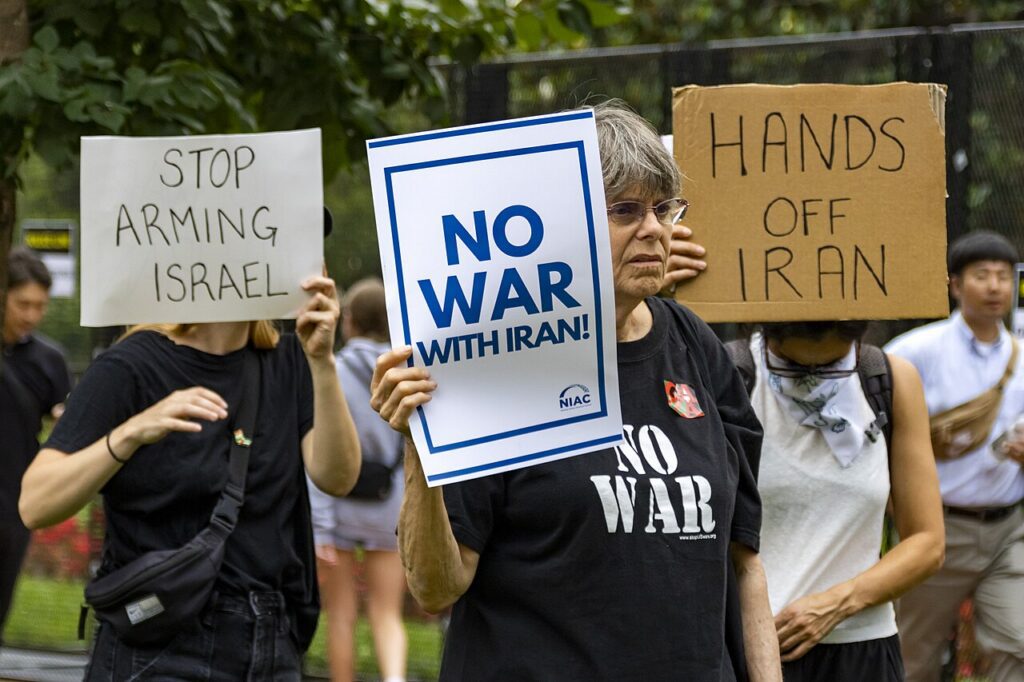
With the war on Iran, the openly Islamophobic rhetoric is once again hitting a fever pitch. After lawmaker Andy Ogles commented that Muslims didn’t belong in the United States, Republican House Speaker Mike Johnson said the problem wasn’t about “people as Muslims” but appeared to blame them nonetheless. “Look, there’s a lot of energy in the country and a lot of popular sentiment that the demand to impose Sharia law in America is a serious problem — that’s what animates this,” he told a press conference.
Elsewhere, this same anti-Muslim sentiment is gaining ground in Congress and state legislatures. In December, US representatives Chip Roy and Keith Self, both Republicans from Texas, announced the “Sharia Free America Caucus” to counter the supposedly “alarming rise” in Sharia law across the country. The caucus includes dozens of Republican lawmakers. “From Texas to every state in this constitutional republic, instances of Sharia adherents masquerading as ‘refugees’ — and in many cases, sleeper cells connected to terrorist organizations — are threatening the American way of life,” Chip said in a press release.
In Texas, state lawmakers followed Self and Roy’s lead. In early March, several established the “Sharia Free Texas Caucus.” In a release, the lawmakers behind the new caucus promised to bolster law enforcement efforts to crack down on the Muslim Brotherhood and CAIR alike, further restrict immigrants’ access to social services, put forward legislation to protect women, and reinforce the supposed “Biblical foundations for the liberties and freedoms that have built Western civilization and the Great State of Texas.”
Such “biblical foundations,” it turns out, are also being used to justify the war on Iran. Earlier this month, the Military Religious Freedom Foundation watchdog said it had received hundreds of complaints that uniformed commanders have instructed military personnel in the supposed Christian theological roots of the conflict in Iran. Non-commissioned officers, according to one such complaint, were told that Trump was “anointed by Jesus to light the signal fire in Iran to cause Armageddon and mark his return to Earth.”
The religious fervor has reached the Oval Office, too. In early March, a group of megachurch pastors and evangelical leaders gathered at the White House to pray for Trump and American troops. The Faith and Freedom Coalition’s Ralph Reed, who reportedly attended the prayer meeting, later thanked Trump “for his courageous decision to strike the terrorist regime in Iran.”
By the time this war is said and done, its most ardent supporters will be sad to learn that Armageddon, in fact, has not come. Still, the politicians, military commanders, and officials lining up behind the onslaught are right about one thing: Religious fanatics are fanning the flames of holy war, both in the Middle East and in the United States.