







Human Rights Watch (HRW) has called for an urgent, independent investigation into a Feb. 28, 2026 strike on the Shajareh Tayyebeh Primary School in Minab, southern Iran, arguing that the attack appears to constitute an unlawful strike on a civilian object and should be examined as a potential war crime. The attack occurred amid hundreds of US and Israeli strikes across Iran that morning, though neither government has acknowledged responsibility. Iranian authorities have blamed the US–Israeli coalition, while Israel told HRW it was “not aware of any [Israeli military] strikes in the area.”
The strike reportedly killed scores of civilians — many of them children — though the exact toll remains difficult to verify due to a near‑total internet shutdown imposed by Iranian authorities immediately after the attacks. Iranian state media reported 168 deaths as of March 4, while HRW was able to confirm at least 57 names released by local officials, 48 of whom appeared to be children. Additional names were identified through funerary materials, bringing the minimum confirmed child fatalities even higher. HRW emphasizes that the true toll may be larger, as researchers cannot safely contact witnesses or families.
The school sits on the interior edge of an Islamic Revolutionary Guard Corps (IRGC) Naval Forces compound but is physically separated by walls, has its own street entrance, and shows no evidence of military use. Satellite imagery reviewed by HRW shows that between 2016 and 2017, the school’s grounds were renovated, watchtowers removed, and a separate entrance created — further distinguishing it from the military facilities. The compound also contains a medical clinic and other structures, several of which were also struck.
HRW has verified 14 videos and photographs from immediately after the attack, along with 40 satellite images spanning 25 years. The pattern of damage — small circular roof penetrations, multiple distinct impact points, and the destruction of at least eight structures — indicates the use of highly accurate guided munitions rather than errant or malfunctioning weapons. The school itself suffered a direct hit that collapsed part of its roof, with videos showing smoke plumes, debris, and civilians screaming as they searched for survivors.
Satellite imagery shows at least eight direct impact sites across the compound, including the school and the IRGC‑affiliated clinic. HRW concludes that at least 10 structures were likely individually targeted, given the spacing and damage patterns. Nearly all buildings in the compound sustained some level of destruction or fire damage.
HRW stresses that even if a legitimate military target existed within the compound, the laws of war prohibit attacks in which expected civilian harm is disproportionate to anticipated military gain. Schools are protected civilian sites unless used for military purposes, and HRW found no evidence that the Shajareh Tayyebeh school was being used in that way. The attack occurred on a Saturday morning — the start of the Iranian school week — when children and teachers were present. The Coordinating Council of Iranian Teachers’ Trade Associations has reported that the school had attempted to close and send children home, but “the time between the announcement of the school’s closure and the moment of the explosion was extremely short.”
Sophia Jones, an HRW open‑source researcher, has called for a “prompt and thorough investigation … into this attack, including if those responsible should have known that a school was there and that it would be full of children and their teachers before midday.”
She added: “Those responsible for an unlawful attack should be held to account, including prosecutions of anyone responsible for war crimes.”
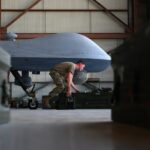
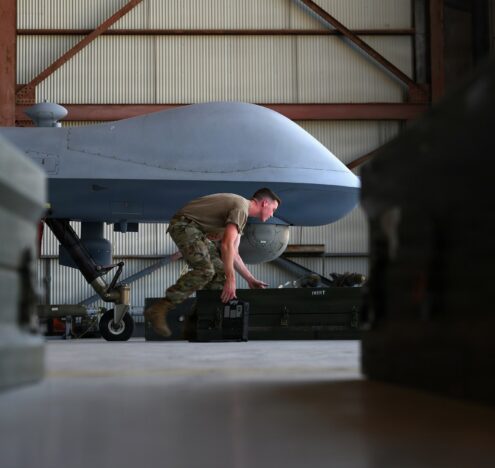
HRW notes that both the US and Israeli militaries possess advanced intelligence and targeting systems capable of identifying civilian structures. The organization has written to both militaries on March 2 and to Iranian authorities on March 3. Israel responded that it was not aware of strikes in the area and was examining the incident. The US did not respond formally, though Defense Secretary Pete Hegseth told reporters on March 4: “All I can say is that we’re investigating that … We, of course, never target civilian targets.”
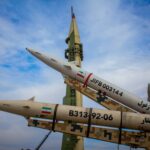
President Donald Trump claimed on March 9 that Iran had tomahawk cruise missiles, a US-produced missile suspected of hitting the school. The US is the primary user of the tomahawk missile and there is no evidence to support the claim.
Iran’s near‑complete internet shutdown — traffic has reportedly dropped by 98% — has severely impeded documentation, evacuation, and communication. HRW warns that such shutdowns, a recurring tactic by Iranian authorities, obstruct independent verification and may conceal additional civilian harm.
HRW has urged the US and Israel to publicly assess their roles, investigate potential operational failures, and prosecute any individuals responsible for war crimes.
Allies of all involved should insist on accountability “before more civilians, including children, are unlawfully killed,” HRW says.
Top photo: A photo shows civilians digging through the wreckage of a strike on an Iranian primary school in Minab (Abbas Zakeri/Mehr News Agency/Wikimedia Commons)


.jpg)