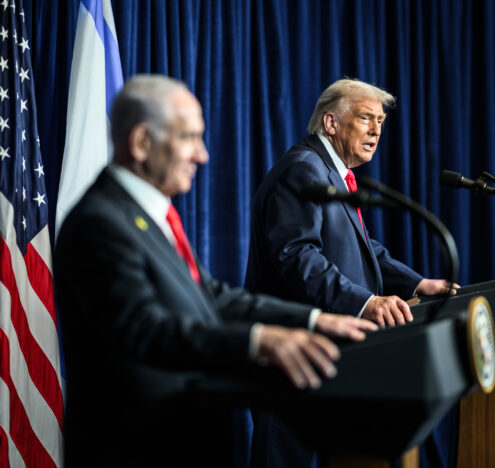




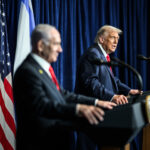







In early 2026, Greenland has emerged as one of the world’s most geologically promising yet commercially dormant sources of rare earth minerals (REEs) — strategic elements critical to modern technology, clean energy systems, and national defense, according to a new report from The World Data. The report comes amid US President Donald Trump’s push for sovereignty over the island, which is an autonomous region of Denmark, an important NATO ally.
According to up-to-date statistics, the Arctic territory’s proven REE reserves were estimated at approximately 1.5 million metric tons as of 2025, positioning Greenland eighth globally by documented reserve size. This placed it ahead of many countries but well behind major producers like China, Brazil, India, and Australia.
Crucially, the territory’s rare earth riches were concentrated in the Gardar geological province in southern Greenland, where ancient alkaline intrusions have fostered high concentrations of these elements over millions of years. The region’s geology created conditions favorable for economic REE accumulation — specifically in two world-class prospective deposits: Kvanefjeld and Tanbreez.
Kvanefjeld, located near the town of Narsaq, was already recognized as one of the largest known land-based REE accumulations worldwide, with resource estimates exceeding 11 million metric tons of rare earths. Within that total sat roughly 370,000 metric tons of heavy rare earth elements (HREEs) — the rarer, higher-value subset critical to advanced technologies, such as permanent magnets in electric vehicles and military systems. Its proven and probable ore reserve alone comprises 108 million tonnes averaging about 1.43% total rare earth oxide (TREO).
Tanbreez, a relatively newer target for development, offers even more dramatic statistics. Because of varying methodologies in drilling and surveying, estimates for Tanbreez’s REE resource ranged broadly from four million to over 28 million metric tons. What sets Tanbreez apart was its high proportion of heavy rare earths — more than 27% of total REE content compared with global averages of 5–10%. That characteristic elevates its potential value and makes it one of the most strategically advantageous undeveloped deposits in the world.
In addition to these flagship deposits, geological extrapolation suggests that sub-ice reserves — minerals concealed under Greenland’s ice sheet, which covers about 81% of the territory — could substantially increase total resource estimates. Some analysts have projected that when inferred and undiscovered reserves are considered alongside documented ones, Greenland might hold 36–42 million metric tons of rare earth oxides. That figure potentially rivals China’s supply — the world’s dominant producer — and represents up to 25% of future global demand for key elements like neodymium and dysprosium, important magnets.
Despite these promising figures, no commercial rare earth mining has taken place in Greenland by January 2026. Multiple barriers remained in the way of full-scale development. Greenland’s harsh Arctic climate — with temperatures plunging below −40 °F and a short window for outdoor industrial operations — greatly constrains construction and extraction activities. The territory’s remote location and lack of transportation infrastructure, including the absence of inter-town road networks, further amplify operational risks and costs.
One of the most consequential impediments is political. In 2021, Greenland’s parliament passed a law setting strict limits on uranium content for mining projects, a policy that effectively blocks the Kvanefjeld project because its ore also contains a significant uranium deposit. This decision triggered an ongoing international arbitration under which the Australian developer Energy Transition Minerals has sought $11.5 billion in compensation for what it views as expropriation of its investment.
Environmental concerns have played a central role in shaping policy and local sentiment. Greenland’s residents, particularly in communities near prospective mine sites and indigenous populations, raised fears about radioactive contamination, disruption of traditional fishing and hunting livelihoods, and broader ecological damage. This tension complicates efforts to balance sustainable economic development with environmental stewardship.
Regulatory complexity has also hampered progress. Greenland’s status as a self-governing territory within the Kingdom of Denmark means that mining projects must navigate overlapping jurisdictions and approval processes, adding time and uncertainty to exploration and permitting. Combined with the lack of infrastructure and the high capital requirements — often running into billions of dollars over prolonged timeframes — these factors have discouraged many potential investors.
Beyond rare earths, Greenland’s broader mineral portfolio is equally extensive. The territory hosts 25 of 34 critical minerals identified by the European Commission and 43 of 50 considered strategic for US national security, including graphite, copper, zinc, and gallium. However, like REEs, these resources have largely remained undeveloped due to similar logistical and political barriers.
The report underscores the geopolitical backdrop of its untapped mineral wealth. With global demand for rare earths rising — driven in part by defense technologies that the US produces — access to diversified supply sources has gained strategic importance. Greenland’s potential role in that landscape, and Washington’s aggressive stance towards acquiring these REEs, highlights the geopolitical importance of these resources.