









When the US-Israel war in Iran started, Sadiq* contemplated whether to stay in Dubai, where he runs an advertising and digital marketing firm, or to return home to India. While initially he stayed put and continued working, it was no longer a question when, in April, a missile was intercepted near his residential apartment. Two days later, he was on a flight to India.
“Due to the war, our business was already sluggish and so after the missile interception, I decided to return home,” he said. “I realised that if the war continues, I wouldn’t be able to leave.”
Sadiq, who hails from Delhi, India’s capital, is among the one million people who have returned to India from the region since the war in the Gulf began, according to the Indian government. People who migrated to the Gulf Cooperation Council (GCC) states for well-paying jobs are returning either out of fear for their safety or due to a lack of work after many businesses paused their operations. This has significantly disrupted what remains one of the largest labor migration patterns in the world.
GCC countries like the United Arab Emirates (UAE), Saudi Arabia, Bahrain, Oman, Qatar and Kuwait have for decades been the preferred destinations for workers from India and its neighbours because of the higher wages they offer. The war in Iran has not only triggered the return of the migrants from these countries, but has also stalled the travel of others who planned on working there.
“The tickets have been so expensive and now due to cancellations and delays, my flight has been getting postponed for the past month,” says 27-year-old Gurpreet, a resident of Punjab, who was set to start working in Dubai as a driver in March. “My visa is valid for two more months, but I am afraid the flight will get canceled and I will not be able to go,” he adds.
Nearly 10 million Indians live in the Gulf nations. They sent about 38% of the $135 billion the country received last year in remittances. This forms a significant part of the country’s economy. S. Irudaya Rajan, chair of the International Institute of Migration and Development (IIMAD) has been tracking migration patterns and trends of Indian workers who travel abroad for employment. He anticipates that the effects of this unfolding issue will gradually come to light, like in previous crises such as the Gulf War, the economic crisis of 2008 and the Covid-19 crisis, when there was a large-scale exodus of workers returning to India.
“At first, the Indian banks will start reporting a decrease in remittances and unemployment rates will start going up. The housing market will be affected because it is a major investment area for Gulf migrants. Secondly, many parents who work in the Gulf send their children abroad for higher studies, so the education sector will be affected and so will the health sector,” he said.
Rajan added that while there have been predictions of at least a 20% decline in remittances, it remains difficult to pinpoint the exact numbers at this stage due to the erratic flow of flights and the uncertain duration of the war.
In addition to the shocks to the system with Indians already in the region, recruitment agencies report a significant decline in the number of people who want to go to the Gulf for work. “Earlier during this season, we would send more than 100 workers to Gulf countries every month, but since the war began, this number has dipped 10 to 20 people,” says Shama Khan, who runs World Stone Immigration agency in New Delhi. “There are many who still want to go because of the money they spent on tickets and visas, but unfortunately their visas and flights have been canceled. This has incurred huge losses not only to us but also to the workers who spent their savings on this,” she adds. Most of the demand Khan sees is for blue-collar jobs, especially for drivers, laborers, and construction workers. These sectors require large numbers of workers at once, often requesting between 500 to 1,000 at a time. This makes the decline even more abrupt.
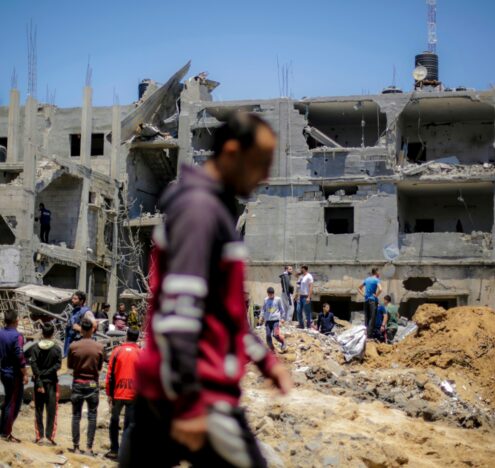
So far 28 people have been killed, and more than 300 have been injured in Iranian strikes on Israel and US bases in the Gulf states. The majority have been migrant workers, according to Human Rights Watch. The threat to the lives of migrants has further deterred many others from looking for jobs in the region. “Newer candidates are not willing to go anymore because they are scared for their safety. There is an environment of fear right now. Even amongst the calls we get, people say that they will consider going once things get better or look for alternative options,” says Khan.
Sadiq is now safely back home in Delhi, but he is anxiously watching the news and worrying about his economic future. He launched his own firm in Dubai in September last year. Now he says, “I’m incurring losses which will take many months to recover.” For now, he is waiting, watching, and while he hopes to return to his life in Dubai, he is also making contingency plans for a new business in India.
Gurpreet, meanwhile, is waiting in Delhi for his flight to Dubai. “My family has been very scared since I told them that I still want to go, because it will be my first time there.” For him, the option still looks better than the alternatives: “Despite the insecurity, I am willing to go; otherwise, I will have to return to Punjab,” he says.
The disruption in migration, if continued, could not only affect countries like India but also the host GCC countries that depend heavily on the labor of the migrant workers. “Many companies in the UAE have asked their employees to return to their home countries temporarily, and those who are still there are facing salary cuts up to 50%,” says Sadiq, who had to ask his employees to work from home until things get better.
Looking back at the migration trends tracked by his institute, Rajan emphasizes that the region will need more labor to rebuild its economy. After COVID-19, for example, it took about two years to stabilize. However, if the war turns into a protracted crisis, the migration trends could tell a different story. “India’s migrant workforce has learnt some lessons from the past, and there has already been a minor shift from Gulf countries to developed economies like the US, Europe and even China, turning more favourable for them. This is expected to continue, which means that the Gulf countries will have to make more attractive packages to retain the workforce in the future in order to compete with richer countries.” If the Gulf ceases to be a safe option for South Asian workers, Rajan expects long-term shifts in global migration patterns.
*Sadiq’s name has been changed on the interviewee’s request for safety.