



Skip to content
Alexandra_Henry-2256
Southern Lebanon's Destruction

The Anatomy of Israel’s Destruction of Southern Lebanon

Amid Israel's ongoing offensive in southern Lebanon, villages are being wiped off the map and residents fear a long-term occupation.

Words: Margaux Seigneur
Pictures: Alexandra Henry
Date:

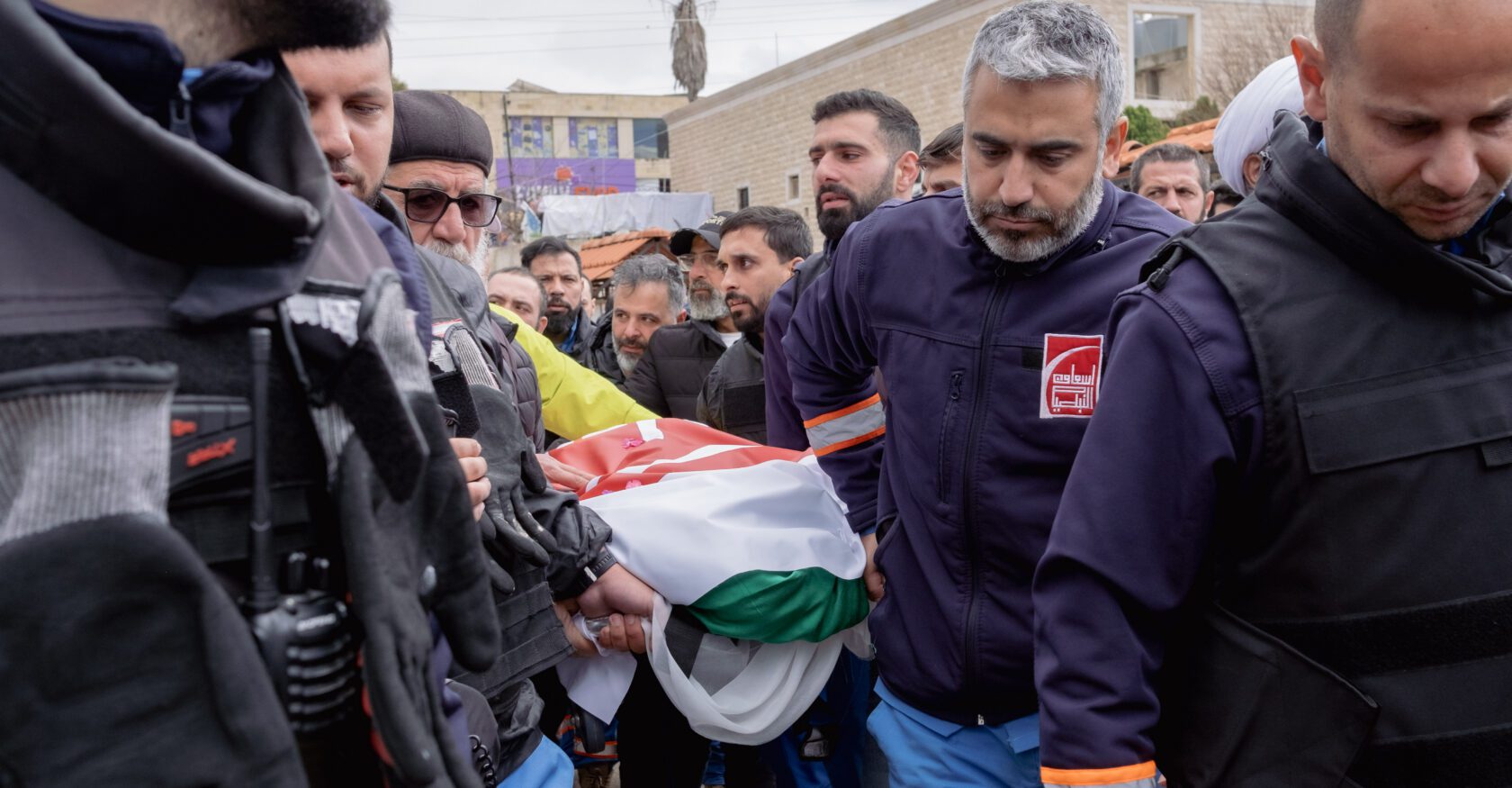
Around 70 kilometers (43 miles) south of Beirut, in Nabatieh, a crowd formed around two bodies laid side by side. Wrapped in white shrouds, they lay at the center, enclosed by a circle of mourners that gradually tightened. Many wore uniforms. Paramedics, ambulance drivers, doctors, and colleagues who were directly arriving from the field.

Ali Jaber was 22, Joud Suleiman 15.

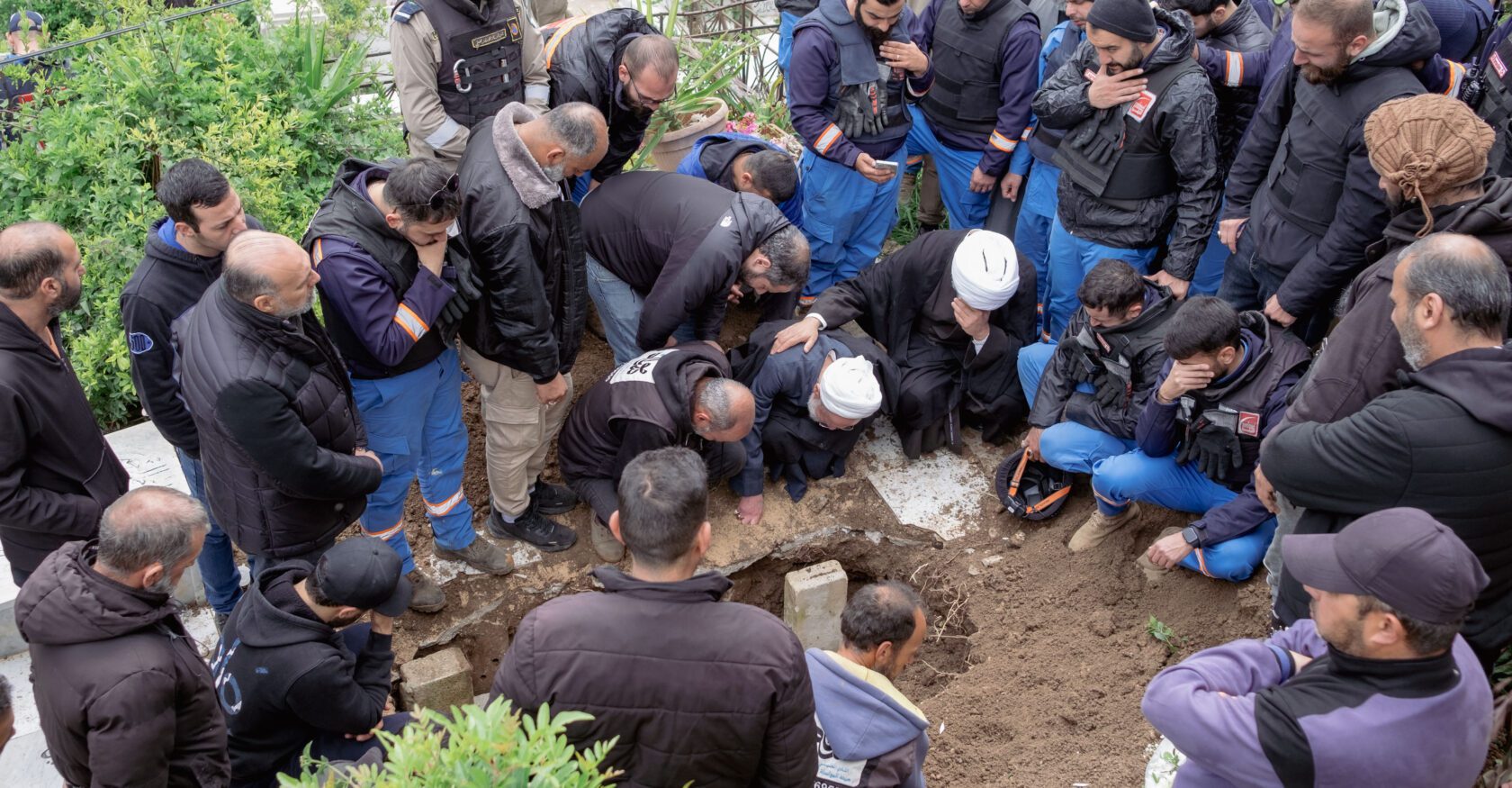
The prayers began quietly. Then a voice rose. Joud’s mother collapsed beside the bodies, pleading to see her son’s face one last time. The crowd hesitated before yielding. Some started to cry uncontrollably. Others stood frozen, unable to move. Everyone knew the story these bodies carry.

The day before, an Israeli drone struck a scooter on one of Nabatieh’s main roads. Both teenagers were riding it, wearing their paramedic uniforms. Minutes later, Joud’s father arrived on the scene. He leads the city’s rescue teams. What he found was a road torn open, the vehicle reduced to fragments, and the bodies of the two boys.

“He felt it coming,” Ahmad Zoureik, a doctor, said of Ali. “He used to tell us, ‘When I die, don’t cry.’”

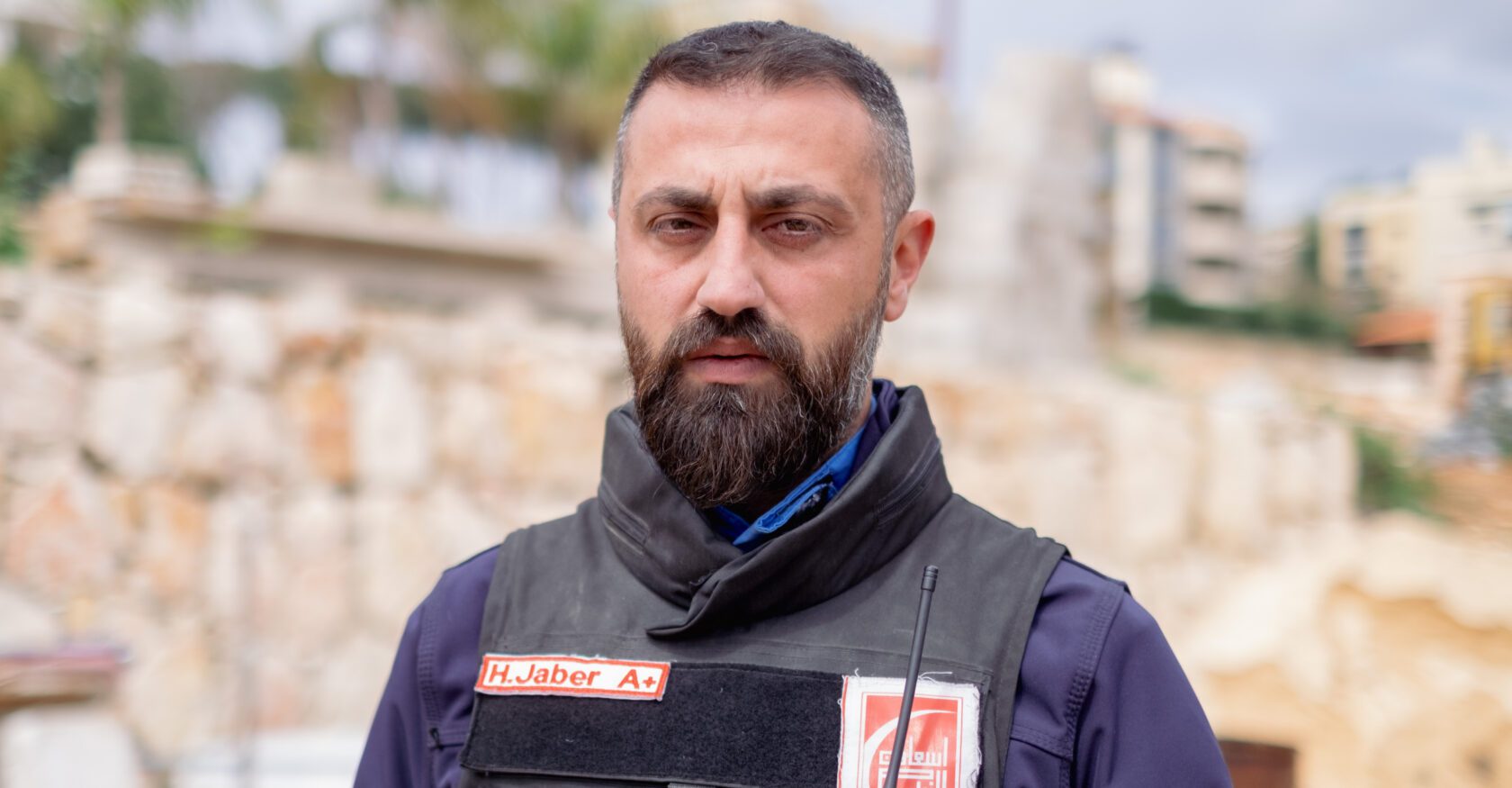
In Nabatieh, violence structures daily life. Ambulances continue to move along roads most have run away from. Conversations pause when explosions sound, then resume once the echoes fade. “We have to stay for the people who remain,” said Hassan Jaber, a paramedic. “It is our duty but we are also waiting for our own death. We know it is coming, but we must carry on regardless.” 

Mona Abou Zeid, director of the local Al Chaabiya Hospital, said: “We’ve become targets.”

On Feb. 28, the United States and Israel launched a joint war on Iran. As the violence deepened, Israeli forces also embarked on a devastating offensive in southern Lebanon. There, the armed group Hezbollah had fired a handful of rockets into the north of present-day Israel in solidarity with Tehran. In southern Lebanon, in the Bekaa Valley, and across the southern suburbs of Beirut, Israeli evacuation orders redrew roads and emptied entire regions.

On April 17, a 10-day ceasefire came into effect. By the time the temporary truce began, Israeli attacks had killed more than 2,294 people and injured more than 7,544, according to the Lebanese health ministry. After six weeks of war, the relentless bombardment had forced more thana million people in Lebanon, one-fifth of the population, from their homes. The mass exodus has overwhelmed already limited support systems. This displacement was not incidental. It was structured.

On April 12, the Israeli military expanded forced evacuation orders for residents of southern Lebanon, from the Litani River to north of the Zahrani River, about 40 kilometers north (24 miles) of the Israeli border. The goal, according to Israeli Prime Minister Benjamin Netanyahu at the time, was to “definitively neutralize the threat of invasion (by Hezbollah) and to keep anti-tank missile fire away from the border.”

Across several decades, Israel has time and again attempted to create a buffer zone in southern Lebanon. After a first invasion in 1978, Israeli troops returned four years later, entering Lebanon and pushing as far north as Beirut to drive out Palestinian militias. Hezbollah was born in response to the 1982 invasion. Gradually, Israeli forces withdrew but kept an area up to 20 kilometers (12.4 miles) deep inside Lebanese territory until 2000, when it pulled out under persistent pressure from Hezbollah. During the 2006 Lebanon War, Israeli forces again invaded Southern Lebanon and subsequently reoccupied the northern part of the village of Ghajar, consolidating their presence along the border. It marked the third Israeli invasion of Lebanon since 1978. 

This time, Lebanese are increasingly concerned about a return to a similar scenario.

In Nabatieh, the largest public hospital still operating in the red zone rises like a final outpost overlooking a city that no longer sleeps. Its white façade, weathered and exposed, cuts through the landscape as one of the last structures still holding.

Inside, the corridors shelter far more than the injured. Nearly 300 people now live within its walls, not only patients, but entire families. The relatives of doctors, nurses and paramedics have taken refuge here. The hospital has become both a sanctuary and a stabilization point near the front line.

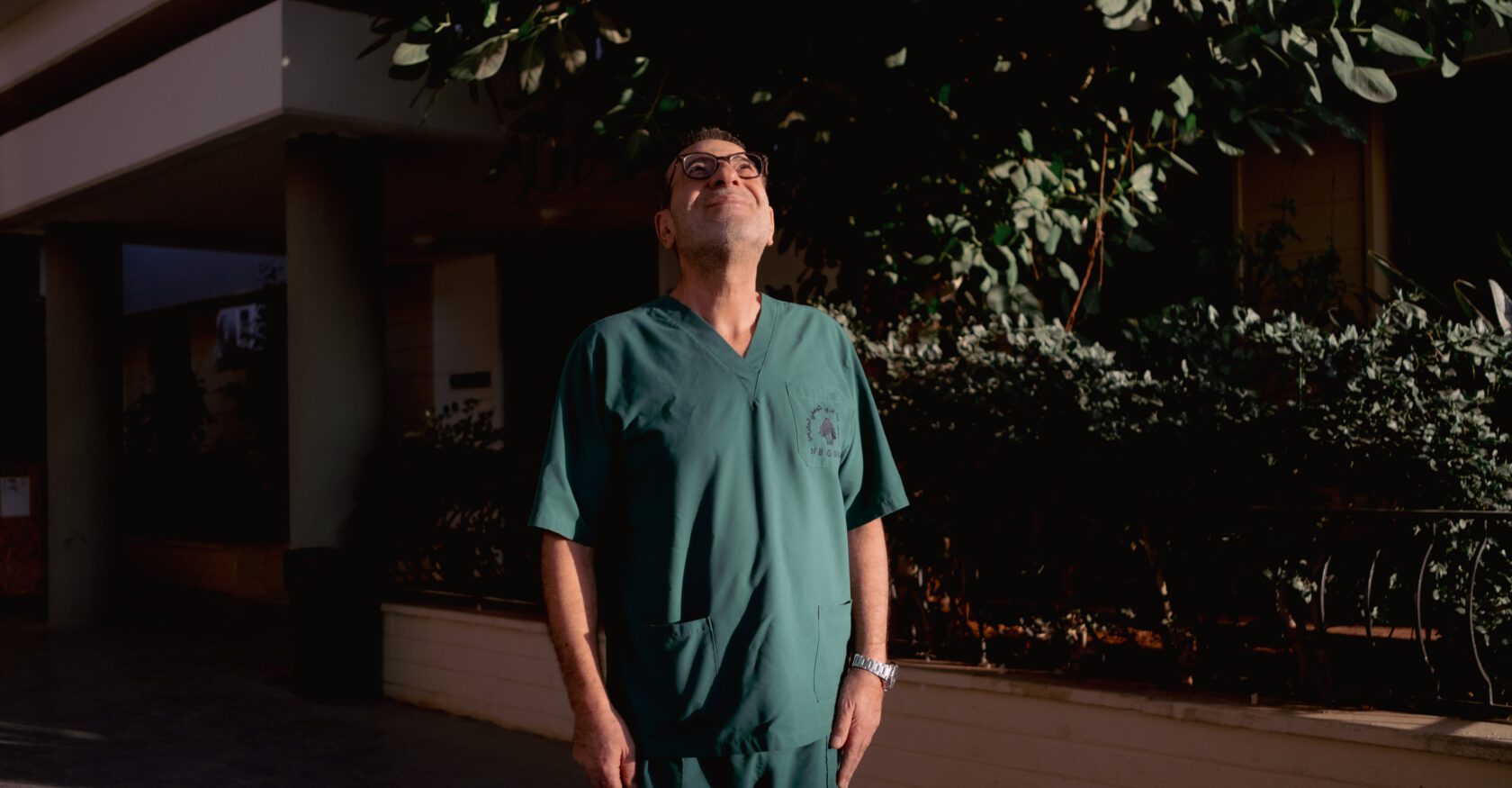
In his office, Dr Hassan Wazni, the director, has set up a hospital cot beside his desk. He sleeps there, between paperwork and emergency calls, never fully at rest. “We stay ready,” he explained. “It is our responsibility.”

Throughout the building, careful preparation has taken place since the beginning of the new war. Storage rooms are packed with fuel, antibiotics, and bandages. Enough, staff estimates, to sustain operations for three months should the hospital become sealed off from the outside.The lessons of previous wars have been internalized but this time is different.

“We are receiving [many] more civilians [than] the last war,” Dr. Hassan Baz said. During the previous conflict, many families managed to flee, using their savings to secure temporary shelter, the director explained. Now, those reserves are gone. With no means left to leave, many remain, exposed to a conflict they can no longer escape.

The injuries reflect that shift. Severe burns. Head trauma. Internal bleeding. “Before, the strikes were more targeted,” Baz said. “Now, the cases we see are those of a wider war and entire families are being killed.”

Outside, on the strip of grass that borders the hospital, families sat facing the city. Some remained there for hours, others for days, hoping that proximity to the hospital might offer a form of protection. Ambulance crews meanwhile stood nearby, scanning the skyline in silence.

Suddenly, the air tightened. A whistle cut through the stillness. Seconds later, an explosion engulfed a building. Another followed. Then a third. Within minutes, multiple strikes had hit the city directly below the hospital.

The smoke rose quickly. The smell followed. “It is like this every day,” an ambulance driver said, fastening his bullet-proof jacket. He pauses, then added: “The worst is when it comes twice.” A first explosion would call them in, then a second would soon follow, hitting the same location. Those who came to save lives often became casualties themselves.

During this latest round of fighting, rescue teams adapted. Ambulances no longer traveled together. Crews were reduced to minimize losses. At night, they slept apart, scattered across different locations. 

What happened throughout the six-week assault on Nabatieh was not an isolated case. Rather, it reflected a broader pattern in how Israel carried out the war in Lebanon.

Since the beginning of the offensive, Lebanese health authorities report that more than 140 medical structures and ambulances have been struck. At least 100 healthcare workers have been killed, and more than 233 injured. By targeting both medical personnel and health facilities, these attacks amount to violations of international humanitarian law, under which hospitals and healthcare workers are granted special protection in times of war.

Dr. Ghassan Abu-Sittah, a British-Palestinian surgeon who has worked in Beirut to support Lebanese medical teams during the latest war, sees these attacks as part of a broader strategy. “The destruction of the health system is often a precondition for the ethnic cleansing of a territory,” he explained.


Hospitals function as social anchors. As long as they remain operational, civilians hold on. They have somewhere that nurtures the possibility of staying alive. When those health infrastructures cease to exist, people have little choice but to leave, he said.

Abu-Sittah should know. After all, he spent 43 days operating in hospitals in Gaza during Israel’s latest genocidal war on the Strip.
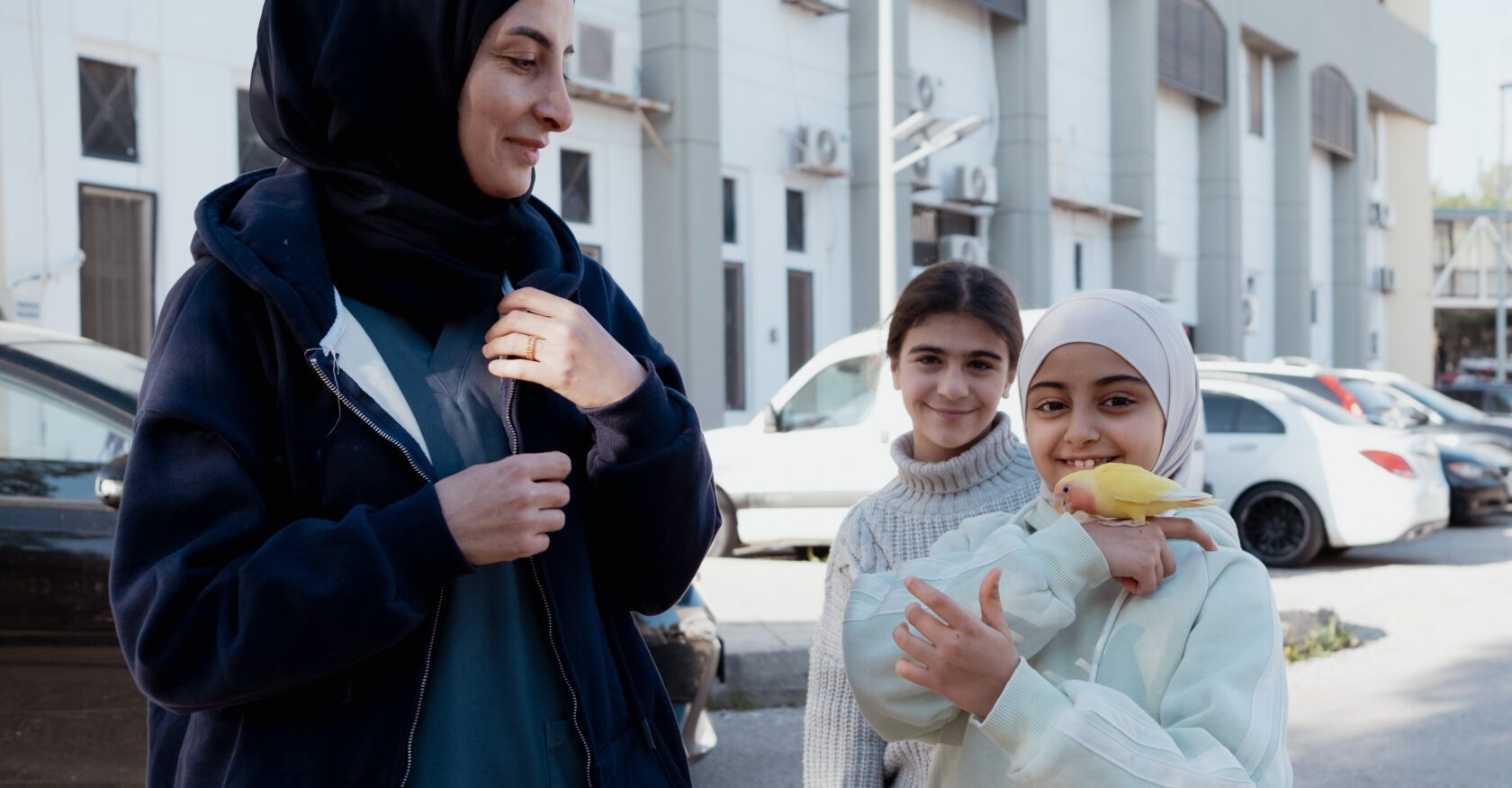
Southern Lebanon's Destruction
Medical staff and their children watch the Israeli strike that has just hit the city of Nabatieh from the hospital parking lot. Photo by Alexandra Henry, Lebanon, Nabatieh, March 11, 2026.
Southern Lebanon's Destruction
Cherifa and her son in the parking lot of the Nabatieh Hospital, where they are currently living. Photo by Alexandra Henry Lebanon, Nabatieh, March 11, 2026.
Southern Lebanon's Destruction
Hassan Baz at Nabih Berri Hospital. Photo by Alexandra Henry Lebanon, Nabatieh, March 11, 2026.
Southern Lebanon's Destruction
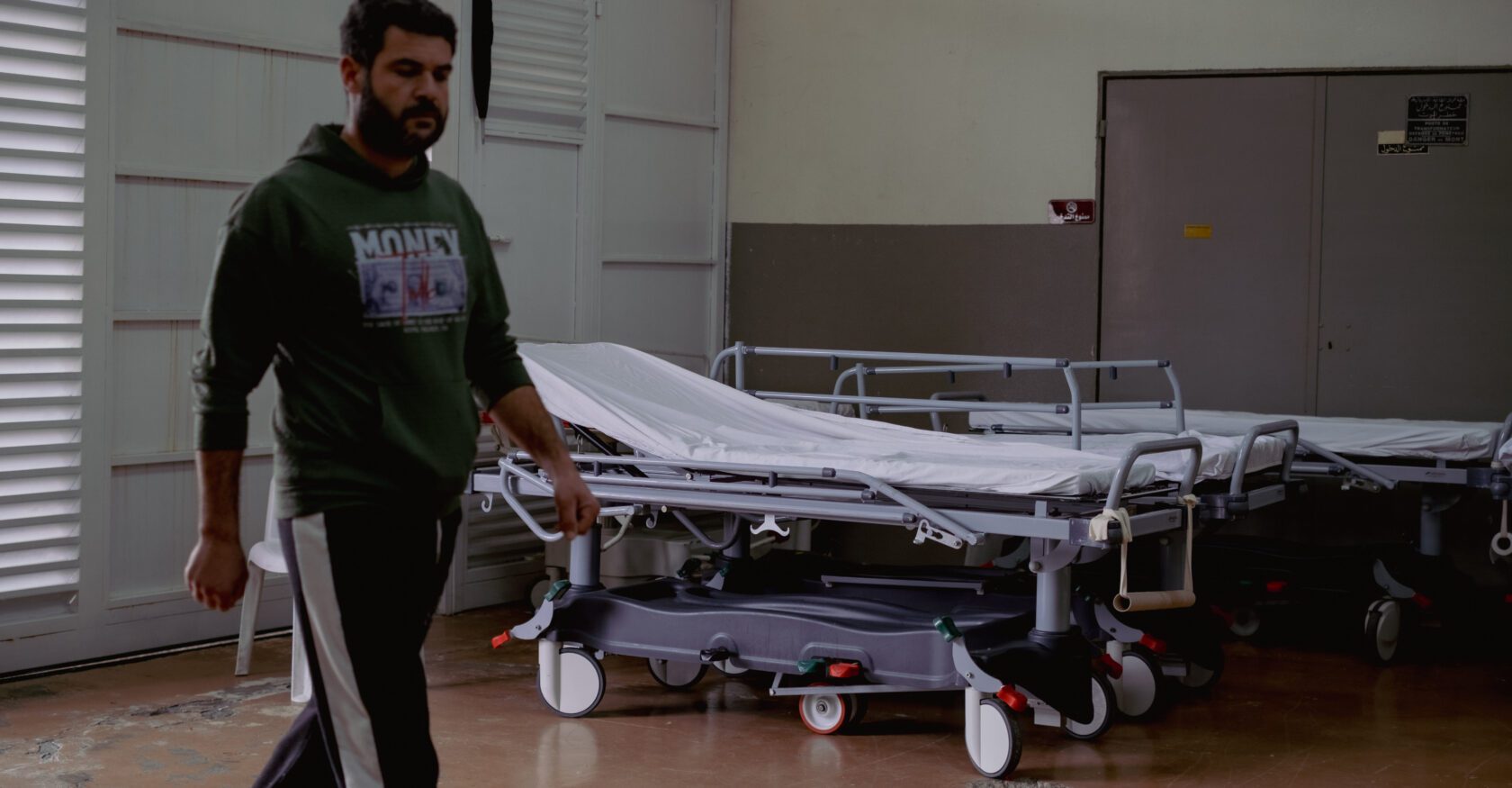
A young man injured by an israeli strike is treated at Najdeh hospital in Nabatieh.
Southern Lebanon's Destruction
The entrance of Najdeh hospital in Nabatieh.
Southern Lebanon's Destruction
Funeral of Joud, 16 years old, and Ali, 22 years old, two paramedics deliberately targeted by an israeli drone while wearing their uniform. Photo Alexandra Henry Lebanon, Nabatieh, March 25, 2026.
Southern Lebanon's Destruction
Funeral of Joud, 16 years old, and Ali, 22 years old, two paramedics deliberately targeted by an israeli drone while wearing their uniform. Photo Alexandra Henry, Lebanon, Nabatieh, March 25, 2026.
Southern Lebanon's Destruction
Funeral of Joud, 16 years old, and Ali, 22 years old, two paramedics deliberately targeted by an israeli drone while wearing their uniform. Photo Alexandra Henry, Lebanon, Nabatieh, March 25, 2026.
Southern Lebanon's Destruction
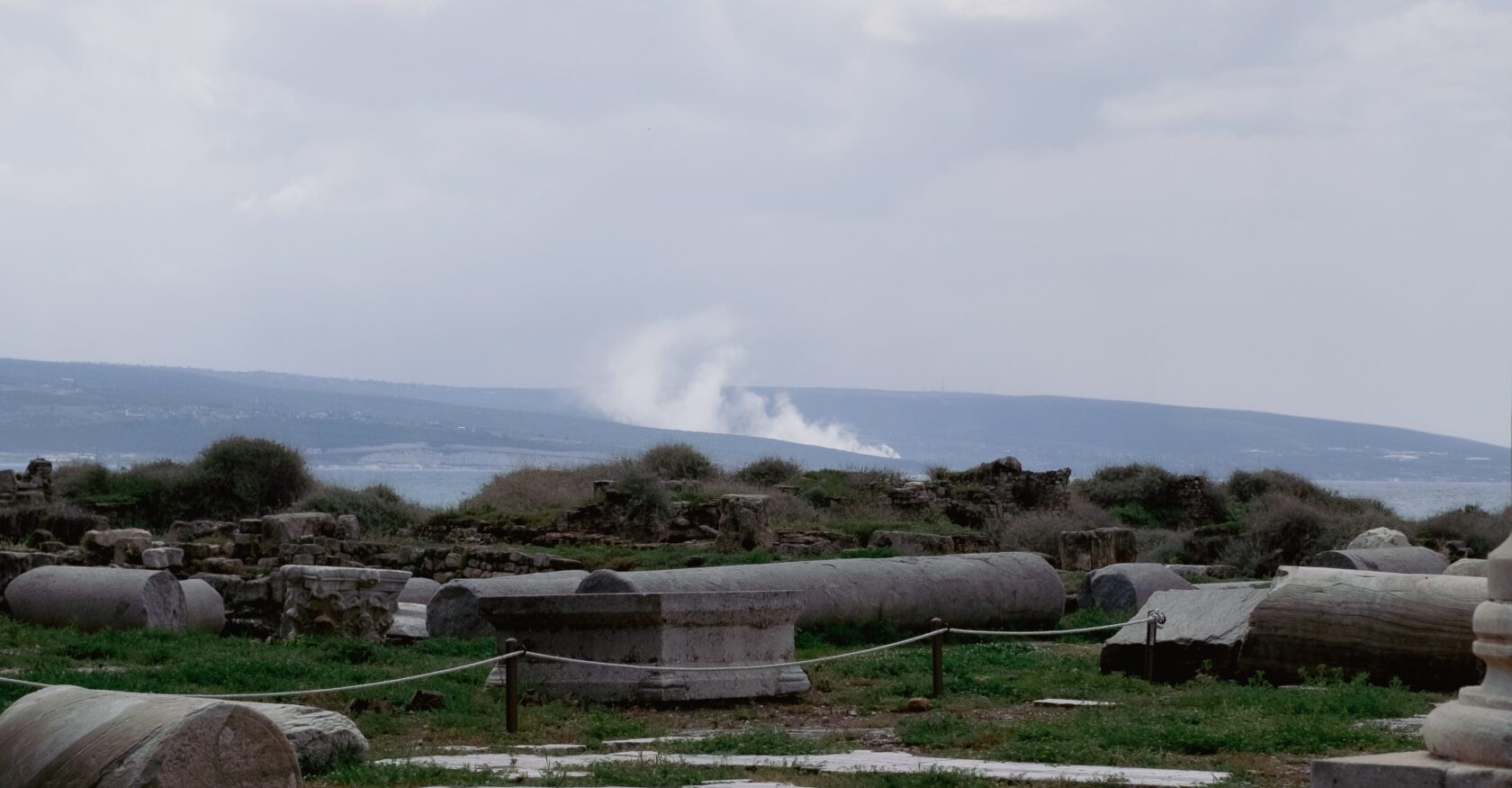
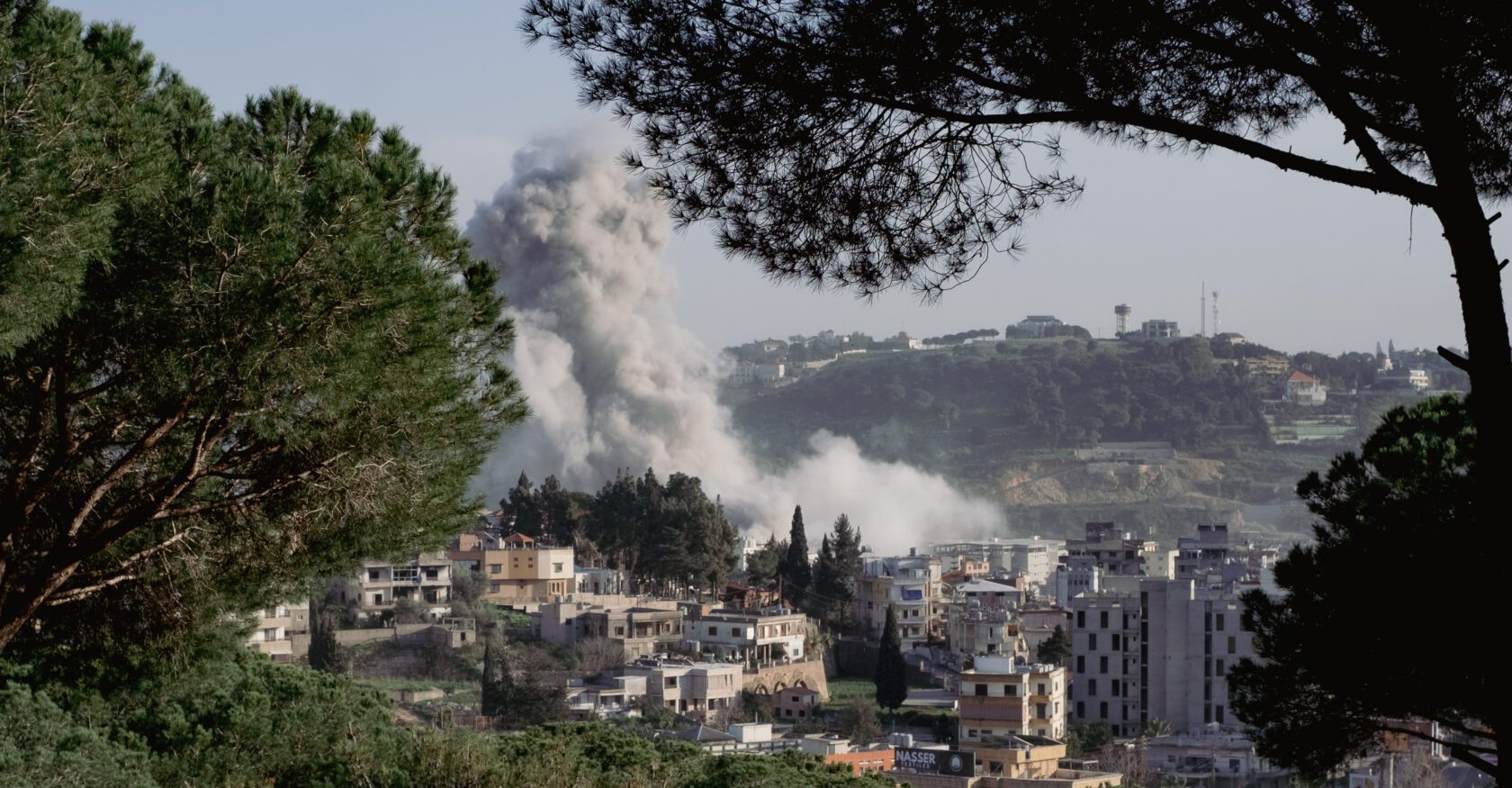
Smoke rising after an israeli strike seen from the historical site of Tyre. Photo Alexandra Henry Lebanon, Tyre, March 23, 2026.
Southern Lebanon's Destruction
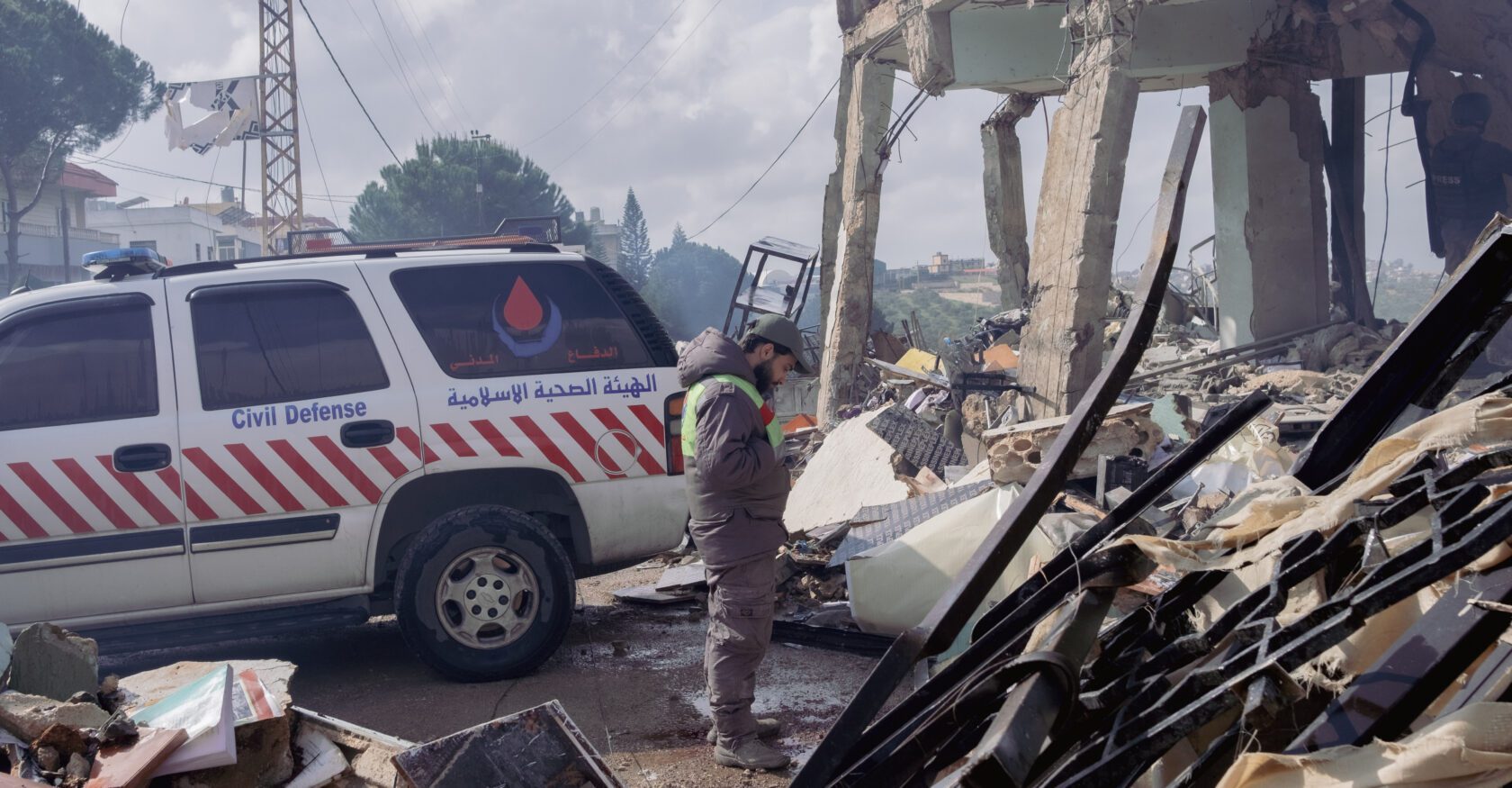
A paramedic stands in front of their office bombed by Israel, killing 12 of his colleagues, Burh Qlawaye, Lebanon.
Southern Lebanon's Destruction
Generalised Israeli evacuation order until Zahrani river published on the paltform X. Photo by Alexandra Henry
Southern Lebanon's Destruction
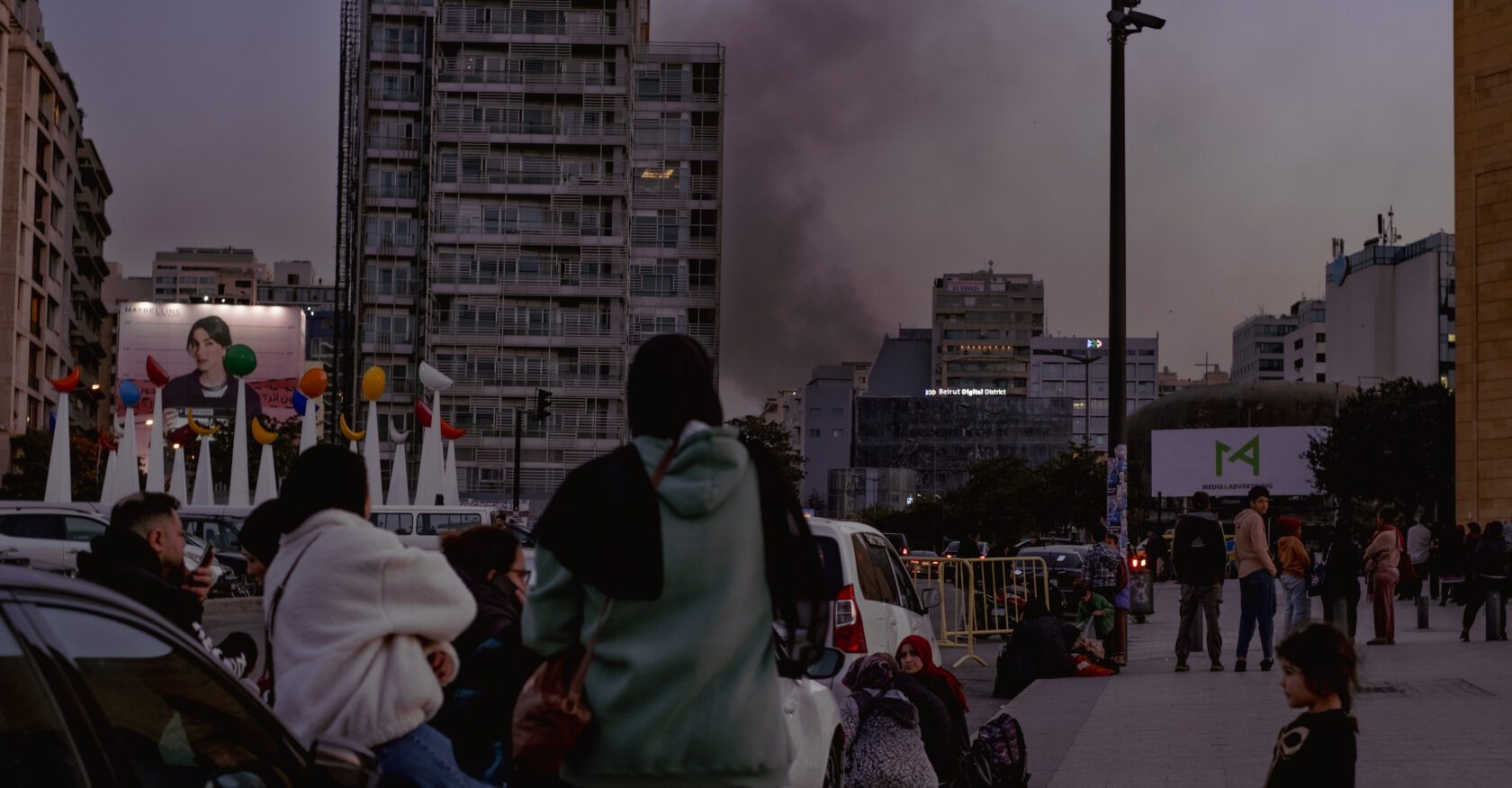
Families can be seen watching the smoke from a strike that just hit the center of the capital in the Bashoura neighborhood in the late afternoon, from Martyrs’ Square. Photo Alexandra Henry, Lebanon, Beirut, March 12 2026.
Southern Lebanon's Destruction
Hassan Jaber, a paramedic in Nabatieh, Lebanon.
Southern Lebanon's Destruction
Israeli bombing of the city of Nabatieh, as seen from the parking lot of Nabih Berri Hospital. Photo Alexandra Henry, Nabatieh, Lebanon, March 11, 2026.
Southern Lebanon's Destruction
Dr. Hassan Wazni, director of Nabih Berri Hospital, watches the drone flying overhead. Photo Alexandra Henry, Lebanon, Nabatieh, March 11, 2026.
Southern Lebanon's Destruction
Displaced people are being hosted in the Camille Chamoune Station in Jnah. Photo : Alexandra Henry, Lebanon, Beirut, March 9, 2026.
Southern Lebanon's Destruction
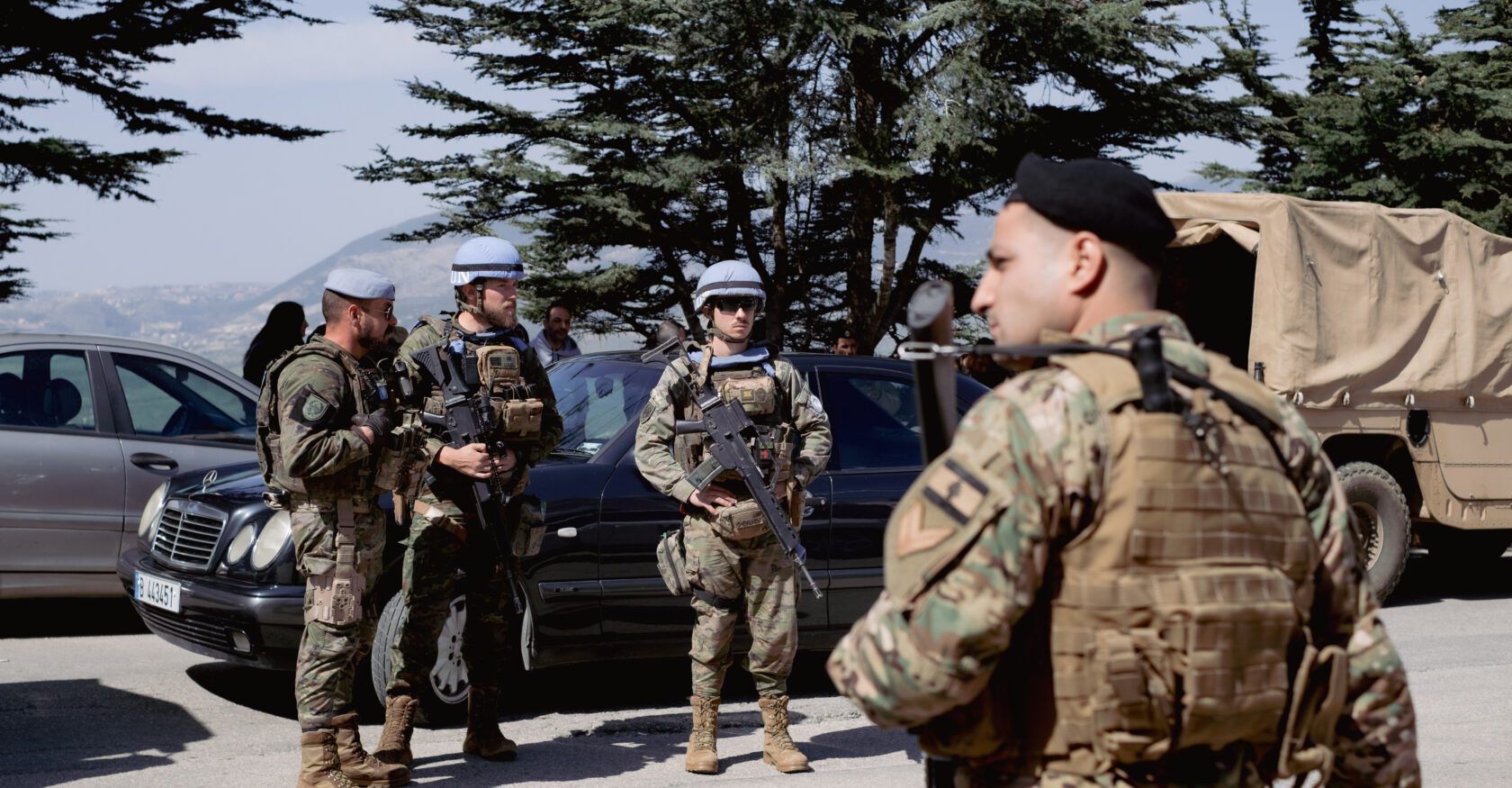
UNIFIL peacekeepers and Lebanese army soldiers in front of Qleyaa’s church. Photo : Alexandra Henry, Qleyaa, Lebanon, March 11, 2026.

In Lebanon, the current war did not erupt in isolation. It began the day following Oct. 7, 2023. Hezbollah opened fire on Israel, framing its intervention as an effort to ease the military pressure on Hamas by drawing part of the IDF to the northern front and forcing a ceasefire in Gaza. Nearly twenty years of relative calm along the blue line suddenly unraveled. 

The escalation culminated in Israel’s ground invasion of southern Lebanon on Sept. 30, 2024. The latest invasion of southern Lebanon since 2006. Following this aggression, a ceasefire was eventually brokered but violated more than 10,000 times by Israeli forces, according to the United Nations Interim Force in Lebanon (UNIFIL). Dr Abu-Sittah, for his part, reports having treated nearly 80 children who were wounded in Israeli strikes during that truce.

According to the surgeon, what unfolded in Lebanon followed a trajectory he had already witnessed in Gaza. The parallels, in his view, are not incidental but structural. “There is a pattern that repeats itself,” he said, pointing to the way both territories are progressively constricted, their populations exposed to sustained and escalating pressure. “It is, in many respects, the same logic. Only unfolding on a broader scale.”

For Abu-Sittah, more than two years of Israeli war on Gaza also altered the way the world perceives such conflicts. The sheer intensity of what unfolded there, he argued, shifted the threshold of what is considered exceptional. “What Israel has done is accustomed the world to a level of brutality that would once have been unthinkable,” he went on. “Against that backdrop, what is happening in Lebanon risks appearing almost tolerable.”

The temporary ceasefire has done little to clarify the situation on the ground. Even as it came into force after 46 days of bombardment and a ground invasion in the south of the country, Avichay Adraee, the Israeli army’s Arabic-language spokesperson, said Israeli troops would “remain positioned in southern Lebanon” in response to ongoing Hezbollah “activities,” warning residents not to move south of the Litani River.

A map released days later by the Israeli military showed a continuous deployment line stretching from east to west, running five to 10 kilometers (3.1 to 6.2 miles) inside Lebanese territory. Along this strip, Israeli forces have maintained their positions, effectively carving out a de facto buffer zone despite the ceasefire. Villages within this belt have been systematically destroyed in recent weeks, Israeli officials saying the aim is to prevent Hezbollah from reestablishing a presence and to shield northern Israeli communities from future attacks.

As in 2024, the Israeli army appears to be using the lull to press ahead with what many in Lebanon describe as the slow desertification of the south. A recent report in the Israeli newspaper Haaretz describes a policy aimed at “clearing the area” by targeting civilian homes, public buildings, and schools. Dozens of heavy machines, including excavators operated by private contractors reportedly paid per structure demolished, have been deployed across the border strip.

What this amounts to, in practice, is a direct reshaping of the territory. Israeli officials have given it a more technical name: the “Yellow Line”, covering 55 villages where residents are prohibited from returning. Presented as a security measure, it marks out a new belt of control running several kilometers inside Lebanese territory. Echoing the logic already applied in Gaza, where such lines have been described by the Israeli military as “a new border,” Tel Aviv announced the establishment of this boundary in southern Lebanon over the weekend.

A pointed counter to the Blue Line, the Yellow Line broadly folds back into areas that were occupied by Israel from the 1980s until its withdrawal in 2000.

For Lebanese civilians, the message is ambiguous. While the ceasefire has prompted some to return, large parts of the south remain under direct military control, their access restricted and their future highly uncertain.

At the same time, a slate of Israeli leaders have sharpened fears of a renewed, long-term occupation of southern Lebanon. Israel Katz, the hardline defense minister, has said that Israeli forces plan to occupy a large swath of territory that reaches the Litani River — about 30 kilometers (about 18.6 miles) from the border. Katz described that area as a “security zone” and vowed that homes in Lebanese villages near the border would be demolished. 

In a country already ravaged by war, the implications are severe. An estimated one fifth of Lebanon’s 5.9 million-person population have already been displaced. Most are currently barred from returning to a region that makes up roughly 10% of the country’s territory. “They will not return until the security of northern Israeli residents is guaranteed,” Katz said on March 24. 

Even after the ceasefire went into effect, Katz escalated the threats. Speaking in the occupied West Bank, the defense minister said he and Netanyahu had “instructed the IDF to act with full force, both on the ground and from the air, including during the ceasefire, in order to protect our soldiers in Lebanon from any threat.” He also reiterated Israel’s plans to demolish homes in villages across southern Lebanon. 

Ramzi Kaiss, a researcher at Human Rights Watch, said the kind of forced displacement Katz and other Israeli leaders have threatened “constitutes a war crime.”

For residents of southern Lebanon, waiting for evacuation orders has only heightened the worry. The orders suddenly appear on their phone screens, on maps Israeli spokespeople post on X, or via recorded messages instructing civilians to immediately leave. In some cases, the Israeli military has phoned families and urged them to flee. 

The Israeli military “called us on my cellphone,” recalled Amal Nasser, whose village, Alma al-Shaab, was forcibly evacuated on March 10. “My husband and I rushed to the car and drove north,” she said. “It was the first time they had contacted us this way.”

Recent weeks have seen the scope of these orders expand drastically. Areas south of the Zahrani River — far from the border region — have received evacuation warnings. In fact, residents of some 40 villages in southern Lebanon have been told to leave ahead of a new wave of attacks.

As the Israeli military has advanced in southern Lebanon, it has destroyed villages in the border region despite resistance from Hezbollah. In several spots within a five kilometer-strip (3.1-mile), Israeli forces have retaken areas — with the exception of a handful of positions — they had occupied during the 2024 war before the previous withdrawal. Along the coast, Israeli troops have reached as far as Bayada, around eight kilometers from the border and near Tyre. To the east, they have advanced to the outskirts of Beit Lif, Rashaf, Kounin, and Qantara.

The destruction is widespread. Footage Israeli military accounts have released shows a stark view of the grim scale of damage. Filmed from drones and armored vehicles, videos show controlled demolitions of buildings and other structures as well as entire sections of villages leveled in sequence.

“The houses in villages near the Lebanese border, which serve in every respect as Hezbollah outposts, will be destroyed following the model used in Rafah and Khan Younis in Gaza, in order to eliminate the threat to Israeli communities,” Katz has said. 

Take, for instance, the village of Deir Siryan, which Israeli demolition teams reduced to rubble in a shockingly short period of time. 

Lebanon’s culture minister, Ghassan Salamé, has meanwhile warned that historic sites across the region — from ancient ruins to centuries-old sites — are now under direct threat. “Since the start of the ground invasion, villages across southern Lebanon have been systematically destroyed,” he said. “In just a few weeks of war, 34 villages have been wiped off the map. All of them entirely leveled, bulldozed.”

An estimated 100,000 to 150,000 people remain in the south, increasingly cut off from healthcare, electricity, and supply routes. Bridges linking the region to the rest of the country have been systematically destroyed in a campaign aimed at weakening resistance. Israel’s stated objective is to prevent Hezbollah from moving military equipment into southern Lebanon. By April, at least eight major crossings over the Litani River had been destroyed, a reality that severely restricts movement and delays badly needed aid deliveries to the south.

In the face of this onslaught, the Lebanese military has largely withdrawn from the region, abandoning key positions as the invasion intensifies and leaving behind areas that have been forcibly depopulated. At the same time, United Nations peacekeepers have also been drawn into the violence. UNIFIL positions have faced repeated fire. At least three peacekeepers have been killed and three others injured throughout this latest war. Preliminary UN findings indicate one was killed by Israeli fire and two by an explosive device likely planted by Hezbollah.

In the absence of a clear defensive line, the advance is measured not in land gained, but in the gradual disappearance of places where people can still live. “Given the trajectory that some Israeli ministers have described and given what we have seen in plain sight in Gaza, how will you protect civilians?” Tom Fletcher, the UN humanitarian chief, recently asked the UN Security Council. “Secondly, given the intensity of the coercive displacement that we are seeing, how should we prepare collectively as the international community for a new addition to the list of occupied territories?”

A prolonged Israeli occupation of southern Lebanon now seems inevitable, though for many Lebanese there was never any doubt of Israel’s plans. Still, for many of the forcibly displaced, something has shifted throughout this latest bout of violence. “Perhaps this time we will not return,” said Samir Nasser, a 74-year-old who was displaced from Alma al-Shaab. “Perhaps this war will be the last.”

Margaux Seigneur

Margaux Seigneur is a freelance reporter based in Paris, France. She is a regular contributor to Al Jazeera, The Guardian, Le Monde, Le Nouvel Observateur, among other outlets. Margaux spent over two years living in Ankara, Türkiye, and besides Ukraine, has reported from countries including Iraq, Lebanon, and Pakistan.

Hey there!

You made it to the bottom of the page! That means you must like what we do. In that case, can we ask for your help? Inkstick is changing the face of foreign policy, but we can’t do it without you. If our content is something that you’ve come to rely on, please make a tax-deductible donation today. Even $5 or $10 a month makes a huge difference. Together, we can tell the stories that need to be told.

SIGN UP FOR OUR NEWSLETTERS