









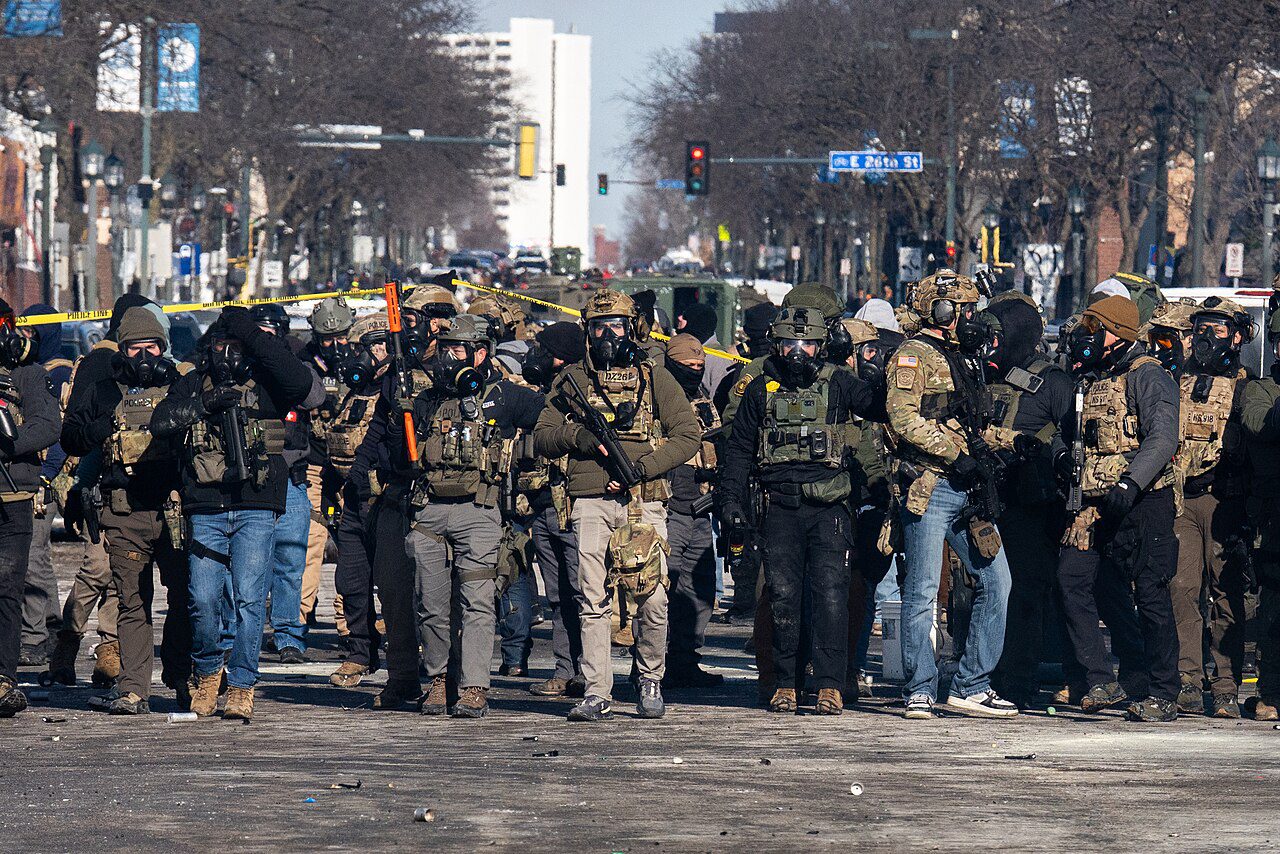
In a new report, Amnesty International has warned that the United States under President Donald Trump was exhibiting what it called a clear trend toward authoritarian behavior and weakening of basic rights. The report, “Ringing the Alarm Bells: Rising Authoritarian Practices and Erosion of Human Rights in the United States,” warns that human rights often deteriorate quietly, without dramatic warning signs.
The human rights organization argues that the administration’s actions in 2025 and early 2026 amounted to a “human rights emergency.” The organization writes that “President Trump acted quickly and consistently through executive actions and administrative measures to shrink civic space and undermine the rule of law domestically and internationally.”
Amnesty claimed that the US is now following a trajectory it has documented in countries such as Hungary, El Salvador, and Nicaragua, where governments “begin by controlling information, discrediting critics, punishing protest, and narrowing civic space,” eventually weakening courts and oversight bodies until the very systems meant to check government authority may already be weakened. According to the organization, what is happening in the US fits the global pattern of shrinking freedoms and legal protections that Amnesty has been warning about.
AI identified 12 “alarm bells” signaling authoritarian drift, including attacks on press freedom, punishment of protest, coercion of civil society, retaliation against critics, targeting of the legal system, disregard for due process, assaults on refugee and migrant rights, militarization of domestic enforcement, expanded surveillance, discrimination against marginalized groups, weakened corporate accountability, and the undermining of international human rights systems. These areas, the report states, show how the administration is undermining the core foundations that keep a society democratic.
The organization emphasizes that these pillars — freedom of expression, freedom of the press, peaceful protest, due process, equality, and non‑discrimination — are foundational.
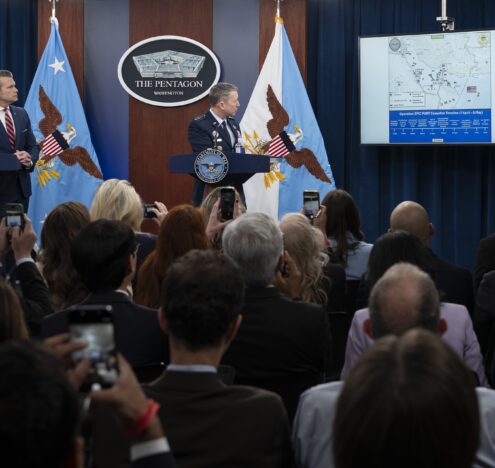
Amnesty says the administration has “dangerously escalated” efforts to control information. It cites the White House’s practice of “conditioning access with speech‑chilling terms,” barring outlets such as the Associated Press from “restricted spaces,” and prompting dozens of Pentagon reporters to surrender their badges rather than sign documents “waiving their First Amendment protections.”
The report also highlights the administration’s transformation of the Federal Communications Commission into “an instrument of political retaliation,” noting that FCC leadership “terminated all diversity, equity, and inclusion initiatives” and launched investigations into NPR and PBS.
Funding for public broadcasters has been “zeroed out” through rescission, while the US Agency for Global Media was “gutted,” shuttering or weakening Voice of America, Radio Free Asia, and other outlets.
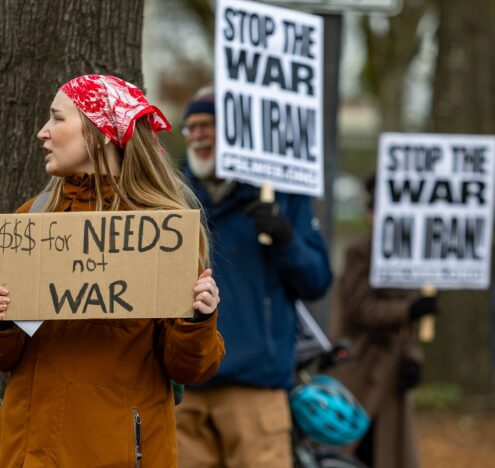
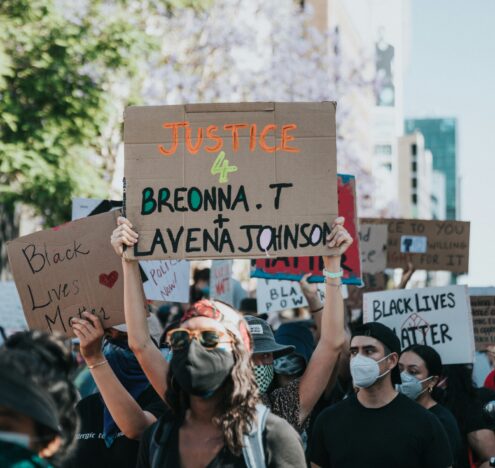
As part of its authoritarian push, according to the rights group, the Trump administration has put forth broad efforts to “shrink civic space.” Amnesty warns that “speech and protest were punished,” and that universities and civil society organizations are being “coerced to narrow civic space.” These tactics, it says, mirror global patterns in which governments “criminalize human rights defenders, climate activists, and Gaza solidarity protesters.”
Retaliation against critics has been “normalized,” with political opponents, whistleblowers, judges, and lawyers targeted in ways that “weaken the rule of law,” Amnesty adds. The report further argues that the administration’s actions made it “increasingly difficult to halt or reverse these patterns of backsliding and abuse.”
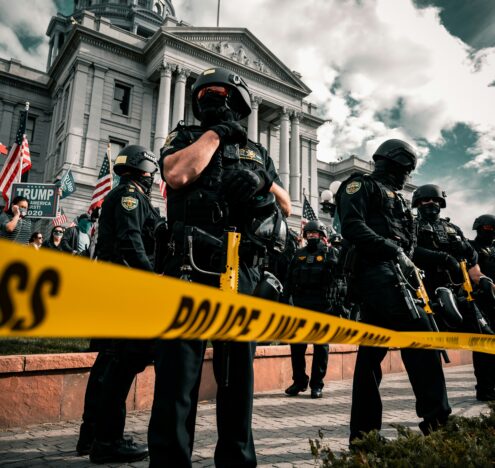
The organization warns that due process is being “disregarded,” enabling “enforced disappearances and illegal expulsions.” It says refugee and migrant rights are “attacked — cruelty became policy and reality,” noting that the administration has “dehumanized and criminalized marginalized populations,” including migrants, Black and Brown communities, LGBTQ+ people, and women. Amnesty describes immigration enforcement as a “paramilitary style operation” defined by “speed, fear, and dehumanization,” conditions that have “made it easier to normalize practices such as masked law enforcement, militarized raids, large scale detention, surveillance, and summary expulsions.”
The report concludes that militarization has become a “new normal” in domestic enforcement and that surveillance and AI tools have been “turbocharged — enabling targeting and repression at speed.” Amnesty says that these tools are being used to “scapegoat populations and roll back non‑discrimination protections,” creating a model of repression that could be expanded to other groups.
AI stresses that US actions are having a global impact by encouraging authoritarian tactics abroad.
In the report, Amnesty Secretary General Agnès Callamard said: “For years now, we’ve witnessed a creeping spread of authoritarian practices among states the world over … all who believe in freedom and equality must steel ourselves to counter increasingly extreme attacks on international law and universal human rights.”