






In December 2025, the Trump administration’s Operation Metro Surge deployed thousands of federal immigration agents to Minnesota in what the Department of Homeland Security called its largest operation ever. What followed, according to a 180-page report by advocacy organization Human Rights Watch (HRW), was not an immigration enforcement campaign so much as a human rights catastrophe, one that killed two people, injured dozens more, terrorized an entire metropolitan area, and produced a sustained government assault on the basic liberties of US citizens and legal residents alike.
The scale of the deployment was staggering. The St. Paul ICE field office, which normally covered five states with roughly 190 officers, had 3,000 additional agents added to it. By early February, more than 1,000 Customs and Border Protection officers had also been deployed to the streets of Minneapolis, a city they had no ordinary jurisdiction over.
At the height of the operation, ICE was arresting more than 100 people per day. The total number of immigrants arrested by ICE’s enforcement arm between December 2025 and February 2026 reached approximately 4,000, giving Minnesota the highest per capita arrest rate in the country. Nearly two out of three of those arrested had no prior US criminal record.
The people swept up in those arrests were not, in any coherent sense, the dangerous criminals the administration described. HRW documented case after case of lawful residents, refugees, asylum seekers, and US citizens stopped on the street, at work, on their way to donate blood, and even while shoveling snow. Federal judge Eric Tostrud found that DHS had adopted a policy of stopping residents “based solely on their race or ethnicity.”
A federal judge overseeing refugee cases wrote that “refugees have a legal right to be in the United States, a right to work, a right to live peacefully — and importantly, a right not to be subjected to the terror of being arrested and detained without warrants or cause in their homes or on their way to religious services or to buy groceries.” The government proceeded anyway.
The deaths of Renee Good and Alex Pretti became emblematic of the operation’s violence. Good, a 37-year-old US citizen, was shot three times through her car windows by an ICE officer on Jan. 7 as she appeared to drive away from agents who had surrounded her vehicle. DHS described it as an act of domestic terrorism. HRW’s video analysis concluded it was an unlawful killing: The car was moving away when the shots were fired and posed no imminent threat to the officers. Pretti, also 37 and a US citizen, was killed on Jan. 24 after Border Patrol agents pepper sprayed him, beat him with a metal canister, and shot him 10 times while he was observing and filming their activity from the street. Witnesses said they saw no weapon brandished.
A third resident, Julio Cesar Sosa-Celis, was shot in the leg; federal prosecutors later moved to dismiss the assault charges against him after discovering evidence “materially inconsistent” with the case, and ICE’s acting director acknowledged that two officers had lied under oath about the incident.
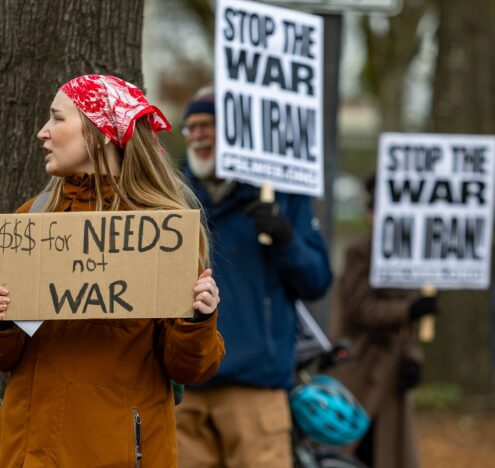
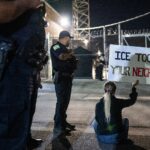
The operation’s reach extended far beyond those directly detained or injured. A survey conducted by the US Immigration Policy Center found that over 28% of Minneapolis residents had at least one interaction with federal agents, with residents of color 40% more likely to be stopped than white residents. Thousands of students missed school. Immigrants and people of color stopped leaving their homes for weeks. Healthcare appointments were canceled. People carried their passports to buy groceries. Community members organized around-the-clock volunteer stations outside the federal detention facility at the Bishop Henry Whipple Federal Building, meeting people released into subzero temperatures without their IDs or a way home. Federal agents reportedly began directing detainees to find the volunteers in neon vests when they let them go.
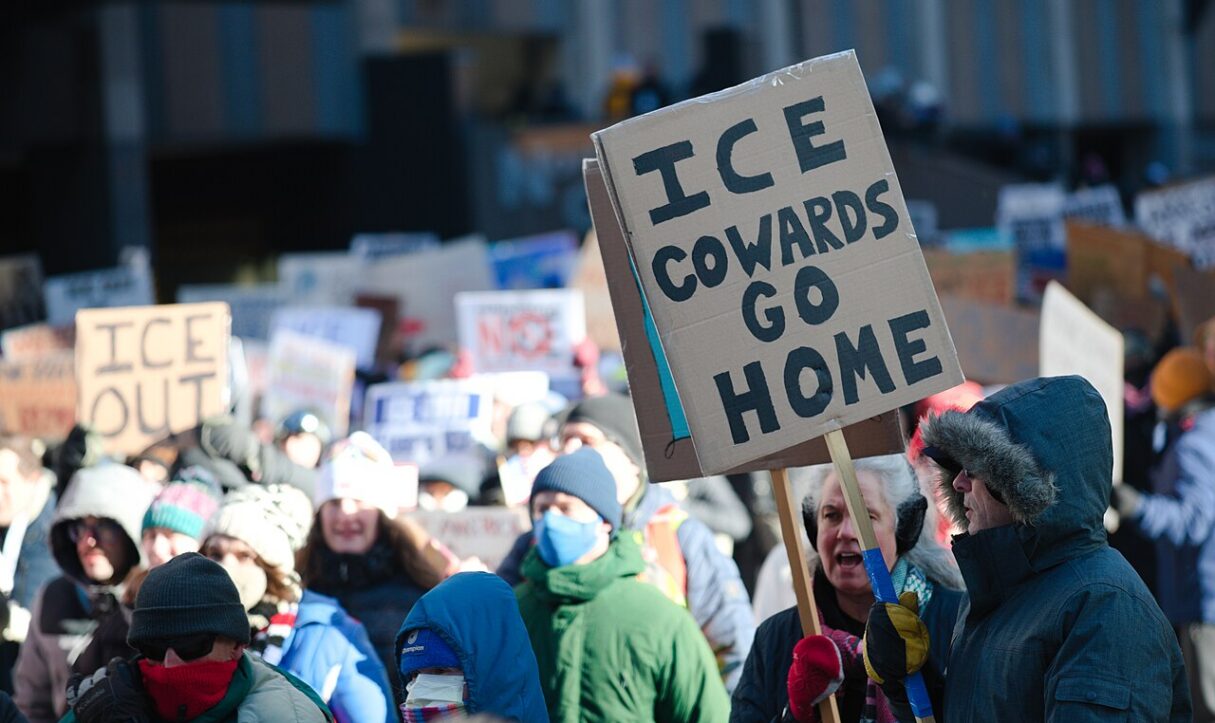
The government also moved against those who tried to watch. More than 500 US citizens were detained while observing or protesting the operation. Agents smashed car windows, used pepper spray and flash-bang grenades without warning, and threatened observers with arrest for filming or blowing whistles. Journalists Don Lemon and Georgia Fort were among 39 people charged under federal statutes for being present during a protest inside a church.
Federal judges issued hundreds of orders demanding the release of unlawfully detained individuals; one judge found that the administration had violated 210 court orders across 143 cases, writing that the court was “not aware of another occasion in the history of the United States in which a federal court has had to threaten contempt — again and again and again — to force the United States government to comply with court orders.”
HRW has called for independent investigations into the killings of Good and Pretti, an overhaul of ICE and CBP oversight mechanisms, and a prohibition on immigration enforcement at schools, health care facilities, and houses of worship. Operation Metro Surge has formally ended. Most of those responsible for its abuses have not been held accountable.