
Skip to content

Hawai‘i Communities Challenge Army’s Pōhakuloa Lease Renewal

As 2029 looms, residents oppose a controversial lease for continued military training on land sacred to Native Hawaiians.

Words: Jon Letman
Pictures: Jon Letman
Date:

In a tropical island paradise where the world’s wealthiest individuals (Larry Ellison, Mark Zuckerberg, Jeff Bezos, and others) purchase sprawling private enclaves and entire islands, there is one entity that has scored a land deal that would make even a billionaire blush: the US military.

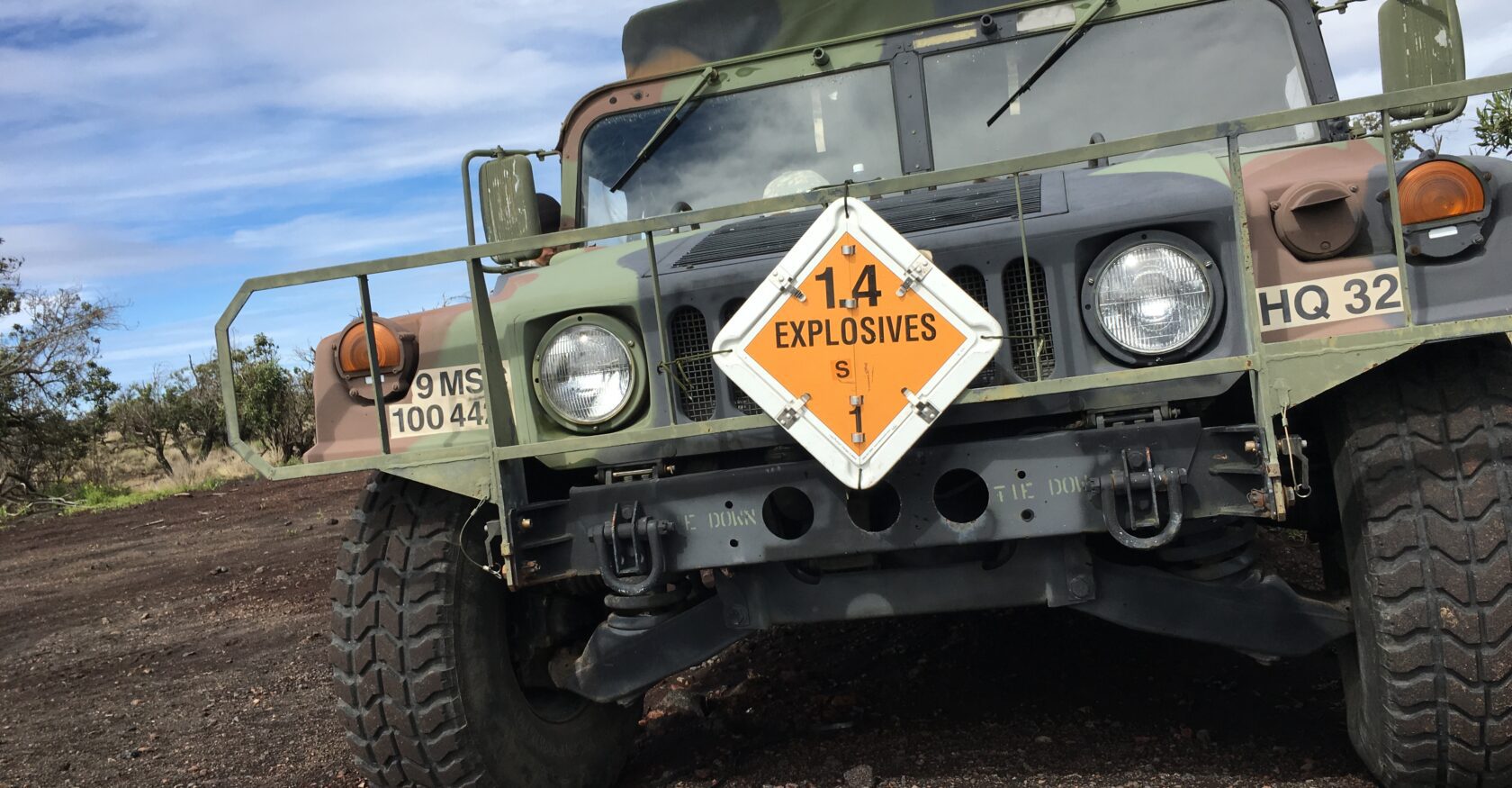
Among the more than 130 military sites scattered across the Hawaiian Islands, the Pōhakuloa Training Area (PTA) on Hawai‘i Island is the most prized and least compensated. The site was established as a Marine Corps live-fire training range during World War II. It spans more than 132,000 acres (206 square miles) — an area roughly the size of Guam. It is made up of large parcels that once belonged to the Hawaiian Kingdom’s crown and government lands before the illegal overthrow in 1893. 

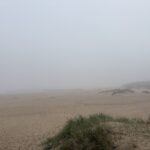
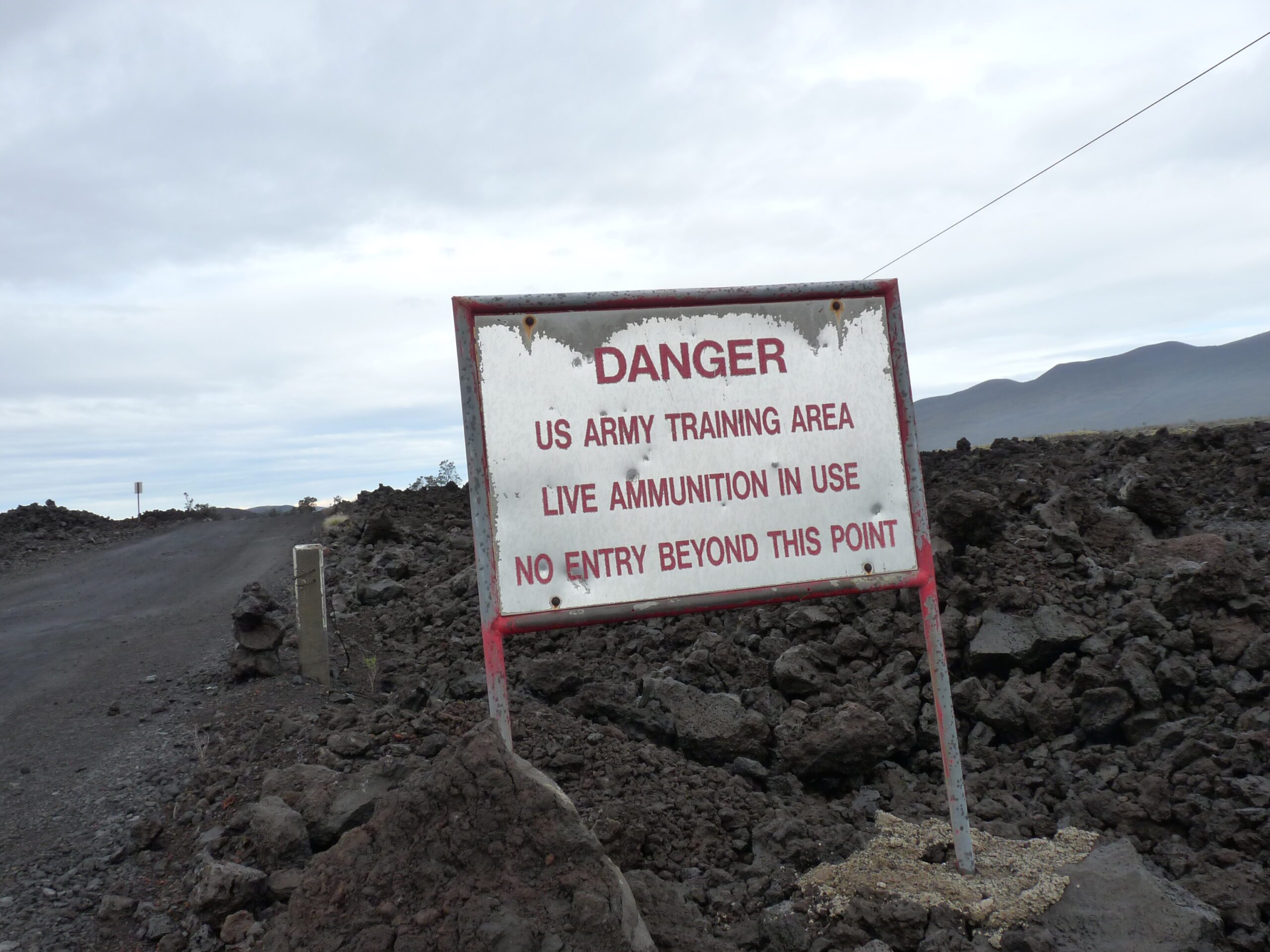
Pōhakuloa sprawls between Mauna Kea and Mauna Loa volcanoes above 6,000 feet, across an open, rugged plateau defined by vast lava fields, rocky plains, and dun-colored cinder cones covered in wild scrub with pockets of endangered native plants. The weather at PTA can swing from foggy, cold, and rainy to blue skies and brilliant sunshine in a single morning. In 1964, PTA was expanded by executive order. That same year, Hawai‘i’s Department of Land and Natural Resources (DLNR) leased the Army roughly 23,000 acres of state conservation land for 65 years for the total paid sum of one US dollar. That lease will expire on Aug. 16, 2029, and the military wants to retain nearly 20,000 acres. The Army seeks to keep an additional 6,300 acres at three separate training sites on the island of O‘ahu.

For decades, PTA has been used by every branch of the US military as well as ally and partner nation militaries for everything from live fire training (mortars, artillery, rockets), small arms and sniper training to the testing of drones, aircraft, and other weapons systems. Hawai‘i’s strategic location has made it the crown jewel of what the US Indo-Pacific Command calls its “area of responsibility.”

While relatively small compared to US military training areas in Arizona and Texas, PTA is highly coveted by the military as the largest US military testing and training installation in the Pacific and the only range capable of supporting battalion and brigade units. 

But for many Hawai‘i residents, especially Kanaka Maoli (Native Hawaiians), who struggle to afford housing and the high cost of living in their home islands, the military has failed to take care of the land. From ongoing war games, live fire training, and other activities, the military has a long history of environmental damage in Hawai‘i. The requested renewal of multiple leases for vast parcels of land — which the military has used for 65 years for less than the cost of a candy bar — is a bitter pill to swallow.

In May, at a public hearing attended by hundreds of Hawai‘i residents, and with over 1,500 written testimonials submitted, the state’s Board of Land and Natural Resources (BLNR) voted to reject the Army’s final environmental impact statement (FEIS). The board cited concerns over an incomplete inventory of archaeological sites, a lack of data analysis for endangered biological resources, and inadequate consultation on cultural impacts of the military’s use of the land. 

Board chair Dawn Chang said it was “one of the most important land decisions that the board has to make.” As she spoke, the sound of protesters could be heard outside. After the hearing, Chang explained that the FEIS was a precondition to other regulatory requirements by DLNR before renewing the lease.

During the hearing, one angry community member dropped a dollar bill and shouted, “give the military back their dollar. They can keep ‘em.… give it to your general, go give it to Trump!” 

One of the most contentious factors in allowing the military to conduct live-fire training is the impact on land Native Hawaiians consider sacred. Before being a training ground for war, Pōhakuloa was a final resting place for iwi kūpuna (ancestral remains). Community members see the disturbance as desecration. 

DLNR exchanged emails with the reporter and supplied limited factual information but did not answer several questions or make Chair Dawn Chang available for comment.

In a statement, a US Army Pacific spokesperson said PTA is “critical for ensuring the readiness of Hawai‘i-based units and other Department of War entities.”

In a press release, US Army Garrison Hawai‘i commander Col. Rachel Sullivan said that PTA is “the only training area in the Pacific region that allows training on the full range of weapons capabilities.” Such capabilities have previously included the Davy Crockett weapon system which was capable of firing tactical nuclear weapons (between 1960-1968), and two B-2 Spirit bombers and two B-52 Stratofortresses (both capable of carrying nuclear weapons), which in 2014 flew 8,000 miles on training missions to drop dummy bombs on PTA.

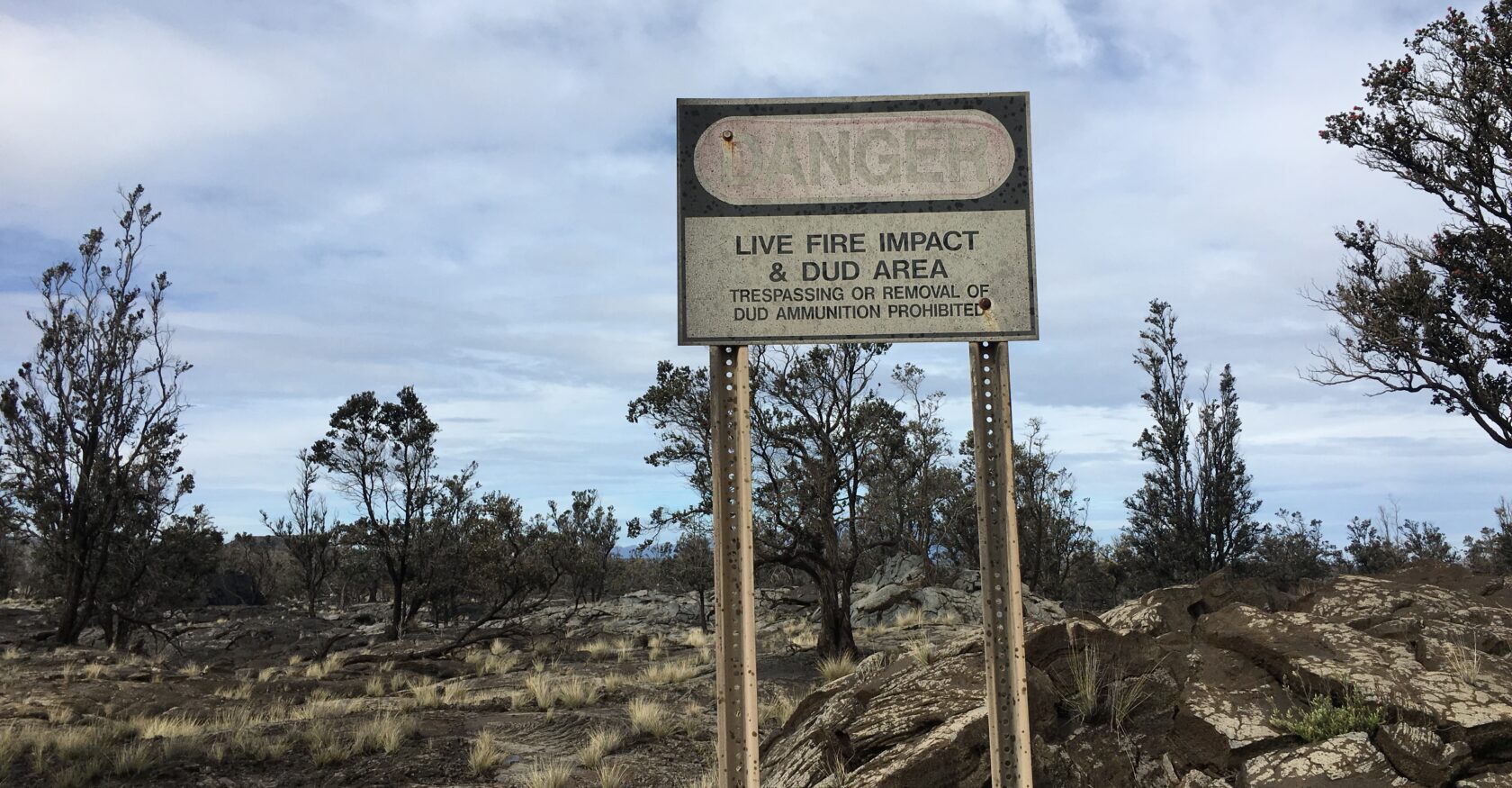
But many in Hawai‘i point to a decades-long history of accidents, contamination, and misuse of Hawaiian land — including the disposal of chemical weapons in Hawaiian waters and testing of sarin nerve agents on Hawai‘i Island. Critics of the military’s use of Hawai‘i say enough is enough.

The Army Pacific spokesperson responded to criticism saying, “The Army acknowledges the concerns raised by Hawai‘i residents and Native Hawaiians regarding past environmental impacts. We are committed to being good neighbors and stewards of the land. At PTA, the Army actively manages over 1,200 archaeological sites and invests in conservation programs to protect endangered species and native habitats.”

Hawai‘i’s governor Josh Green is central to discussions about the PTA lease renewal. In September, Green and Army Secretary Dan Driscoll signed a non-binding statement of principles, intending to achieve a memorandum of understanding before the end of this year. 

In an Oct. 29 letter sent to Driscoll, Green wrote, “Hawai‘i’s people have stood shoulder-to-shoulder with the Nation’s armed forces for generations. Our shared duty now is to ensure that this partnership evolves with integrity, balancing readiness with respect for our land, our culture, and our future.” 

In early November, Green presented a proposal that would see the federal government invest $10 billion as part of the negotiations around the lease. The proposal includes military financial support for increasing housing and investing in civilian infrastructure projects, including the expansion of highways and a new rail line in Honolulu. Concessions could include addressing the return and recovery of land previously used by the military on other Hawaiian islands.

Wayne Tanaka, executive director of the Sierra Club of Hawai‘i, was critical of Green’s approach to the PTA lease agreement. He wrote, “the cost of the Governor’s continued acquiescence to the Army’s demands may accordingly far, far exceed the monetary benefits he is asking for in exchange for the continued bombing and occupation of Hawai‘i’s ‘āina [land].”

Tanaka called the governor’s proposed one-time settlement of $500 million for “land restoration, UXO [unexploded ordnance] cleanup, and long-term management” a “paltry sum.” He found it well below previous financial commitments to remediate military environmental contamination and ordnance removal elsewhere in Hawai‘i.

The governor recently named an advisory committee composed mostly of Native Hawaiians. But Green’s earlier suggestions that the military could use eminent domain, “which would take the land without giving Hawaiʻi anything in return” have fueled concerns that the military could use force to retain land.

The governor’s communications staff engaged in multiple exchanges but ultimately did not provide a statement or make the governor available for an interview.

Hawai'i Pohakuloa Army Lease Controversy
Military decoys simulating cannons, rocket launchers, and radar-equipped tanks stand at the ready inside Pōhakuloa Training Area on Hawai‘i Island. All photos Feb. 23, 2018.
Hawai'i Pohakuloa Army Lease Controversy
In addition to all branches of the US military and foreign military partners, Pōhakuloa Training Area is used by local police for training.
Hawai'i Pohakuloa Army Lease Controversy
Mortars, artillery, rocket fire, and heavy military equipment have severely degraded the land where Hawaiians have laid their ancestors to rest.
Hawai'i Pohakuloa Army Lease Controversy
Spent ammunition rounds litter the ground at Pōhakuloa Training Area.
Hawai'i Pohakuloa Army Lease Controversy
The military values Pōhakuloa Training Area for its rugged landscape and open spaces which are used to train for war, but for Native Hawaiians, the land is sacred.
Hawai'i Pohakuloa Army Lease Controversy
Feral ungulates like sheep and goats inside the Pōhakuloa Training Area damage native plants and spread weeds including fire-prone invasive grasses.
Hawai'i Pohakuloa Army Lease Controversy
A wall map displayed at Pōhakuloa Training Area illustrates the vast parcels of land controlled by the US military, including thousands of acres leased for just one dollar for a 65 year period.

In a state where the military is second only to tourism as a financial driver, many people are unable or unwilling to speak out. Many are either beholden to the state or dependent on the military for income or social and family connections. There is money to be made through grants and contracts for construction, infrastructure, utility upgrades, and as service providers. And many civilians work directly for or with the military, either as civilian employees or in jobs that rely on the military. If your uncle or sister work on base, speaking out can cause friction. 

When it comes to the PTA, even staunch military supporters proved reluctant to share their views. The State of Hawai‘i’s Military and Community Relations Office, Hawai‘i Defense Alliance, and Hawai‘i’s Chamber of Commerce Military Affairs Council did not respond or declined multiple requests for comment for this story. 

In 2021, 19,000 gallons of jet fuel contaminated a well that provided water for families at Joint Base Pearl Harbor-Hickam. Tens of thousands of people were potentially exposed to water tainted with jet fuel in the Red Hill disaster. Healani Sonoda-Pale, a community organizer with a group called O‘ahu Water Protectors, says that incident was a wake-up call. It shifted the conversation around the presence and role of the military in Hawai‘i.

“Their history here has not been a very good history,” Sonoda-Pale says. She listed some of the environmental disasters that followed military interventions in the islands: “They bombed and broke the water table on Kaho‘olawe. It’s uninhabitable. They bombed Waiāhole. They bombed Makua Valley. They have done so much damage environmentally to Hawai‘i and also to our communities.”

For her and other Native Hawaiians, the land at Pōhakuloa is sacred. “It’s our mother. It’s a living being to us,” said Sonoda-Pale. She said the continued training on “military-occupied land” is “traumatizing.” 

Sonoda-Pale said that people in Hawai‘i have a colonized mindset and have been conditioned to feel dependent on the military. “We were taught that we needed the military and if the military left Hawai‘i, we would be without jobs, infrastructure, electricity.” 

For her, continued military presence in Hawai‘i is “the means of violence for the colonial occupation that we’re now under with the United States.”

“What is the public really getting out of this?” she asks. “I think we’re actually the biggest losers in this whole situation.” Discontinuing the lease, she said, would be a start.

In 2014, two Native Hawaiian kūpuna (elders) sued Hawai‘i’s DLNR for failing to meet its obligations to monitor Pōhakuloa. This set the stage for a second lawsuit before Hawai‘i’s supreme court in 2019, which found that DLNR was in breach of trust. The opinion issued by Hawai‘i’s supreme court stated that “the State breached its constitutional trust duties by failing to reasonably monitor the PTA, including by failing to inspect the land to ensure the United States’ compliance with the lease terms intended to protect and preserve trust property.”

Six years later, one of the plaintiffs, Mary “Aunty Max” Kahaulelio, said DLNR still bears responsibility and is the most hewa — the Hawaiian word for wrong, at fault, or improper. She blames DLNR, Hawai‘i’s Congressional delegation, and the Department of Defense for the degradation of the land.

“When is this all going to stop? When they get rid of us? We [are] still here. I’m 87 years old. I’m not going no place!” She said.

Kahaulelio, who lost two brothers in the Vietnam War and has been arrested for protesting the militarization of her homeland, said she is pained to see some of her own people “bought off with money.” Choked up with emotion and fighting back tears, she said, “There’s not going to be any peace until we empty our rifles. Break it up and throw it away. Dismantle all our bombs and stop using technology as a weapon.”

For Native Hawaiians, Pōhakuloa is the piko (navel) and spiritual center of Hawai‘i Island. Kalikoonāmaukūpuna Kalāhiki, who works in land restoration, said the military presence is at odds with restoring balance and harmony between the land, the elements, and humans. 

Testifying before Hawai‘i’s BLNR in May, Kalāhiki said live fire training desecrates the iwi kūpuna buried at Pōhakuloa. They said that exposing ancestral remains to the light and preventing them to “rest in all seasons without disturbance” was hewa.

Safeguarding Hawai‘i’s culture and environment is not exclusively a Native Hawaiian issue, Kalāhiki said, but one that requires the broader community to come together.

As kahu (caretaker) at the Mauna Ala (Royal Mausoleum), James Jay Kaleimamahu Crowningburg Maioho’s ancestral lineage compels him to care for iwi kūpuna. He says that the Army’s own documents show major gaps in cultural-resource studies. 

Last July, Maioho and several Hawaiian cultural practitioners had the opportunity to visit a centuries-old heiau (religious platform) on privately owned land a few miles from PTA. They planned to camp overnight, taking advantage of the high elevation and clear conditions to map the night sky and plot celestial alignments. As they gazed toward the heavens, the evening calm was suddenly broken by the thunderous explosions and ground convulsions of live-fire testing.   

“To hear these missiles impacting and exploding…that immediately has to stop,” Maioho said. “The destruction has to stop.”

He emphasized the reverence Hawaiians hold for Mauna Kea, which is considered a living part of the Hawaiian people. “Everything we do is connected to our ancestors and the land and the dirt that we came from. That is the absolute most sacred spot so to bomb that…it’s an outrage.”

“The real question,” he said, is “who’s going to clean it up because there’s shells, there are unexploded ordnance… I think that’s an expense they don’t want to incur.”

Rick Warshauer, a retired conservation biologist, has conducted multiple biological assessments at PTA since 1977. In a telephone interview, Warshauer said Pōhakuloa is rich in endangered species thought to have been extinct, along with cultural artifacts, burial sites, and ancient trails. He said the impact area of PTA has been “permanently poisoned by unexploded ordnance of which there are a huge amount.” He said live fire training rendered the land “permanently contaminated and permanently dangerous for any human use.”

Comparing Pōhakuloa’s natural wealth to that of a national park, Warshauer said it is home to a diversity of vegetation types representing three of the adjacent volcanoes of Mauna Loa, Mauna Kea, and Hualālali, as well as some of the last remaining upland dry forest native habitat in Hawai‘i.

He called the military “very poor stewards of the land,” adding, “Hawai‘i has been stepped on since 1840 by the military. They coveted Pearl Harbor and haven’t stopped since.”

Prior to the 20th century, Ke Awalau O Pu‘uloa was a healthy network of saltwater bays, fishponds, estuaries, and cultivated crop patches that provided abundance for Native Hawaiians. Today, it is known as Pearl Harbor, a geography transformed through industry and the military, cemented in history by the Japanese air attack on Dec. 7, 1941.

University of Hawai‘i ethnic studies assistant professor Kyle Kajihiro has conducted extensive research on the military impacts to Hawai‘i at Pearl Harbor, Kaho‘olawe Island, Pōhakuloa, and elsewhere. He said that using Pōhakuloa to demonstrate destructive capability, combined with escalating hostile rhetoric directed at China, is provocative, effectively turning Hawai‘i into an offensive weapon.

As the 2029 lease expiration looms, Kajihiro said there is time for more public participation and input but sees the governor and the Army pushing an accelerated timeline. “Green is totally playing along with it and helping the military to achieve what it’s trying to do instead of fighting for the beneficiaries of these [Hawaiian trust] lands,” Kajihiro said. “There’s no reason for that. It’s a fabricated emergency.”

In a television interview in August, Green said he wanted a military lease extension to benefit Hawai‘i, but added, “Keep in mind, at any moment if they truly wanted to, they could take the land, they could eminent domain it from us and we would get nothing.”

In a recent press release, the governor said that if the Army does not pursue “‘fast track’ condemnation, it would give “the people of Hawai‘i a longer runway to conduct robust community engagement through public processes.” Green said his administration has initiated ongoing dialogue with senior military leaders.

Kajihiro says that if the military were to seize the land, they would lose support and inflame anger anew. He said, “the military is part of this invasion, part of the dispossession, and part of an unjust occupation.”

Jon Letman

Jon Letman is a Hawaii-based independent journalist covering people, politics, and the environment in the Asia-Pacific region.

LEARN MORE

Hey there!

You made it to the bottom of the page! That means you must like what we do. In that case, can we ask for your help? Inkstick is changing the face of foreign policy, but we can’t do it without you. If our content is something that you’ve come to rely on, please make a tax-deductible donation today. Even $5 or $10 a month makes a huge difference. Together, we can tell the stories that need to be told.

SIGN UP FOR OUR NEWSLETTERS