











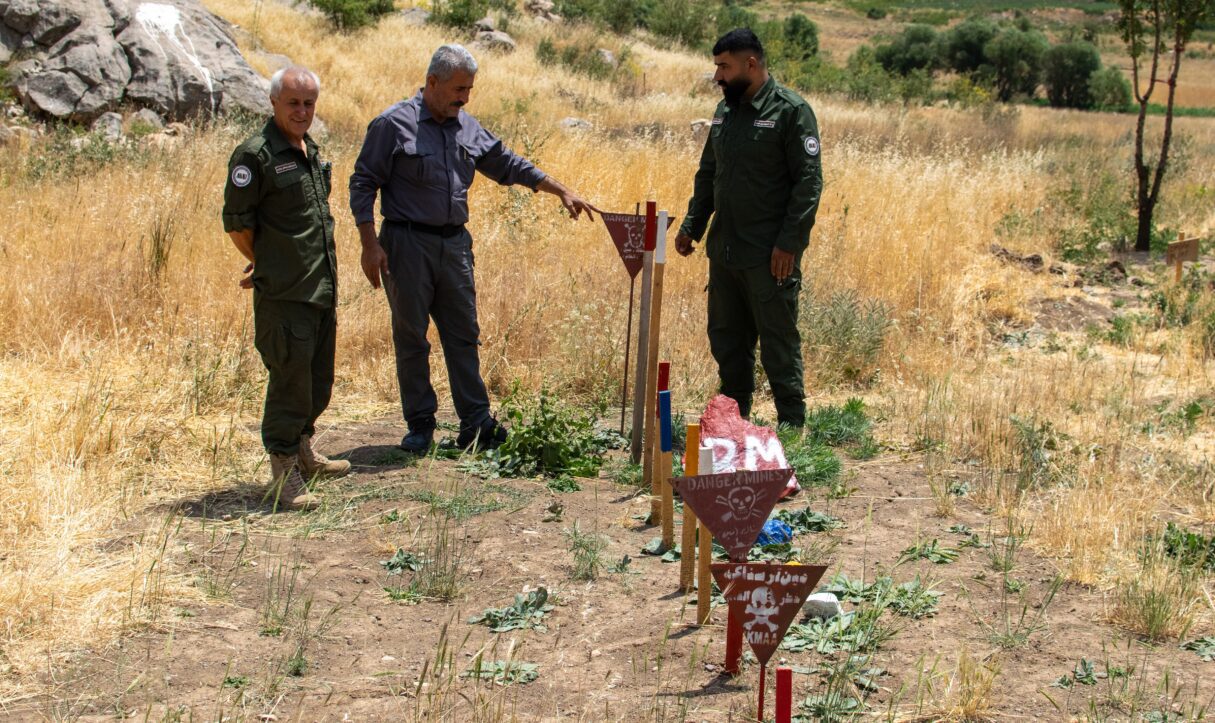
Driving up into the high mountains of Iraq’s Kurdistan Region, expert deminer Smko Ahmed points out patches by the roadside that were painstakingly cleared of explosives over his long career. V-69s, VS-50s, TS-50s, and two dozen other types of landmines once contaminated the fields and villages in Choman district, a legacy of the war between Iran and Iraq in the 1980s. Almond and apple trees now dot the slopes, and tomato crops ripen in the fields. “People are now building here because of mine clearance,” he said. “There’s new agriculture. New orchards are being planted.”
It’s progress, but the administration of US President Donald Trump has implemented drastic cuts to foreign aid that do not carve out exceptions for demining operations around the world. In Iraq, the decision has forced hundreds of trained deminers out of a job and left communities at risk.
As the world’s single largest funder of humanitarian mine action, the United States plays an outsized role in cleaning up remnants of war. Since 1993, it has contributed more than $5.09 billion to clearing landmines and unexploded ordnance (UXO), supporting programs in more than 125 countries. In fiscal year 2023 alone, it contributed $398 million. Now, that funding is suddenly gone.
In January, the White House initiated a review of all foreign aid spending issued by USAID and the State Department. Over the following weeks, humanitarian and international development organizations received stop-work orders, disrupting critical programs worldwide.

The news shocked Ahmed. He was working as a national operations manager for Fondation Suisse de Déminage (FSD), a Geneva-based humanitarian nonprofit that received funding from the State Department’s Bureau of Political-Military Affairs’ Office of Weapons Removal and Abatement (PM/WRA). At the time, he was overseeing clearance operations in areas liberated from the Islamic State (ISIS) just a few years earlier. Working at full capacity, his teams could make 100 square meters of farmland safe each day.
That all came to a halt in response to instructions from Washington. FSD laid off staff and suspended operations. There was a brief reprieve when it received a no-cost extension for a few weeks, but active clearance work concluded at the end of April. “It was terrible,” Ahmed said. “All of us had plans for this year. Now, I don’t have any work. What do I do?”
Decades of conflict have “massively contaminated” Iraq with landmines, according to the International Campaign to Ban Landmines — Cluster Munition Coalition (ICBL-CMC). There are legacy minefields from the Iran-Iraq War 40 years ago and the southern deserts hide cluster munitions the US and its allies dropped during the Gulf War and the 2003 invasion.
The most recent and deadly threats are located in areas once held by ISIS. Most of FSD’s clearance work focused on areas that would otherwise be some of Iraq’s most productive farmland, which is littered with improvised explosive devices left by the militant group and therefore useless.
Peter Smethers, Iraq country director for FSD, said that the group had nearly completed clearance efforts in Erbil Governorate’s Makhmour District and was preparing to move into Hawija District in neighboring Kirkuk Governorate. Those plans are now suspended as a result of Washington’s funding cut.
“It’s having a massive effect on the communities,” said Smethers. “The local populace was hoping for us to clear their land so that they could get on with their lives without the threat of explosive ordnance and now they have to carry on living under that threat.”
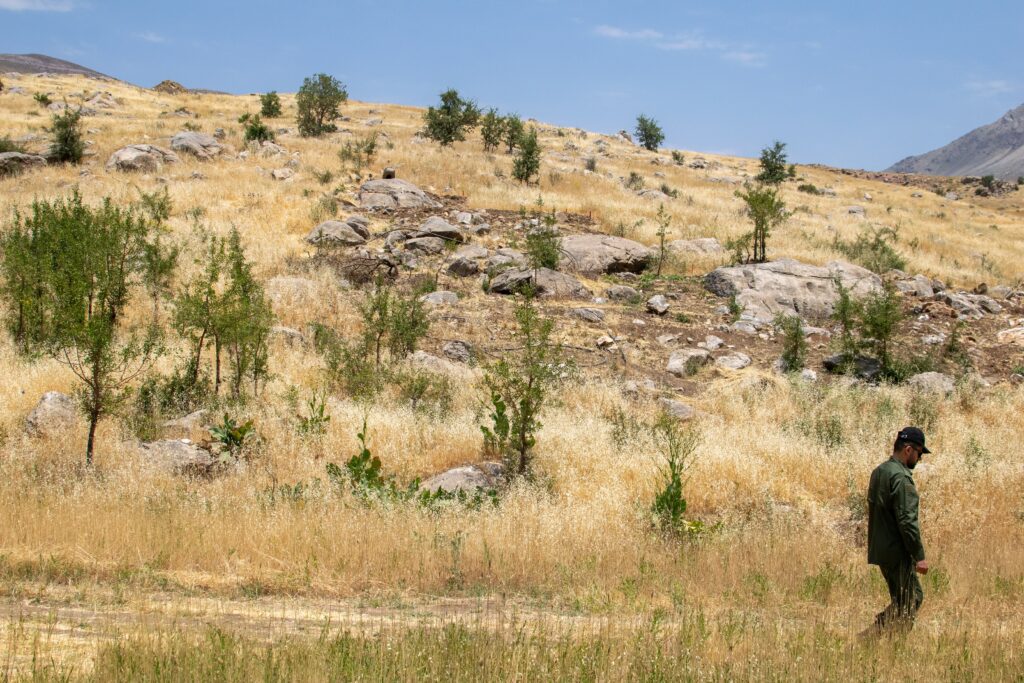
As of 2023, which is the most recent data available from ICBL-CMC, 1,841.48 square kilometers (about 710 square miles) of Iraq is contaminated with landmines, IEDs, cluster munitions, and other unexploded ordnance (UXO). This is approximately the size of Buckinghamshire in the United Kingdom.
Between 2019 and 2023, 94.81 square kilometers (about 36.6 square miles) of land was cleared, or about half the size of Washington, DC. In 2023 alone, a reported 16,756 antipersonnel landmines were removed and destroyed.
The sheer size of the threat to Iraqi civilians is reflected in the financial contributions from the international community. Between 2019 and 2023, countries spent a combined $453.4 million on mine action in Iraq, the second most for any single country after Ukraine. Still, annual contributions declined from a five-year peak of $104.5 million in 2020 to $68.1 million in 2023.
Reflecting its global leadership on the issue, the US was the most prominent supporter of mine action in Iraq. In 2023, it contributed $40.5 million, or about 60% of the total assistance. Canada, Norway, Germany, France, Sweden, and Luxembourg all contributed more than $1 million each, though none came close to the US total.
Despite its domestic oil wealth, Iraq’s federal government only contributed $3.9 million to its mine action program in 2022. The Kurdistan Regional Government (KRG) provides an additional $10 million annually, according to a representative of its demining department, IKMAA. This funding has allowed some demining activities to continue in the Kurdistan Region following the Trump administration’s cuts, but it is insufficient for extensive clearance operations.
Lieutenant Colonel Bakhtiar Mohammed, the Secretary General of the Peshmerga Ministry, explained that he is worried about the impact of foreign aid cuts on the Kurdistan Region and Iraq and hopes that the administration will restore the funding. “Other countries might not need US aid as much as we do,” Mohammed said, adding that the US contributions make a critical difference for Iraq after decades of conflict.
According to the Trump administration’s thinking, the foreign aid cuts are designed to shift financial burdens onto other countries, who must take responsibility for themselves. This does not make landmines any less deadly in the meantime. In fact, mines and explosive remnants killed at least 39 people in Iraq in 2023 and wounded another 63 people.
“It’s having a massive effect on the communities.” – Peter Smethers
Mine action funding also supports risk education programming to prevent harm before it happens and provides support for victims after accidents occur. These inexpensive but effective programs were not spared, caught up in the Trump administration’s one-size-fits-all approach to cuts.
The foreign aid cuts also meant that hundreds of local employees working for demining organizations lost their jobs. Most live in the same areas that they were clearing and the money they earned provided a much-needed financial boost to communities where farming and other development is impossible until they are cleared of explosives.
Ahmed said that a trained demining tech can earn about $1,000 per month. This represents a good salary for many Iraqis and makes it an attractive job despite the risks.
While the financial loss hurts, the real possibility that civilians will be killed or maimed because demining work has stopped weighs heavily on demining organizations and civilians alike. “My greatest fear is that if the funding doesn’t reappear for demining that the locals will take it into their own hands to start clearing areas themselves,” Smethers said, outlining how technical and tricky disarming explosives can be even for those with years of experience. “But they need the land to live.”
Back in Washington, members of Congress and advocacy groups have spoken out about the negative impact of arbitrarily cutting foreign aid funding. Amid outcry, some programs were spared.
In that vein, US Representative Stephen Lynch, a Democrat from Massachusetts, introduced the Global Demining Protection Act in February. If passed, it would restore funding for these programs. Demining programs “advance US security and global peace and stability by returning land to productive use and promoting security and economic development,” Lynch’s office said in a statement introducing the legislation.
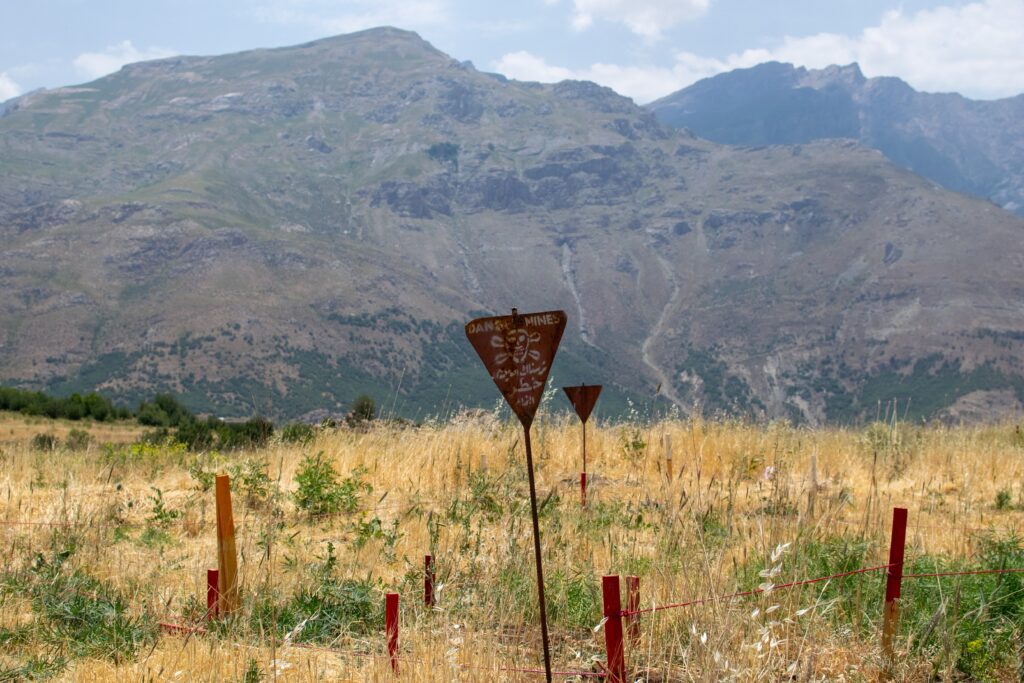
The legislation is currently stalled in committee. At the time of publication, Lynch’s office and those of cosponsors had not replied to inquiries about the bill’s prospects for passage and whether they would seek new funding in the upcoming appropriations cycle.
FSD and other demining organizations are now searching for new sources of funding, but few opportunities remain. Unless that changes, explosives and landmines will remain in place and prevent contaminated countries from addressing the legacy of conflict.
Restoring funding for demining, the way Mohammed sees it, would allow the US to have a massive impact and help prevent needless harm to civilians. It would also forestall potential instability in the future. For those living in near explosive-laden areas, an exemption could mean the difference between life and death. “There will be a sense of safety and security,” Mohammed explained. “They will have a normal life.”