







The Trump administration’s brazen and potentially illegal strikes on alleged drug trafficking boats in international waters off the coast of Venezuela this month, reportedly killing at least 14, represent a major escalation in the Washington’s military posture toward the Western Hemisphere.
As the US ratchets up its crusade against regional drug cartels by launching its first unilateral air strikes in Latin America since 1989, a potential follow-up attack within Venezuelan waters or against human or material targets on Venezuelan soil is a possibility Trump officials have left on the table.
This abrupt build-up poses a serious challenge to regional security, most immediately to Colombia, a close US ally whose 1,378-mile border with Venezuela is a largely porous binational region home to 12 million people. It is also mostly controlled by irregular armed groups like the National Liberation Army (ELN) and Segunda Marquetalia, a dissident faction of the dissolved Revolutionary Armed Forces of Colombia (FARC).
Trump has downplayed the prospect of regime change. At the same time, US military action in Venezuela — an option sources say Trump is currently weighing — could have a potentially disastrous spillover effect into Colombia. Such an attack would likely trigger mass displacement and exacerbate the severe security vacuum on the border. This scenario could grow even more dire if Colombia’s formal drug “decertification” this week, despite carveouts for security assistance, further weakens state presence through reduced US aid, investment, and trade.
The possibility that the next Colombian president, who will be elected in May, might also allow the US military access to the country in the event of an attack on Venezuela, could be why the ELN, generally sympathetic to Venezuelan President Nicolas Maduro, began an orchestrated push to seize control of much of the Venezuela-Colombia border near the Catatumbo region in January, leading to the suspension of peace talks with the government. That offensive has resulted in more than 100 civilian deaths and some 56,000 people displaced, overwhelming border towns and straining relief agencies working there.
Though plagued by intractable violence tied to illicit economies, Latin America and the Caribbean — unlike other regions in the world — has no major interstate, religious, or ethnic conflicts, and its countries do not possess nuclear weapons. In fact, every regional government agreed in 2014 to declare the region a “zone of peace” whereby differences among nations are solved through dialogue and negotiation, according to international law.
Nonetheless, US Secretary of State Marco Rubio, who has long sought to confront the government in Caracas, is seemingly attempting to rope other South American countries into efforts to further isolate Venezuela and provide cover for the US designation of drug trafficking groups as terrorist organizations, with Argentina, Peru, Paraguay, the Dominican Republic and Ecuador recently following suit.
Top Trump administration officials and GOP lawmakers have visited these countries on multiple occasions in recent months. Department of Homeland Security Secretary Kristi Noem went to Argentina in July. National Security Council senior director Michael Jensen traveled to Paraguay and the Dominican Republic in August, while House Armed Services Committee Vice Chair Rob Wittman visited Peru. While in Ecuador earlier month, Rubio lauded Ecuadorean president Daniel Noboa — who has reportedly been implicated in drug smuggling to Europe and has expressed his support for the US to set up a military base in the country — for offering to help Trump officials track down foreign drug smugglers.
In the Caribbean, Guyana and Trinidad and Tobago, encouraged by US officials, have also welcomed support for US counternarcotics operations in the Southern Caribbean, even going so far as offering to station US military assets in the case of further escalation.
On the other hand, major US allies like Brazil, Mexico, and Colombia, as well as 23 countries in the Community of Latin American and Caribbean States (CELAC), have all urged restraint in US military action near Venezuela. Instead, they have called for increased judicial cooperation, intelligence sharing, and demand reduction programs, as well as focusing interdiction efforts on trafficking routes in the Pacific, through which roughly three quarters of US-bound cocaine transits. Such options are far more likely to stem the flow of narcotics from South America than the Trump administration’s current saber-rattling approach, while also preserving crucial bilateral cooperation on energy production, prisoner releases, and deportation flights.
Until now, left-of-center governments critical of the Maduro government have adopted a relatively mild tone regarding the recent US strikes to avoid complicating their own bilateral ties with Washington. Yet a targeted operation to take out members of the Maduro government or bomb drug processing labs would likely stir up regional solidarity in defense of national sovereignty, a central tenet of Latin American diplomacy.
Former US officials have also warned against the United States getting further involved in a military conflict in or around Venezuela given the US military’s subpar track record fighting guerrillas, who dominate a regional security landscape comprised of paramilitary, insurgent, militia, and transnational criminal groups, some of whom have been operating for half a century.
“The reality is that today the ingredients all exist for there to be an internal conflict inside of Venezuela, not unlike the one that Colombia has been living through for over 50 years,” the Biden administration’s top Latin America official, Juan González, told The Guardian.
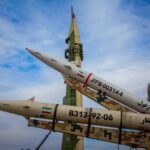
More concerning still, further US military action could also invite outside actors like China, Russia, and Iran, all allied with Maduro’s government, into a conflict with the United States, potentially putting US troops at risk in other theaters. Talking to CBS after the first strike, US Senator Tammy Duckworth, a Democrat, said such attacks could endanger American citizens: “The fact that it happened in international waters actually opens Americans to similar actions by our adversaries.”
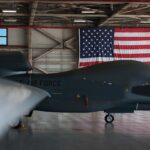
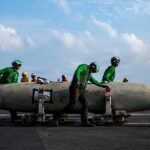
The Trump administration’s actions have already prompted rapid militarization in the region. Ships armed with Tomahawk missiles, an attack submarine, a range of aircraft and nearly 4,500 US sailors and Marines are now all positioned in the Southern Caribbean. The Pentagon said that Venezuelan F-16s flew near US Navy vessels recently twice in less than 24 hours. In response, Trump sent 10 F-35 fighter jets to Puerto Rico, where Secretary of War Pete Hegseth and the Chairman of the Joint Chiefs of Staff Dan Caine made a surprise visit, telling US Marines aboard the USS Iwo Jima: “What you’re doing right now — it’s not training.”
Maduro, for his part, has already surged 25,000 troops to coastal states along Caribbean drug trafficking routes, up from the 10,000 he sent last week to the border with Colombia. He has also announced a drive to mobilize up to eight million citizens as militia ready to fend off a potential US invasion.
While a precision strike or operation in Venezuela would look considerably different than the past instances when US troops actually invaded countries in the region, such as Panama in 1989 and Grenada in 1983, it would likely be viewed within the same legacy of those incursions: further marring US standing and influence in the hemisphere.
Some analysts believe that if Maduro, who has a $50 million bounty on his head, is removed from power, his plan could be to spark an armed internal conflict, fueling regional instability. “You’ll end up having people going to Venezuela to fight the Yankees and I think it’ll get messy,” Gonzalez, the former Biden official, predicted.
The resulting chaos, instability, and mass displacement could serve to strengthen the Maduro government and accelerate criminal governance throughout the country — contrary to the Trump administration’s objectives — as well as bog down the US in a new regional quagmire for which much of the national security establishment and the US public have no appetite.
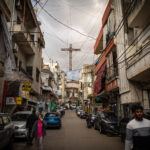
For many Venezuelans trying to eke out a living amid scarcity and hyperinflation, such as binational communities along the Colombian border and fishing families on the Caribbean coast, the specter of potential military action adds even more uncertainty, fear, and hardship to everyday life, which has grown increasingly precarious in recent years.
For a Trump administration hoping to get drugs and crime off US streets, military action toward Venezuela is likely to backfire, further destabilizing a region key to US interests while inflicting unnecessary suffering and failing to achieve its stated objectives.