








A mere 15 years ago, during an epoch that now seems as distant as the Paleozoic era, an American president attempted to use military power to prevent a dictator from slaughtering his own citizens. Barack Obama billed the action in Libya as a humanitarian intervention, citing the new United Nations doctrine of “responsibility to protect” (R2P). The president hoped to avert a massacre by Libyan dictator Muammar Qaddafi rather than, as usual, coming in afterwards to count the dead and try to bring the malefactors to justice.
Obama intervened like a global police officer, following the letter of the (international) law. Eager to be seen as a “good cop,” the president even promised to “lead from behind.” It’s impossible to know if the US-led action did indeed prevent massive war crimes. However, the disastrous aftermath of that Libyan campaign — the summary execution of Qaddafi and a civil war that would kill tens of thousands — was yet more evidence that Washington’s attempts to police the world are quixotic at best.
Public support for the Libyan action was decidedly mixed, with criticism of the president coming from all sides of the political spectrum. On the left, former Congressman Dennis Kucinich thundered that “we have moved from President Bush’s doctrine of preventive war to President Obama’s assertion of the right to go to war without even the pretext of a threat to our nation.” Steven Groves of the Heritage Foundation complained that Obama was too scrupulous in his adherence to the principles of R2P, which might only raise the bar for future US interventions.
Ah, the good old days, when the left and the right both took international law seriously enough to argue over how a US president should engage with it!
Donald J. Trump has shown no such scruples. He considers international law nothing more than a trifling impediment by which the weak try to drag down the strong. He boasts that he didn’t even bother to consult the UN when pursuing his trumped-up peace plans and creating his laughably ill-named “Board of Peace.” He certainly didn’t consider international law recently when he bombed Nigeria, seized Venezuela’s President Nicolás Maduro, and threatened to annex Greenland. He may be the first American president to treat international law as if it were as fictional as intergalactic law.
By contrast, the only principle that Trump now invokes in his foreign policy is the infamous law of the jungle. He believes that power — its threat and its exercise — is all that matters for apex predators like the United States (and himself). The rest is just the chittering of potential prey.
“My own morality. My own mind. It’s the only thing that can stop me,” the amoral Trump told the New York Times in a recent (and terrifying) interview. “I don’t need international law.”
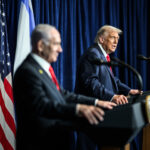
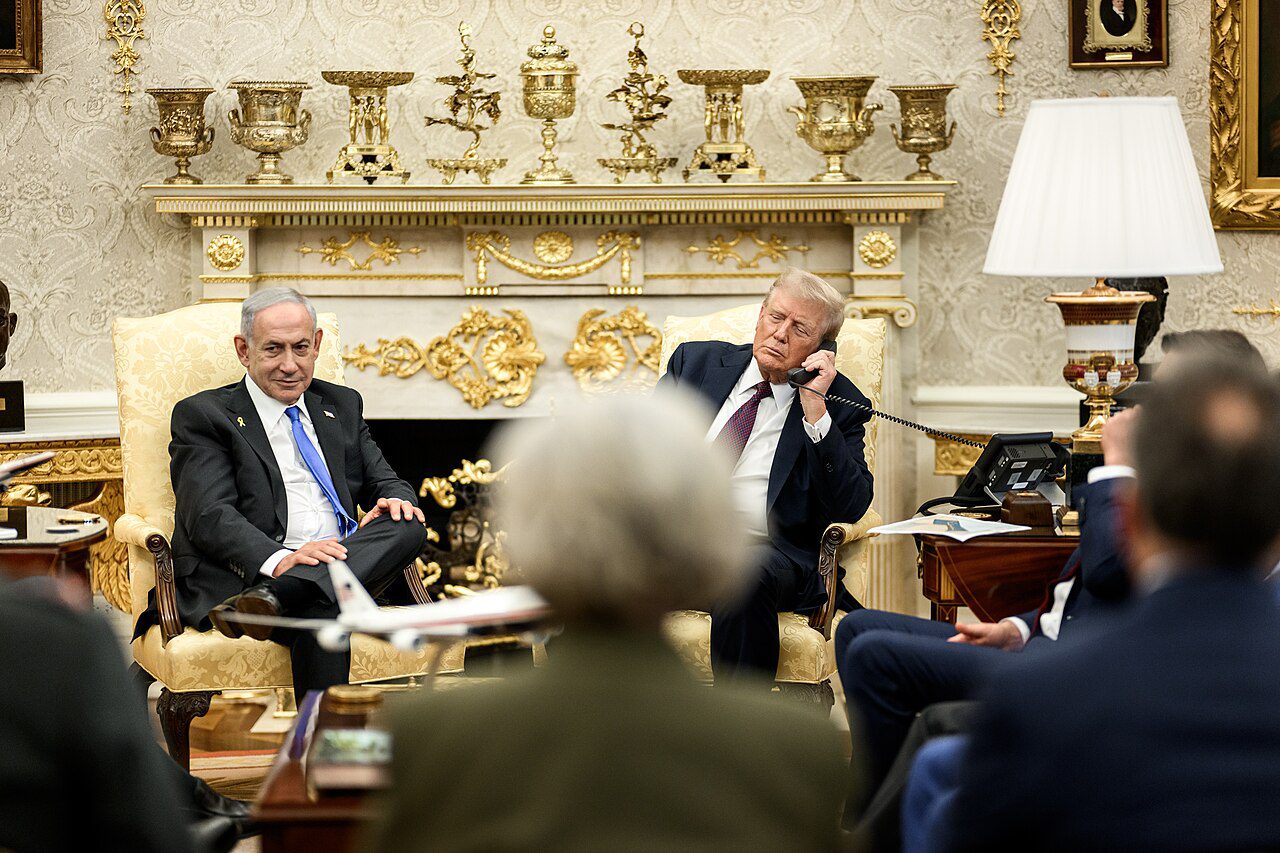
Global cop, then, would not seem to be a suitable aspiration for the likes of Donald Trump. Unlike Obama, he’s not interested in making sure that laws are observed and miscreants punished. Instead, Trump practically fawns over the miscreants: Russia’s Vladimir Putin, Israel’s Benjamin Netanyahu, Saudi Arabia’s Mohammed bin Salman. The duties of policing the planet — both the adherence to law and the expenditure of resources — simply don’t appeal to him.
“We’re spending tremendous amounts of money for decades policing the world, and that shouldn’t be the priority,” Trump said back in 2018. “We want to police ourselves and we want to rebuild our country.”
That was the old Trump. The new Trump looks at things quite differently.
Maybe when you hear the expression “world’s policeman,” you think of Officer Clemmons on the once-popular children’s TV show Mister Rogers’ Neighborhood: a genial upholder of community morals, but on a global scale.
Or maybe you’re like former NATO head Anders Fogh Rasmussen who, in 2023, pined for an upright world policeman with superpowers and lofty principles. “We desperately need a US president who is able and willing to lead the free world and counter autocrats like President Putin,” he wrote. “The world needs such a policeman if freedom and prosperity are to prevail against the forces of oppression, and the only capable, reliable and desirable candidate for the position is the United States.”
Donald Trump doesn’t want either of those jobs.
But let’s face it, that’s not how a large number of police officers actually operate. In 2025, police across the United States killed 98 unarmed people, the majority people of color. The misconduct of more than 1,000 dirty cops in Chicago — ranging from false arrests to the use of excessive force — cost that city nearly $300 million in court judgments between 2019 and 2022 alone, a pattern repeated at different magnitudes across the country and still ongoing, given the recent ICE killings in Minneapolis.
Elsewhere in the world, the police suppress dissent and fill prisons at the behest of dictators from Russia and North Korea to Saudi Arabia and El Salvador.