









After 16 years in Lebanon, Mai* wheeled the three bags of her belongings into the departure hall of the Beirut-Rafic Hariri International Airport. She was finally returning home to Nepal. “I don’t really know how to feel,” she said, her voice uncertain.
Mai spent most of her decade and a half in Lebanon working for an employer who eventually fled the country, leaving her homeless, undocumented, and emotionally torn. He had failed to pay her wages for years before he simply abandoned her.
Clutching her newly issued passport, she was escorted to the General Security desk at the airport, where her unpaid visa fines — accumulated over six years — were settled by a nonprofit called KAFA, which advocates for migrant domestic workers’ rights in Lebanon.
Just days before, the 34-year-old domestic worker had been left sitting outside a building in Beirut’s Hamra district, abandoned by her long-time employer, a retired Lebanese doctor. She had been living and working in his home since 2012 — unpaid for the last six years.
We first became aware of Mai Dong’s case in 2022, when advocacy group This Is Lebanon issued a public appeal for information on the whereabouts of a Nepali domestic worker whose family claimed she was being manipulated into working without pay. The group uses social media to pressure employers into improving their treatment of domestic workers.
With support from This Is Lebanon, who helped locate Mai’s family, we traveled to her family home in the mountain village of Lidi, near Nepal’s border with China in June 2022. The journey took a full day of driving from Kathmandu and another day of climbing.
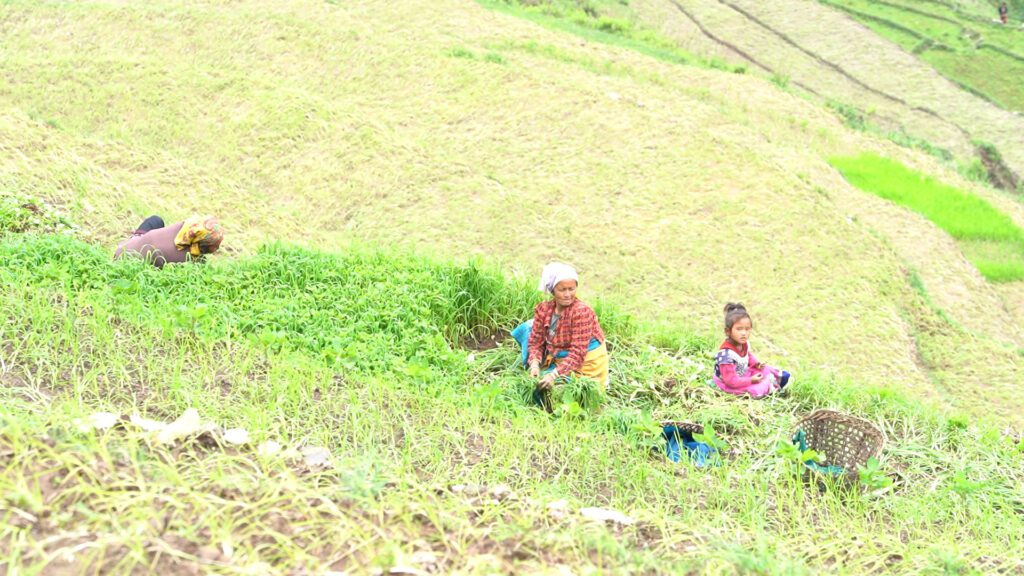
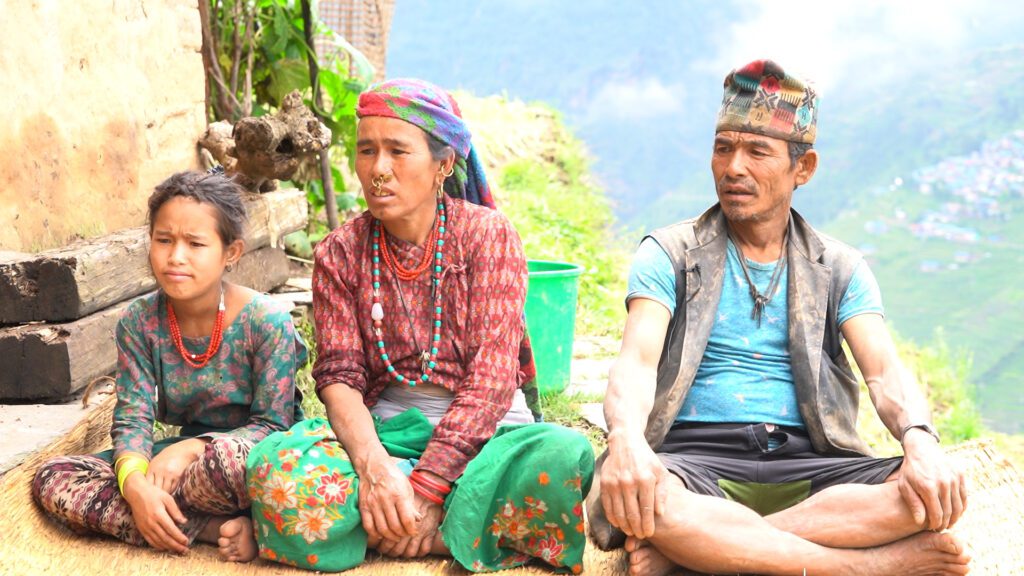
Sitting on the porch of her house in the picturesque but remote village of Lidi, Mai’s mother, Nima, explained that she had encouraged her daughter to leave.
“She wanted to go, and I told her to,” she said. “If she stayed in the highlands, she would not have learned anything. People who go abroad come back with knowledge and money for the family, so I said, ‘Go’.”
Her parents said she hadn’t sent money back to Nepal in years, and in the occasional conversations they were able to have with her, she always said she was coming home soon but the promised return kept being delayed.
Efforts to locate Mai in Lebanon, led to an apartment in Beirut, where she was believed to be living.
Years of uncertainty about Mai’s whereabouts — and assumptions that she was being hidden — revealed a more complex reality. Migrant workers under the kafala system, a widely criticized set of laws and policies that define relationships between migrant laborers and their employers, are not always physically imprisoned, but they can still be trapped — economically, legally, and psychologically.
In Lebanon, an estimated 250,000 foreign domestic workers — mostly from Ethiopia, Philippines, Bangladesh, and Sri Lanka — face a flawed system that fails to protect them. Although kafala translates to “sponsorship,” the system grants employers excessive authority over workers, enabling exploitation and abuse.
The system effectively strips workers of independence, leaving them vulnerable to exploitation with little legal recourse.
Mai appeared calm and healthy at first. She led us into the home of Dr. Nawaf Abdallah, 84, a retired psychologist who lived with his wife in a dimly lit top-floor apartment. Most of the furniture was covered in plastic; the windows were sealed shut and the room felt isolated from the outside world.
On that first visit — and across several others between September 2023 and April 2025 — Abdallah’s appearance remained largely the same. He often wore a vest and track pants, and at times, he answered the door in his underwear. While physically drained, his attitude would shift sharply when questioned about Mai’s status. He grew defensive and aggressive whenever the topic turned to unpaid wages or expired residency papers.
“What do I call you? Tell them!” the doctor demanded.
“My daughter,” Mai replied.
“What do you call me?”
“Baba,” she answered, using an Arabic word for dad.
This exchange was one of several attempts by Abdallah to sidestep questions about Mai’s status. When asked whether Mai would inherit anything, since he claimed to see her as family, Abdallah shook his head.
“I don’t mean it like that,” he said.
As the visits continued, it became clear that Mai’s situation was shaped not just by labor exploitation, but by a profound emotional entanglement. Many, like Mai, become emotionally dependent on their employers — trapped in controlling employment arrangements through fear, loyalty, and isolation under the kafala system.
Such emotional entanglement is routine under Lebanon’s kafala system, according to Noura Makarem, a case manager at KAFA. “It’s very common for migrant domestic workers to form emotional bonds with their employers due to psychological manipulation. Often, they are isolated from their families and communities, and entirely dependent on the employer for legal status and survival. This is directly tied to the Kafala system.”
Mai spoke more openly in cafés and public spaces away from the apartment. Over the course of 18 months, it became clear that she had no set working hours and was expected to be available at all times. Her responsibilities extended beyond housekeeping to caring for both Abdallah and his wife.
She assisted with daily hygiene for the wife, including bathing, and reminded both of them to take medications. She often accompanied them to hospital appointments.
At first, Mai insisted that everything was “okay.” But over time, across a series of in-person and phone conversations, she began to open up. Some weeks, she expressed a desire to return home to her family in Nepal. Other times, she hesitated, conflicted between her longing to leave and a strong sense of loyalty to Abdallah.
“It’s very common for migrant domestic workers to form emotional bonds with their employers due to psychological manipulation.” – Noura Makarem
She often said she wanted her unpaid wages, but didn’t want to “pressure him.” The contradiction she struggled with was obvious: she repeatedly claimed she would leave because she knew it was best, yet never followed through.
Even small decisions triggered fear. Once, when she told Abdallah she wanted to return to Nepal, he warned her the plane might crash due to rain — despite it being the middle of summer. The comment unsettled her, and she dropped the idea.
Though she was allowed to carry her phone and go out for errands, she was expected home by 7 p.m. sharp. The curfew was just one of many ways Abdallah maintained control over her movements. At one point, during a meeting in the Beirut neighborhood of Achrafieh, she expressed visible fear after staying out too long, repeatedly saying, “He’s going to ask a lot. He might fight with me.”
The fear of conflict, even over a minor delay, only added to the psychological pressure she already lived under.
Mai kept her phone and could speak with her family. But over time, she said she had forgotten much of her native Tamang language, making conversations with her parents difficult.
Mai’s case languished for years. Lebanon is a state with few functioning government institutions, and abuse of domestic labor is a serious problem for which few perpetrators face consequences. Mai’s family first contacted Nepal’s consulate in Beirut in 2019, reporting that she had not sent money or been paid for years. The consul, Elcheikh Mohamad, said both Mai and her employer were summoned to the consulate.
“At first, the employer was very polite,” he recalled. “But when we raised the issue of wages, he changed completely. He said he would only pay her in Lebanese pounds, which at that point was worth just a few dollars. He insisted that this was their agreement.”
Despite efforts by the consulate and NGOs to intervene, Mai remained unwilling to leave Abdallah. She refused offers of shelter and defended him in front of officials. Much to the frustration of her family, aid and community workers, Mai was reluctant to blame Abdallah. In her mind, it seems, he had treated her well and looked after her.
Mai recounted arriving in Lebanon in 2009, at just 18 years old — and being placed in a different home, where she suffered physical abuse. “I wasn’t paid for six months,” she recounted. “There was no food or drink. He used to chain me up so I couldn’t go out.”
She escaped and was temporarily moved between different homes before meeting Abdallah. Compared to her first employer, Abdallah appeared kind, stable, and gentle. But the dependency that followed created a different kind of captivity.
Still a teenager, vulnerable and likely traumatized, Mai was taken in by Abdallah and put to work. “I changed her life,” Abdallah insisted. “She was living on the streets and being beaten. I empathized with her. I sacrificed for her.”
Yet, after six years of work, he stopped paying her. When she questioned him, he blamed Lebanon’s collapsing economy or claimed he’d pay her when she left the country.
She continued to work, hoping his promise would eventually be fulfilled. Meanwhile, her family back home waited for updates — and financial assistance — that never came.
In April 2025, the situation changed. Dr. Abdallah booked a trip to South Africa and arranged a flight for Mai to Nepal. But under Lebanese law, she would have been detained at the airport for overstaying her visa, which had expired in 2019.
The risks were explained to her. Despite everything, Mai continued to hope that Abdallah would pay her before leaving. But on April 11, he packed his bags and left, abandoning her on the pavement outside the apartment with only $200.
KAFA stepped in to provide shelter. For the first time, Mai agreed to file a formal complaint. “He hasn’t paid me since 2019,” she said. “He was supposed to give me $150 a month. He owes me $10,800.”
Two weeks later, she stood at the airport, preparing to return home. Mai eventually boarded a flight headed for Dubai, and then continued onward to Kathmandu, where she would eventually see her family, with only $400 in her pocket.
After over a decade in bustling Beirut, she had learned Arabic but lost most of her native Tamang. Now, she was returning to a remote mountain village, far from the life she imagined — and with little to show for the years she spent away from her family.
*Indicates the use of a pseudonym for safety and privacy.