









Vandenberg Space Force Base, “the missile capital of the free world,” is the only place in the US where intercontinental ballistic missiles (ICBMs) launch. It was claimed by the Air Force in 1956 and “designed to fire in anger at Russia” in the event of nuclear war.
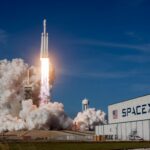
Vandenberg launched an unarmed missile on Nov. 5. The launch generated some anxiety after President Donald Trump vaguely announced the US should resume nuclear testing. The statement followed an unarmed ICBM test conducted by Russia. Vandenberg’s test, scheduled years in advance, measured the “ongoing reliability, operational readiness, and accuracy of the ICBM system” according to the Air Force.
In 1959, it was where the first nuclear-armed ICBM in the US went on alert and where the first operational launch squadron was formed. Every type of ICBM made in the US has gone through operational tests at Vandenberg. Every missile squadron trains there. It remains the “proving ground” for the land-based leg of nuclear warfare.
In Vandenberg’s first decade, pretend nuclear war was staged a thousand times. ICBMs tested to an audience of engineers, generals, world leaders, and civilians. The successes, failures and near misses at Vandenberg in its hey-day offer a glimpse at a possible future should nuclear tensions return to Cold War heights.
Early on the morning of Oct. 26, 1962, a ball of fire rose from the west. At the height of the Cuban Missile Crisis, Vandenberg Air Force Base launched an intercontinental ballistic missile. It was unarmed, just a routine test flight. But days before, Strategic Air Command had taken control of all ICBM launch bases, even the test silos at Vandenberg, mating nine ICBMs with nuclear warheads and aiming them toward the Sino-Soviet Bloc. As Washington and Moscow sought to avert nuclear war, Vandenberg lit a match.
Scott D. Sagan first uncovered the potentially catastrophic episode of the Cuban Missile Crisis in his book The Limits of Safety. “Whether Soviet intelligence sources picked up the US ICBM launch is not known,” Sagan wrote. Evidently, no one “imagined the possibility that Soviet intelligence might learn of the launch just as it was taking place, and then misinterpret it as part of an actual attack.”
Sagan called the Vandenberg launch a demonstration of the inherent perils of nuclear weapons systems. Massive, interlocking but deliberately opaque organizations with complex technologies were tested for the first time that October.
Publicly, the Strategic Air Command (SAC) called operations during the missile crisis a complete success. It doubled the amount of ICBMs on alert in the country. SAC said it canceled training exercises. It praised Vandenberg’s Atlas, Titan, and Minuteman squadrons’ emergency combat capability, “which takes precedence during times of emergency.” At Vandenberg, it reported, the SAC’s system of positive control ensured that “no individual can launch a missile accidentally or irresponsibly.”
Despite its reports to the contrary, SAC did launch an ICBM on Oct. 26. “The launch by the Air Force Strategic Air Command was described in a terse announcement as a ‘routine training,’” The Eureka Humboldt Standard wrote the following day.
A history of the crisis told by missileers stationed at Vandenberg bears no mention of the test launch. Instead, missileers described how SAC commandeered operations and locked down the base. Engineers tasked with readying the missiles for war were surveilled by helicopter and escorted by armed guards. Men carried target coordinates in briefcases handcuffed to their wrists.
SAC commander-in-chief Thomas Power, possibly the real-world analogue of Dr. Strangelove’s Jack D. Ripper, controlled the country’s ICBMs and bomber planes. That fact unnerved his contemporaries. “I used to worry that General Power was not stable,” another Air Force general said.
Tensions between Kennedy’s whiz kids and the military, stoked by the Bay of Pigs failure, funding cuts to weapons development, and distrust over the efficacy and control of ICBMs, simmered during the crisis. Retrospectively, ExComms members debated the extent of Kennedy’s anxiety about losing control of his own military.
The generals were largely shut out of strategic meetings. When they did get the ear of Kennedy, they pressed for preemptive military strikes against Cuba.
Air Force Chief of Staff Curtis LeMay, another Strangelove double, mourned the lost war openly: “We could have gotten not only the missiles out of Cuba, we could have gotten the communists out of Cuba.”
In General David Burchinal’s recollection, “[Defense Secretary Robert] McNamara was not fond of the Strategic Air Command.” He also said Kennedy’s administration “did not understand what had been created and handed to them… complete nuclear superiority over the Soviets.”
The generals were itching for World War III — the Second World War, after all, had launched their careers. With LeMay and Power at the helm, the US Air Force killed hundreds of thousands of civilians with firebombs and atomic bombs in Tokyo, Hiroshima and Nagasaki. Power testified to Congress that conventional bombs that would risk a counterattack should not be used in future wars. “I have a deep moral sense as it applies to Americans,” he said, later adding that “in a certain type of small war, we should use nuclear weapons.”
In this context, some call the test flight on Oct. 26 a deliberate provocation. But if it was intentional, no one took credit for it. “I don’t think this was provocation. This was mindlessness,” Sagan told Inkstick. “To me, it suggests that crises can get out of control more easily than people sometimes imagine.”
Sagan quoted John F. Kennedy’s summary of the U-2 incident: “There’s always some son of a bitch who doesn’t get the word.”
The 1st Strategic Aerospace Division at Vandenberg had nuclear-armed ICBMs on alert intermittently from 1959 to 1973.
Sagan once wrote Vandenberg was a “test site in peacetime and crises, and a launch site in war.” He does not know if that remains true today.
“This was mindlessness.” – Scott D. Sagan
In his research for The Limits of Safety, Sagan learned that no one in Washington knew about the launch. No one was named responsible, no one investigated, and critically, nothing changed.
The crisis unfolded during a rapid, dangerous time for ICBM research and development. The first generation of ICBMs proved unreliable and prone to disassemble shortly after lift-off. Atlas D had “troubles,” the Air Force conceded, but Atlas E would be different. The very first launch of Atlas E exploded, destroying its coffin silo in the process.
At its peak in the early 1960s, the base was firing around 120 missiles per year. Workers assembling, test launching, and clearing away the wreckage after launches to make way for the next one, were working long hours.
Lompoc, the California city just north of Vandenberg, could see more than one failed launch a week at the time, with explosions spreading a “black, donut-shaped cloud 15,000 feet high” or showering “confetti-like metal over the east end of the base.” Six test launches ended in explosions, one after the other, in the fall of 1963.
There wasn’t just the risk of being struck by an errant chunk of metal. The launches also made Vandenberg a target for military strikes.
“For the first time, the Cuban business gives our people real cause to think about the modern method of getting blown to smithereens,” Redlands Daily columnists wrote. The Air Force launched missiles from Vandenberg for years they said, but “that doesn’t quite implant the idea that you are sitting on the bullseye of somebody else’s rocket target.”
What Vandenberg was signalling with its test launches did seem to cross the minds of officials eventually. In 2013 and 2022, Vandenberg delayed test flights in response to “escalated tensions” first with North Korea, then Russia. Officials said they did not want the test launch to be mistaken for the real thing.
The 2022 delay was prudent, Sagan said. “There is no rush to get information about reliability. There is a priority to reduce misunderstandings,” Sagan said, explaining that the trend may not hold with the current White House. “I think this administration has shown that occasionally it can behave with a degree of reckless abandon.”
Regardless of what Trump wants — and that remains unclear — there’s still the problem of the long-delayed and over-budget Sentinel, the ICBM meant to replace the Minuteman III. The Minuteman III has been in operation for 50 years though it was only planned for 10. The Air Force is facing “aging facilities, aging infrastructure, and parts obsolescence.”
Whenever a test flight fails at Vandenberg — most recently in 2018, 2021, and 2023 — doubts emerge, reassurances are issued by the Air Force. The Sentinel’s first test flight, which would launch from Vandenberg, has been delayed twice. Like its predecessors, the Sentinel would travel 5,000 miles to strike Mid-Corridor, a chain of islands on the Kwajalein Atoll in the Marshall Islands. Since 1964, Vandenberg launches have terminated there.
QB Keju was born on Kwajalein Atoll in 1955. He lives in Costa Mesa, California, but the Marshall Islands are his home. He’s running for the Marshall Islands Senate in 2027.
The ICBMs Vandenberg launches have a “devastating effect on the livelihoods of Marshallese people,” Keju said. Many are still barred from returning home. Mid-Corridor sits in the middle of Kwajalein. During test launches, no one can go anywhere.
Marshallese people suffer the effects of carcinogens and hazardous waste sloughed by US military installations, including 67 nuclear weapons tests conducted from 1946 to 1958.
On Kwajalein, the US poisoned the coral reefs with waste from the Army Garrison. Eating reef fish, a staple in Marshallese diets, carries a “cancer risk and non-cancer hazard” deemed unacceptable in a 2019 US Army report.
Through a Compact of Free Association, the US pays the Marshall Islands to host its military bases and let the military operate with impunity.
A few landowners in Kwajalein have become millionaires, but they’re all reliant on US spending, even if it’s just the roughly $200 quarterly check each Marshallese resident gets. It’s hard for Keju to imagine landlords on Kwajalein ending their arrangement with the US military. “Sure, it’s good money,” Keju told Inkstick. “But what effects does it have in the long run?”
Meanwhile, the water is rising around the Marshall Islands. The Runiot Dome, a massive depository of the US’s radioactive waste on Enewetok Atoll, is cracking. The archipelago is especially vulnerable to the effects of climate change. To Keju, you can’t tackle climate change without addressing the US military operations, including today’s ICBM tests. Climate activists in the Marshall Islands are also up against “the big leaguers, the United States, our mother country,” Keju said.
Keju has protested during ICBM launches at Vandenberg alongside MacGregor Eddy and Leah Yananton. Eddy has been around for the past 20 years and Yananton for the past two. They spoke to Inkstick about the need for nuclear abolition, and the ICBMs launched in their backyard.
There’s a long tradition of protest at Vandenberg, about as old as the base itself. Daniel Ellsberg, leaker of the Pentagon Papers, was one of the Vandenberg 15, a group of demonstrators arrested in 2012. Their case generated so much press that Vandenberg started launching late at night, stopped announcing launches well in advance, Yananton said.
Eddy joined protests at Vandenberg as the US was building to the Iraq invasion in 2002. Vandenberg, with its military satellites, drones, and missiles was a “one-stop shop for peace activists,” she joked. The ICBM launches at Vandenberg didn’t make an impression on her for a few years. “It’s not hidden, but it’s routine.” People have forgotten what ICBMs stand for. Vandenberg ICBM flights are a “rehearsal for our world ending,” Eddy said.
Trump actually did the Vandenberg protesters a favor by attracting more attention to the oft-forgotten program, she said.
Emma Claire Foley, an organizer with Defuse Nuclear War, helps coordinate the Vandenberg protests. “I’m increasingly convinced the only thing that’s going to move the needle is public support for a better status quo,” she told Inkstick.
Watching the ICBMs launch from Vandenberg, the spectacle and the ultimate purpose, nauseates Yananton. She goes to witness and to publicly oppose the idea that nuclear weapons contribute to national security.
“They make us less safe, and in fact, they threaten the entire existence of the planet,” she said. “It needs to be dismantled. We need to invest in human well-being, human longevity, [and] human sustainable systems. This is old technology from World War II Nazi scientists,” she went on, referencing Operation Paper Clip and the Nazi engineers who were absorbed by the ICBM program. “We should value life, right?”