






On Oct. 9, 2025, the world exhaled. Cameras rolled, leaders shook hands, and headlines declared the news: A US-backed ceasefire had been brokered in Gaza after two years of relentless Israeli bombardment. From Washington, Donald Trump promised, “Nothing is going to jeopardize” the ceasefire. He added with typical bravado, “If they [Hamas] are not good, they are going to be terminated.”
But what would happen if Israel were considered “not good”?
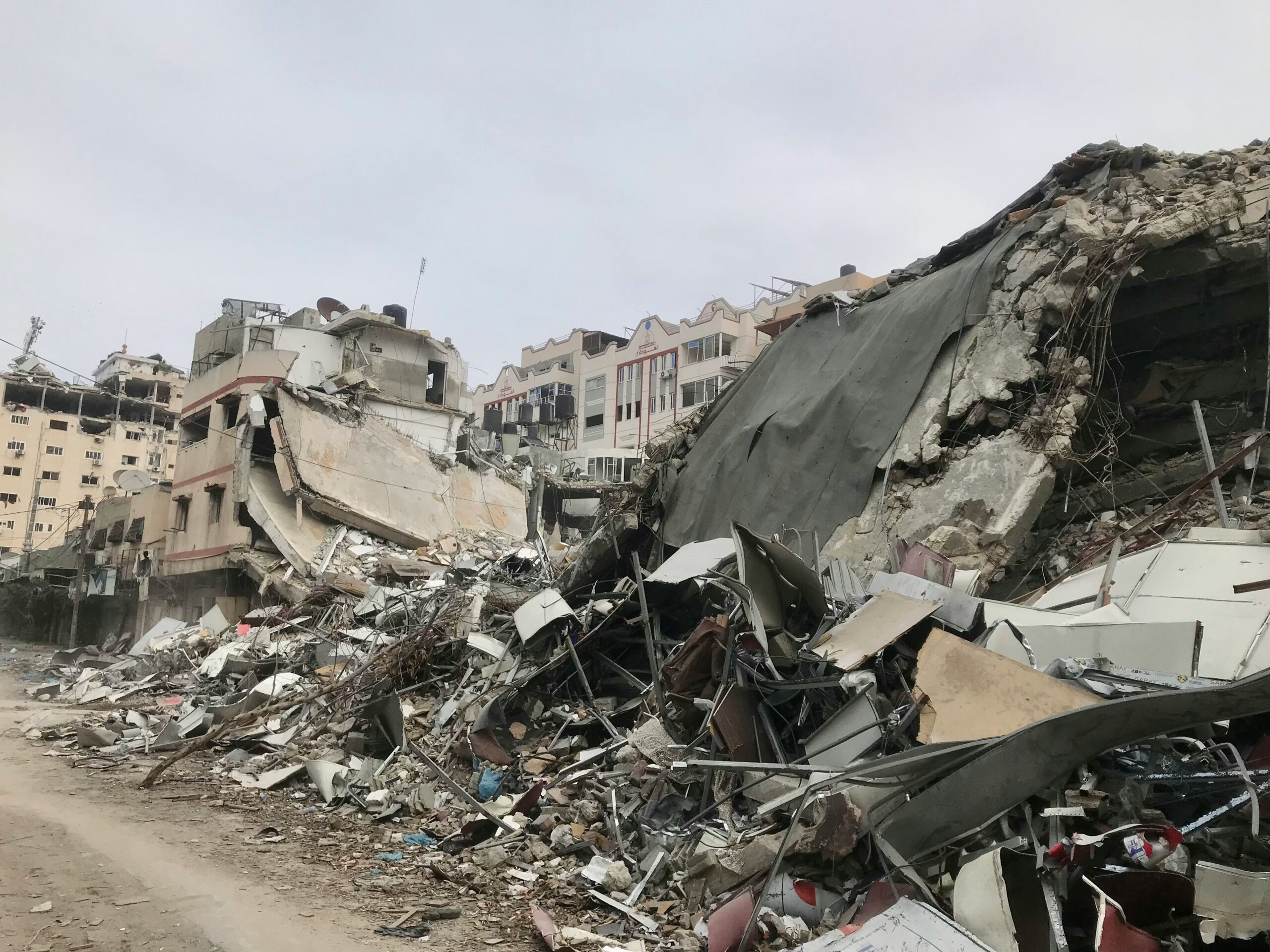
The peace was claimed to be made, but in the streets of Gaza, where the smell of ash clings to clothes and the sky is never still, people knew better. “Ceasefire? What ceasefire?” asks Mohammed Washah, 26, standing on the rubble of what was once his family’s home in Al-Bureij.
He relives the moment a strike hit his brother’s house. “We were sitting together as a family after Maghrib prayer, sipping tea, talking like we always did. And then… the light turned red, the ground shook, and the world disappeared.”
It was Oct. 19, just 10 days into the so-called ceasefire. The Israeli strike killed 10 members of Washah’s family, including his brother Ibrahim, 30, his wife, and their toddler son. Only a four-year-old daughter survived. “Ibrahim had just enrolled her in kindergarten. He was so proud,” Washah says, eyes fixed on the shattered window frame. “He told me, ‘She’s growing up, finally ready for school.’ Now she’s an orphan.”
Washah himself was lightly injured in the blast. His daughter was in his arms. Beside him, his niece screamed. He handed the children off to a neighbor, then rushed back to find the rest of his family. “I couldn’t find my mother. My father was under the rubble, his head bleeding. I screamed for Ibrahim. He was just here… half a meter from me.”
Neighbors joined the frantic search. They pulled Washah’s mother out — she had been pinned beneath debris, only her hand visible. She survived. But his brother, sister-in-law, and their son were gone. A cousin, just six, who had survived an earlier airstrike, died beside them. “There were no bodies,” Washah says. “Just pieces. That missile erased them.”
The Gaza Media Office reports that Israeli forces violated the ceasefire 125 times within the first 10 days, killing 94 Palestinians and injuring 344. Human rights groups believe the true number is higher. On Oct. 29 alone, Israeli strikes killed 104 Palestinians, including 46 children, the deadliest day since the truce began. And yet Trump insisted, “The ceasefire holds.”
For many in Gaza, those words are meaningless.
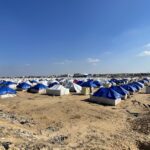
On a plastic chair beneath a tarp in Deir al-Balah, Ibtisam Abu Jreiban, 53, peels onions in the fading light. A chicken clucks nearby, and the wind carries dust across the barren lot where her five-story home once stood.
“They say the war is over,” she says. “But every day I hear bombing. If the answer is peace, why am I still in a tent?”
Abu Jreiban has been displaced since Oct. 7, 2023. A grandmother of nine, she fled her home in Wadi al-Silqa with her family under a hail of bombings. They first went to a school, but her asthma made it unbearable. “I couldn’t breathe in the classrooms,” she says. “So I went to stay with my daughter. But I didn’t want to be a burden. I’ve always lived free.”
In February, against the warnings of her children, she returned to her home. “They said it was too dangerous. But I told them, ‘It’s one death. Let me die in my house.’”
For 50 days, she stayed. “Every day there was bombing. My neighbors died. I saw bodies,” she recalls. One day, Israeli troops torched her home. She stood there, powerless. “I watched my house burn. My house. The one I built with my own hands. I lifted those stones. I planted those olive trees.”
Eventually, her sons and grandchildren convinced her to leave. She moved into a rented plot of land, pitching a tent with help from her sister. “But even that felt like too much,” she says. “I don’t want to be a burden. So I moved again, to this camp. It’s not home, but it’s something.”
The illusion of a ceasefire is perhaps more cruel than war itself. It dangles the promise of safety, of renewal, of return—then shatters it with another blast.
Despite the announced ceasefire, life is still a tangle of hardship as few aid trucks are allowed. While hundreds of trucks were permitted to enter with the ceasefire, thousands are needed daily, the UN said. For that reason, Bread is scarce. Firewood, when it can be found, costs more than Abu Jreiban can afford. Her husband, a diabetic, can’t eat the food provided by charity kitchens. Her 12-year-old son wets the bed, terrified by every sound. She herself ventures dangerously close to her old home to gather wood, braving sniper fire and artillery.
“They say there is a ceasefire,” she says, “but I risk my life for kindling. What kind of peace is that?”
Back in Al-Bureij, Washah stares at the spot where his brother used to sit. “We had plans,” he says. “When goods began to return to the markets, Ibrahim said he would go back to distributing merchandise. He wanted to rebuild our home.”
They had moved to an older house after their original one was destroyed earlier in the war. It was cramped, but they made it work. “Ibrahim kept talking about the future. He was ready to live again.”
Instead, he died in the rubble of a truce.
“We were just sitting, laughing. Drinking tea,” Washah says. “We had no weapons. No ties to any group. Nothing. We were just a family.”
He pauses.
“The ceasefire is a lie,” he says finally. “Just ink on paper. A performance for cameras.”
Since the truce, Gaza has remained a war zone. The United Nations has documented repeated violations. Shelters are overcrowded. Food is rationed. More than 1.9 million people have been displaced. There are still days when aid trucks can’t pass through. Hospitals are barely functioning. And more than 67,000, including 20,000 children, have been killed since the war began, according to the Gaza Health Ministry. Thousands more have been orphaned.
“We celebrated when the ceasefire was announced,” Washah remembers. “People filled the streets shouting Allahu Akbar. It felt like life might begin again.”
Instead, the bombs kept falling.
“I miss my home,” Abu Jreiban says, pressing a trembling hand to her chest. “I miss the smell of my garden, the lemons, the olive trees, and the grapes. I used to press olives with my hands and save the oil for the whole year. Now, I finish a dish with one olive and a plate of oil.”
She wants to return, but the landscape is unrecognizable. Streets have vanished. Fields are bare. She fears landmines. The price of living is unbearable, and winter is coming. “I just want a tent that can survive the cold,” she says. “I want a home, not someone else’s charity.”
Still, she has hope. “If they let me go back tomorrow,” she says, “I will kiss the ground. I will plant again. I will build again. I will hold the stones of my home and cry for what I lost.”
The illusion of a ceasefire is perhaps more cruel than war itself. It dangles the promise of safety, of renewal, of return—then shatters it with another blast. For the people of Gaza, peace does not come with a signature on paper. It comes with silence. With rebuilding. With a future unclouded by drones.
Until then, Washah carries his niece to school, the daughter left behind by a father who had dared to hope. Abu Jreiban kneads dough with calloused hands and dreams of trees.
And in the place where homes once stood, the wind blows dust over graves and memory alike.
“We are still here,” Washah says. “Like the olive tree. Deep roots. Even if they burn us down, we rise again.”