







The Central African Republic is the site of the latest chapter in Russia’s shifting security architecture on the continent. Following years of influence by the Wagner paramilitary group, officials in the Central African Republic (CAR) have said that Russia has asked the government to replace it with Africa Corps and to pay in cash, rather than minerals. CAR is hesitant, but may have few options. The tenuous negotiation is emblematic of the Kremlin’s attempts to more closely control its vast mercenary network.
The discord is noteworthy in part because Russia’s relationship with CAR has been as close as that with many other African countries. Since late 2017, this relationship has centered on a security partnership in which the Wagner mercenary group provides extensive security support to the CAR government in exchange for access to the country’s resources, such as gold and timber.
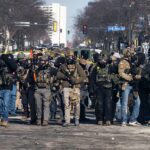
As part of this arrangement, the CAR government has leaned heavily on Wagner to protect officials and to ensure civil obedience, particularly in moments of social and political tension. For example, in the lead-up to a controversial constitutional referendum in 2023 that eliminated presidential term limits, Wagner sent hundreds of fighters to the capital, Bangui, to quell any potential unrest.
Wagner personnel also support daily policing operations and can be seen scattered throughout Bangui at all hours of the day and night, serving as a corollary to the country’s national police force.
Russia’s desire to shift its security support in CAR from Wagner to Africa Corps is following a broader trend. On June 6, Wagner announced a full withdrawal from Mali, where it had been supporting the junta government’s counterterrorism efforts since 2021. The Russian government then announced that Africa Corps will be taking over security operations in the country moving forward. This came after Wagner forces had suffered from serious attacks at the hands of armed groups, including one in July 2024 in which 84 Wagner fighters were killed in an ambush in northern Mali.
Since Prigozhin’s failed effort to overthrow Vladimir Putin’s government in an attempted coup in June 2023, Putin has been wary of Wagner’s strength and autonomy.
For years, Wagner was under the control of its founder, Yevgeny Prigozhin, and served as a semi-autonomous mercenary group that cooperated with the Kremlin on global security efforts. But ever since Prigozhin’s failed effort to overthrow Vladimir Putin’s government in an attempted coup in June 2023, Putin has been wary of Wagner’s strength and autonomy.
Following Prigozhin’s death in August 2023, the Russian government has shifted Wagner fighters to Africa Corps — a paramilitary group housed under the Russian Ministry of Defense, and thereby under the direct control of Moscow.
The difference between the two mercenary groups not only has to do with the fact that the Russian government more directly controls Africa Corps, but also with the strategy each takes in its security operations. Whereas Wagner has engaged in direct counterterrorism operations across various countries in Africa, Africa Corps is a more risk-averse institution and works mostly on providing training and logistical support to local armies in order to bolster their counterterrorism activities.
Russia is looking to recalibrate its security operations on the continent to better match its limited capacity as well as its desire to more directly control Russian-sponsored security operations, according to John Lechner and Sergey Eledenov. This latest move seems to be an extension of this recalibration.
But the CAR government is pushing back. A CAR official told the Associated Press that the Central African government prefers Wagner’s forces to Africa Corps’ because Wagner has “connections with the officers, are feared operationally and have the resources.”
Another CAR official told the AP that Russia was also requesting that CAR not only pay the Russian government an undisclosed amount in cash as payment for Russia’s security support, but also cover the costs of stationing Africa Corps personnel in the country. Amounting to a sum in the millions of dollars, the CAR official claimed that this surpasses what CAR can afford.
The question now becomes whether or not Russia will force CAR to accept its proposal. As one of the poorest countries in the world, CAR lacks the capacity to sustain its own security operations in the face of armed groups, which operate throughout the country’s vast rural areas. The government is also generally unable to quell potential grassroots uprisings that have rocked the capital in the past.
This is particularly relevant as CAR’s president, Faustin-Archange Touadera, is preparing to run for a third term this December, in what will be the first presidential election since the Constitution was revised to allow unlimited presidential terms in office.
Given CAR’s limited options, Russia has considerable leverage to force the CAR government to accept the shift in their security relationship.