The development plans include a new cricket stadium in Jaffna, infrastructure upgrades, and beach resorts near Elephant Pass, a region situated at the gateway of the Jaffna Peninsula. The plans represent a critical push for growth following a severe economic crisis that gripped the country from 2019 until 2024, hitting northern and eastern provinces especially hard.
Demining organizations are now working even more closely with the government, stressing that public and international support for their work is essential for safe and lasting development. Nonetheless, many projects are moving “full steam ahead” without proper land clearance, according to MAG’s Garewal. In some cases, hospital renovations have taken place alongside demining at the same site. “That’s why we’re now trying to engage with authorities more directly.”
For their part, villagers across the northeast have learned to live cautiously. In one village, a resident says a local boy recently avoided injury after lighting a fire in a rice paddy that caused an unexploded ordnance to blow up. “He was lucky,” he says. “You never know what’s beneath your feet.”
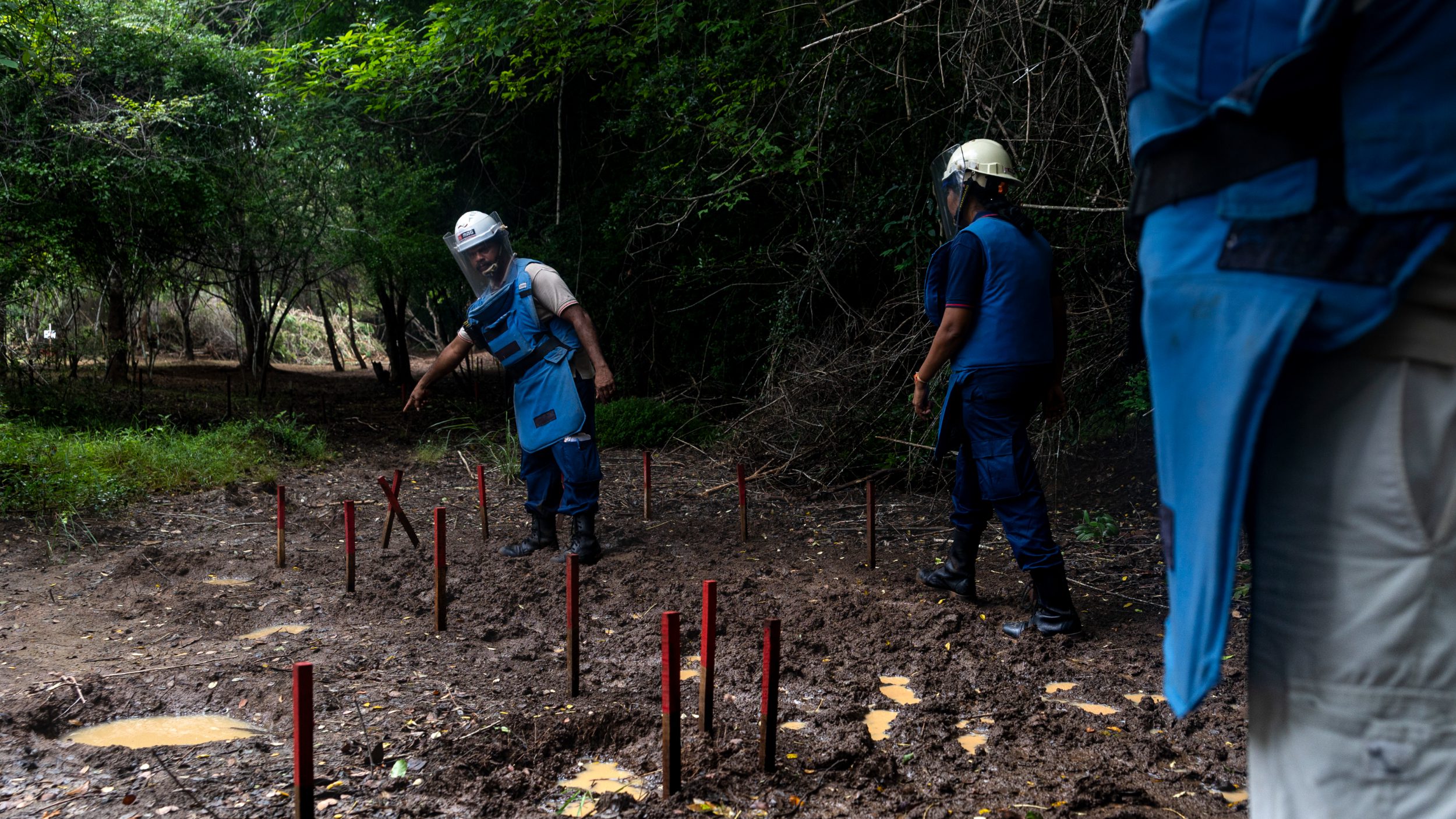
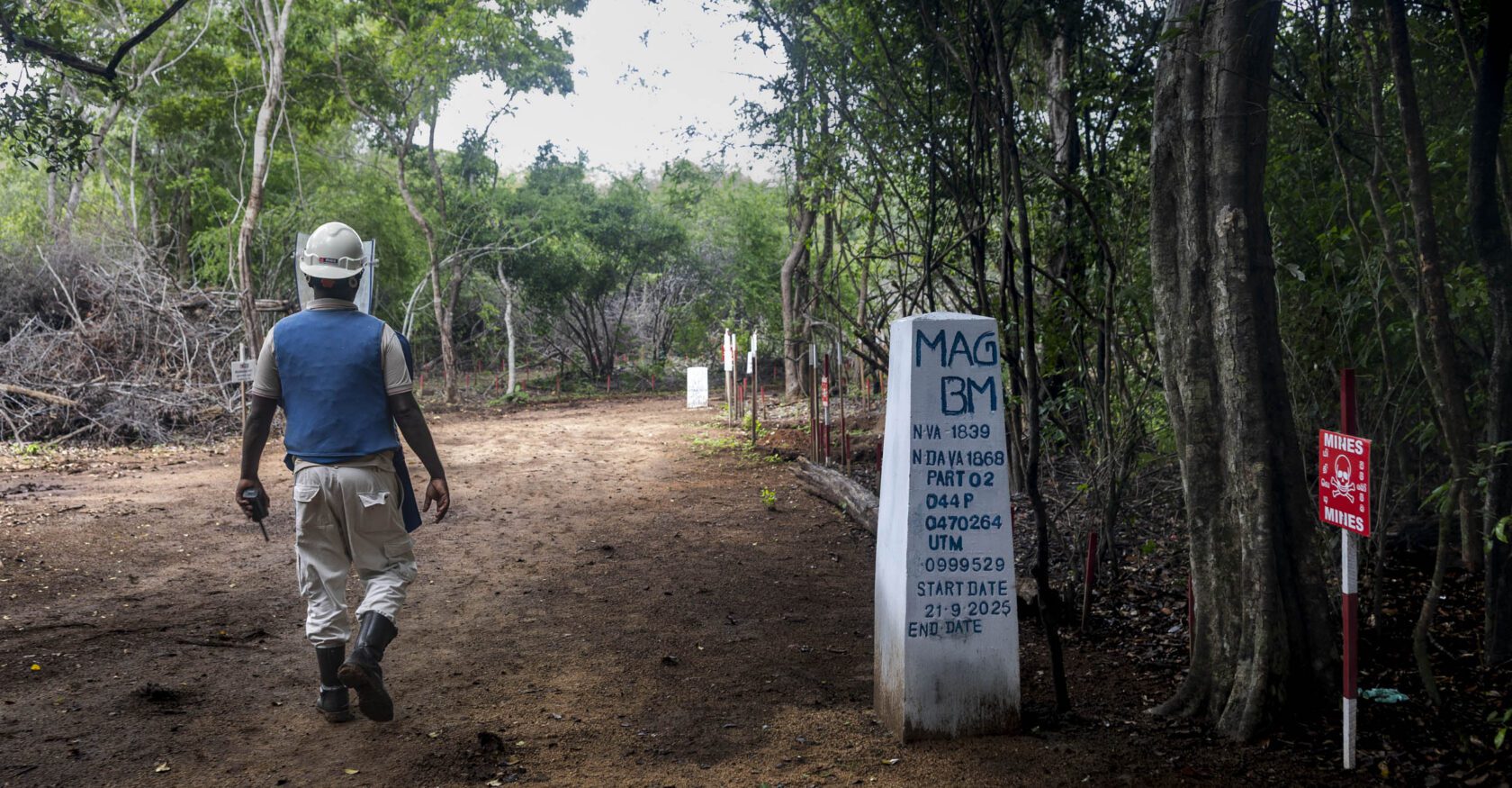
Demining, of course, is a costly and complex process. Clearance teams have to work on tropical terrain while also protecting fragile ecosystems. Because fighting often occurred in forested areas, soil metal contamination sometimes disrupts electronic detectors, and demining teams have to manually excavate unexploded ordnance after clearing the vegetation.
Strict environmental regulations, such as a government ban on removing large trees, force the demining crews to navigate dense forests, restricted to narrow working lanes. But deforestation isn’t the only challenge: In some cases, white phosphorus found in certain munitions has ignited upon contact with oxygen and left soil toxic for months, effectively ruining farmland and local livelihoods.
The exact locations of mines adds another layer of uncertainty. The minefields the Sri Lankan military laid were typically well organized and documented, but LTTE fighters often buried mines at random. Gathering information about these sites is especially difficult in areas where, for many Tamils, contact with state institutions and the military has long carried risks. Tamil communities have routinely cited harassment, surveillance, and discrimination at the hands of the state. In 2023, the US State Department’s Human Rights Report on Sri Lanka confirmed that such problems remained deeply entrenched until recently.
Garewal agrees that distrust between Tamil communities and the state has led to roadblocks in the demining process. “Until last year,” she says, “every few hundred yards, there were massive police checkpoints blocking that road from Colombo to Jaffna.”
The result is that many residents have preferred to deal with NGOs rather than the military or police. Demining organizations have responded by establishing locally embedded community liaison teams to build trust and act as intermediaries between villages and government authorities.
Further complicating the process, many communities have simply become accustomed to living alongside landmine-contaminated land, no longer viewing the unexploded ordnance as a threat so much as a fact of life. Some farmers have resisted clearance efforts, reluctant to disturb the fields they depend on for their survival. Others have turned to collecting and selling unexploded ordnance — “explosive harvesting,” in local parlance. Several people have died in the process. Younger generations, too, can struggle to understand the severity of the dangers.
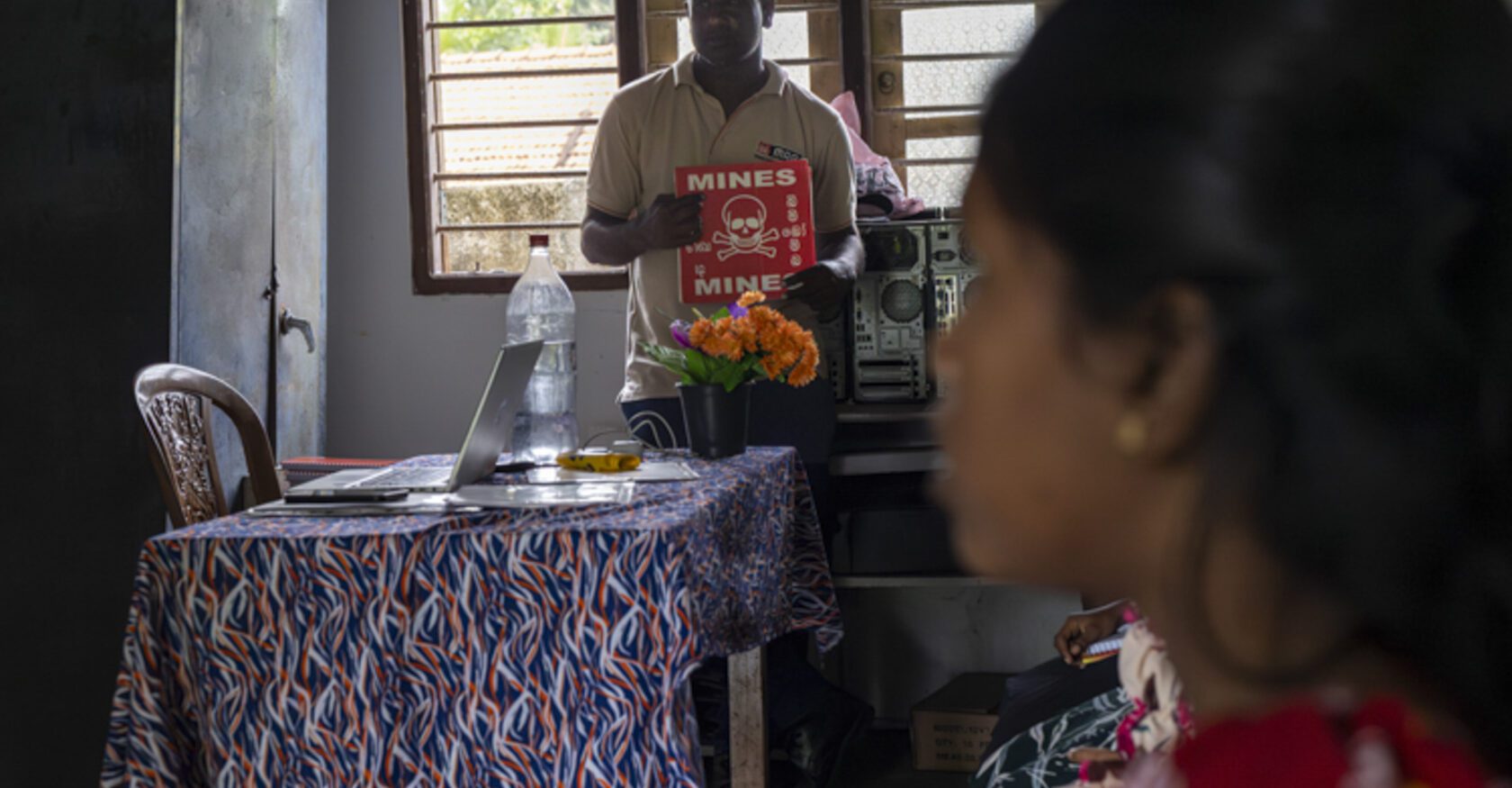
To raise awareness, mine risk education programs have been introduced in schools and villages, teaching residents how to identify explosive remnants and what steps they ought to take if they find one. These programs have already had an impact, but the risks remain.
Nearly two decades after the war ended, after millions of dollars spent, only 22.16 square kilometers (8.5 square miles) of contaminated land remains. According to MAC, the demining efforts are nearing an end. In 2017, Sri Lanka joined the Mine Ban Treaty (known as the Ottawa Treaty) and pledged to become mine-free by 2028. Whether that goal can be met in time now depends almost entirely on international aid.
In recent years, though, global focus has turned to conflicts in Ukraine, Sudan, and Gaza, among other places where landmines are once again being laid. At the same time, the United Kingdom has withdrawn support, the United States is signaling further cuts to aid, and the European Union is now prioritizing defense spending over aid. As a result, humanitarian budgets are shrinking, and demining programs are now trying to find ways to make up for it.
The consequences are far-reaching. Demining organizations are struggling to hang onto skilled staff, and thanks to the lingering impact of the economic crisis, employees are leaving every day in search of better pay. In other cases, budget cuts mean organizations have had to lay off employees. At the same time, the remaining contaminated areas are scattered across less accessible parts of the north and east, making operations more complex and costly, and new hazardous sites are still being discovered.
Many demining experts now doubt Sri Lanka will clear the remaining landmines in time for the 2028 goal. “We think it’s going to be 2031,” Garewal explains. “But if funding drops every year, as it has recently, that could push us up to 2033 or even 2035.”
MAG, her organization, has already suffered a 40% loss of its team since last year. “We simply can’t predict how long demining will take because we don’t know what funding will look like from one year to the next.”
Amid such uncertainty, the risk of more accidents remains constant. For everyday people across the country, such accidents can shape their lives for decades to come.
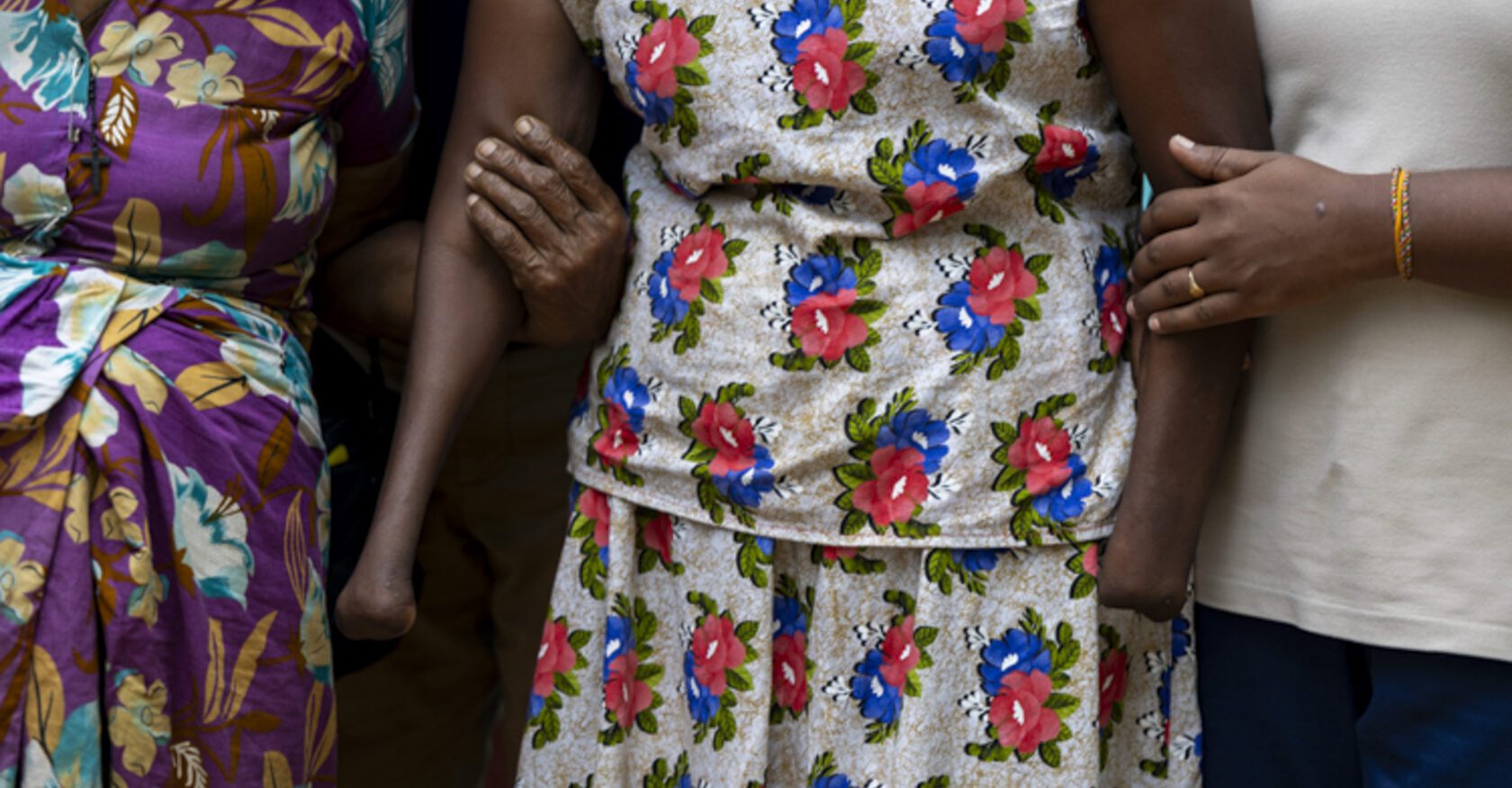
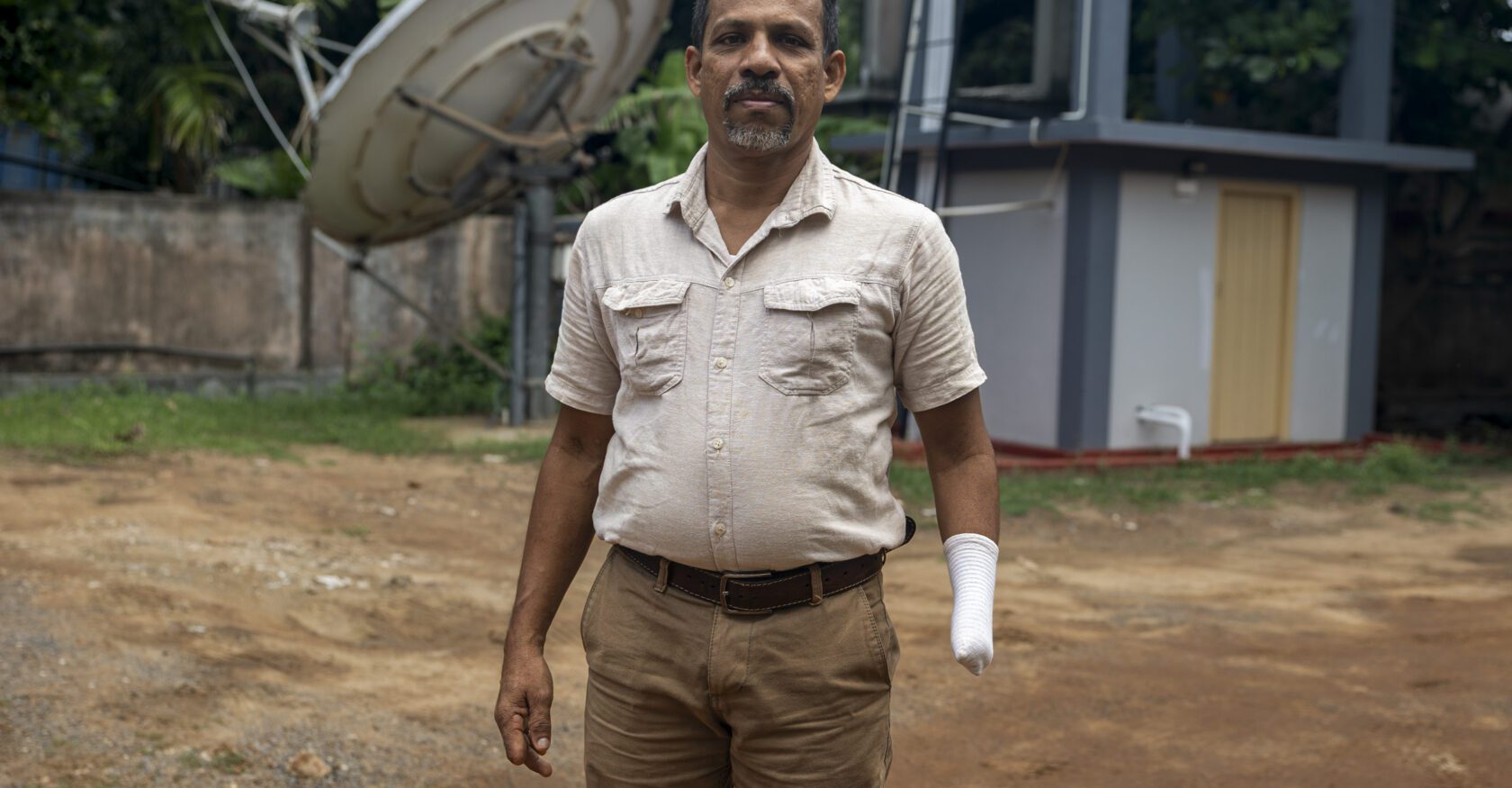
Victoria Jesuthasan Figurado knows how drastic the human impact can be. In December 1994, while she was 18, she ventured out to collect firewood not far from her village in northern Sri Lanka. Because the war had not yet reached her hometown, she had never heard the word landmine. She spotted what she believed was a jewelry box on the ground. When she tried to open it, it exploded.
She woke up nine days later in the hospital, missing both of her hands. She asked her mother why she had let her live. In the months that followed, people came to visit her — not to help, she says, but to look. She was the first person in their village to be injured by a landmine.
Overcome by grief, she later considered suicide. “If I had lost my limbs fighting for a cause,” she says, “maybe I could have accepted it. But this was meaningless.”
Her outlook only changed when she visited a disability camp and saw others who had lost much more than she had. That was when she decided to live.