


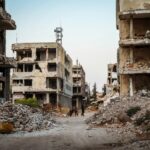
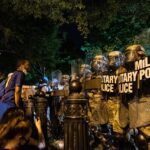



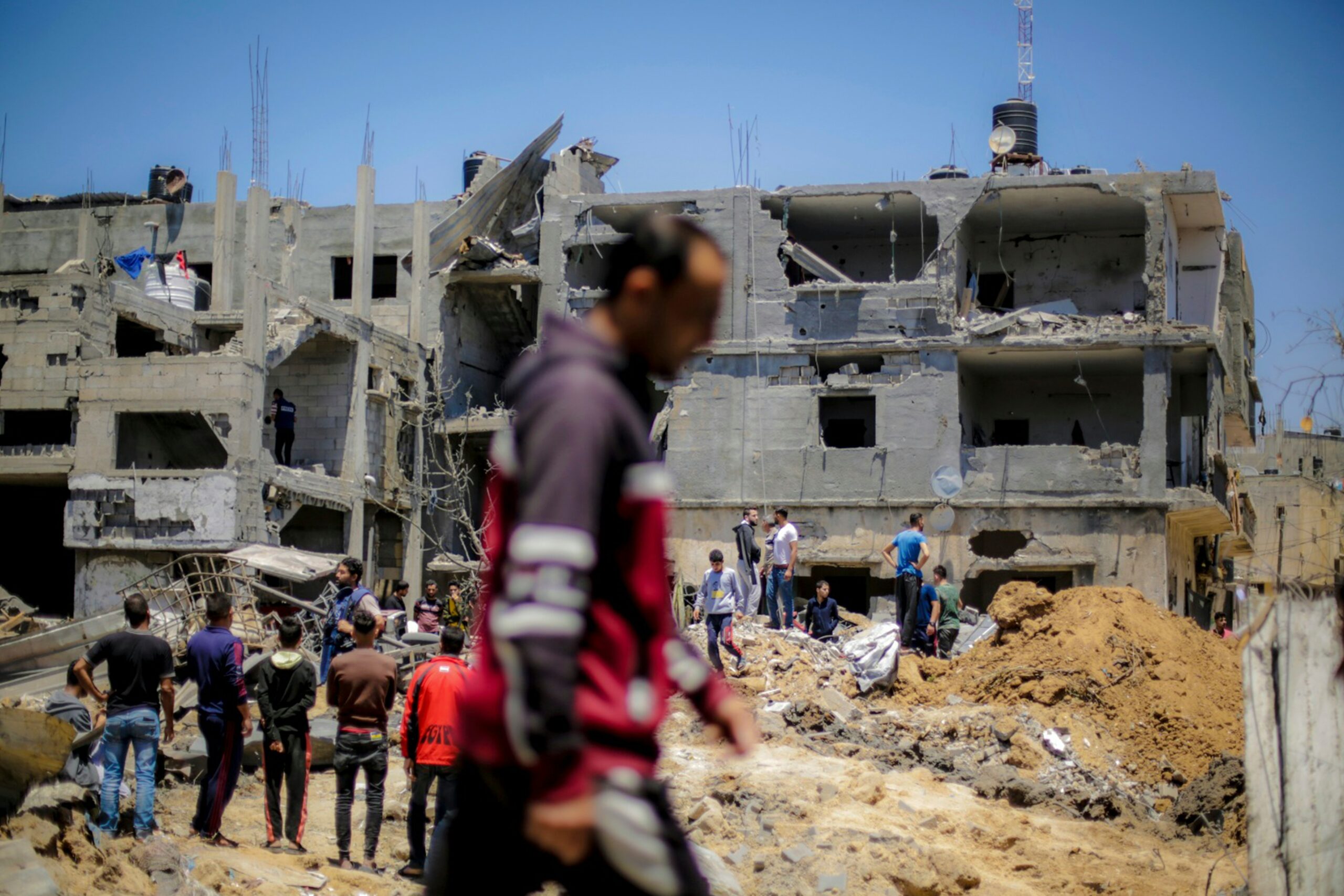
From the military deployments in the streets of American cities to the wreckage of the war-wracked Gaza Strip, the world has witnessed an astounding amount of violence in 2025. Syria began to look toward a future without dictatorship, but bloodshed has erupted in parts of the country. Donald Trump claimed to have ended eight wars, but violence continues to rage the world over. Conflicts, mass displacement, growing inequality, and a surging international far right have all made the planet a more dangerous place to live.
At Inkstick, we have tried to cover such events by the same standard despite where they might occur. Our hope is to report on the military occupation of American cities and the bombing of far-off countries as if they are symptoms of the same disease — and to always, no matter the case, keep a tunnel-vision focus on the humans at the center of these stories.
As the New Year approaches, we have made it our mission to double down on our editorial mandate and to continue bringing you on-the-ground reporting that foregrounds empathy. You’ve no doubt read the news at a major outlet, felt drowned in numbers and jargon, and scratched your head wondering what it means for everyday people. Inkstick wants to be the antidote to that.
While 2025 has earned its place among the grimmest years of recent history, we are hopeful. Our readers have gravitated to both US and international stories, and the numbers speak to that fact.
Inkstick’s 10 Most-Read Reported Pieces from 2025:
“How Gangs, Displacement, and Deportation Are Redrawing Haiti’s Map” by Jess DiPierro Obert
With armed violence spreading and aid stalling, strongmen have stepped in to fill the power vacuum across Haiti’s north and south. According to the United Nations, more than 90% of Port-au-Prince had fallen under the control of armed groups by this past summer. The Transitional Presidential Council, established in April 2024, has been plagued with corruption charges.
“Trump’s Return to Power Puts Militias and Border Patrol in Spotlight” by Tyler Hicks
In the past, watchdogs and observers who kept a close eye on the American far right often used the terms militia and anti-government interchangeably. Now, though, right-wing militias have largely pledged their fealty to Donald Trump, and some have offered their help in advancing the president’s anti-immigrant crackdown.
“Memories and Mourning as Israel Severs Rafah” by Issam Adwan
“The name Rafah once evoked images of sea-breeze evenings, Friday picnics under fig trees, and streets so familiar they felt like the palm of my hand,” Inkstick regular Issam Adwan wrote in April. “Now, the name echoes differently — I hear evacuation orders, war maps, and headlines forecasting its erasure.”
“What’s Behind the UK Labour Party’s Plummeting Support?” by Katy Fallon
Many held out hope when the United Kingdom’s center-left Labour Party returned to power by ousting its conservative predecessor. It wouldn’t take long for them to be disappointed. Back in control, Labour has veered toward militarism and anti-migrant xenophobia, moves that have chipped away at much of its support.
“Drone Wars Find a New Battlefield in India, Pakistan, and China” by Hanan Zaffar
Back in February, Inkstick regular Hanan Zaffar reported on the growing number of drone-related incidents along India’s borders with China and Pakistan. As the borderlands turn into high-tech battlegrounds, the countries have increasingly accused one another of spying and violating buffer zone agreements.
“Legal Moves, New Lobbyist Point to Northrop Grumman’s Influence in Utah” by Taylor Barnes
Nuclear weapons are a global threat, but more times than not, the US companies that produce them depend on currying favor in specific states around the country. In this piece, Inkstick’s field reporter looks at the way that new developments suggest the military-industrial complex is pulling levers of influence in a key nuclear weapons state.
“Burying the Klan: A Texas White Supremacist’s Last Stand” by Patrick Strickland
In the 1920s, the Ku Klux Klan was one of the strongest political forces in Dallas. Six decades later, a local Klan leader named Addie Barlow Frazier tried to orchestrate the group’s comeback. But anti-Klan protesters flooded the streets of Dallas, and the police had to hide Klansmen in a downtown basement.
“Inside the US Military’s ‘Dehumanization’ Crisis Under Trump” by Tyler Hicks
The Trump administration has slashed counter-extremism programs and directed federal law enforcement to back off far-right groups. Meanwhile, members of the US armed forces worry that a top-down dehumanization campaign will have consequences across the decades to come.
“What’s in a Name? Tibet, Xizang, and the Politics of Erasure” by Victoria Jones
On one of the plaques about Tibet at a Silk Roads exhibition at the British Museum, the word Xizang was also used. Most visitors would likely not even have noticed, but the inclusion of that word stands out as a deeply political and controversial choice.
“Progress Without Protection for Women in Mexico” by Mie Hoejris Dahl
Mexico has one of the world’s highest femicide rates, with about 10 women violently killed every day. The rate of women’s killings has increased by 137% since 2015 — four times that of other homicides. As critics told Inkstick in January, it will take more than a female president to end gender-based violence in Mexico.