Skip to content

Anand Gopal Explores Syria’s ‘Days of Love and Rage’

In a new book, the author Anand Gopal looks at the complexities of Syria's nearly 14-year civil war.

Words: Tyler Hicks
Pictures: Mahmoud Sulaiman
Date:

When Al-Qaeda attacked the United States on 9/11, Anand Gopal, then in his early 20s, was living in Lower Manhattan. He was trapped under a car for several hours and lost friends when the towers fell. That day and its trauma, he’d later say, “jarred me out of my complacency.” 

Across the years that followed, he started paying close attention to the wars in Afghanistan and Iraq, and something gnawed at him — some sense that he wasn’t getting the full story. In 2007, he left his work in chemistry and physics and moved to Afghanistan. He had no contacts, didn’t know the language and, at the time, didn’t know much about the new career he hoped to forge in journalism. 

“In retrospect, it was a pretty bad idea in some respects,” he later told an interviewer. 

Anand Gopal's 'Days of Love and Rage' is available from Simon & Schuster

Because he wasn’t yet attached to a paper and didn’t have money for a fixer or translator, Gopal roamed the country on a motorcycle. He made connections with people living in the villages outside Kabul, and he eventually became a correspondent for The Christian Science Monitor and The Wall Street Journal. When he embedded with the Taliban — one of the few journalists to gain that kind of access — he gradually began work on the book that became No Good Men Among the Living: America, the Taliban and the War through Afghan Eyes. Critics praised Gopal’s novelistic approach to the three characters at the heart of his immersive narrative: a housewife, a Taliban commander, and a warlord backed by the US. The author took his title from a Pashtun proverb Gopal heard from a man during his travels:

“There are no good men among the living, and no bad ones among the dead,” the man told him. As Gopal would later write in the book,  “Neither side in the conflict offered much hope for a better future.” That man’s goal, like so many others, “was simply to finish each day alive.”

Gopal’s career has changed a lot since his first book’s publication in 2014. He was a finalist for a Pulitzer and a National Book Award; he became a regular contributor to The New Yorker. But he’s still pursuing those same themes that drove him to Afghanistan. His second book — twice as long, with twice as many principal characters — finds Gopal once again exploring trauma, hope and what it means to carve out some agency for yourself in a world that seems hopelessly cruel and unjust. This time, his characters respond to that injustice by building a revolution.

Days of Love and Rage: A Story of Ordinary People Forging a Revolution covers six decades of life in Syria, from the rise of the Ba’athist Party to the fall of Bashar al-Assad in December 2024. The bulk of the narrative covers the Syrian revolution of 2011 to 2024, and though his mastery of the country’s history and politics is admirable, Gopal’s character work is once again the highlight.

“One of the things that a revolution does is it takes ordinary people and thrusts them into extraordinary circumstances,” he says. “And so all sorts of people have pretty remarkable stories in that context.”

The early chapters of Days of Love and Rage are in-depth portraits of the people who, in one way or another, find themselves at the center of the brutal, odds-defying conflict that eventually toppled Assad. Gopal often begins with his characters’ childhoods, a technique that helps the reader become deeply invested in his characters’ yearnings.

One such character is a gifted soccer player who just wants to play the sport he loves. Another is a beloved community member whose yearning to land a wife and grow his small business lands him in deep trouble with debtors. Sometimes the reader comes across people who appear to be minor characters — an artist nicknamed “Shampoo Sami,” for instance — only to realize they are bridges to other characters and some of the book’s core themes. Shampoo Sami’s sister, a meek teacher named Mina, is one such character. Enraged by the injustice that ultimately befalls her brother, she brings together several women for a protest that opens the eyes of other key characters. 

“At night, after putting the children to bed, Mina lay awake and sorted through the day’s rough scenes and emotions,” Gopal writes. “Slowly, she stripped away the confusion and held before her, for the first time, a clear vision. “This rage, so pure, demanded a response.”

“I was meeting people who are dodging the bullets, dodging the bombs.” – Anand Gopal

This is where Gopal’s work is at its most impressive — when he maps the ways lives can intertwine, creating even the most unlikely revolutionaries. The author started covering the Arab Spring when it broke out in 2011, and a year later, in Syria, he started laying the groundwork for his second book right as Assad’s government was dropping bombs on its own citizens.

“I was meeting people who are dodging the bullets, dodging the bombs,” he says. “I was being taken into people’s homes, strangers’ homes often, and as the world was blowing up around us, they were telling me their stories.”

As he heard these stories, a theme took hold. In the face of state brutality — some of which Gopal describes in searing detail — people were coming together to form the types of community that the state had expressly forbidden. This is how he learned about Manbij, a small Syrian city about an hour and a half northeast of Aleppo. 

In 2012, Gopal heard that the Assad regime’s forces had withdrawn from Manbij. He’d never heard of the city until then, but he navigated the country’s “patchwork of territories” to get there. What he found was a community attempting to run itself — attempting, in effect, to forge their own democracy. 

Days of Love and Rage chronicles this democratic experiment and its aftermath, as ISIS asserts its control. In fact, we meet one of Gopal’s main characters early in their life, only for them to become an important figure in the Islamic State. 

“That kind of trajectory I think may be surprising to people, but actually, in the context of complicated wars, this is actually not that unique,” Gopal says. 

The author’s deep understanding of the sociology of terrorism — as well as history, politics, culture and religion — are the result of his nearly two decades of reporting, as well as thousands of interviews for his new book. What’s more, when he realized the importance of Manbij, Gopal enlisted research assistants to track down more stories about the city. This research informed the structure of his book, but at its core, it remains a story about big ideas like hope, humanity, community, and freedom. 

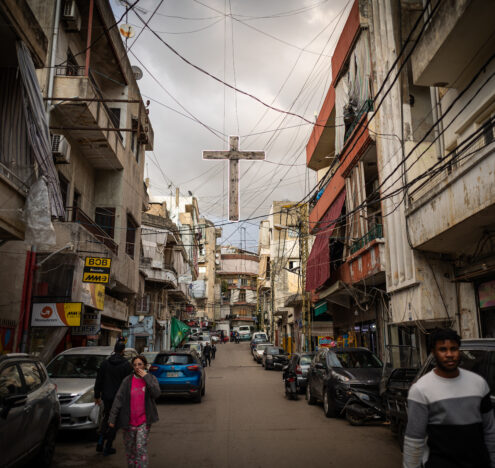
Demonstrators in Daraa rally in celebration after Bashar al-Assad's collapse in December 2024 (Mahmoud Sulaiman/Unsplash)

“When you’re in these situations, where people are really pushed to their limits, you really can get a sense of what humanity is at its best and at its worst,” he says. 

In this case, “the worst” he’s referring to — torture, imprisonment, indiscriminate murder — is unforgettable, but so is “the best.” Time and again, the people Gopal profiles show an almost unbelievable capacity for forgiveness and love, even among people who barely know one another. 

Just as strangers opened their doors to him in Afghanistan and Syria, the strangers filling the pages of Days of Love and Rage open their doors and hearts to one another, often risking everything in the process. 

“It taught me something about the nature of human beings,” Gopal says of his work on the book. It taught him, “that we’re deeply social animals that need to ally with each other to get things done. It’s easy to forget that sometimes, especially in the West when we’re a very individualistic culture.” 

When I spoke with him, Gopal was back in New York. The conversation turned to No Good Men Among the Living and how it differs from his follow-up. He remembers turning in the first draft of his first book and being “very, very proud.” 

Then his editor called him. 

“He said, ‘I’ve been doing this for a long time, and I’ll tell you, this is one of the worst things I’ve ever read,’” Gopal recalls with a laugh. “He was probably right.” 

The author gives himself some grace; at the time, he’d only been a journalist for a couple of years. He threw out that draft and started from scratch, this time with a focus on tying all of the material from his sources into a clear narrative. That same focus benefits his follow-up act, too, especially since, as Gopal puts it, Syria is vastly more complicated than Afghanistan.

“Every town and village had its own faction,” he says. “You had secular groups, Islamist groups, civilian groups, and on the government side, you had Iranian forces and Russian forces. So it was a very, very complex soup to sift through. I think some of the training I got in Afghanistan really helped me to map this out and parse it and not get too attached to some of the ideological categories.”

What emerges is a highly focused, empathetic story about people. And Gopal hopes it’s instructive, too. 

When we spoke the US-Israeli war with Iran was still several days away, but it was in the air; some type of military action seemed imminent. Even beyond foreign interventions, the author was also thinking about the fragility of American democracy. Perhaps, he reasons, there’s something to be learned from a story about people building community and democracy in the face of brutality. 

“I think there’s a broader story here about the ways in which democracy is threatened by profound inequality, and I think we see examples of that around the globe,” he says. “If there’s a way to uncover something hopeful in what seems to be one of the bleakest situations on earth, then maybe they can give us a sense of hope in our own circumstances.”

Anand Gopal’s Days of Love and Rage: A Story of Ordinary People Forging a Revolution is now available from Simon & Schuster.

Tyler Hicks

Tyler Hicks is a writer and journalist living in Texas. His work has appeared in The New York Times, Al Jazeera, The Daily Beast, and many other publications.

LEARN MORE

Hey there!

You made it to the bottom of the page! That means you must like what we do. In that case, can we ask for your help? Inkstick is changing the face of foreign policy, but we can’t do it without you. If our content is something that you’ve come to rely on, please make a tax-deductible donation today. Even $5 or $10 a month makes a huge difference. Together, we can tell the stories that need to be told.

SIGN UP FOR OUR NEWSLETTERS