











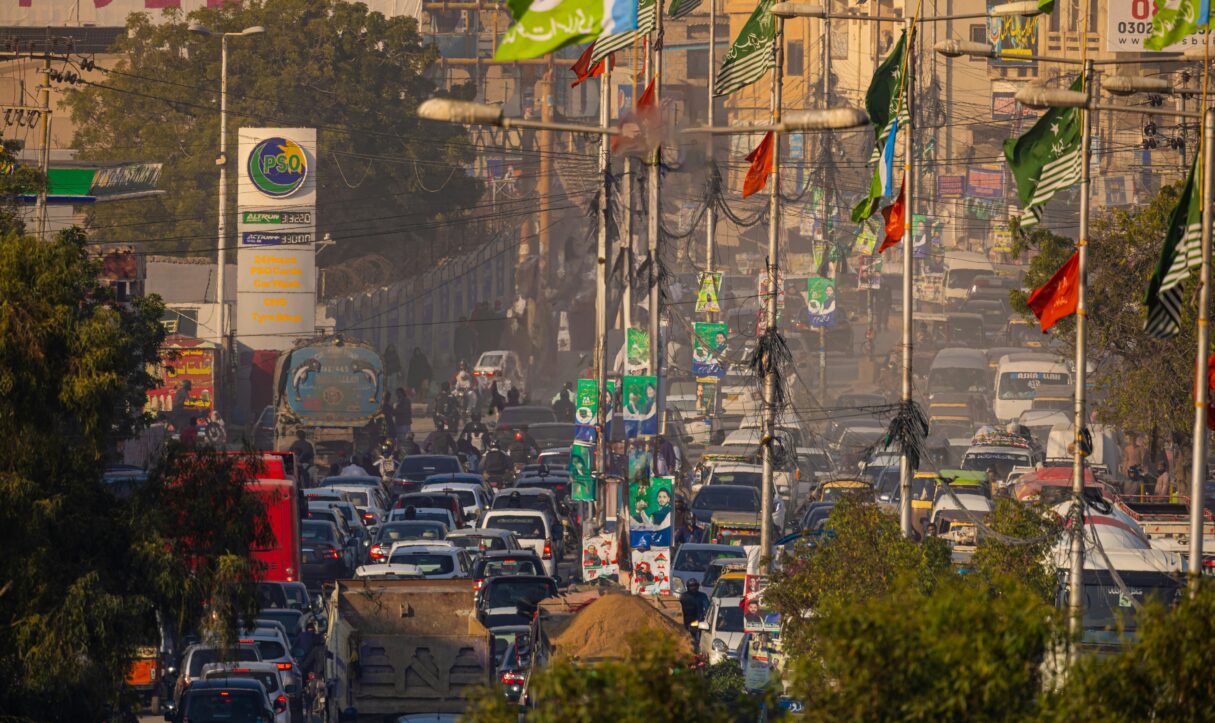
In late July, the United States and Pakistan agreed a deal to lower tariffs and increase cooperation in “energy, mines, minerals, IT, and cryptocurrency,” according to Pakistan’s finance ministry. The timing of the deal was crucial, coming one day before the Trump administration would impose a 29% tariff on all goods from Pakistan. Instead, exports from Pakistan will now face a 19% tariff, an increase still on the 10% blanket rate applied on Trump’s so-called “Liberation Day,” but not high enough, Islamabad will hope to significantly disrupt an export market worth more than $5 billion.
Aside from the newly agreed tariff rate, the promise of US collaboration on oil extraction in Balochistan has generated much enthusiasm in both Washington and Islamabad. If successful, the project will have a transformative effect on bilateral relations that have previously been dominated by strategic, rather than economic interests. There is reason to be skeptical, though, with conflicting claims to the extent of oil reserves and several interested partners in the region potentially standing in the way of any progress.
Under the Trump administration, the US has undertaken an unexpected shift in its approach to South Asia. Relations between the US and Pakistan had reached a low point following the American withdrawal from Afghanistan and remained frozen while the Biden administration pursued deeper ties with India to bolster its Indo-Pacific strategy. The Quadrilateral Security Dialogue, or Quad — comprising the US, Australia, India, and Japan — occupied a central position in this strategy, and though work remained to be done, the grouping provided an effective framework with which the US and its allies could counter Chinese belligerence in the region.
Upon assuming office, Trump appointed a cabinet full of China-hawks. One could have been forgiven for assuming that Trump would continue down this path, capitalizing on the close relationship he had forged with Indian Prime Minister Narendra Modi during his first term. Instead, Trump has imposed hurdles and adopted a transactional stance towards the Indian government. Meanwhile, he has allowed himself to be wooed by Pakistan, particularly its military leadership. Announcing the deal on Truth Social, Trump also took the opportunity to troll India once more, adding that Pakistan could one day be “selling oil to India” as a result.
By agreeing to assist in oil extraction, Trump is continuing his expedient repositioning in the region. Still in doing so, the US president is also overlooking the inevitable strategic pitfalls that lie ahead of this move. While Balochistan serves as a significant source of natural gas in Pakistan, the prospect of oil in the province has long eluded successive governments. Islamabad has repeatedly pointed towards unproven assessments that the country, and its surrounding waters, could be home to billions of barrels of untapped oil, only for each claim to eventually be disproved by unsuccessful drill attempts.
In 2019, it took just a matter of hours for Pakistan’s Petroleum Division to discredit then-Prime Minister Imran Khan’s claim of “massive reserves.” As the country’s largest import, oil remains an elusive commodity for Pakistan, and its domestic production could go some way to alleviating strains on its struggling economy.
“Under the Trump administration, the US has undertaken an unexpected shift in its approach to South Asia.”
Although the first part of this new oil collaboration has seen oil shipments flow from the US to Pakistan, rather than the other way around. Nonetheless, while Islamabad’s motivations for the deal are understandable, it remains puzzling why Trump has chosen to involve the US in what has thus far been little more than a chimera.
If past failures are not enough of a warning for the US, China’s disinterest in the matter and its willingness to allow Pakistan to broker such a deal with the US should sound the alarm in Washington. China has dominated nearly every aspect of the Pakistan economy in recent years, investing in infrastructure, energy, and security projects, and in turn increasing Islamabad’s dependence on Beijing. For this reason, it is unlikely that China would not have had first refusal on any oil exploration and mining projects in the country.
The fact that Beijing did not leap at such an opportunity implies it does not deem such a project viable. Even if China was rightfully skeptical of any potential for significant oil mining in Pakistan, it is equally surprising that the Chinese Communist Party has not protested the prospect of an increased US presence in Pakistan. In recent years, Pakistan has afforded China a great deal of deference when dealing with the US, with Islamabad skipping two Washington-backed democracy summits in 2021 and 2023, supposedly on account of Beijing. Pakistan would not, it seems, have pursued this deal without some form of approval from China.
After having successfully supplanted US influence in Pakistan following the American withdrawal from Afghanistan, it is curious why China would be willing to allow the US back into the country, and particularly in the province of Balochistan. The culmination of China’s investment and infrastructure projects in Pakistan lies in Gwadar, Balochistan, in a seaport that provides China with long-coveted, direct access to the Arabian Sea. Having to compete with new, American interests so near to its “crown jewel” seems inconsistent with China’s desires to limit US influence in Asia.
The answer may of course lie in the fact that the scheme appears so far-fetched that China is happy for the US to sink millions of dollars into futile oil exploration. Beijing may also view the potential increase of dollars into the Pakistan economy as a means of getting much-needed repayment on loans it has provided to Islamabad.
Alternatively, the answer for China’s apparent indifference at the US-Pakistan oil deal could lie in China’s own difficulties in achieving its strategic and economic objectives in Pakistan. It is no secret that China has grown dissatisfied with the deteriorating security situation in Pakistan, following constant attacks against Chinese interests, particularly in Balochistan, which have plagued infrastructure projects. Trump should not expect that the same issues will not face American oil projects in the province as well. Unequal distribution of resources and the profits of resources found in the province have long been rallying cries for separatist and militant movements in Balochistan, especially the Balochistan Liberation Army. A US-backed oil extraction scheme in the province will only serve to further entrench this view that Balochistan is being exploited by the central government, and further inspire militancy.
By agreeing to collaborate with Pakistan on oil exploration and mining, Trump is making an unforced error that could cost substantial amounts of money. Time and again, past attempts to uncover oil deposits in Pakistan have failed to yield results. There is no certainty that a Trump-backed initiative will fare any better. The sharp uptick in violence targeting Chinese workers and infrastructure projects in Pakistan over the last three years should serve as a further warning against greater US involvement in the country.
Unless the US is prepared to deploy security forces to protect its investment, the risks will far outweigh any potential benefits. Islamabad, on the other hand, will be hoping that Trump can overlook any misgivings and can channel much-needed American investment its way, whether or not Washington will ever see any returns on its outlay.