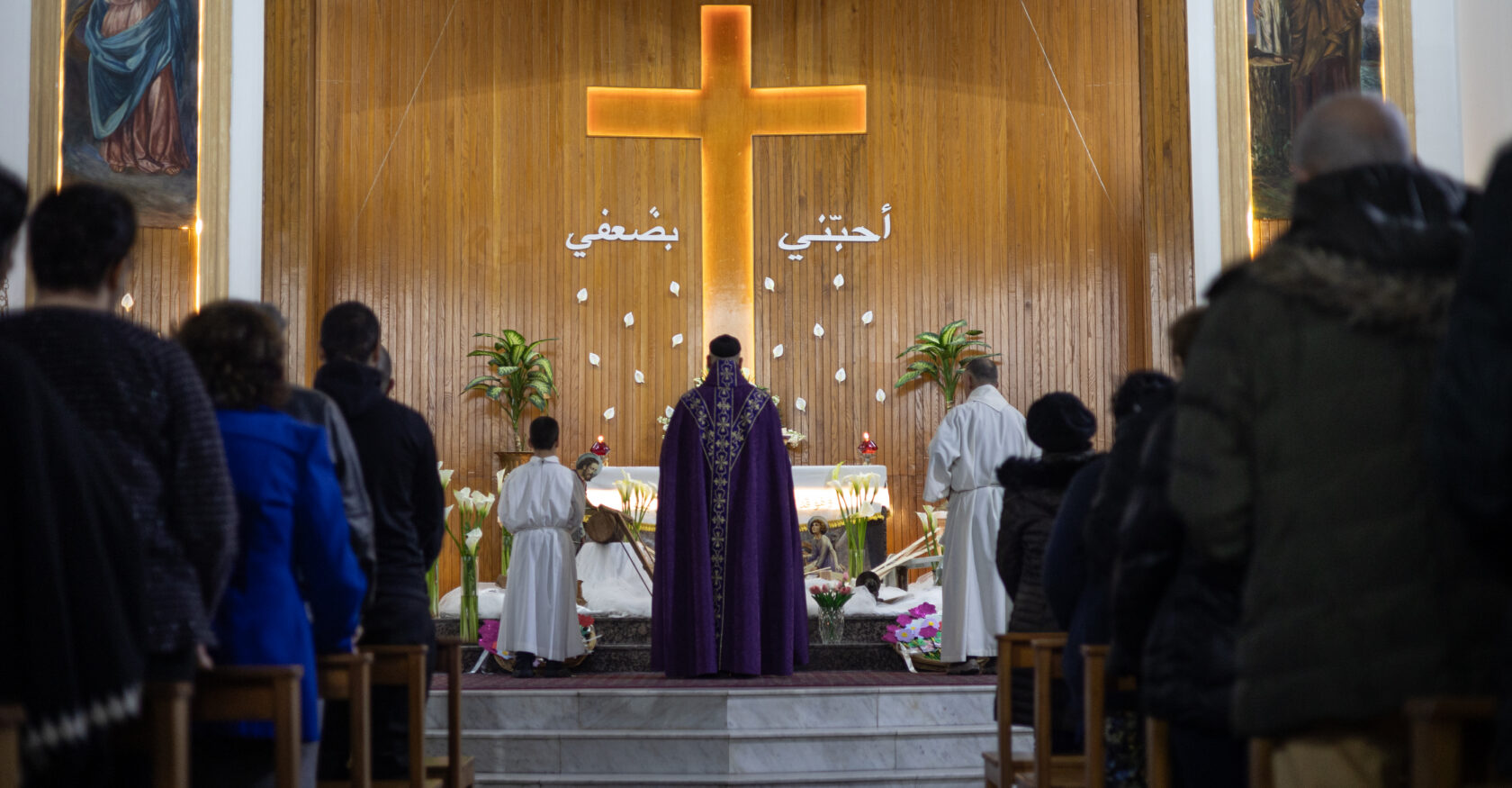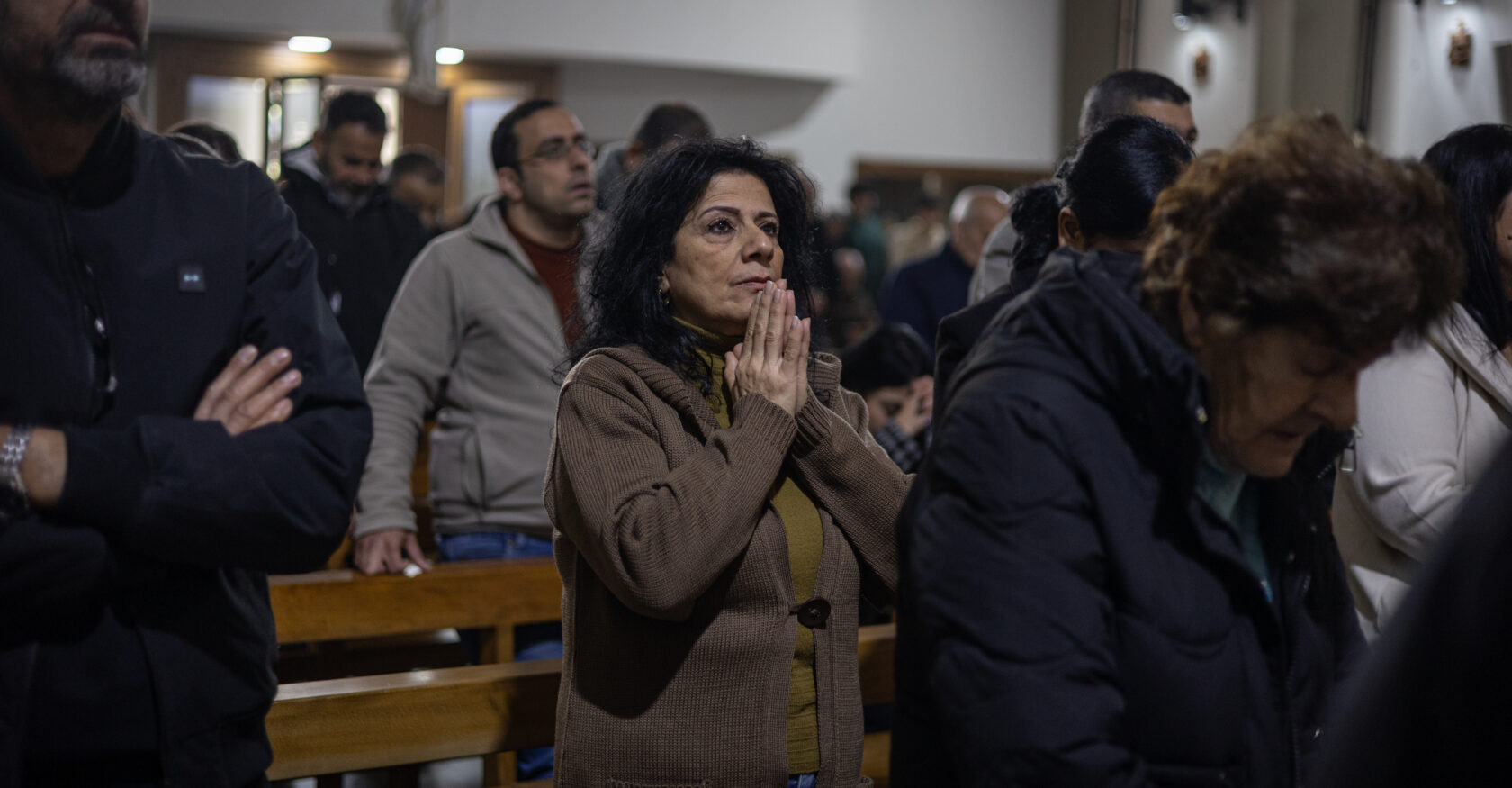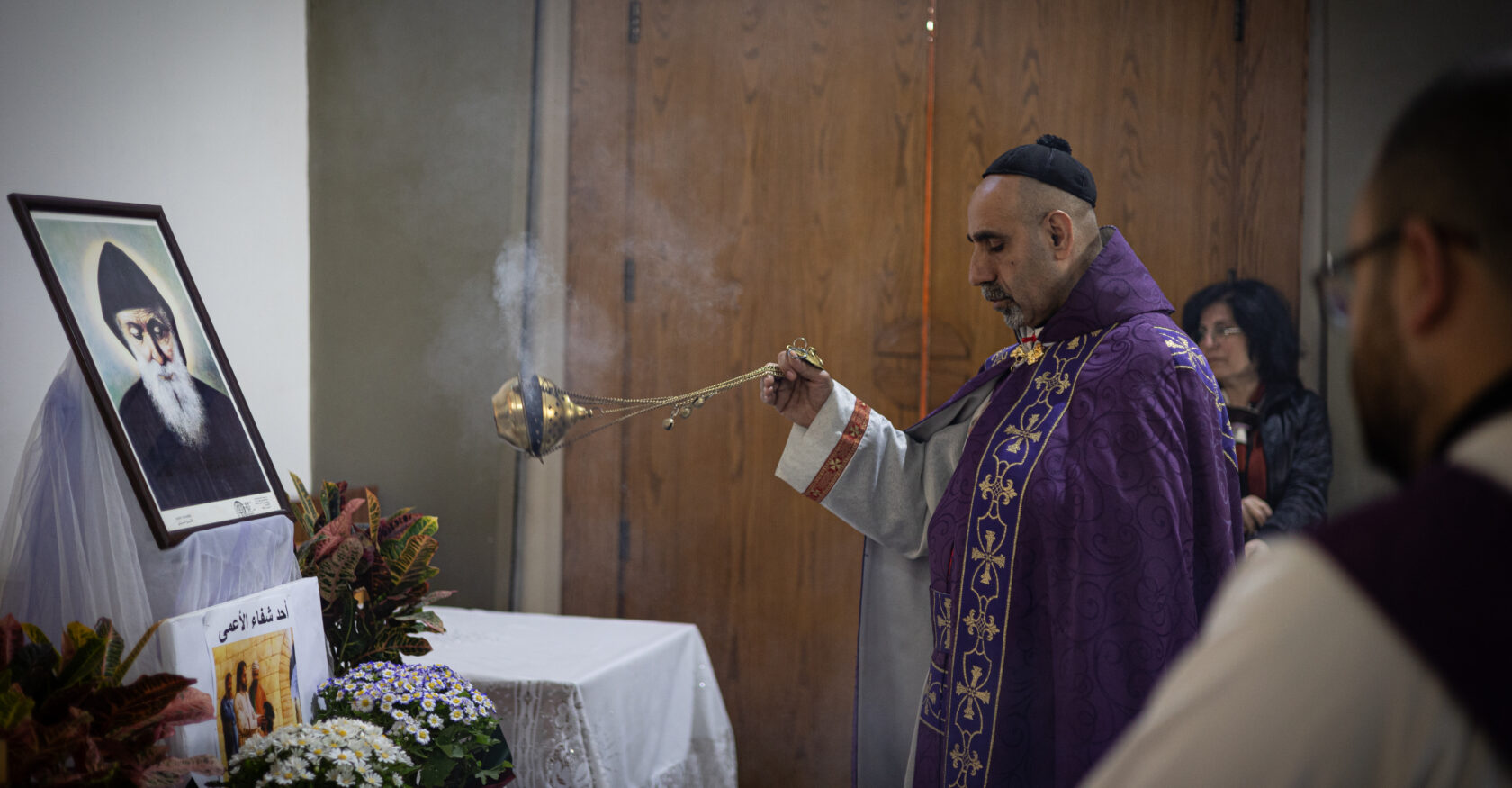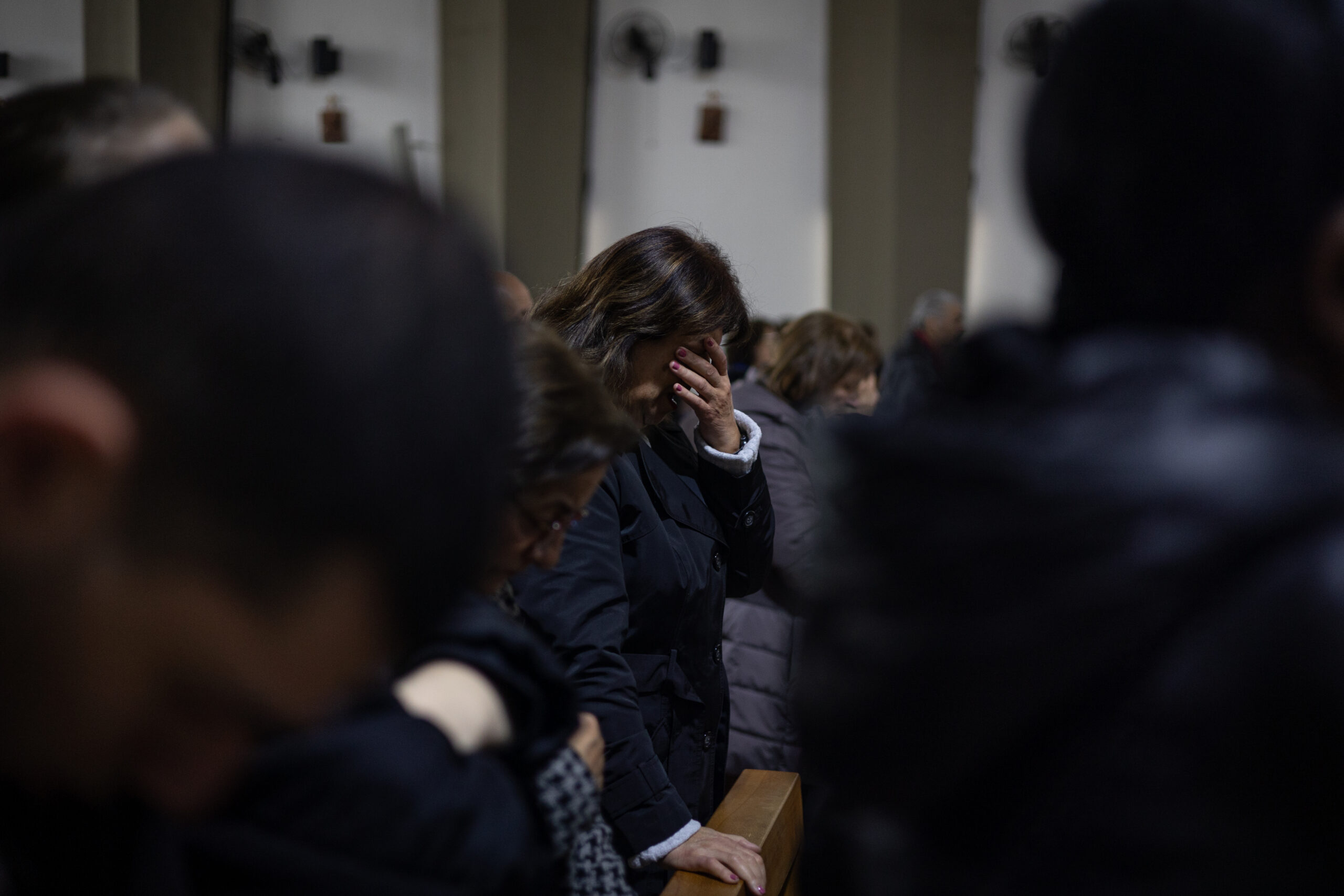

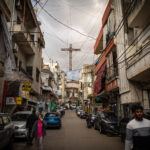






Inside the walls of Saint Joseph Church in March, hundreds of people filled the pews, praying and singing. Among them, the parish priest, Bassem Kiwan, saw scores of new faces.
In recent days, he had met with some of them. On Feb. 28, Israel and the United States launched what has become a weeks-long war on Iran. Meanwhile, Israeli forces went back to war in Lebanon. Since then, Kiwan said, 100 Christian families displaced from southern Lebanon had sought refuge in the area, a densely crowded suburb of Beirut known as Bourj Hammoud. With a largely Armenian Christian population unaffiliated with Hezbollah, Bourj Hammoud is seen as one of the unofficial “safe areas” in the Lebanese capital city.
But a series of Israeli attacks on so-called safe areas has eroded people’s sense of security.
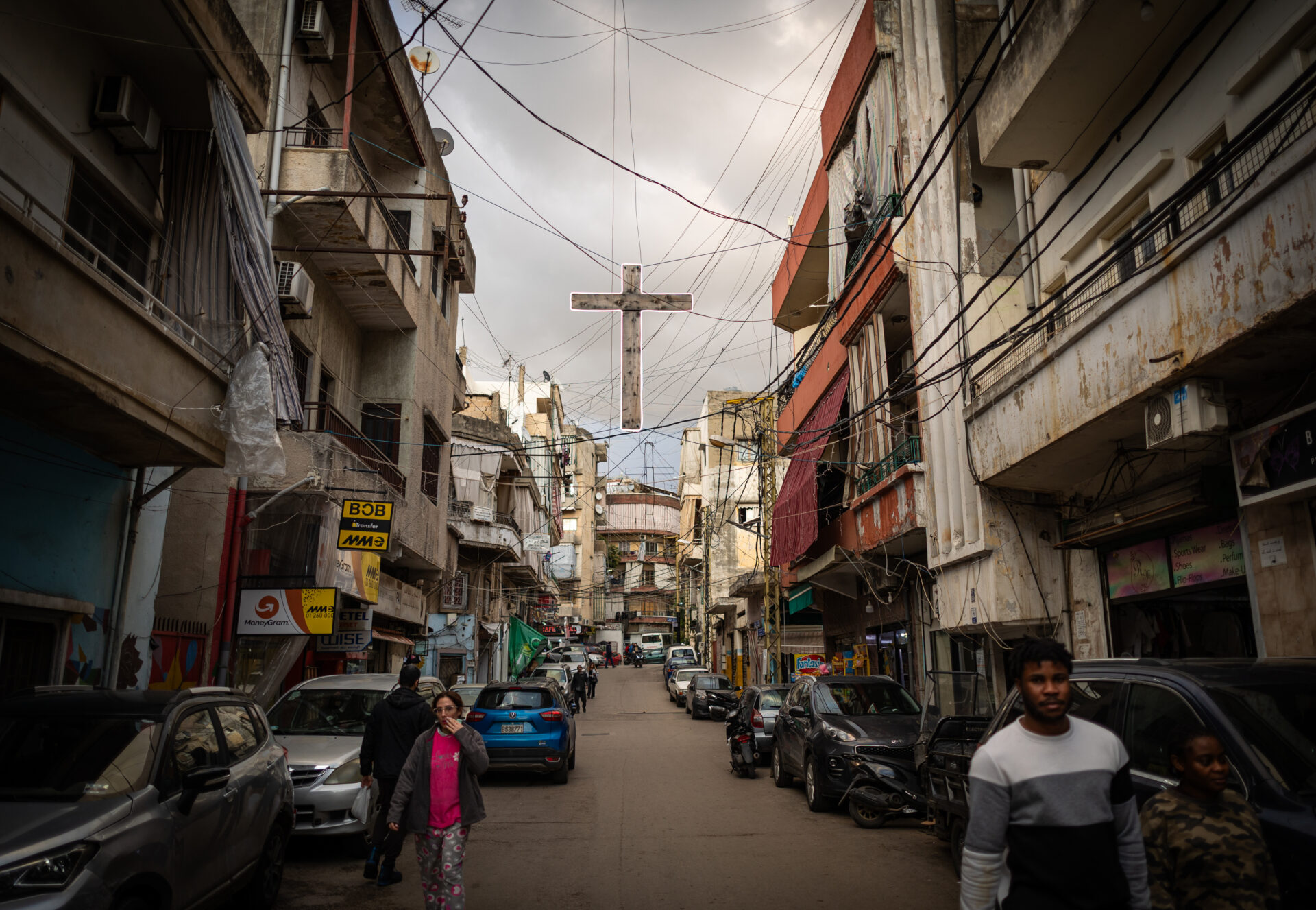
When I visited the suburb a few weeks ago, life at first glance seemed almost normal. The streets were crowded with cars, and on sidewalks and in front of stores, people walked and chatted. There was little to suggest that just a few kilometers (miles) away, adjacent suburbs were regularly bombed by Israeli war jets, and that a few hours south, fierce ground fighting raged between Hezbollah and Israel.
It was only when you began to talk to people that you saw the apprehension and unease tucked behind the veil of normalcy.
Kiwan put it succinctly when I spoke to him.
“Fear has begun to affect our children and our women,” he said. “We are afraid.”
For decades, religion and sectarian politics have shaped life in Lebanon. Within the tiny country’s 10,452 square kilometers (4,036 square miles) of territory, more than a dozen sects of Muslims, Christians, and Druze coexist in a fluctuating state of peace, tension, and conflict. From 1975 to 1990, Lebanon fought a devastating civil war fueled by sectarianism.
In the Hezbollah-Israel conflict unfolding now, sectarian demographics have taken on a life-or-death dynamic. With Hezbollah largely representing Lebanon’s Shia Muslim community, which makes up an estimated third of the population, Shia neighborhoods, villages, and cities bear the brunt of Israeli military attacks.
Parts of the country inhabited by Lebanon’s other religious sects — Christians, Sunni Muslims, Druze, and Alawites — have largely been spared, at least until recently. As Israel’s war against Hezbollah rages on amid a wider regional conflict with Iran, areas once seen as safe are finding themselves under fire, including Bourj Hammoud.
Kiwan had just finished leading a second liturgy service when I met him in the back of Saint Joseph, a landmark Eastern Catholic Maronite church that sits along one of Bourj Hammoud’s main streets.
As he changed from his purple vestments to more casual clerical clothing, Kiwan told me about the families displaced from southern Lebanon that he had been meeting with. They were among the more than 1.2 million people uprooted from their homes since the start of the war on March 2. While many displaced individuals have ended up in overcrowded centers or on the streets, the families in Bourj Hammoud seemed to be faring slightly better. Kiwan said they were staying with friends and family or renting homes.
As he visited families, Kiwan said, he took time to get to know them and to understand how the church could provide assistance. It was an approach that seemed to be based as much on charitable values as it was for security. In addition to the Christian families, Kiwan noted that many displaced Shia families had also arrived in Bourj Hammoud. While sympathetic to their plight, he also hinted at the concerns that their presence raised.
“It’s true that (Bourj Hammoud) is safe, but among the displaced there are people whose identities are unknown,” the priest said.
His comments echoed what I heard from other Lebanese in Bourj Hammoud and across the country: a fear that a member of Hezbollah or one of its allies would be among displaced families, leading to an attack on the area.
“That’s why we hope that only displaced people from our Shia brothers who are not involved in the war will come,” Kiwan said. “We fear that trouble will rise among people and that innocent people will be caught up in the crossfire because of those who are causing the war.”
His concerns were not without precedent. Around a week earlier, two Israeli airstrikes targeted a residential building in Bourj Hammoud where a Hezbollah member was allegedly staying.
In a half-asleep slumber, Hagop* thought he heard one of the attacks before drifting back to sleep. Later that morning, the 26-year-old social media manager awoke to texts from friends and family asking him if he was okay. As it turned out, there had been a strike less than two kilometers from his home.
Some 24 hours later, Israel bombed the same building again.
To Hagop, the strikes were a one-off, but they were also something he always thought was possible. While much of the population in Bourj Hammoud is Lebanese-Armenian, the building that was targeted stands in Nabaa, a neighborhood with a large Shia population.
“I always knew it was a possibility to have someone (from Hezbollah) here,” he said.